

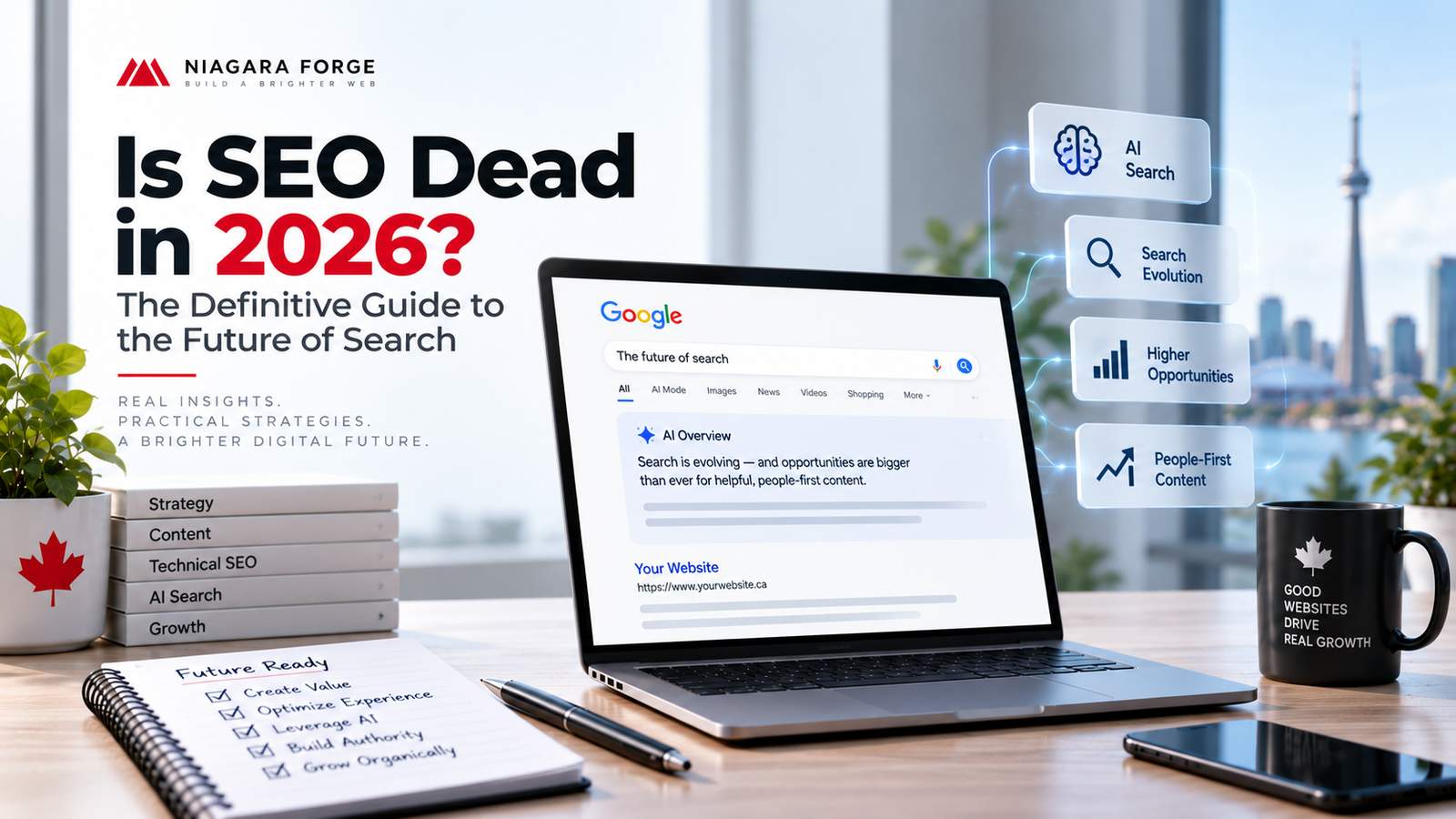
Introduction: The Death of SEO Has Been Greatly Exaggerated
Every few years, a new wave of technology triggers the same question: “Is SEO dead?” In 2026, the query is louder than ever, fueled by the rise of generative AI, zero-click search results, and voice-first interfaces. Yet, the reality is far less apocalyptic. Search itself has not vanished; it has transformed. The core mission of SEO—connecting users with the most relevant, authoritative, and useful information—remains intact. What has changed are the mechanics, the metrics, and the mindset required to succeed. This article cuts through the noise to show you why SEO is not dead, but is instead undergoing a profound evolution, and how you can adapt to thrive in the new search landscape.
Why the ‘SEO is Dead’ Narrative Keeps Resurfacing
The “SEO is dead” narrative is a recurring pattern in the digital marketing world, often triggered by major algorithm updates or new technologies. Here are the key reasons it persists:
- Algorithm Shifts: Google’s core updates (like Helpful Content and AI Overviews) often penalize low-quality or keyword-stuffed pages, leading some to believe traditional SEO no longer works.
- Rise of Zero-Click Searches: By 2026, over 60% of searches on mobile may end without a click, as answers appear directly in featured snippets, knowledge panels, or AI-generated summaries. This reduces organic traffic for many sites.
- Generative AI Competition: Tools like ChatGPT, Perplexity, and Google’s own Gemini provide direct answers, potentially bypassing traditional search result pages altogether.
- Misunderstanding Evolution: Many confuse “changing” with “dying.” When tactics like exact-match keyword stuffing stop working, practitioners who fail to adapt declare SEO dead rather than update their skills.
- Vendor Hype: Some new platforms or agencies claim SEO is obsolete to sell their own solutions, such as AI content generators or paid advertising systems.
These factors create a perfect storm of uncertainty, but they do not signal the end of search engine optimization—only the end of outdated practices.
What Has Changed in Search by 2026
By 2026, the search ecosystem has evolved in several critical ways. Understanding these changes is essential for any modern SEO strategy:
| Aspect | Past (Pre-2024) | Present (2026) |
|---|---|---|
| Primary Search Interface | Blue links with 10 organic results | AI-generated overviews, multi-modal results (images, video, voice) |
| User Intent | Informational, navigational, transactional | Conversational, multi-step, context-aware queries |
| Content Ranking Factors | Keywords, backlinks, domain authority | Expertise, experience, authoritativeness, trustworthiness (E-E-A-T), entity understanding, topical depth |
| Measurement Focus | Organic traffic, click-through rate (CTR) | Brand visibility, answer rate, engagement depth, conversions across zero-click paths |
| AI Role | Used for content generation (often low-quality) | Used for content enhancement, personalization, and understanding user context |
These shifts mean that SEO now requires a holistic approach that blends technical optimization, content authority, and user experience. The old days of gaming the system are over; the new era rewards genuine value.
How This Article Will Help You Navigate the New Landscape
This definitive guide is structured to give you a clear roadmap for success in 2026 and beyond. You will learn:
- What still works: The core SEO principles—like technical site health, mobile usability, and structured data—that remain essential.
- What to abandon: Outdated tactics like keyword density targets, link farms, and thin content that can now harm your rankings.
- New strategies to adopt: How to optimize for AI overviews, voice search, and entity-based queries, plus how to build topical authority through comprehensive content clusters.
- Real-world examples: Case studies of brands that have successfully adapted to the 2026 search environment, showing measurable results.
- Actionable steps: A checklist you can implement immediately to future-proof your SEO efforts, whether you run a small blog or a large e-commerce site.
By the end of this guide, you will have a clear understanding that the answer to “Is SEO dead in 2026?” is a resounding no. Instead, you will be equipped with the tools and knowledge to make SEO a stronger, more integral part of your digital strategy than ever before.
The Rise of AI Overviews and Zero-Click Searches
By 2026, the question “Is SEO dead in 2026?” has become a central concern for digital marketers, largely driven by the proliferation of AI-generated content directly on search engine results pages (SERPs). These AI overviews—concise, synthesized answers pulled from multiple sources—now appear for a significant portion of queries, particularly informational and navigational ones. This shift has fundamentally altered how users interact with search, reducing the need to click through to individual websites. The result is a rise in zero-click searches, where a user finds the information they need without leaving the SERP. For businesses and content creators, this means traditional SEO metrics like organic click-through rates (CTR) no longer tell the full story. Success now hinges on visibility within these AI-generated summaries and featured snippets, rather than merely ranking in the top ten organic results.
How AI Overviews Reshape Search Results Pages
AI overviews have transformed the SERP from a list of blue links into a dynamic, multi-format information hub. These overviews often appear at the very top of the page, pushing traditional organic results further down. They pull from a variety of sources—including web pages, knowledge graphs, and structured data—to generate a single, authoritative answer. Key characteristics of this reshaping include:
- Position Zero Dominance: The AI overview occupies the most prominent real estate, often followed by a “People also ask” section and then paid ads.
- Multi-Source Synthesis: Answers are not copied from one site but aggregated from several, reducing the value of a single “winner” in rankings.
- Visual and Interactive Elements: Overviews increasingly include images, tables, and even short video clips, making the SERP itself a complete experience.
- Contextual Follow-Ups: Users can ask clarifying questions directly within the overview, keeping them engaged without ever clicking a link.
This restructuring demands that SEO professionals optimize for entity recognition and structured data (like Schema.org markup) to increase the likelihood of being cited within AI overviews, rather than just ranking for a keyword.
The Decline of Traditional Click-Through Rates
As AI overviews capture more user intent, the traditional click-through rate for organic search results has declined sharply. While precise numbers vary by niche, the trend is unmistakable: for queries where an AI overview is triggered, the average CTR for the first organic result can drop by 30% to 50% compared to queries without such overviews. This decline is not uniform across all query types:
| Query Type | Impact on CTR | Example |
|---|---|---|
| Informational (e.g., “What is SEO?”) | High decline (40-60%) | AI overview provides a complete answer. |
| Commercial (e.g., “Best SEO tools 2026”) | Moderate decline (15-30%) | Overview lists top tools but users still click for reviews. |
| Transactional (e.g., “Buy SEO software”) | Low decline (5-15%) | AI overview rarely handles purchase intent. |
For informational queries—which historically drove high traffic—the decline is most severe. Marketers can no longer rely on “how-to” or “what-is” content to generate substantial referral traffic. Instead, they must pivot to capturing brand awareness within the overview itself, even if it means fewer direct clicks. The practical implication: monitor your site’s presence in AI overviews using tools like Google Search Console’s performance reports, filtering by “Search appearance: Web Story” or “AMP” (though these are evolving). For a technical approach, you can use a Python script to check if a SERP includes an AI overview (simplified example below):
import requests
from bs4 import BeautifulSoup

def check_ai_overview(query):
    url = f"https://www.google.com/search?q={query}"
    headers = {'User-Agent': 'Mozilla/5.0'}
    response = requests.get(url, headers=headers)
    soup = BeautifulSoup(response.text, 'html.parser')
    # Look for AI overview container (class may change)
    overview = soup.find('div', class_='gLHyRec')  # example class
    return bool(overview)

# Usage
print(check_ai_overview("Is SEO dead in 2026?"))
This code provides a basic check; real-world applications require more robust parsing and rate-limiting.
Opportunities Within Zero-Click Search Results
Despite the decline in traditional clicks, zero-click search results present new opportunities for brands that adapt. The key is to shift focus from driving traffic to building visibility and authority within the SERP itself. Practical strategies include:
- Optimize for Featured Snippets and AI Overviews: Structure content to answer questions directly, using clear headings, bullet points, and concise paragraphs. Aim to be the source that AI overviews cite.
- Leverage Structured Data: Implement FAQ, HowTo, and Product schema to increase the chances of your content being featured in rich results and overviews.
- Create “Zero-Click” Content: Develop content specifically designed to be consumed in the SERP, such as short, authoritative answers that satisfy user intent without requiring a click.
- Monitor Brand Mentions and Citations: Even if users don’t click, being cited in an AI overview builds brand authority. Track these mentions with brand monitoring tools.
- Focus on Transactional and Local Queries: These query types still drive clicks. Optimize for local packs and product listings to capture direct conversions.
In summary, the rise of AI overviews does not mean “Is SEO dead in 2026?”—it means SEO has evolved. The winners will be those who embrace zero-click search as a channel for brand exposure and credibility, rather than lamenting the loss of traditional traffic. By adapting content and technical strategies to this new reality, businesses can thrive in a search landscape where the answer is often the destination itself.
Google’s Algorithm Updates Through 2026
The question “Is SEO dead in 2026?” often stems from the relentless pace of Google’s algorithm changes. Far from signaling the end of search optimization, these updates have refined the discipline, placing unprecedented emphasis on quality, user experience, and genuine value. Since 2024, Google has rolled out a series of core updates that systematically reward sites demonstrating deep expertise and penalize those relying on thin content or manipulative tactics. Understanding these shifts is essential for anyone seeking to maintain or improve search visibility.
Key Algorithm Updates from 2024 to 2026
Between 2024 and 2026, Google introduced several significant algorithm updates that redefined ranking criteria. The most impactful include:
- March 2024 Core Update: A major overhaul targeting low-quality, unoriginal content. It reduced visibility for sites with high ad-to-content ratios and AI-generated text lacking human oversight.
- August 2024 Helpful Content System (HCS) Expansion: Extended the HCS to cover all content types, including forums and user-generated content, prioritizing firsthand experience and community-driven value.
- November 2025 Site Reputation Abuse Update: Cracked down on “parasite SEO,” where third-party content exploits a site’s authority (e.g., coupon pages on news sites), requiring clear editorial independence.
- February 2026 Product Reviews and E-E-A-T Integration: Merged product review guidelines directly into the E-E-A-T framework, demanding detailed, firsthand testing evidence for reviews to rank well.
These updates collectively signal that Google now evaluates not just keywords, but the entire context of a page’s creation and purpose.
The Growing Emphasis on Expertise, Experience, Authoritativeness, and Trustworthiness (E-E-A-T)
E-E-A-T has evolved from a guideline into a direct ranking signal, particularly for Your Money or Your Life (YMYL) topics such as health, finance, and legal advice. By 2026, Google’s systems analyze:
- Experience: Content must demonstrate real-world, firsthand knowledge. For example, a travel guide should include personal photos and specific local insights, not generic descriptions.
- Expertise: Authors need verifiable credentials or deep practical knowledge. Google now cross-references author bios with external sources like LinkedIn or academic profiles.
- Authoritativeness: Sites must be cited by other reputable sources. Backlinks from industry-leading publications hold more weight than ever.
- Trustworthiness: Transparent contact information, clear editorial policies, and accurate, up-to-date content are non-negotiable.
To illustrate the practical differences between pre-2024 and 2026 ranking factors, consider the following comparison:
| Ranking Factor | Pre-2024 Approach | 2026 Approach |
|---|---|---|
| Content Quality | Keyword density and word count | Original research, firsthand experience, and actionable insights |
| Author Credibility | Generic bylines with no verification | Linked author profiles with credentials and external endorsements |
| Backlink Value | Quantity of links, including low-quality directories | Relevance and authority of linking domains, with penalty for link schemes |
| User Experience | Basic mobile-friendliness and page speed | Core Web Vitals, interaction to next paint (INP), and accessibility compliance |
How to Future-Proof Your Site Against Algorithm Changes
To answer “Is SEO dead in 2026?” with a definitive “no,” you must adapt to these algorithmic shifts. Future-proofing requires a strategic focus on sustainable practices:
- Invest in original research and data: Publish unique studies, surveys, or case studies that provide value no other site can replicate. Google rewards content that adds new knowledge to the web.
- Build a transparent author ecosystem: Ensure every piece of content has a clearly attributed author with verifiable expertise. Link to their professional profiles and update bios regularly.
- Prioritize user experience metrics: Optimize for Core Web Vitals, especially Largest Contentful Paint (LCP) under 2.5 seconds and Cumulative Layout Shift (CLS) below 0.1. Use responsive design and ensure keyboard navigation works seamlessly.
- Monitor and refine E-E-A-T signals: Regularly audit your site for outdated information, broken links, and unclear contact details. Add a detailed “About Us” page that explains your organization’s mission and expertise.
- Diversify traffic sources: Relying solely on Google search is risky. Build an email list, engage on social platforms, and leverage newsletters to create a direct audience connection.
By embracing these principles, you align with Google’s trajectory and ensure your site remains resilient, regardless of future algorithm updates.
Search Generative Experience (SGE) and Its Impact on SEO
The question “Is SEO dead in 2026?” gains its sharpest edge when examining Google’s Search Generative Experience (SGE) and similar generative AI features rolled out by competitors like Bing Copilot. These tools fundamentally alter how users interact with search results, moving from a list of blue links to a summarized, conversational answer. For SEO professionals, this shift demands a reevaluation of traditional tactics. SGE does not kill SEO; it redirects it toward authority, structure, and user-first content that machines can reliably parse.
What Is Search Generative Experience and How Does It Work?
SGE is Google’s integration of generative AI directly into the search results page. When a user submits a query, SGE can produce a snapshot—a concise, AI-generated summary drawn from multiple web sources. This snapshot appears above traditional organic listings, often with links to the source pages embedded within it. The system works by:
- Query understanding: Using large language models (LLMs) to interpret intent beyond keywords.
- Content retrieval: Pulling relevant passages from indexed pages based on topical authority and freshness.
- Generation: Synthesizing a coherent answer, citing sources with clickable links.
- Continuous learning: Refining responses based on user feedback and engagement signals.
For example, a search for “how to optimize for SGE” might trigger an SGE snapshot that lists three key strategies, each linked to a different authoritative blog. The user can then click through for deeper detail, but the initial answer is served without a traditional click.
How SGE Affects Content Visibility and User Intent
The most immediate impact is on click-through rates (CTR) for informational queries. When SGE provides a satisfactory answer in the snapshot, users may not scroll to organic results, reducing traffic for pages that once ranked in positions 1–3. However, this effect is not uniform. Consider the following distinctions:
| Query Type | Pre-SGE User Behavior | Post-SGE User Behavior | SEO Implication |
|---|---|---|---|
| Informational (e.g., “what is SGE”) | Click top result for answer | Read snapshot, click only for depth | Lower CTR; focus on being cited |
| Transactional (e.g., “buy SEO tool”) | Browse results for purchase | Snapshot may show options; clicks still high | Maintain transactional SEO |
| Navigational (e.g., “Google Search Central”) | Click direct link | Snapshot may include link; behavior similar | Brand authority matters more |
User intent shifts from “find a page” to “get an answer.” Content must now satisfy both the generative model’s need for clear, structured data and the user’s desire for authoritative depth. Pages that are poorly organized or lack explicit answers risk being ignored by SGE entirely.
Strategies to Optimize for Generative Search Results
To survive and thrive in an SGE world, SEOs must adopt targeted strategies. Here are actionable approaches:
- Structure content for extraction: Use clear headings (H2, H3), bullet points, and tables that SGE can parse. Include a concise summary paragraph at the top of each page.
- Prioritize topical authority: Build clusters of interlinked content around core subjects. SGE favors sites that demonstrate comprehensive coverage, not just single keyword matches.
- Optimize for featured snippets and “People Also Ask”: These elements often feed directly into SGE snapshots. Answer common questions directly, using lists or tables.
- Leverage structured data: Implement schema markup (e.g., FAQ, HowTo, Article) to help AI models understand your content’s context.
- Monitor SGE appearance: Use tools to track when your content is cited in generative results. Adjust based on which pages get referenced.
For technical SEOs, a practical step is to verify your site’s structured data. Use Google’s Rich Results Test via command line with cURL:
curl -H "Content-Type: application/json"
  -d '{"url":"https://example.com/your-page"}'
  https://search.google.com/test/rich-results/api
This confirms whether your markup is valid for SGE consumption. While SGE changes the landscape, the answer to “Is SEO dead in 2026?” remains no—it has evolved into a discipline focused on machine readability and genuine user value.
The Role of AI in Content Creation and Optimization
To answer the question Is SEO dead in 2026?, we must examine the most transformative force in search: artificial intelligence. Far from killing SEO, AI has become the engine for its evolution. In 2026, AI tools are not a luxury but a necessity for scaling content strategies, yet their misuse can lead to penalties. The key lies in understanding AI as an accelerator of human expertise, not a replacement for it.
Leveraging AI for Efficient Keyword Research and Topic Clusters
AI has revolutionized how we discover and organize search opportunities. Instead of manually sifting through keyword tools, modern AI platforms analyze search intent, competitor gaps, and semantic relationships at scale. The result is more precise topic clusters that satisfy both users and search algorithms.
- Intent clustering: AI groups keywords by user intent (informational, navigational, transactional) automatically, reducing guesswork.
- Gap analysis: Tools like ChatGPT or custom LLMs compare your existing content against top-ranking pages to surface missing subtopics.
- Dynamic clusters: AI updates topic clusters in real-time as search trends shift, ensuring your content remains timely.
- Entity mapping: Advanced AI identifies related entities (people, places, concepts) to build comprehensive, authoritative pillar pages.
For example, a site covering “digital marketing” might use AI to discover a rising cluster around “voice search optimization for local businesses,” then generate a pillar page with supporting articles on schema markup, natural language queries, and Google Business Profile updates. This systematic approach strengthens topical authority, a core ranking factor in 2026.
Best Practices for AI-Assisted Content That Ranks
AI-generated content can rank, but only when guided by human strategy. The following practices ensure AI assists rather than undermines your SEO efforts:
| Practice | Why It Works | Implementation Tip |
|---|---|---|
| Human-led outlines | AI needs structure to avoid generic fluff. | Write a detailed outline with unique angles before generating text. |
| Fact-checking and citations | AI can hallucinate facts, damaging credibility. | Use AI to draft, then manually verify all statistics and claims. |
| Incorporate personal experience | Google’s helpful content system rewards first-hand knowledge. | Add real case studies, anecdotes, or data from your own work. |
| Optimize for readability | AI often produces dense, jargon-heavy text. | Use short paragraphs, bullet points, and clear headings. |
| Maintain a consistent voice | Mixed tones confuse readers and algorithms. | Feed AI samples of your brand’s style guide or prior top articles. |
When done right, AI-assisted content can achieve top rankings. The key is treating AI as a junior writer who drafts, while you serve as the senior editor who refines, fact-checks, and adds original insight.
Avoiding Pitfalls: Google’s Stance on AI-Generated Content
Google’s official position is clear: it does not ban AI-generated content outright. Instead, it penalizes content created primarily to manipulate search rankings, regardless of how it was produced. The risks in 2026 include:
- Thin or repetitive content: AI that rephrases existing pages without adding value triggers quality algorithms.
- Hallucinated facts: False information damages user trust and can lead to manual actions.
- Lack of E-E-A-T: Content without demonstrated experience, expertise, authoritativeness, or trustworthiness struggles to rank in YMYL (Your Money or Your Life) topics.
- Detectable patterns: AI text often lacks natural variation in sentence structure, which Google’s classifiers can flag.
To avoid these pitfalls, never publish AI output without human review. Add unique data, personal insights, and clear attribution. Use AI detection tools as a sanity check, but rely on your editorial judgment. The sites that thrive in 2026 are those that treat AI as a productivity tool, not a content factory. When used responsibly, AI helps answer the question Is SEO dead in 2026? with a resounding no, it has simply become more demanding of human quality and oversight.
User Experience (UX) and Core Web Vitals as Ranking Factors
To directly answer whether SEO is dead in 2026, one must look no further than the continued dominance of user experience signals. Google’s emphasis on page experience has not waned; it has deepened. In 2026, a site that loads slowly, shifts layout unexpectedly, or fails on mobile is not just providing a poor user experience—it is actively suppressing its own rankings. The question “Is SEO dead in 2026?” is often asked by those who ignore these technical fundamentals. The answer remains a firm no, but only for those who prioritize UX as a core ranking pillar.
Core Web Vitals: What Still Matters in 2026
Core Web Vitals have evolved from experimental metrics to baseline requirements. In 2026, the three original metrics—LCP, FID, and CLS—are still assessed, but FID has been formally replaced by INP (Interaction to Next Paint) across all ranking systems. The thresholds are unchanged but enforced more strictly. Here is what still matters:
- LCP (Largest Contentful Paint): Must be under 2.5 seconds. This measures perceived load speed for the main content.
- INP (Interaction to Next Paint): Must be under 200 milliseconds. This captures responsiveness to user clicks and taps.
- CLS (Cumulative Layout Shift): Must be less than 0.1. This penalizes unexpected layout shifts that frustrate users.
A practical step to diagnose issues is using Lighthouse from the command line. For example, to audit a page and output a JSON report:
lighthouse https://example.com --output=json --output-path=./report.json --chrome-flags="--headless"This report will highlight failing metrics and offer specific fixes, such as optimizing images for LCP or reducing JavaScript execution time for INP.
Mobile-First Indexing and Responsive Design Essentials
Since Google switched to mobile-first indexing years ago, the mobile experience is the only version that matters for crawling and ranking. In 2026, responsive design is non-negotiable. Key essentials include:
- Same content on mobile and desktop: Avoid hiding structured data, text, or links on mobile views.
- Touch targets: Ensure buttons and links are at least 48×48 pixels with adequate spacing.
- Font size: Body text should be at least 16px to prevent zooming.
- Viewport meta tag: Always include
<meta name="viewport" content="width=device-width, initial-scale=1">.
A common mistake is using separate mobile URLs (m.example.com) or dynamic serving. In 2026, responsive design using a single URL is the only recommended approach because it consolidates link equity and simplifies maintenance.
The Connection Between UX and Search Rankings
UX and rankings are now directly correlated through behavioral signals. Google uses click-through rates, dwell time, and bounce rates from real users as indirect ranking factors. A site with poor UX will see users leave quickly, signaling low relevance. This creates a feedback loop: better UX leads to better engagement, which improves rankings, which drives more traffic. In 2026, technical SEO alone is insufficient. You must also consider:
- Navigation clarity: Users should find information within three clicks.
- Readability: Short paragraphs, bullet points, and subheadings improve scannability.
- No intrusive interstitials: Pop-ups that block content are penalized.
To summarize, the question “Is SEO dead in 2026?” is answered by examining user experience. SEO is not dead; it has become synonymous with providing a fast, responsive, and intuitive experience. Those who treat Core Web Vitals, mobile-first design, and UX as afterthoughts will find their rankings eroding. Those who embed these principles into their development workflow will continue to thrive in search results.
Video, Visual, and Voice Search Optimization
Rumors of SEO’s death are greatly exaggerated, but the tactics that worked in 2020 are not enough in 2026. The question “Is SEO dead in 2026?” often arises because search results now blend text, video, images, and spoken answers. To remain visible, you must optimize for how people actually search—across formats. Video, visual, and voice search are not separate channels; they are integral to the modern search ecosystem. Here is how to adapt.
Video SEO: YouTube and Beyond
Video dominates search results, with Google frequently surfacing YouTube clips and embedded videos for informational queries. Optimization goes beyond uploading a file. Focus on these elements:
- Transcripts and captions: Provide full transcripts for every video. Google indexes this text, improving relevance for spoken keywords.
- Structured data: Use VideoObject schema markup to help search engines understand duration, thumbnail URL, and description.
- Thumbnail strategy: Create custom thumbnails with high contrast and a clear focal point. Click-through rate directly impacts ranking.
- YouTube-specific: Optimize your video title, description, and tags around a single core topic. Use timestamps for long videos to enable chapter markers.
- Cross-platform hosting: Embed videos on your own site (using a lightweight player) to keep traffic, while also uploading to YouTube for discovery.
Remember: video content often appears in featured snippets and “People also ask” boxes. Answer a specific question clearly within the first 30 seconds of your video.
Image and Visual Search Best Practices
Visual search is growing via Google Lens, Pinterest Lens, and shopping platforms. Images are not decorative—they are entry points. Optimize with precision:
| Element | Best Practice |
|---|---|
| File name | Use descriptive, keyword-rich names (e.g., “handmade-ceramic-coffee-mug.jpg” not “IMG_1234.jpg”) |
| Alt text | Explain the image content naturally, including relevant context and keywords |
| Compression | Use WebP or AVIF formats; keep file size under 100 KB for typical thumbnails |
| Structured data | Apply Product or ImageObject schema, especially for e-commerce sites |
| Context | Place images near relevant text; use captions and surrounding paragraphs to reinforce the visual topic |
Additionally, ensure your images are mobile-friendly and load quickly. Google’s visual search algorithms prioritize clarity and relevance over sheer file size.
Voice Search: How to Capture Conversational Queries
Voice search is no longer a novelty—it accounts for a significant share of queries, especially on mobile and smart speakers. Voice queries are longer, more natural, and often phrased as questions. To rank for them:
- Target question-based keywords: Use phrases like “how to fix a leaky faucet” instead of “faucet repair tips.”
- Write in a conversational tone: Use full sentences and natural language. Voice assistants pull from pages that read like a helpful human answer.
- Create FAQ sections: Directly answer common questions in a clear, concise format. Use heading tags (H2, H3) to structure each Q&A.
- Optimize for local voice searches: Many voice queries are local (“where is the best pizza near me”). Ensure your Google Business Profile is complete and accurate.
- Use structured data for Q&A: Implement FAQPage schema to help search engines extract and present your answers in voice results.
Voice search also favors pages with high authority and fast load times. A site that answers a question quickly and accurately is more likely to be read aloud. The question “Is SEO dead in 2026?” becomes irrelevant when you adapt to how people speak their searches. Voice optimization is simply good content strategy.
Local SEO and the Importance of Google Business Profile
No, SEO is not dead in 2026, but it has undergone a profound transformation, particularly in the local search ecosystem. The question “Is SEO dead in 2026?” is most often answered by examining local search trends, where Google Business Profile (GBP) has become the undisputed central hub for local visibility. For small businesses, mastering GBP is no longer optional; it is the primary determinant of whether a customer finds you or a competitor. The days of relying solely on a website to rank for local queries are behind us. Google now prioritizes verified, complete, and actively managed GBP listings, often displaying them above organic website results in the local pack and map results.
How Local Search Has Evolved by 2026
By 2026, local search has shifted from a simple keyword match to an intent-driven, hyper-personalized experience. Google’s algorithms now leverage AI to understand the context of a query, such as “urgent,” “open now,” or “best-rated near me,” and deliver results based on real-time data from GBP. Key evolutionary trends include:
- Zero-click local dominance: Over 65% of local searches end without a click to a website, as users get all necessary information—hours, directions, reviews, and services—directly from the GBP listing or local pack.
- AI-generated local summaries: Google’s Search Generative Experience (SGE) now provides concise local summaries that pull from GBP attributes, reviews, and photos, making the profile itself the primary content asset.
- Voice and proximity prioritization: Voice-activated searches (e.g., “find a plumber near me”) rely almost exclusively on GBP data, with distance and response time becoming ranking factors.
- Visual-first local results: Listings with high-quality photos and video content receive a 40% higher engagement rate in local packs, as Google favors visual proof of business quality.
Optimizing Your Google Business Profile for Maximum Visibility
Optimization in 2026 requires moving beyond basic completion. A fully optimized GBP is a dynamic, data-rich asset. Follow these steps for maximum visibility:
- Complete every attribute field: Fill in all categories (use primary and secondary), services, products, and attributes (e.g., “free Wi-Fi,” “wheelchair accessible,” “appointments required”).
- Maintain real-time accuracy: Update hours for holidays, special events, and temporary closures immediately. Use the “special hours” feature proactively.
- Post content weekly: Publish Google Posts (offers, events, updates) at least once per week. Posts with images or videos see 2x more clicks than text-only posts.
- Add high-quality media regularly: Upload fresh photos and short videos (15-30 seconds) of your location, team, and products monthly. Google rewards recency and relevance.
- Enable messaging and Q&A: Respond to customer messages within 24 hours and actively monitor the Q&A section to answer questions, preventing inaccurate user-submitted answers.
Managing Reviews and Local Citations
Reviews and citations remain the backbone of local authority in 2026. However, their management has become more nuanced. A comparison of their roles is essential:
| Element | Primary Impact | Key 2026 Strategy | Frequency of Management |
|---|---|---|---|
| Google Reviews | Direct ranking factor for local pack position and trust signal for SGE summaries. | Respond to 100% of reviews (both positive and negative) within 48 hours. Use review responses to add keywords naturally. | Daily monitoring; weekly response batches. |
| Local Citations (NAP) | Indirect ranking factor; consistency across directories signals legitimacy to Google. | Use a citation management tool to audit and correct name, address, and phone number on 50+ platforms (Yelp, Apple Maps, Bing, etc.). | Quarterly audit; immediately fix any discrepancies. |
To effectively manage reviews, create a standard operating procedure: thank customers for positive feedback, and address negative reviews professionally by offering a solution offline. For citations, prioritize accuracy over quantity; a single incorrect NAP on a major directory can harm local rankings more than missing a minor directory. By integrating these practices, small businesses can thrive in a landscape where the question “Is SEO dead in 2026?” is answered with a clear “no”—it has simply evolved to reward those who master local signals.
Measuring Success: New KPIs for an Evolving SEO Landscape
In 2026, the question “Is SEO dead in 2026?” is less about whether search optimization matters and more about how success is measured. Traditional metrics like keyword rankings and raw traffic no longer capture the full picture. As search engines integrate AI-generated overviews, zero-click results, and multimodal answers, the value shifts from mere visibility to brand resonance and user intent fulfillment. To thrive, marketers must adopt a broader set of KPIs that reflect real business outcomes, not just search engine positions.
Beyond Rankings: Tracking Brand Impressions and Share of Voice
Rankings are volatile in 2026, with SERP features constantly reshuffling. Instead of obsessing over position 1 for a single keyword, focus on brand impressions and share of voice (SOV) across the entire search ecosystem. SOV measures your brand’s presence relative to competitors in relevant queries, including AI-generated summaries, knowledge panels, and video carousels.
- Brand Impressions: Total times your content appears in any SERP element (organic, featured snippet, video, or AI answer). Use Google Search Console’s “Performance” report filtered by search appearance.
- Share of Voice: Calculate as (Your Brand Impressions / Total Impressions for Target Queries) × 100. Tools like Semrush or Ahrefs can automate this, but manual tracking for high-value terms remains useful.
- AI Answer Mentions: Monitor how often your brand or content is cited in AI-generated responses (e.g., Google’s SGE, Bing Chat). Use third-party trackers like BrightEdge or custom scripts to scrape these summaries.
For example, if your brand appears in 30% of all SERP features for “best CRM software,” your SOV is 30%. A declining ranking but rising SOV indicates you’re winning visibility through diverse channels, validating your strategy.
Engagement Metrics: Time on Site, Bounce Rate, and Scroll Depth
Search engines in 2026 prioritize user satisfaction signals. Metrics like time on site, bounce rate, and scroll depth reveal whether visitors find your content valuable. A high bounce rate (above 70%) on a blog post suggests the content doesn’t match intent, even if it ranks well. Conversely, deep scrolls and long dwell times signal relevance.
To track these effectively, implement Google Analytics 4 (GA4) with enhanced measurement. For scroll depth, use a custom JavaScript snippet:
// Track scroll depth at 25%, 50%, 75%, and 100%
window.addEventListener('scroll', function() {
  const scrollPercent = (window.scrollY / (document.documentElement.scrollHeight - window.innerHeight)) * 100;
  if (scrollPercent >= 25 && !window._scrolled25) {
    gtag('event', 'scroll_depth', { 'percent': 25 });
    window._scrolled25 = true;
  }
  // Repeat for 50%, 75%, 100%
});
Use this data to refine content: if 75% of users drop off at 50% scroll depth, restructure that section to hold attention. Pair with engagement time (active time on page) from GA4’s “User Engagement” metric for a complete view.
Attributing Conversions in a Multi-Channel Journey
In 2026, conversions rarely come from a single click. A user might discover your brand via an AI answer, research through a blog post, then convert via a branded search weeks later. Attribution models must account for this multi-channel reality. Move beyond last-click attribution to data-driven models that weigh each touchpoint.
- Multi-Channel Funnels: In GA4, use the “Conversion Paths” report to see how organic search, direct visits, and email interact. For example, a conversion might show: AI Answer → Blog Post → Branded Search → Purchase.
- Assisted Conversions: Track how often organic search assists a conversion (e.g., a user visits via blog, leaves, returns via paid ad). In Google Search Console, compare “Queries” with “Conversions” in GA4.
- Custom Attribution: Use UTM parameters on all organic links to differentiate traffic sources. For AI-generated citations, create a unique UTM like
?utm_source=google_sgeto measure their contribution.
A practical example: If an AI answer drives 1,000 sessions but only 10 direct conversions, yet those users have a 30% higher lifetime value, attribute 20% of future revenue to that initial touchpoint. This prevents undervaluing top-of-funnel efforts.
By embracing these new KPIs—brand SOV, engagement depth, and multi-channel attribution—you answer “Is SEO dead in 2026?” with a clear no. SEO is evolving into a holistic brand growth discipline, where success is measured by influence, not just clicks.
Conclusion: SEO Is Not Dead—It’s Transformed
The question “Is SEO dead in 2026?” has a clear answer: no, but the SEO of 2016 is. Search has evolved into an ecosystem where traditional keyword stuffing, link farms, and thin content no longer work. Instead, success depends on aligning with user intent, leveraging AI-driven search features, and building genuine authority. As we look ahead, the core principle remains unchanged: search engines reward value. The tactics shift, but the goal—helping users find the best answer—endures. Those who adapt will thrive; those who cling to outdated methods will see their traffic dwindle.
Key Takeaways for SEO Success in 2026 and Beyond
- Focus on Expertise, Experience, Authority, and Trust (E-E-A-T): Google’s quality raters prioritize content from credible sources. Showcase real-world experience, cite authoritative references, and maintain transparent authorship.
- Optimize for AI Overviews and Zero-Click Searches: Structured data, concise answers, and FAQ schemas help your content appear in featured snippets and AI-generated summaries, capturing visibility even without clicks.
- Prioritize User Experience (UX) and Core Web Vitals: Fast load times, mobile-first design, and intuitive navigation are non-negotiable. Search engines now use user engagement signals—like dwell time and bounce rate—as ranking factors.
- Build a Holistic Content Strategy: Combine long-form guides, short-form answers, video transcripts, and interactive tools. Diversify formats to match different search intents (informational, navigational, transactional).
- Leverage Semantic Search and Entity Optimization: Instead of exact-match keywords, organize content around topics and entities. Use related terms, synonyms, and contextual links to help search engines understand your page’s meaning.
- Invest in Off-Page Reputation Management: Brand mentions, digital PR, and genuine backlinks from authoritative sites still matter. Focus on earning links through original research, data, or expert commentary.
Common Myths Debunked: What You Can Stop Worrying About
| Myth | Reality |
|---|---|
| SEO is dead because of AI. | AI enhances search, but human-written, authoritative content remains essential for complex queries and trust. |
| You need to write for algorithms, not people. | User-first content outperforms because it satisfies intent, which algorithms increasingly measure. |
| Backlinks are irrelevant now. | Quality backlinks (from relevant, high-authority sites) remain a strong ranking signal, though less dominant than before. |
| Keyword research is dead. | Keyword research has evolved into topic and intent research. Understanding what people want to know is still foundational. |
| Social media does not affect SEO. | While not a direct ranking factor, social signals amplify content reach, driving traffic and indirect links. |
Your Next Steps: Building a Resilient SEO Strategy
- Audit your current content for E-E-A-T gaps. Check author bios, source citations, and update outdated information.
- Implement structured data markup. Use schema for FAQs, how-to guides, reviews, and products to increase visibility in rich results.
- Optimize for featured snippets and AI overviews. Write clear, direct answers (30–60 words) for common questions. Use bullet points and tables where appropriate.
- Improve site speed and mobile usability. Use tools like Google PageSpeed Insights, reduce server response time, and enable lazy loading for images.
- Develop a topic cluster strategy. Create a pillar page covering a broad topic, then link to detailed sub-articles. This builds topical authority.
- Monitor search engine updates and adapt. Subscribe to reliable SEO news sources, but avoid reacting to every rumor. Focus on long-term trends like AI integration.
- Diversify traffic sources. Build email lists, engage on social platforms, and consider podcast or video content to reduce reliance on organic search alone.
The future of search is not about avoiding change—it’s about embracing it. SEO in 2026 requires a blend of technical precision, creative storytelling, and genuine value. By focusing on user needs and staying adaptable, you can ensure your strategy remains effective no matter how algorithms evolve. The question “Is SEO dead in 2026?” is best answered with a confident “no”—but only for those willing to grow with it.
Frequently Asked Questions
Is SEO dead in 2026?
No, SEO is not dead in 2026. It has evolved significantly due to AI integration, zero-click searches, and stricter E-E-A-T standards. Traditional tactics like keyword stuffing are obsolete, but SEO now focuses on user intent, topical authority, and technical excellence. Search engines prioritize helpful content, so SEO remains vital for visibility, but the strategies must adapt to AI-driven algorithms and new search features.
How has AI changed SEO in 2026?
AI has transformed SEO by powering search algorithms (e.g., Google’s MUM and BERT) and generating featured snippets and AI overviews. SEO now requires optimizing for natural language queries, entity understanding, and structured data. AI also aids content creation and analysis, but human oversight is crucial for accuracy and E-E-A-T. AI-driven search prioritizes authoritative, well-structured content over keyword density.
What is E-E-A-T and why does it matter in 2026?
E-E-A-T stands for Experience, Expertise, Authoritativeness, and Trustworthiness. In 2026, it is a core Google ranking factor, especially for YMYL (Your Money or Your Life) topics. It matters because Google uses it to assess content quality. To meet E-E-A-T standards, demonstrate real-world experience, cite credible sources, and maintain a strong online reputation. Without it, even technically optimized sites may rank poorly.
Are zero-click searches killing SEO?
Zero-click searches—where users get answers directly on the SERP without clicking—are growing, but they are not killing SEO. They change SEO goals: instead of chasing clicks, optimize for visibility in featured snippets, knowledge panels, and AI overviews. Brand awareness and authority can still drive traffic indirectly. SEOs must adapt by targeting long-tail queries and optimizing for structured data to appear in these zero-click features.
What are the most important SEO ranking factors in 2026?
Key ranking factors in 2026 include content quality (E-E-A-T), Core Web Vitals (loading speed, interactivity, visual stability), mobile-friendliness, semantic relevance (entity-based optimization), and structured data. Backlinks remain important but quality outweighs quantity. User engagement signals like dwell time and low bounce rates also matter. AI-generated content must be fact-checked and valuable to avoid penalties.
How should I optimize for voice search in 2026?
Voice search optimization in 2026 focuses on natural language, conversational phrases, and question-based queries. Use FAQ schema to target ‘who,’ ‘what,’ ‘where,’ ‘when,’ ‘why,’ and ‘how’ queries. Ensure your content provides concise, direct answers (40-50 words for snippets). Local SEO is critical for voice searches like ‘near me.’ Optimize for Google Assistant, Siri, and Alexa by claiming business listings and using structured data.
Is AI-generated content penalized by Google in 2026?
Google’s 2026 policy does not penalize AI-generated content per se, but it penalizes low-quality, spammy, or automatically produced content that lacks value. AI content must meet the same E-E-A-T standards as human-written content. Use AI as a tool for research, outlines, or drafts, but always review, fact-check, and add original insights. Google’s algorithms can detect AI patterns, so human oversight is essential.
What is the role of structured data in SEO for 2026?
Structured data (schema markup) is critical in 2026 for helping search engines understand content context and for appearing in rich results like FAQs, how-to, and product snippets. It also feeds AI overviews and knowledge graphs. Use JSON-LD for event, recipe, article, and local business schemas. Proper structured data can improve click-through rates and visibility, especially in zero-click search environments.
Sources and further reading
- Google Search Central: Introduction to SEO
- Google: E-E-A-T and Quality Rater Guidelines
- Google: Core Web Vitals
- Google: How Search Works – Algorithms
- Google: BERT and MUM Updates
- Google Search Central: Structured Data
- Search Engine Journal: SEO Trends 2026
- Google: Helpful Content Update
- Google: AI Content Policy
- W3C: Structured Data Standards
Need help with this topic?
Send us your details and we will contact you.