
Canada Business
148 Minute
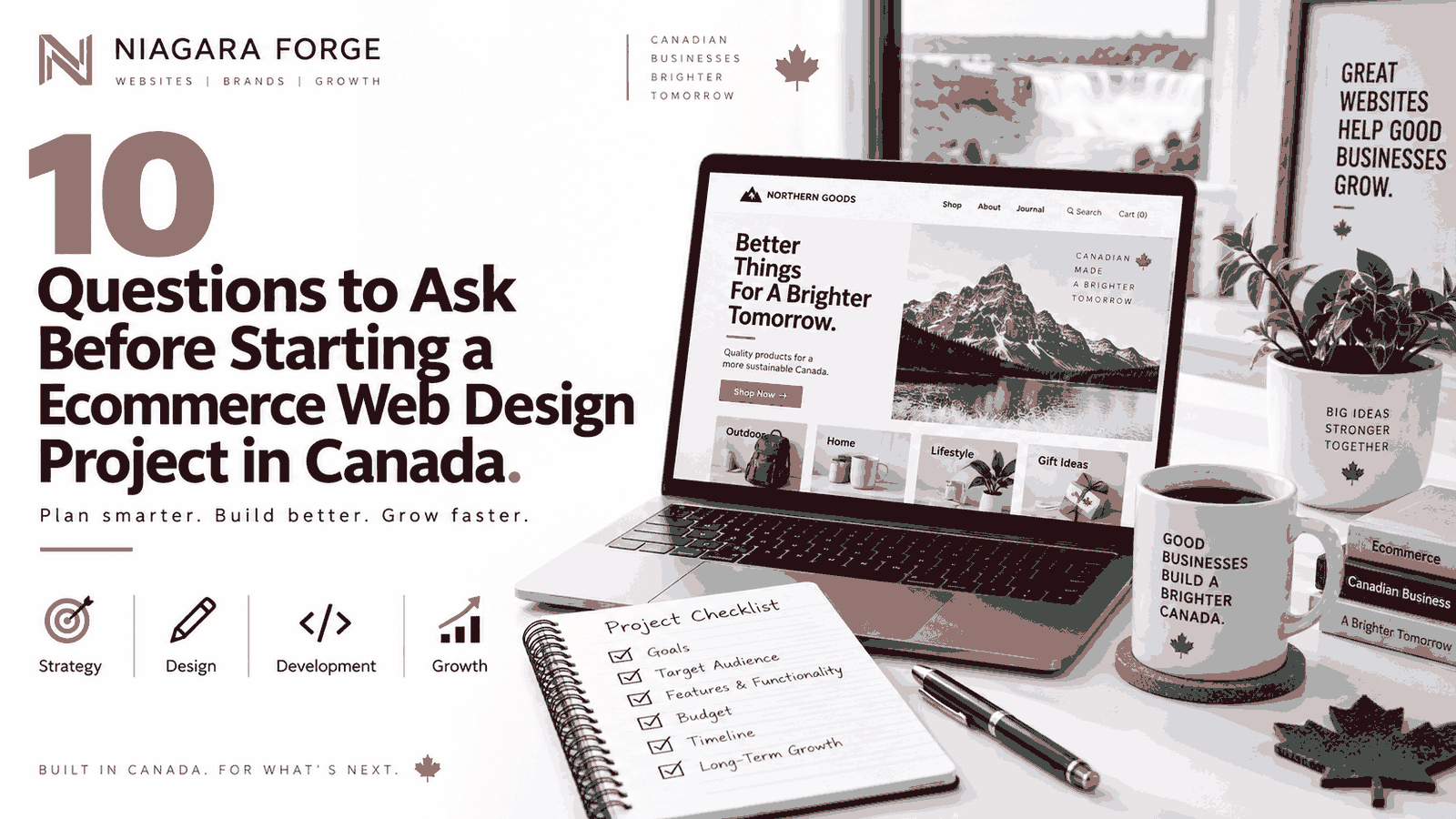
10 Questions to Ask Before Starting a Web Design Company Project in Canada


1. What Is Your Experience with Canadian Businesses and Markets?
Before you commit to a web design partner, you need to know whether they truly understand the Canadian landscape—not just the geography, but the culture, language laws, and regional buying habits. A website that works for a U.S. audience or a generic global market often misses subtle cues that Canadian users notice immediately. This question is your first filter to separate agencies that treat Canada as an afterthought from those who build with Canadian context baked into every decision.
Why Canadian Market Knowledge Matters
Canada is not a monolithic market. A consumer in Vancouver has different expectations than one in Halifax, and a business in Montreal operates under distinct linguistic and legal requirements. The most obvious factor is bilingualism: the Official Languages Act and Quebec’s Charter of the French Language (Bill 101) mean that many projects require full French-language versions, not just translated text but culturally adapted imagery, tone, and navigation. Beyond language, consider regional nuances like payment preferences (Interac, Visa Debit, or PayPal), shipping expectations for remote communities, and seasonal timing tied to Canadian holidays like Victoria Day or Canada Day. An agency with local experience knows that a call-to-action like “Order now” may underperform compared to “Get it delivered across Canada” when your audience includes rural or northern customers. They also understand that Canadian privacy laws (PIPEDA) affect how you collect email addresses or use analytics cookies—something a foreign agency might overlook entirely.
How to Evaluate Their Portfolio for Canadian Relevance
Don’t just ask if they have Canadian clients—ask to see specific examples. Look for these markers in their portfolio:
- Bilingual or French-first builds: Do they show real French-language sites with proper typography, longer text expansion, and Quebec-specific idioms? Or do they just add a language toggle?
- Regional references: Check for local landmarks, weather-appropriate imagery (e.g., winter coats vs. beach scenes), or Canadian spelling (colour, centre, cheque).
- Localized trust signals: Do their sample sites include Canadian phone numbers, postal codes (not ZIP codes), or mentions of Canadian provinces and territories?
- E-commerce details: Look for HST/GST/PST calculations, Canadian shipping carriers (Canada Post, Purolator), and bilingual checkout flows.
If their portfolio is dominated by U.S. or European projects, ask them directly how they adapt their process for Canada. A strong agency will walk you through their research phase, including competitor audits of Canadian businesses, user testing with Canadian participants, and compliance checks with provincial consumer protection laws.
Questions to Probe Their Local Experience
Go beyond the surface level. Use these follow-up probes to test their depth:
- “Can you describe a project where you had to adjust your design strategy for a specific Canadian province or territory? What changed?”
- “How do you handle French-language content for Quebec versus other francophone regions like New Brunswick or Ontario? Do you use different translators or copywriters?”
- “What Canadian-specific legal or accessibility requirements do you typically address in your contracts (e.g., AODA for Ontario, Web Content Accessibility Guidelines under provincial laws)?”
- “How do you research Canadian search behavior—do you use Canadian keyword tools, Google.ca data, or local SEO experts?”
- “If we serve both English and French users, how do you ensure that navigation labels and buttons work naturally in both languages without breaking the layout?”
Listen for specifics, not generic answers like “we have a global mindset.” A genuine local expert will mention real examples, such as adjusting a checkout form to include the “Province” dropdown with all 13 provinces and territories, or designing a hero image that doesn’t feature American flags or U.S. currency. They will also ask you about your target regions, which is a positive sign that they treat Canadian market knowledge as a discovery process, not a checkbox. If they stumble on basic questions about bilingual routing or regional shipping, treat that as a red flag—your website will carry those gaps into every user interaction. Ultimately, this question saves you from a costly redesign later, because fixing a website that feels “off” to Canadian users is far more expensive than choosing the right agency from day one.
2. Who Will Be My Primary Point of Contact and Project Manager?
Before signing a contract with a Canadian web design agency, you must know exactly who you will speak with on a daily basis—and who holds the authority to make decisions. Many projects stall because clients assume the salesperson who pitched them will remain involved, only to discover that person has moved on to new leads. Clarifying the communication structure upfront prevents miscommunication, duplicate work, and costly delays. This question is not about being difficult; it is about protecting your timeline and budget.
Understanding the Team Structure
Ask for an organizational chart of your project team, even if it is informal. You need to know whether you are working with an in-house designer, a freelance contractor, or a subcontracted developer. In Canada, many agencies use a hybrid model—core staff manage strategy while outsourced specialists handle coding or illustration. Request the names and roles of:
- The project manager (PM) who coordinates tasks and updates.
- The lead designer responsible for visual concepts.
- The developer who writes the actual code and integrations.
- The content strategist or copywriter, if applicable.
If the agency cannot name a dedicated PM—or says “everyone will be in touch”—treat that as a red flag. A single accountable person is non-negotiable for a smooth workflow. Also ask whether the PM is a full-time employee or a contractor, as this affects their availability for meetings in your time zone, particularly across provinces like Ontario and British Columbia.
Communication Cadence and Tools
Define the rhythm of updates before the project begins. A typical Canadian web project runs 8–12 weeks, and weekly check-ins are standard. However, you should agree on the following specifics:
| Cadence | Typical Use | Recommended Tool |
|---|---|---|
| Daily (15 min) | Quick blockers or urgent fixes | Slack or Microsoft Teams |
| Weekly (30–60 min) | Review progress, approve deliverables | Zoom or Google Meet |
| Asynchronous | Task tracking, file comments | ClickUp, Asana, or Trello |
Ask for a written communication plan that includes response time expectations. For example, the PM should reply to emails within one business day, and urgent issues should be flagged via a dedicated channel. Also confirm whether the agency uses a shared project dashboard where you can see task statuses without asking for updates. If they rely solely on email threads, you will spend hours hunting for decisions.
Escalation Paths for Issues
Even the best teams hit roadblocks—a developer falls ill, a third-party API fails, or a stakeholder changes scope mid-project. Knowing the escalation path in advance saves you from panic. Ask:
- Who do I contact if the PM is unresponsive for more than 48 hours?
- Is there a senior director or account owner who can step in?
- What is the formal process for raising a complaint or requesting a change in personnel?
For example, a practical escalation might look like this: you send a flagged message to the PM, then wait four business hours. If no reply, you email the agency’s operations manager and copy the original sales contact. The agency should provide this path in writing, not just verbally. Additionally, ask how disputes over scope are handled—will the PM have authority to approve small changes (e.g., under $500) without a full contract amendment? This clarity prevents “he said, she said” situations and keeps the project moving. Ultimately, a transparent escalation structure demonstrates that the agency values accountability over defensiveness.
3. What Does Your Web Design Process Look Like from Start to Finish?
A transparent, well-defined process is the single most reliable indicator of a professional web design company. When an agency can articulate each phase of their workflow—without vague jargon—you gain clarity on timelines, deliverables, and who is responsible for what. This prevents scope creep, budget surprises, and the dreaded “we thought you were handling that” conversations. In Canada, where project timelines often span multiple time zones and provinces, a structured process also ensures consistent communication. Below is what a mature, Canadian-focused web design process should include, broken into three critical phases.
Discovery and Strategy Phase
This is the foundation of your entire project. A reputable agency will not write a single line of code or open a design tool until this phase is complete. Expect the following activities:
- Stakeholder interviews: They will meet with your team (and possibly your customers) to understand business goals, user pain points, and competitive positioning.
- Audit and research: Review of your existing website, analytics, and SEO health, plus an analysis of Canadian-specific market nuances (e.g., bilingual requirements, regional compliance like PIPEDA).
- Deliverables: A documented strategy including sitemap, user flows, content inventory, and a technical requirements checklist. You should receive a written project brief that both parties sign off on.
Ask specifically: “Who from your team will conduct the discovery, and how many hours are allocated to it?” If they cannot name a dedicated strategist or project manager, treat that as a red flag.
Design and Development Iterations
Once strategy is approved, the agency moves into iterative creation. This phase is not linear; it involves cycles of feedback and refinement. A clear process here includes:
- Wireframes first: Low-fidelity layouts that focus on structure and hierarchy, not colors or fonts. This avoids early arguments about aesthetics.
- Visual design mockups: High-fidelity designs for key pages (home, product, contact) presented in a shared tool (e.g., Figma) for real-time commenting.
- Sprint-based development: Coding is done in weekly or bi-weekly sprints, with a staging link you can view at any time. You should never be left in the dark for more than five business days.
- Content integration: The agency should provide a content matrix showing exactly what copy, images, and videos are needed from you—and by which date. Delays here are the #1 cause of missed launch dates.
Testing, Launch, and Post-Launch Support
Launch day is not the finish line. A rigorous process includes a dedicated testing window and a clear post-launch plan. The table below compares a basic vs. comprehensive approach to this final phase:
| Activity | Basic Approach | Comprehensive Approach |
|---|---|---|
| Browser & device testing | Manual checks on Chrome and Safari only | Automated + manual testing across 10+ browser/device combinations, including mobile-first viewports |
| Performance & accessibility | Page speed check via a free tool | Core Web Vitals optimization, WCAG 2.1 AA compliance audit, and load testing under Canadian traffic spikes |
| Post-launch support window | 30 days of bug fixes (with exclusions) | 90 days of bug fixes + a dedicated support channel (Slack/email) and a documented handover session for your team |
When interviewing agencies, ask for a written timeline that includes buffer days for feedback delays. Also confirm who handles post-launch analytics setup, 404 redirects, and server-side monitoring. A process that ends at “we hit publish” is not a process—it is a handoff. The best Canadian agencies treat post-launch as a partnership, offering clear service-level agreements (SLAs) for response times and a roadmap for future iterations. If the agency cannot show you a sample process document from a past project, move on to the next candidate. Transparency here is non-negotiable.
4. How Do You Handle Content Strategy and SEO for Canadian Audiences?
Your website’s design is only half the battle. If it doesn’t rank on Google.ca or resonate with visitors from Vancouver to Halifax, it won’t generate leads. This question separates web design companies that treat SEO as an afterthought from those that build it into every wireframe and content block. In Canada, you face unique challenges: bilingual search intent in Quebec, regional terminology (e.g., “hydro bill” vs. “electricity bill”), and fierce competition from US-based sites. A strong answer will show that the agency understands local search nuances, not just generic SEO tactics.
Incorporating Keywords and Local SEO
Ask for concrete examples of how they research keywords for Canadian audiences. A competent firm will use tools like Google Keyword Planner with a geo-location filter for Canada, then map those terms to specific pages. They should also discuss local SEO elements such as:
- Setting up and optimizing a Google Business Profile with Canadian NAP (Name, Address, Phone) consistency.
- Building location-specific landing pages for each city you serve (e.g., “Web design in Calgary” vs. “Web design in Toronto”).
- Using hreflang tags if you target both English and French Canada, ensuring the correct language version appears in search results.
- Incorporating Canadian spelling (e.g., “colour,” “centre,” “organise”) naturally into copy—not forcing it, but matching user search behaviour.
For technical SEO, they should mention schema markup for local businesses. A practical example of what they might implement in your site’s backend:
<script type="application/ld+json">
{
  "@context": "https://schema.org",
  "@type": "ProfessionalService",
  "name": "Your Company Name",
  "areaServed": "CA",
  "address": {
    "@type": "PostalAddress",
    "addressLocality": "Toronto",
    "addressRegion": "ON",
    "postalCode": "M5V 2T6",
    "addressCountry": "CA"
  }
}
</script>
This code tells search engines you operate in Canada, improving your chances of appearing in local map packs.
Content Creation and Migration Services
Your current website likely has existing blog posts, service pages, and product descriptions. A critical part of this question is understanding their process for handling that content. Do they offer to write fresh, Canada-specific copy, or do they expect you to supply it? If they do write, ask about their process for:
- Auditing existing content for accuracy, outdated statistics (e.g., Canadian tax rates), or broken links.
- Rewriting for Canadian relevance—for example, replacing US-centric examples with Canadian case studies, using metric measurements, and referencing provincial regulations.
- 301 redirects during migration to avoid losing search equity. A sloppy migration can drop your rankings for months.
- Content hierarchy—ensuring your most important service pages get the most internal links and keyword focus.
If they don’t provide content creation, ask for a list of recommended Canadian copywriters they partner with. Their design should include content templates that guide your writing toward SEO best practices, such as proper header structure and meta description length.
Measuring SEO Success Post-Launch
Finally, you need to know how they’ll prove their work is effective. Avoid vague promises like “we’ll get you to page one.” Instead, demand a clear reporting framework. They should provide:
| Metric | Why It Matters for Canadian Audiences | Reporting Frequency |
|---|---|---|
| Organic traffic from Canada (geo-filtered) | Shows whether you’re actually reaching Canadian users, not just global clicks. | Monthly |
| Keyword rankings for Canadian-specific terms | Tracks progress on terms like “Toronto web developer” or “Canadian e-commerce agency.” | Bi-weekly |
| Conversion rate by province | Identifies which regions respond best to your content and design. | Quarterly |
| Bounce rate on local landing pages | High bounce may indicate content doesn’t match Canadian user intent. | Monthly |
Also ask who owns the SEO data and analytics accounts. You should have full access to Google Analytics and Search Console from day one. If they hesitate to hand over credentials, that’s a red flag. A reputable agency will set up proper tracking for Canadian locations, including geolocation filters, and schedule a 30-day post-launch review to adjust strategy based on early performance data.
5. What Is the Full Cost Breakdown and Are There Any Hidden Fees?
Budget transparency is the cornerstone of a successful web design partnership. In Canada, where project costs can vary significantly between provinces and agency types, a vague estimate is a red flag. You need a detailed, line-item quote that covers every phase of the project—from initial discovery to post-launch support. Without this, you risk encountering unexpected charges for essential features, third-party tools, or even basic revisions. A clear cost breakdown not only protects your cash flow but also sets realistic expectations for both you and the design team.
Understanding Pricing Models (Fixed vs. Hourly)
Before you compare quotes, understand the two primary pricing structures used by Canadian web design firms. Each has distinct advantages and risks depending on your project’s scope.
- Fixed-Price (Project-Based): You agree on a total cost for a defined scope of work. This is ideal for projects with clear deliverables, such as a 10-page marketing site with standard features. The benefit is predictability—you know the final bill upfront. The risk is that any change request (e.g., adding a blog or a custom animation) will trigger a “change order” with an additional cost. Always ask how change requests are priced before signing.
- Hourly or Time & Materials: You pay for the actual hours worked, often at a blended rate (e.g., $95–$150/hour for senior designers in Toronto or Vancouver). This model suits projects with evolving requirements or ongoing retainer work. While flexible, it makes cost forecasting harder. Ask for a capped estimate or weekly time reports so you don’t get a surprise invoice at the end of the month.
Many Canadian agencies offer a hybrid: a fixed price for the core build, plus an hourly rate for post-launch changes. Clarify which model applies and what triggers a shift from one to the other.
What’s Included in the Proposal
A professional proposal should be your financial map. Do not accept a single lump sum. Instead, require that the quote explicitly lists the following components:
- Discovery & Strategy: Includes stakeholder interviews, competitor analysis, sitemap, and content audit. This is often 10–15% of the total budget.
- UI/UX Design: Wireframes, high-fidelity mockups, and interactive prototypes. Confirm how many design revision rounds are included (typically 2–3).
- Development: Front-end and back-end coding, CMS setup, and basic on-page SEO (meta tags, alt text).
- Quality Assurance (QA): Testing across browsers (Chrome, Safari, Firefox) and devices (mobile, tablet, desktop). Ask if load testing and accessibility checks (WCAG 2.1 AA) are included.
- Launch & Training: Deployment to your hosting, domain setup, and a 1-hour training session for your team.
If any of these items are missing, ask why. For example, “Does the quote include a 404 error page and a custom thank-you page?” If not, that’s a potential hidden cost.
Potential Additional Costs (Plugins, Licenses, Maintenance)
Hidden fees rarely come from the agency’s hourly rate—they come from third-party dependencies. In Canada, common “extras” include the following:
| Item | Typical Annual Cost (CAD) | Why It’s Often Overlooked |
|---|---|---|
| Premium WordPress plugins (e.g., WPForms, Slider Revolution) | $100–$500 per plugin | Free plugins may not meet your security or feature needs; premium versions have recurring license fees. |
| Stock photo subscriptions (e.g., Shutterstock, Adobe Stock) | $200–$800 | Your agency may use placeholder images; you must pay for final licensed assets. |
| SSL certificate (if not free via Let’s Encrypt) | $50–$150 | Some hosts include it free; others charge annually. Confirm who buys and renews it. |
| Annual maintenance & security updates | $600–$2,000 | Many agencies exclude post-launch updates from the build quote. Ask for a separate retainer. |
| Google Analytics 4 or Tag Manager setup | $200–$500 (one-time) | Basic setup is often free, but advanced event tracking (e.g., form submissions) may be billed extra. |
Finally, ask about hosting costs. In Canada, managed WordPress hosting from providers like WP Engine or Canadian-based firms such as Kinsta ranges from $300 to $1,200 per year. The agency may resell this at a markup, or you may pay directly. Always request that the quote separates agency fees from third-party costs, and ask for a written guarantee that no additional charges will be added without your written approval. This single question can save you thousands of dollars and prevent project delays.
6. How Will You Ensure the Website Is Accessible and Inclusive?
In Canada, digital accessibility is not just a moral imperative—it is increasingly a legal one. Provinces like Ontario (under the Accessibility for Ontarians with Disabilities Act, or AODA) and Quebec (under its own standards) have enforceable requirements, while federal entities must follow the Accessible Canada Act. Beyond compliance, an accessible website expands your market reach to the over 6 million Canadians living with a disability, improves SEO, and enhances usability for every visitor. Asking this question early separates agencies that treat accessibility as a checkbox from those that embed it into their design and development process. A credible partner should answer with specifics, not platitudes, and demonstrate a working knowledge of WCAG 2.1 AA standards as the baseline.
Compliance with Canadian Accessibility Laws
Your web design partner should clearly articulate how they map their process to Canadian legal frameworks. For instance, if your business operates in Ontario and has 50+ employees, your website must conform to AODA’s Web Content Accessibility Guidelines (WCAG 2.0 AA) as of January 2021—but many experts now recommend WCAG 2.1 AA for better mobile and cognitive support. Ask whether they have experience with provincial audits or federal requirements under the Accessible Canada Act for regulated sectors like banking, telecommunications, or transportation. A strong agency will also mention that accessibility is a continuous obligation, not a launch-day fix, and will schedule periodic reviews to keep pace with legal updates (e.g., the upcoming European Accessibility Act influence on global standards). They should be able to name the specific standard they code against and provide a written compliance roadmap.
Designing for Diverse Abilities
Inclusive design goes far beyond adding alt text or increasing contrast ratios. The agency should discuss how they handle a spectrum of user needs—permanent, temporary, and situational disabilities. For example, a user with a broken arm may rely on keyboard-only navigation, while someone with low vision uses screen magnifiers, and a person with a vestibular disorder needs reduced motion options. Ask how they approach color choice (avoiding red-green reliance), typography (legible font sizes and line spacing), and interactive elements (large touch targets for motor impairments). They should also consider cognitive load by simplifying forms, providing clear error messages, and using plain language. A practical example of their commitment might be a code snippet they use for focus states—ensuring keyboard users see a visible outline when tabbing through menus. Here is a minimal CSS example they should recognize as foundational:
:focus-visible {
  outline: 3px solid #005fcc;
  outline-offset: 2px;
}
This single rule guarantees that every interactive element—from buttons to form fields—is visually identifiable for keyboard and screen reader users, a non-negotiable baseline.
Testing and Validation Methods
Accessibility cannot be verified by automated tools alone. A competent agency will describe a multi-layered testing strategy that includes:
- Automated scans using tools like axe or WAVE to catch common issues (missing alt attributes, low contrast, improper heading order).
- Manual keyboard testing to ensure all functionality is reachable without a mouse, including dropdowns, modals, and carousels.
- Screen reader testing with NVDA (Windows) and VoiceOver (macOS/iOS) to validate semantic landmarks, ARIA labels, and form instructions.
- Real-user testing with individuals who have disabilities—not just simulated personas—to uncover contextual barriers that software cannot detect.
Ask for a sample accessibility audit report from a past project. It should list specific WCAG success criteria (e.g., 1.4.3 Contrast Minimum, 2.4.7 Focus Visible) and show how each was remediated. Also inquire about their validation timeline: do they test during development sprints or only at the end? The best answer is continuous testing, with a final independent audit before launch. Finally, ensure they commit to post-launch monitoring—accessibility regressions happen with every new plugin or content update, so a maintenance retainer that includes periodic re-testing is a sign of genuine accountability. If an agency hesitates on any of these points, treat it as a red flag and move on to a partner who treats accessibility as a core feature, not an add-on.
7. Can You Provide References or Case Studies from Canadian Clients?
Social proof is the most reliable shortcut to truth in web design. A portfolio shows finished work, but references and case studies reveal the messy middle—how the agency handled deadlines, budget changes, and feedback loops. For a Canadian project, this step carries extra weight. You need to confirm they understand local market nuances, from bilingual content requirements to provincial privacy laws (like PIPA in British Columbia or Quebec’s Law 25). Ask for at least two references from companies in your industry or with a similar project scope. If they hesitate or offer only vague testimonials, treat that as a red flag. A credible agency will happily connect you with past clients who can speak to their process, communication style, and post-launch support.
What to Ask References
When you get a reference’s contact details, prepare specific questions—not generic “were they good?” queries. Focus on measurable behaviors and outcomes. Here is a practical list to guide your conversation:
- How did the agency handle scope changes or unexpected technical issues mid-project?
- Did they meet the original timeline and budget? If not, what caused the deviation?
- How responsive were they during the design revision rounds? Did they push back with reasoning or just comply?
- What was their approach to content migration or SEO setup for your existing pages?
- Did they provide training for your team on updating the site after launch?
- Were there any hidden costs—like plugin licenses, hosting fees, or third-party integrations—that appeared later?
- Would you hire them again for a second project? Why or why not?
Take notes during the call. Listen for patterns: if two references mention slow email responses, that is likely a recurring issue. Also, ask about the agency’s familiarity with Canadian web standards, such as accessibility (WCAG 2.1) or compliance with Canadian Anti-Spam Legislation (CASL) for forms and newsletters.
Analyzing Case Study Metrics
Case studies are only useful if they include numbers you can verify. A polished PDF with pretty screenshots tells you nothing. Demand metrics that align with your business goals. For example, if you run an e-commerce site, look for data on load time improvements, conversion rate changes, or average order value growth. If you are a service-based business, ask for organic traffic growth, lead form submissions, or bounce rate reductions. Here is a table of metrics to request and why they matter:
| Metric Type | Example Question | What It Reveals |
|---|---|---|
| Performance | “Did page load speed improve by more than 20%?” | Technical competence and attention to Core Web Vitals |
| SEO | “What was the organic traffic change 6 months post-launch?” | Whether they build with search visibility in mind |
| Conversion | “How did the new design affect form submissions or purchases?” | Design effectiveness, not just aesthetics |
| Maintenance | “How many support tickets were filed in the first quarter?” | Quality of testing and post-launch stability |
| Localization | “Did they handle French/English translation and hreflang tags correctly?” | Canadian market expertise |
Be wary of case studies that only show “before and after” screenshots without dates or context. A real case study will state the project duration, the client’s original problem, and the specific tools used (e.g., WordPress, Shopify, or custom Laravel). If the agency cannot provide a clear methodology for measuring success, they may not track results at all.
Checking Online Reviews and Testimonials
Online reviews are useful for spotting red flags, but they are not a substitute for direct references. Start with Google Business Profile and Clutch.co, which are common for Canadian agencies. Look for reviews that mention specific project details—like “they fixed our broken checkout flow” or “their team responded to our Calgary office’s needs.” Generic praise (“great guys, highly recommend”) is low-value. Also, check the agency’s response to negative reviews. A defensive or dismissive reply tells you how they handle criticism. For Canadian-specific insight, search for mentions of “Canadian web design” in local business directories like the Better Business Bureau (BBB) or provincial tech association listings. Pay attention to review dates: a cluster of recent 5-star reviews after a period of silence may indicate incentivized feedback. Cross-reference any testimonial on their website with the reviewer’s LinkedIn profile or company email domain. If you cannot verify the person exists, assume it is fabricated. Finally, ask the agency directly for a list of Canadian clients you can contact outside of their provided references—this shows they have nothing to hide about their local track record.
8. How Do You Handle Revisions and Feedback During the Project?
Before you sign a contract with a Canadian web design company, you need to understand exactly how changes to your project will be managed. Without a clear revision policy, you risk facing unexpected fees, delayed timelines, or a final product that misses your expectations. A transparent process for feedback and changes protects both you and the design team, ensuring that the project stays on budget and on schedule. Here are the three critical components to clarify before your project begins.
Number of Revision Rounds
Most professional web design firms in Canada include a set number of revision rounds in their proposals. A revision round typically means a complete cycle of feedback on a specific deliverable—such as the homepage mockup or the full site design—followed by the designer’s updated version. The industry standard for a mid-range website project is two to three revision rounds per key deliverable. However, this varies widely: some agencies offer unlimited revisions for a fixed price, while others charge an hourly rate for any change beyond the included rounds.
You should ask for the number of revision rounds in writing, and also confirm whether that number applies to each page, to the entire design phase, or to every stage (wireframes, visual design, and development). Be aware that a “round” is not a single comment—it is a full set of feedback on the entire deliverable. If you send feedback piecemeal, you may burn through your rounds quickly. To avoid surprises, request a clear breakdown in your contract, for example:
- Wireframes: 2 rounds included
- Visual design (homepage + 5 internal templates): 3 rounds included
- Development preview (on staging site): 2 rounds included
Feedback Collection and Approval Workflow
How you submit feedback is just as important as how many rounds you get. A structured workflow prevents miscommunication and keeps the project moving. Reputable Canadian web design companies will use a project management tool (like Asana, Trello, or a dedicated client portal) or a collaborative design tool (like Figma or InVision) where you can leave comments directly on the design. Others may ask for feedback consolidated into a single document or email, which is less efficient but still workable.
Ask the company these specific questions about their workflow:
- Do you provide a single point of contact (e.g., a project manager) to receive all feedback?
- Is feedback collected in writing, or do you schedule a live review call after each deliverable?
- What is the typical turnaround time for implementing a round of revisions (e.g., 3–5 business days)?
- Do you require a formal sign-off (e.g., written approval) before moving to the next phase?
Having a clear approval workflow is especially important in Canada, where many projects involve stakeholders across different time zones. A structured process—such as a 48-hour window for internal review after each deliverable—ensures that all decision-makers have time to contribute without stalling the project.
Handling Scope Creep
Scope creep occurs when additional requests—such as a new page type, a custom animation, or a third-party integration—are added after the project has begun. These changes are not “revisions” in the traditional sense; they are new features that require additional design and development work. A reliable web design company will have a formal change request process. This typically involves you submitting a written description of the new request, the company providing a fixed quote and a revised timeline, and both parties signing off before any work begins.
Be cautious of any firm that claims “unlimited revisions” without defining the boundary between a revision and a new feature. For example, changing the color scheme is a revision, but adding a multi-step booking form is a new feature. To protect yourself, ask the company to define in your contract what constitutes a revision (e.g., adjusting layout, text, or color) versus a new feature (e.g., adding functionality or new pages). A good agency will also flag potential scope creep early, rather than silently absorbing extra work or surprising you with a final invoice.
| Revision Aspect | Typical Inclusions | Potential Extra Cost |
|---|---|---|
| Number of rounds | 2–3 rounds per deliverable (wireframes, design, development) | Hourly rate or per-round fee (e.g., $150–$300 per round) |
| Feedback method | Comments in Figma/InVision, consolidated email, or PM tool | Live review calls beyond 30 minutes per round |
| Scope changes | Minor text or color adjustments within included rounds | New features or pages quoted separately |
| Approval deadline | 48–72 hours per deliverable | Project delay fees or rescheduling costs |
By asking these three targeted questions—revision rounds, feedback workflow, and scope creep handling—you will enter your Canadian web design project with confidence. A transparent revision policy is not a sign of a rigid agency; it is a sign of a professional one that values clear communication and fair pricing. Ultimately, the goal is to ensure that your feedback is heard, your budget is respected, and your final website aligns with your vision without hidden friction.
9. What Is Your Timeline and How Do You Manage Delays?
Timelines are not just a convenience; they are a critical component of your business planning. Whether you are coordinating a product launch, aligning with a seasonal campaign, or replacing an outdated system, knowing exactly when your new website will go live—and how the agency handles the unexpected—can make or break your project’s success. In Canada, where business seasons can be tightly tied to events like the holiday retail rush or fiscal year-end, a missed deadline has real financial consequences. Before you sign a contract, you need a clear, honest answer about scheduling and, just as importantly, about the process when things go wrong.
Typical Project Duration
Most Canadian web design agencies will provide a range, not a single date. For a standard marketing website (5 to 10 pages, basic CMS, no complex integrations), expect a timeline of 6 to 10 weeks. For a larger e-commerce build or a custom web application, plan for 12 to 20 weeks or more. Be wary of any agency that promises a fixed date without first understanding your content readiness, approval speed, and third-party dependencies (like your hosting provider or payment gateway). Ask them to break down the duration into phases—discovery, design, development, content migration, and testing—so you can see where the weeks actually go. A realistic agency will also factor in Canadian statutory holidays (e.g., Canada Day, Thanksgiving) and typical summer vacation slowdowns, which can extend a project by a week or two.
Milestones and Checkpoints
A timeline without milestones is just a wish. Insist on a written schedule that includes at least four major checkpoints:
- Discovery & Strategy sign-off – after initial research and sitemap approval.
- Design mockup approval – usually for the homepage and one inner page template.
- Development completion – when all features are built and content is placed.
- Final QA and launch – including cross-browser testing and staging review.
Each milestone should have a clear deliverable, a review window (typically 3–5 business days for your feedback), and a named person responsible for moving it forward. If the agency cannot name a project manager or provide a shared tracking tool (e.g., Asana, Trello, or a simple Gantt chart), that is a red flag. For a practical example of how a milestone might be verified, consider a simple automated check for your staging site before launch:
curl -I https://staging.yourproject.ca | grep "HTTP/"This command checks that the staging server responds with a 200 OK status, confirming the site is publicly reachable before you schedule the final launch call.
Contingency Plans for Setbacks
Even the best-planned projects hit snags—a plugin incompatibility, a delayed client approval, or a sudden illness of a key developer. What matters is the protocol. Ask directly: “What happens if you miss a milestone?” A professional agency will have a written change-order process that distinguishes between delays you cause (e.g., late content) and delays they cause (e.g., server errors). For their own errors, they should offer to add resources, work overtime at no cost, or reduce the final invoice proportionally. For your delays, they should have a clear policy on how many revision rounds are included before additional charges apply. Also ask about their communication cadence during a setback—do they send a formal status update within 24 hours, or do you have to chase them? Finally, request a named backup person for every role (designer, developer, project manager). If the lead developer leaves mid-project, you need to know that a handover plan exists, not just a promise to “figure it out.” A strong contingency plan also includes a buffer of 5–10% of the total timeline built into the schedule, so small hiccups do not automatically push your launch date.
10. What Post-Launch Support and Maintenance Do You Offer?
Launching your website is not the finish line; it is the starting point of its lifecycle. In Canada, where digital expectations are high and cybersecurity threats are constant, a website that goes unmaintained can quickly become a liability. Before you sign a contract, clarify exactly what happens after the launch celebration ends. A reputable web design company will offer a structured support framework, not just an email address that may go unanswered. You need to know who to contact, how quickly they respond, and what is included in the base price versus what costs extra.
Support Plans and Response Times
Ask for a written breakdown of support tiers. Some agencies bundle a 30-day or 90-day post-launch bug-fix window into the project cost, while others sell ongoing monthly retainers. You must distinguish between critical issues (site down, payment gateway failure) and minor requests (text changes, image swaps). Request a Service Level Agreement (SLA) that specifies:
- Critical response time: For example, 1 business hour during working hours, 4 hours after hours.
- Standard response time: Usually 24 to 48 hours for non-urgent queries.
- Resolution time: How long until the issue is fixed, not just acknowledged.
- Hours of coverage: Is support 24/7, or only 9–5 Eastern Time? If your customers shop at midnight in Vancouver, you need evening coverage.
- Channel of communication: Ticketing system, Slack, phone, or email—pick one that matches your team’s workflow.
Beware of vague promises like “we’re always here.” Get the response times in writing. Also ask about a dedicated account manager: will you speak to the same person each time, or a rotating pool of technicians? Consistency matters for context and efficiency.
Security and Backup Services
Canadian businesses must comply with privacy laws like PIPEDA, which means you are legally responsible for protecting user data. Your web design company should offer proactive security measures, not just reactive fixes. Inquire about:
- Regular security scans: Weekly or daily malware detection, and whether they patch vulnerabilities immediately.
- Core and plugin updates: Who updates your CMS, plugins, and server software? Outdated components are the top entry point for hackers.
- Backup frequency and storage: Daily backups are standard. Ask where backups are stored (offsite, encrypted) and how long they are retained (e.g., 30 days).
- Restoration testing: Do they actually test restoring from a backup, or is it just a scheduled task that might fail? Ask for a quarterly restoration report.
- SSL certificate management: Renewal, installation, and troubleshooting should be included, not an upsell.
If they charge extra for basic security monitoring, reconsider. A secure website is not a luxury; it is the baseline of professional service.
Training for Your Team
You should not be held hostage by your developer every time you want to update a product description. Ask if the post-launch support includes training sessions—live or recorded. A good agency will provide:
- CMS walkthrough: Hands-on training for your content editors, covering pages, blog posts, media uploads, and user permissions.
- Documentation: A custom user guide that explains your specific site structure, not a generic PDF.
- Video tutorials: Short clips for common tasks like adding a team member or changing a banner.
- Admin access policies: Clear instructions on who has admin credentials and how to manage passwords securely.
If training is not offered, ask for a separate quote. Alternatively, negotiate one free hour of training per month for the first three months. After training, you should be able to handle 80% of routine content changes yourself, leaving the agency for complex coding or design work. This reduces your long-term costs and gives your team confidence.
Finally, ask for a sample support contract or a list of current clients who use their maintenance plan. Call one or two references. In Canada, where seasons change rapidly and your business does too, a support plan that adapts to your growth is essential. Get everything in writing, including response times, backup guarantees, and training scope, so there are no surprises six months down the road.
Frequently Asked Questions
Why is it important to ask about web design experience with Canadian businesses?
A web design company familiar with the Canadian market understands local consumer behaviour, bilingual (English/French) considerations, and legal requirements like CASL for email marketing and PIPEDA for privacy. They can ensure your website complies with Canadian regulations and resonates with Canadian audiences. This experience can prevent costly redesigns and legal issues. Always ask for examples of projects they’ve completed for Canadian clients in your industry.
What should I ask about mobile responsiveness in a web design project?
You should ask how they approach mobile-first design, what breakpoints they use, and how they test on real devices. Enquire if they use responsive design or a separate mobile site, and ask to see examples of their mobile versions. Also, ask how they handle performance on slower connections, as mobile users in Canada may have varying speeds. A good agency will prioritize mobile user experience and provide evidence of their mobile design capabilities.
How can I ensure my web design project stays on budget?
Ask for a detailed breakdown of costs, including design, development, content creation, and ongoing maintenance. Enquire about what happens if the scope changes—how change orders are handled and what they might cost. Also, ask about payment milestones and whether there are any hidden fees. A transparent agency will provide a fixed quote or a clear hourly rate and explain the process for handling additional requests.
What should I ask about SEO during the web design process?
Ask if they will conduct keyword research, optimize on-page elements (title tags, meta descriptions, headings), and ensure fast loading times. Enquire about their approach to site architecture, URL structure, and image optimization. Also, ask if they will create an XML sitemap and submit it to Google Search Console. A reputable agency will include basic SEO in the design process and explain how they will help your site rank in Canadian search results.
Why is it important to ask about content management systems (CMS) in a web design project?
Your CMS determines how easily you can update your website. Ask if they recommend WordPress, Shopify, or a custom solution, and why. Enquire about the learning curve and whether they provide training. Also, ask about the ability to add new pages, blog posts, and media. A good agency will choose a CMS that matches your technical skill level and business needs, ensuring you can manage your site without constant developer support.
What should I ask about web design project timelines?
Ask for a realistic timeline with milestones and deadlines. Enquire about what factors could cause delays, such as content approval, third-party integrations, or client feedback. Also, ask how they handle project management and communication (e.g., weekly calls, project management tools). A reliable agency will provide a clear schedule and keep you informed throughout the process, so you can plan your business activities accordingly.
How do I know if a web design company provides good post-launch support?
Ask about their post-launch support package, including response times, availability (e.g., 24/7 or business hours), and what types of issues are covered (bugs, security updates, backups). Enquire about the cost of ongoing maintenance and whether they offer a warranty period after launch. A supportive agency will have a clear support process and be willing to sign a service level agreement (SLA) to ensure your website remains secure and functional.
What questions should I ask about web design accessibility?
Ask if they follow WCAG (Web Content Accessibility Guidelines) and how they test for accessibility. Enquire about features like alt text, keyboard navigation, and screen reader compatibility. Also, ask if they can design for users with visual or motor impairments. In Canada, accessibility is not just good practice but can be a legal requirement under the AODA for Ontario businesses. A professional agency will prioritize inclusive design.
Sources and further reading
- Web Content Accessibility Guidelines (WCAG) 2.1
- PIPEDA – Office of the Privacy Commissioner of Canada
- Accessibility for Ontarians with Disabilities Act (AODA)
- Statistics Canada: Internet use by Canadians
- Google Search Central – SEO Starter Guide
- Shopify – Ecommerce Platform
- WordPress.org – Open Source CMS
- W3C – Mobile Web Best Practices
- Canadian Marketing Association – Code of Ethics
- Industry Canada – Doing Business in Canada
Need help with this topic?
Send us your details and we will contact you.






Comments (3)
Pingback: Small Business Web Design in Vancouver: Strategy, Cost & Process
Pingback: Small Business Web Design Best Practices for Canada
Pingback: Ecommerce Web Design in Edmonton: Strategy, Cost & What to Expect