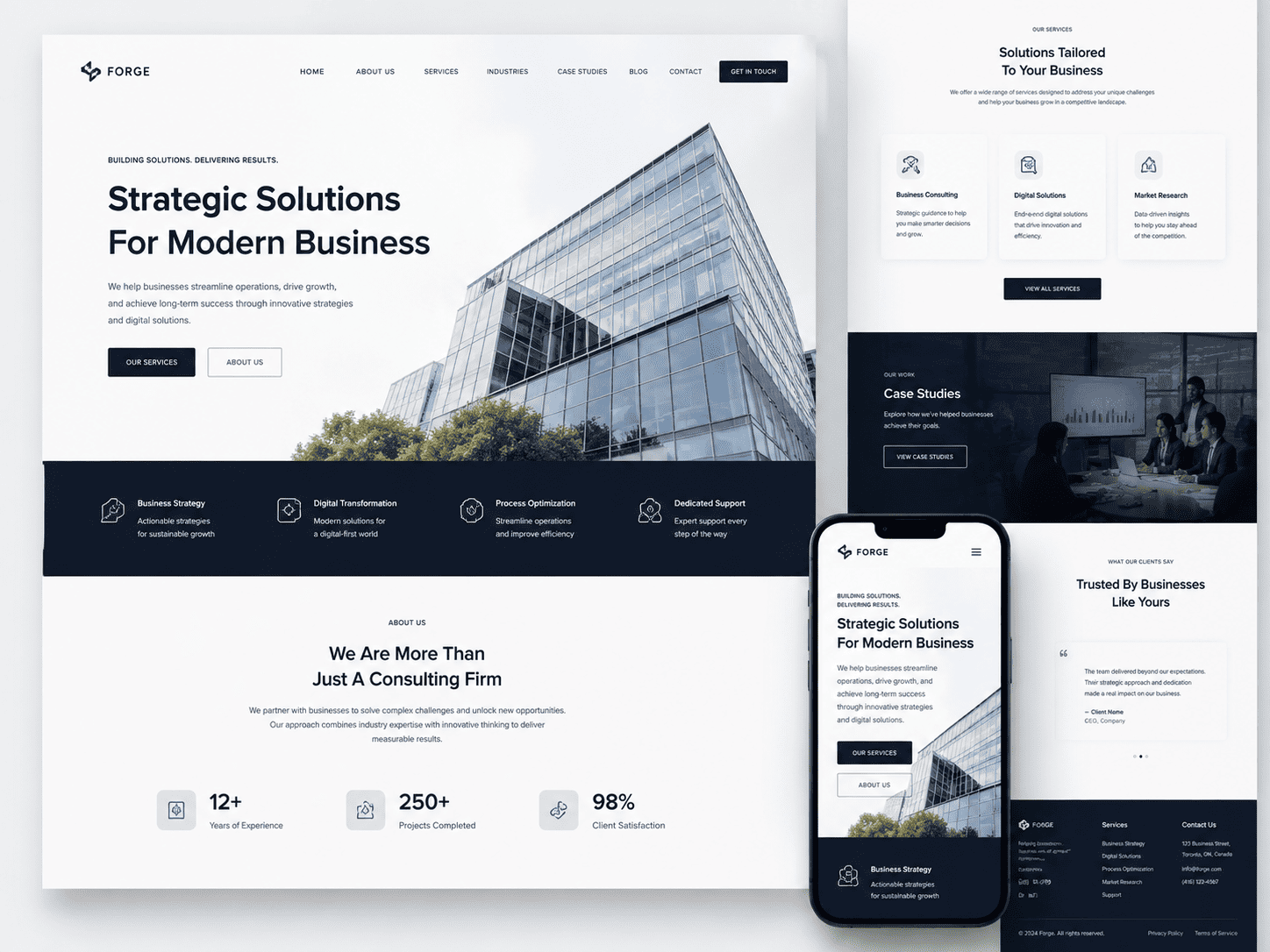
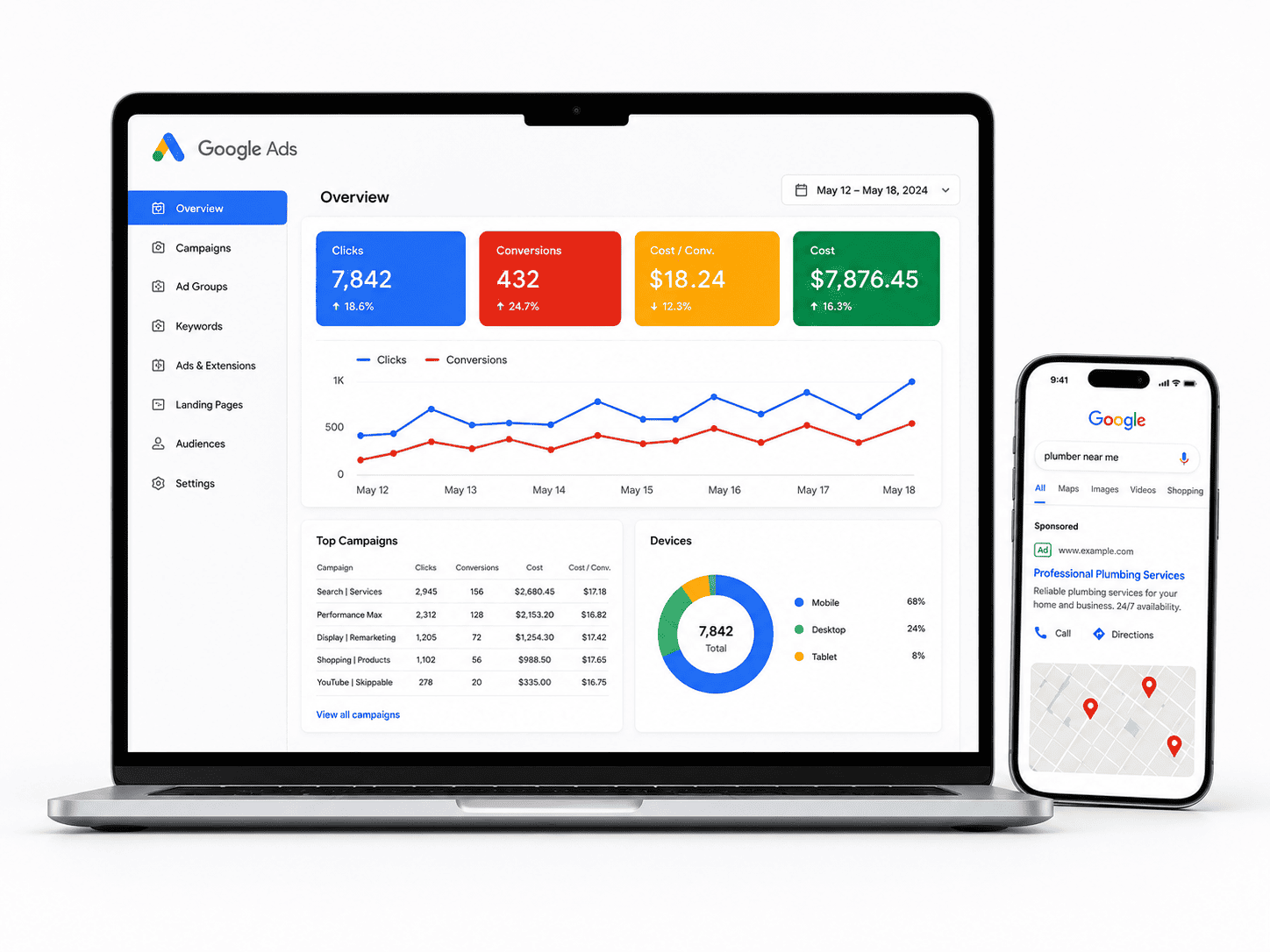

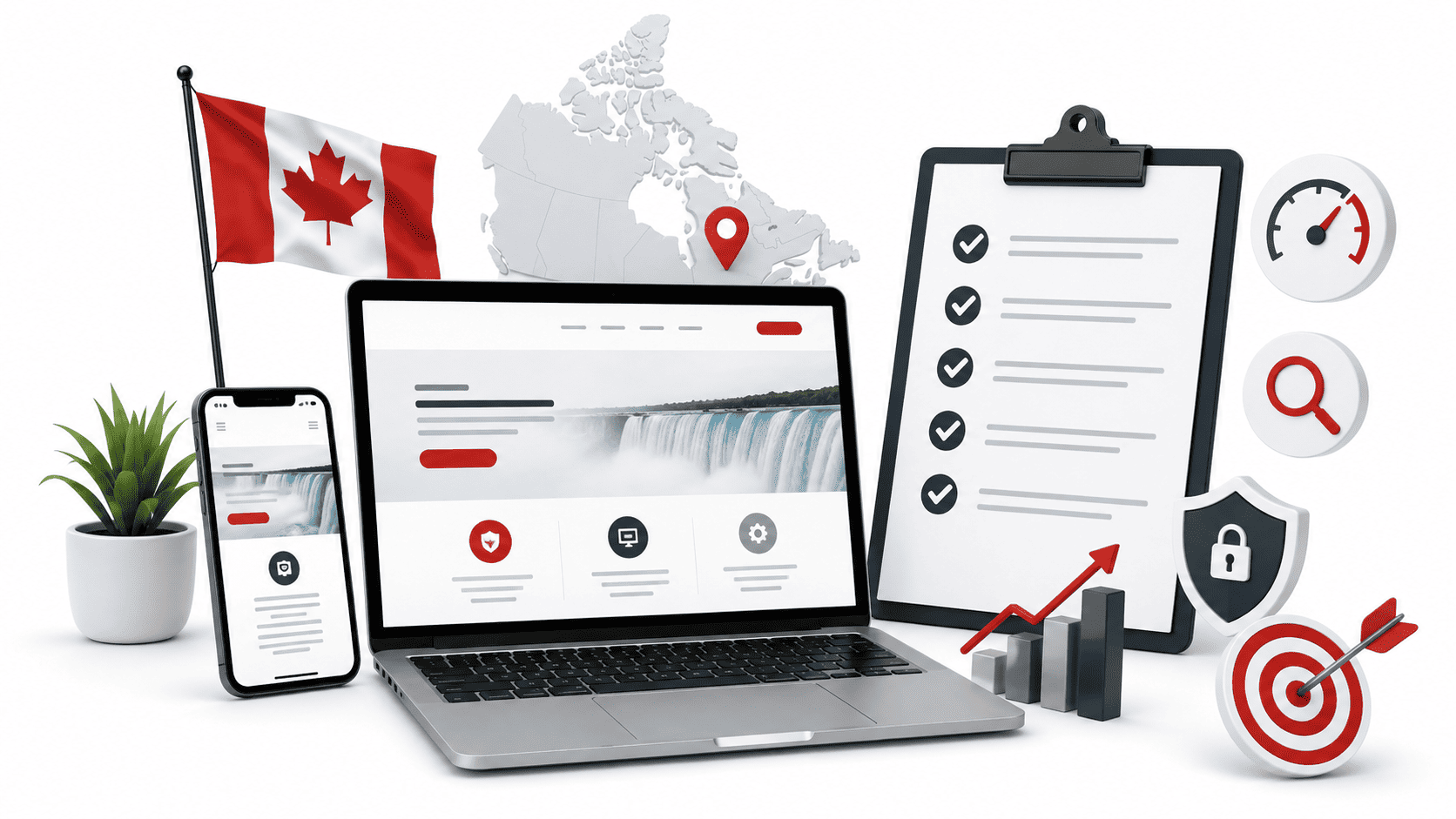
Why Canadian Businesses Need a Specialized Web Design Checklist
Hiring a web design company in Canada is not the same as hiring one in the United States, the United Kingdom, or Australia. Canadian businesses operate within a distinct digital ecosystem shaped by language laws, regional consumer behaviour, and a geographically dispersed market. A generic checklist—pulled from an American blog or an international agency’s sales page—will miss critical requirements that directly impact your revenue, legal compliance, and brand credibility. A specialized Web Design Company Checklist for Canadian Businesses forces you to evaluate vendors against criteria that matter locally, from bilingual navigation to provincial privacy regulations, before you sign a contract.
Understanding Canada’s Digital Landscape and Consumer Expectations
Canadian internet users have unique expectations that stem from the country’s dual-language reality and regional diversity. Over 22% of the population speaks French as their first language, concentrated in Quebec but present in Ontario and New Brunswick. A website that ignores French-language versions or uses machine translation will alienate a substantial segment of your market. Beyond language, Canadian consumers expect websites to reflect local payment methods (Interac, Visa Debit), shipping options that account for vast distances, and transparent handling of taxes like GST, HST, and PST. Provincial regulations add another layer: Quebec’s Law 25 requires strict consent protocols for cookies and data collection, while British Columbia and Alberta have their own privacy frameworks. A web design firm unfamiliar with these nuances may build a site that technically functions but legally fails. Furthermore, Canadian shoppers increasingly favour businesses that demonstrate local relevance—showing Canadian addresses, using Canadian spelling (e.g., “colour,” “centre”), and integrating Canadian social proof. Your checklist must verify that the design company has a proven track record with Canadian clients, not just international portfolios.
The Cost of Choosing the Wrong Web Design Partner
The financial risk of hiring an unsuitable web design company extends far beyond the initial invoice. Consider the hidden costs: a redesign after a failed launch, legal penalties for non-compliance with Canadian privacy laws, lost sales from a website that doesn’t rank in local search results, and the opportunity cost of months spent in a broken project timeline. Many Canadian businesses discover too late that their “affordable” offshore agency delivered a template that cannot be adapted for bilingual content or that their local developer has no experience with the Canadian Anti-Spam Legislation (CASL) requirements for email forms. A poorly chosen partner can also lock you into a proprietary platform that makes future updates expensive, or worse, produce a site with slow load times that fail to meet the expectations of users in rural areas with limited broadband. These mistakes are not theoretical—they happen weekly across Canada. A structured checklist acts as a pre-flight inspection, forcing you to ask about hosting locations (preferably in Canada for latency and data residency), accessibility standards (AODA compliance in Ontario), and mobile-first design for users on the go. Without it, you rely on promises and flashy portfolios that may not reflect real-world performance.
How This Checklist Saves Time, Money, and Headaches
A disciplined checklist compresses your vendor evaluation from a chaotic, gut-feeling process into a systematic comparison. It saves time by eliminating agencies that fail basic criteria early—for example, those without a clear process for bilingual keyword research or those who cannot provide references from Canadian industries similar to yours. It saves money by preventing scope creep: the checklist defines deliverables, timelines, and compliance requirements in writing before you pay a deposit. It also saves you from the emotional toll of micromanaging a project that has gone off the rails. Here is what a practical checklist should include:
- Bilingual capability: Does the team include native French speakers or offer professional translation services?
- Legal compliance: Can they demonstrate experience with PIPEDA, CASL, and provincial privacy laws?
- Local SEO expertise: Do they understand Google Business Profile optimization for Canadian cities and regions?
- Payment and shipping integration: Are they familiar with Canadian gateways like Moneris or Beanstream?
- Accessibility: Do they build to WCAG 2.1 AA standards, which are legally required in Ontario and federally for government sites?
- Support and hosting: Is support available in Canadian time zones, and is hosting located in Canada?
By using this checklist, you transform an overwhelming decision into a clear, manageable evaluation. You will ask sharper questions, compare apples to apples, and ultimately choose a partner who understands that your website is not just a digital brochure—it is a regulatory, commercial, and cultural bridge to Canadian customers. The upfront effort of using a specialized checklist pays for itself many times over in avoided rework, legal fees, and lost sales.
Defining Your Business Goals and Web Project Scope
Before you begin evaluating potential partners, you must invest time in internal discovery. A web design company can only deliver measurable results if you have clearly articulated what success looks like. Without a defined scope, projects suffer from scope creep, budget overruns, and misaligned expectations. This section provides a structured approach to building a project brief that serves as your decision-making filter throughout the selection process.
Setting Clear Objectives: Lead Generation, E-commerce, or Brand Awareness
Your primary objective determines the entire architecture, content strategy, and feature set of your website. Canadian businesses often conflate these goals, leading to diluted designs that fail at everything. Choose one dominant objective, then treat secondary goals as supporting elements.
- Lead Generation: Prioritize conversion paths, gated content, clear calls-to-action (CTAs), and integration with your CRM. Design should minimize navigation distractions and emphasize form fields.
- E-commerce: Focus on product discovery, secure checkout, inventory synchronization, and shipping logic for Canadian provinces and territories. Performance and page speed are non-negotiable.
- Brand Awareness: Emphasize storytelling, visual impact, and editorial layouts. User engagement metrics like time-on-page and scroll depth matter more than immediate conversions.
Write a single sentence that defines your primary objective. For example: “Our website will generate 50 qualified consultation requests per month from Ontario-based manufacturing firms.” This clarity will guide every subsequent decision.
Mapping User Journeys and Key Conversion Paths
Once your objective is set, document the exact steps a visitor must take to become a customer. For a lead generation site, the journey might be: Homepage → Service Page → Case Study → Contact Form. For e-commerce: Product Category → Product Page → Cart → Checkout. Create a simple table to visualize these paths, noting the entry point, the action taken, and the desired outcome.
| User Persona | Entry Point | Key Action | Conversion Metric |
|---|---|---|---|
| Procurement Manager | Google Search “industrial suppliers Alberta” | Download a spec sheet | Form submission |
| Retail Customer | Social media ad | Add product to cart | Completed purchase |
| Job Seeker | Direct URL | View careers page | Application submitted |
Identify any friction points in these journeys. Do you require multi-step forms? Is there a live chat trigger after 30 seconds of inactivity? Map these interactions explicitly so your web design company can build wireframes that address them.
Documenting Must-Have Features and Technical Requirements
Distinguish between “must-have” and “nice-to-have” features before you sign a contract. This prevents budget surprises. Create a prioritized list that covers both front-end functionality and back-end integrations. Common requirements for Canadian businesses include bilingual support (English/French), multi-currency display, GST/HST calculation, and compliance with provincial privacy laws (PIPEDA).
For technical requirements, be specific about your content management system (CMS) preference, hosting environment, and third-party integrations. If you need a custom form handler that posts data to a legacy system, document the API endpoint and authentication method. Here is an example of a technical specification you might include in your brief:
POST /api/leads
Content-Type: application/json
Authorization: Bearer {your_api_token}

{
  "first_name": "Jane",
  "last_name": "Smith",
  "email": "jane.smith@company.ca",
  "province": "BC",
  "source": "website_contact_form"
}
Finally, establish your non-functional requirements: maximum page load time (e.g., under 2 seconds on mobile), accessibility standards (WCAG 2.1 AA), and browser support for the last two versions of Chrome, Safari, Firefox, and Edge. Documenting these details now will allow your web design company to provide an accurate proposal and timeline, reducing the risk of costly revisions later.
Evaluating Portfolio and Industry Experience
A web design company’s portfolio is the single most reliable indicator of what you will actually receive. While a polished website and persuasive sales pitch are expected, the proof lies in the work they have already delivered. For Canadian businesses, this review process requires more than a casual glance at screenshots. You must examine how their designs perform, how they adapt to your specific sector, and whether they understand the nuances of the Canadian digital landscape. The checklist below breaks down exactly what to look for when assessing their past projects.
Reviewing Case Studies: Look for Results, Not Just Pretty Designs
Attractive layouts are the baseline, not the differentiator. A compelling case study should demonstrate a clear link between the design work and measurable business outcomes. When you review their portfolio, demand specifics. Look for key performance indicators (KPIs) such as increased conversion rates, reduced bounce rates, higher average session duration, or improved search engine rankings. If the company only shows “before and after” images without data, ask pointed questions about the project’s goals and whether they were met. A mature firm will happily share anonymized analytics or client testimonials that confirm the impact of their work. Be wary of portfolios filled exclusively with award-winning designs for industries unrelated to your own; those accolades do not guarantee they can generate leads for your plumbing business or law firm.
Checking for Canadian Market Experience and Localization
Your web design company must understand that the Canadian market is not a smaller version of the United States. Localization goes far beyond translating text into French for Quebec. It involves using Canadian spelling (e.g., “colour,” “centre”), displaying prices in CAD, integrating with Canadian payment gateways (like Moneris or Stripe Canada), and complying with provincial privacy laws such as PIPEDA (Personal Information Protection and Electronic Documents Act). Review their portfolio for evidence of these details. Have they built sites for Canadian clients with location-specific calls to action, such as “Contact our Toronto office” or “Serve customers in Calgary”? Do they use Canadian analytics tools or understand the importance of hosting data within Canada for certain industries? A company without this local expertise may miss critical legal and cultural cues that erode user trust. The following table outlines key differences to probe during your evaluation.
| Portfolio Element | What to Look For | Why It Matters for Canadian Businesses |
|---|---|---|
| Currency & Payment Options | Prices listed in CAD, support for Interac Online, or Canadian-specific processors. | Prevents checkout friction and builds immediate trust with local customers. |
| Language & Spelling | Use of Canadian English (e.g., “organization” vs. “organisation”) or proper French Canadian localization. | Signals attention to detail and cultural awareness, avoiding generic US or UK templates. |
| Legal & Compliance | Privacy policies referencing PIPEDA, cookie consent mechanisms, and accessibility (AODA) compliance. | Reduces legal risk and demonstrates professionalism in a regulated market. |
| Geographic Targeting | Case studies showing local SEO, Google Business Profile optimization, or landing pages for specific provinces. | Shows they can drive relevant traffic from your actual service area, not just national or global audiences. |
Assessing Mobile Responsiveness and User Experience in Their Work
Over 60% of Canadian web traffic now comes from mobile devices, according to Statistics Canada usage data. Therefore, a portfolio that only showcases desktop views is a red flag. Open their past projects on your phone. Check if the navigation collapses into a usable menu, if text is legible without zooming, and if buttons are large enough to tap with a thumb. More importantly, assess the user flow: is it easy to find a phone number, fill out a contact form, or make a purchase on a small screen? Look for evidence of responsive frameworks that adapt images and typography fluidly. Also, evaluate the overall user experience (UX) beyond just screen size. Does the site load quickly? Are there clear calls to action? Does the design guide the visitor logically from awareness to conversion? A portfolio that demonstrates thoughtful mobile UX shows the company prioritizes the end user’s journey, which is essential for converting Canadian visitors into paying customers. If their own portfolio site is clunky on mobile, consider that a direct preview of their capabilities.
Verifying Technical Expertise and Platform Proficiency
Your website’s technology stack is the engine behind every visitor interaction, from page load speed to data security. A poorly chosen platform or underqualified development team can lead to slow performance, costly maintenance, and compliance headaches. Before signing a contract, Canadian businesses must probe beyond the portfolio and ask pointed questions about the tools and systems your web design partner will use. The following checklist will help you separate agencies that understand robust engineering from those that only know how to drag-and-drop templates.
CMS Proficiency: WordPress, Shopify, or Custom Solutions
The content management system (CMS) determines how easily your team can update pages, add products, or scale content. For most Canadian businesses, WordPress powers roughly 40% of the web, but it requires ongoing plugin and core updates. Shopify is the preferred choice for e-commerce due to its built-in payment processing and PCI compliance, but it locks you into monthly fees and proprietary checkout. Custom solutions offer maximum flexibility but demand a dedicated developer for every change.
Ask the agency these specific questions:
- Which CMS do you recommend for our business model, and why?
- Do you have certified developers (e.g., WordPress VIP, Shopify Partner) on staff?
- How do you handle CMS updates and version control (e.g., Git, staging environments)?
- Can you provide examples of headless CMS implementations if we need a decoupled architecture?
Request a live demo of your proposed stack. A competent team should walk you through the admin dashboard, show you how to edit a page without breaking the layout, and explain their backup strategy. Avoid agencies that refuse to name the exact CMS version they use—this often signals a lack of depth.
Security, SSL, and Compliance with Canadian Privacy Laws (PIPEDA)
Canadian businesses are legally obligated to protect personal information under the Personal Information Protection and Electronic Documents Act (PIPEDA). Your website must have an SSL certificate (HTTPS) to encrypt data in transit, but that is only the baseline. The agency should implement security headers, regular malware scans, and a Web Application Firewall (WAF). For e-commerce, they must also comply with Payment Card Industry Data Security Standards (PCI DSS).
Use this checklist when evaluating security readiness:
| Security Feature | Question to Ask |
|---|---|
| SSL/TLS | Is SSL included in the hosting plan, and do you enforce HTTPS redirects? |
| PIPEDA compliance | How do you handle data storage, consent checkboxes, and privacy policy updates? |
| Backups | How often are backups taken, and can we restore a version from 30 days ago? |
| Login protection | Do you implement two-factor authentication (2FA) for admin accounts? |
For a practical test, ask the agency to show you their server configuration. A simple command you can run on your own domain after launch is curl -I https://yourdomain.ca to verify the HTTP response headers include Strict-Transport-Security and X-Content-Type-Options. If those headers are missing, your site is more vulnerable to man-in-the-middle attacks.
Integration with CRM, Email Marketing, and Analytics Tools
A beautiful website is useless if it doesn’t feed your sales pipeline. Your web design team must demonstrate they can integrate with your existing CRM (e.g., HubSpot, Salesforce), email marketing platform (e.g., Mailchimp, Klaviyo), and analytics tools (e.g., Google Analytics 4, Matomo). Poor integrations cause data silos, duplicate records, and inaccurate reporting.
Before hiring, request a detailed integration plan that covers:
- API-based connections versus third-party middleware (e.g., Zapier, Make).
- How form submissions will be mapped to CRM fields (e.g., lead source, language preference).
- Whether analytics tracking includes e-commerce events, scroll depth, and conversion funnels.
- Data residency: are your servers or third-party tools storing data in Canada to comply with provincial privacy laws?
Ask for a test integration on a staging site before launch. For example, submit a dummy form and verify the lead appears in your CRM within 5 minutes. Also, confirm that your email marketing platform can segment subscribers based on website behavior—this is critical for Canadian marketing campaigns under CASL (Canadian Anti-Spam Legislation). A team that cannot articulate these connections will leave you with a static brochure instead of a growth engine.
Assessing SEO and Local Search Readiness
A beautiful website is useless if customers can’t find it. When evaluating a web design company, you need more than a portfolio of pretty pages. You need proof that they understand Canadian SEO—including local search, multilingual optimization, and technical best practices. Use this section of your checklist to probe their expertise before you sign a contract.
On-Page SEO: Metadata, Heading Structure, and Content Strategy
Your web design partner should treat every page as a search landing page, not just a visual element. Ask them to walk you through their process for:
- Metadata: Unique title tags (under 60 characters) and meta descriptions (under 155 characters) that include your primary keywords and a clear call to action.
- Heading hierarchy: One H1 per page, with logical H2 and H3 subheadings that mirror user intent—not just decorative styling.
- Content strategy: Plans for keyword research that targets Canadian spelling (e.g., “colour,” “centre,” “traveller”) and long-tail phrases like “web design in Calgary” or “Toronto real estate lawyer.”
- Image optimization: Descriptive alt text, compressed file sizes, and lazy loading for speed.
Request a sample page mockup where they show you how they integrate these elements. If they only talk about colors and animations, that’s a red flag.
Local SEO for Canadian Cities and Provinces
Local search is non-negotiable for businesses serving specific regions. Your web design company must demonstrate experience with:
| Local SEO Element | What to Ask For |
|---|---|
| Google Business Profile (GBP) | Will they set up or optimize your GBP with accurate NAP (name, address, phone), categories, and service areas? |
| Location pages | Do they create dedicated pages for each city or province you serve (e.g., “Kitchener” vs. “Waterloo”) with unique content—not copied boilerplate? |
| Local citations | Will they submit your business to Canadian directories like YellowPages.ca, Canada411, and provincial chambers of commerce? |
| Schema markup | Do they implement LocalBusiness or ServiceArea schema to help search engines understand your geographic relevance? |
Also ask how they handle reviews. A good agency will integrate review widgets and suggest a workflow for soliciting feedback from Canadian customers, since review volume and velocity are local ranking factors.
Bilingual and Multilingual SEO Considerations (English/French)
Canada’s official bilingualism creates unique technical and content challenges. Your web design company must have a clear answer for these questions:
- URL structure: Do they recommend subdirectories (e.g.,
/fr/) or subdomains (e.g.,fr.example.com)? Subdirectories are generally easier to maintain and consolidate link equity. - Hreflang tags: Will they implement proper
hreflang="en-ca"andhreflang="fr-ca"attributes to prevent duplicate content penalties? - Translation quality: Do they work with native French Canadian translators, or will they rely on machine translation? Poor translation harms both user experience and rankings.
- Keyword research per language: French keywords are not direct translations. For example, “web design” is “conception de sites Web” in Quebec, but search volume may differ. Ask for their process to build separate keyword maps.
- Localized content: Will they adapt images, testimonials, and calls to action for each language, or just swap text? Cultural relevance matters for engagement.
If your business only operates in English-speaking provinces, you may not need full bilingual support—but your agency should still explain how they’d handle a future expansion. If you do require French, ask for examples of previous bilingual sites they’ve launched, and verify those sites rank for both languages in Google Canada.
Finally, confirm that their technical SEO audits include checks for canonical tags, XML sitemaps, and robots.txt files that respect language versions. A checklist that ignores these details will cost you visibility in Quebec and beyond.
Reviewing Design Process and User Experience (UX) Approach
A website that looks beautiful but frustrates visitors will fail your business goals. The design process must be user-centric and iterative, not a linear “design then launch” sprint. When evaluating a web design company, ask how they gather evidence about your Canadian audience, how they translate that into tangible layouts, and how they validate their work before launch. A rigorous UX process reduces costly post-launch revisions and improves conversion rates. Below is a practical checklist to guide your evaluation.
User Research and Persona Development
Your website must serve real people with specific needs, not a generic “user.” A competent design firm will begin with qualitative and quantitative research tailored to the Canadian context. Look for evidence of:
- Demographic and geographic segmentation: Do they account for regional differences (e.g., bilingual needs in Quebec, time zones for support teams, or shipping expectations in remote areas)?
- Behavioural data: Do they review your existing analytics (bounce rates, exit pages, conversion funnels) to identify pain points?
- Competitor gap analysis: Do they examine Canadian competitors and international best practices to find unmet user needs?
- Persona artefacts: Ask to see a sample persona. It should include a name, role, goals, frustrations, and specific Canadian context (e.g., “Marie, a Toronto-based procurement manager who needs French-language product specs”).
Beware of firms that skip research and jump straight to mood boards. Without personas, design decisions become subjective opinions.
Wireframing, Prototyping, and Design Iterations
Wireframes are the blueprint of your website. They should be low-fidelity and focus on information hierarchy, not colours or fonts. The design process should include multiple rounds of iteration before any visual design begins. Evaluate the company’s approach with these questions:
- Do they provide clickable prototypes? Static mockups are insufficient. A clickable prototype (using tools like Figma or Adobe XD) lets you test navigation flow and content placement early.
- How many revision rounds are included? A standard contract should offer at least two to three structured feedback cycles for wireframes and prototypes. Unlimited revisions are a red flag—they often indicate a lack of process.
- Do they test with real content? If they design with lorem ipsum, they risk layout breaks when your actual Canadian copy is added. Insist on using real or near-final text for key pages.
A practical example: when reviewing a prototype, ask the designer to walk you through a typical user task—say, finding a product’s return policy. If the path requires more than three clicks, the wireframe needs rework. This iterative loop should be documented in your project timeline.
Usability Testing and Accessibility (AODA Compliance)
Usability testing is non-negotiable. The company should test with real users from your target Canadian audience—not just internal staff. Look for these practices:
- Moderated sessions: At least five to eight participants per round, with tasks like “Checkout with a product from your cart” or “Find your nearest store location.”
- Unmoderated remote testing: Tools like Maze or UserTesting to gather quantitative data on task success rates and time-on-task.
- Accessibility audits: Beyond basic WCAG 2.1 AA standards, Canadian businesses must comply with the Accessibility for Ontarians with Disabilities Act (AODA) if they operate in Ontario. The design process should include automated checks (axe, WAVE) and manual keyboard-only navigation testing.
Here is a simple code snippet to check for a common accessibility issue—missing form labels—which should be part of the developer’s testing checklist:
// Quick automated test for missing labels (using axe-core in Node.js)
const axe = require('axe-core');
const { JSDOM } = require('jsdom');

const html = '<input type="text" placeholder="First name">'; // Missing label
const dom = new JSDOM(html);
axe.run(dom.window.document, (err, results) => {
  if (err) throw err;
  const violations = results.violations.filter(v => v.id === 'label');
  console.log(violations.length > 0 ? 'FAIL: Missing labels found' : 'PASS');
});
Finally, ask for a post-launch usability plan. A good firm will offer a 30-day observation period to review heatmaps and session recordings, then make data-driven adjustments. If a company treats accessibility as an afterthought or charges extra for AODA compliance, walk away—it should be integral to the design process from day one.
Checking Content Strategy and Copywriting Support
Content is the backbone of any effective website, yet it is often the most overlooked component during the design process. For Canadian businesses, the stakes are higher because content must resonate with a bilingual and culturally diverse audience. Before signing a contract, evaluate how the web design company approaches content strategy, copywriting, and ongoing content management. A strong partner will not simply build a shell and ask you to fill it later; they will integrate content planning into the design phase, ensuring that messaging, user experience, and visual hierarchy work together seamlessly.
In-House vs. Outsourced Content Creation
One of the first questions to ask is whether the agency writes content in-house or subcontracts to freelancers. Each model has trade-offs.
- In-house teams offer better collaboration with designers and developers, leading to more cohesive brand voice and faster revisions. They are also more likely to understand the technical constraints of the CMS you choose.
- Outsourced writers may bring niche industry expertise or lower costs, but they often work in isolation. This can cause delays and inconsistent tone if the agency does not manage them tightly.
- Hybrid models are common: the agency handles strategy and editing internally while using vetted freelancers for volume writing. This can be effective if clear brand guidelines and review processes are in place.
Ask for samples of their writing across different industries. Also clarify who owns the content copyright after launch and whether they provide a style guide for your internal team to follow.
Content Migration and SEO-Focused Copywriting
If you are redesigning an existing site, content migration is a critical service. A checklist item should include how the agency will audit your current pages, identify what to keep, consolidate, or delete, and ensure that URLs and metadata are preserved to avoid losing search rankings. SEO-focused copywriting goes beyond simply inserting keywords. The agency should demonstrate how they conduct keyword research specific to Canadian search behaviour, including regional variations (e.g., “e-transfer” vs. “wire transfer”) and local intent.
Ask for a clear process that includes:
- Keyword mapping for each page, tailored to your target provinces or cities.
- Meta title and description writing that follows Google’s character limits.
- Internal linking strategy that improves crawlability.
- Regular content updates post-launch, if you subscribe to a maintenance plan.
Beware of agencies that promise “instant SEO” or reuse generic copy templates. Quality copywriting for Canadian audiences should reflect local spelling (e.g., “colour,” “centre”) and cultural references that resonate from coast to coast.
Multilingual Content Management and Translation Services
Canada’s official bilingualism means your website may need to serve both English and French audiences. However, translation is not the same as transcreation. A competent web design company will offer or partner with professional translation services that understand Canadian French (which differs from European French in vocabulary, tone, and legal terminology).
Consider these practical points:
- Hreflang tags – Does the agency know how to set up language targeting so search engines correctly serve the right version to users in Quebec versus Ontario?
- Content parity – Will both language versions have equal depth, or will French pages be an afterthought with fewer details?
- Translation memory tools – For ongoing updates, ask if they use tools like Smartling or Lokalise to keep terminology consistent and reduce costs on repeated phrases.
- Legal compliance – If you operate in regulated industries (finance, health), confirm that translated content meets provincial language laws and accessibility standards.
A robust multilingual strategy also includes UI strings, forms, error messages, and even image alt text. Insist on seeing a sample French page from a previous Canadian client to assess quality. The right agency will treat language as a strategic asset, not a last-minute add-on.
Evaluating Project Management and Communication
For Canadian businesses, a web design project’s success hinges on more than visual appeal. Without structured project management and transparent communication, even the most talented design team can deliver a site that misses deadlines, exceeds budget, or fails to meet stakeholder expectations. Before signing a contract, use the following checklist to probe how the agency manages work flow, reporting, and collaboration. A clear process reduces friction, keeps your team informed, and ensures that feedback loops are productive rather than chaotic.
Defining Timelines, Milestones, and Deliverables
Vague promises like “we’ll launch in a few weeks” are a red flag. Ask for a written project schedule that breaks the work into phases. Each phase should have a specific deliverable—for example, a sitemap, wireframes, a design mockup, or a staging site—with an associated deadline. This helps you track progress and identify delays early. Inquire about what happens if the agency misses a milestone: does the timeline reset, or is there a penalty clause? Also, confirm who is responsible for providing content, images, and approvals, as your delays can affect the schedule just as much as theirs.
- Request a Gantt chart or a simple table with phase names, start/end dates, and owner.
- Clarify what constitutes a “completed” deliverable (e.g., approved by whom, in what format).
- Ask about dependencies—for instance, if you must supply brand assets before design begins.
- Confirm the launch date is a hard date or a target subject to scope changes.
Communication Channels and Frequency of Updates
Different projects suit different communication rhythms. A small business may prefer a weekly email summary, while a larger enterprise might need a Slack channel and a shared dashboard. Determine the primary point of contact (POC) on the agency side—ideally a dedicated project manager, not a salesperson. Ask how often you will receive status reports and what those reports include (e.g., tasks completed, upcoming work, risks, budget burn). Also, clarify response times for your messages: a 24-hour turnaround is standard, but urgent issues may need faster escalation. Finally, check if they use project management tools like Asana, Trello, or Basecamp that you can access in real time.
| Communication Aspect | Ideal Agency Practice | Red Flag |
|---|---|---|
| Status report frequency | Weekly written summary with metrics (tasks done, hours used, risks) | No scheduled reports; you must chase for updates |
| Primary contact | Dedicated project manager with named backup | Rotating contacts or only a generic inbox |
| Response time | Within 24 business hours for non-urgent queries | 48+ hours or no stated policy |
| Tool access | Shared dashboard or board you can view anytime | Updates only via phone calls or in-person meetings |
Handling Revisions, Feedback, and Change Requests
Every design project involves iteration. The key is to understand the limits of that iteration before you start. Ask how many revision rounds are included per deliverable—typically two or three—and what happens after that. Many agencies charge an hourly rate for additional changes. Also, define how feedback is collected: do you submit comments through a tool like Figma, or via email? Clarify who consolidates feedback from your side to avoid contradictory instructions. For change requests that alter scope (e.g., adding a new page or a custom feature), request a written change order process that includes cost and timeline impact. This prevents surprise invoices and ensures both parties agree on new expectations. Finally, ask how the agency handles bug fixes after launch—are they included for 30 days, or is there a separate maintenance retainer?
Understanding Pricing, Contracts, and Ownership
For Canadian businesses, a web design project is a significant investment. The difference between a smooth partnership and a costly dispute often comes down to how well you understand the financial and legal documentation before you sign. This section provides a practical framework to compare quotes, decode contract language, and secure your digital assets. A clear agreement protects your cash flow, your intellectual property, and your ability to switch vendors without penalty.
Breaking Down Costs: Design, Development, and Ongoing Fees
When you receive a quote, it should clearly separate the three main cost categories. If it doesn’t, ask for a breakdown. Vague estimates often lead to surprise invoices later.
- Design phase: Includes wireframes, mockups, and revisions. Confirm how many revision rounds are included (e.g., two rounds of changes per page) and the hourly rate for extra revisions.
- Development phase: Covers coding, CMS setup, and integration of features like e-commerce or booking systems. Ensure this is quoted as a fixed price for a defined scope, not an open-ended hourly rate.
- Ongoing fees: These are recurring costs such as maintenance retainers, security updates, and content updates. Ask for a 12-month projection of these fees so you can budget accurately.
Request a line-item table in your proposal. It should look like this:
| Cost Item | Included | Excluded |
|---|---|---|
| Custom homepage design | 2 revision rounds | Copywriting |
| CMS setup (e.g., WordPress) | Theme installation, basic configuration | Premium theme purchase |
| Monthly maintenance | Core updates, uptime monitoring | Content changes beyond 30 min/month |
For technical clarity, ask whether “development” includes mobile responsiveness testing across all major devices or only desktop. A simple request like, “Please specify the breakpoints (e.g., 375px, 768px, 1440px) used for responsive testing in your QA process,” forces the vendor to be specific about their testing scope.
Contract Terms: Payment Schedules, IP Rights, and Cancellation Policies
Your contract is a legal shield. Pay attention to these three clauses before signing:
- Payment schedule: A typical fair structure is 30% deposit, 40% at design approval, and 30% upon launch. Avoid paying more than 50% upfront. Tie each payment to a deliverable, not a calendar date.
- Intellectual property (IP) rights: The contract must state that upon full payment, you own the final website’s code, design files, and all custom graphics. If the designer uses pre-existing templates, clarify that you receive a perpetual, transferable license to use those templates.
- Cancellation policy: Define what happens if you part ways mid-project. You should be able to pay for completed work only and receive the files for that work. Watch for clauses that charge a penalty for early termination or claim ownership of partial work.
One practical tip: include a clause that says “All source files (e.g., PSD, Figma, or Sketch files) will be delivered to the client in editable format upon final payment.” This prevents a situation where you are locked out of your own design.
Third-Party Costs: Hosting, Domains, and Premium Plugins
Many Canadian businesses are surprised by costs that fall outside the designer’s quote. These are third-party expenses you pay directly or reimburse. Clarify who owns each account and who holds the login credentials.
- Domain registration: The domain should be registered in your business name and email address, not the designer’s. If the designer registers it, you risk losing control if you part ways. Annual cost: approximately $15–$40 CAD for a .ca domain.
- Hosting: Choose a provider with Canadian data residency if you handle personal data (e.g., under PIPEDA). Shared hosting costs $10–$30 CAD/month; managed WordPress hosting runs $30–$60 CAD/month. Ensure the hosting account is in your name.
- Premium plugins and licenses: If your site uses paid plugins (e.g., for e-commerce or SEO), the contract must state whether the license is purchased for you or is a rental under the designer’s account. You should own the license key for any plugin you pay for.
To avoid a common pitfall, request a “Third-Party Cost Schedule” in your contract. This lists every external service, its annual cost, and the account owner. A simple table like the one below keeps everyone accountable:
| Service | Annual Cost (CAD) | Account Owner |
|---|---|---|
| Domain (.ca) | $30 | Your business |
| Hosting (Canadian server) | $360 | Your business |
| SEO plugin (Yoast Premium) | $99 | Your business |
By explicitly documenting these costs, you eliminate ambiguity and ensure that when the project ends, you have complete control over every asset—from your domain to your plugin licenses. This checklist is your safeguard against hidden fees and ownership disputes.
Planning for Post-Launch Support and Maintenance
Launching a website is not the finish line; it is the starting point of an ongoing relationship between your business, your users, and the technology that powers your online presence. A common mistake Canadian businesses make is focusing solely on the initial design and development phase, only to discover that the real work—and the real cost—begins after the site goes live. To avoid surprises and ensure your investment continues to perform, you must clarify exactly what happens after launch. A professional web design company will be transparent about its post-launch responsibilities, but you need to ask the right questions before signing the contract. This section of your web design company checklist for Canadian businesses will help you evaluate support structures, maintenance offerings, and growth pathways.
Maintenance Plans: Updates, Backups, and Security Monitoring
Your website runs on a complex stack of software—content management systems, plugins, themes, and server-side scripts. Each component requires regular updates to patch vulnerabilities, fix bugs, and maintain compatibility with browsers and devices. Without a proactive maintenance plan, your site can become slow, break unexpectedly, or fall victim to security breaches. When reviewing a potential partner, ask for a detailed breakdown of their maintenance offering. A robust plan should include at least the following:
- Scheduled updates: Core system, plugin, and theme updates applied on a defined cadence (e.g., weekly or monthly), with testing after each update.
- Automated backups: Daily or real-time backups stored off-site, with a clear restoration process and a stated recovery time objective (RTO).
- Security monitoring: Continuous scanning for malware, suspicious login attempts, and file changes, plus immediate response to threats.
- Uptime monitoring: Active checks that alert you and the agency if your site goes down, with a defined response time for fixes.
Be wary of companies that sell maintenance as an add-on rather than an integral service. Also, confirm whether the plan covers emergency fixes after business hours, as Canadian businesses often serve customers across time zones. If the agency outsources maintenance to a third party, ask who you will contact and what the escalation process looks like.
Performance Analytics and Reporting
Post-launch, you need to know whether your website is achieving its goals—whether that means generating leads, selling products, or providing information. A responsible design company will not disappear after launch; they will provide you with actionable insights. Look for a partner who offers regular reporting, not just raw data dumps. Your reporting should include:
- Traffic and user behaviour: Page views, unique visitors, bounce rate, and average session duration, broken down by source (organic, paid, social, direct).
- Conversion metrics: Form submissions, phone calls, purchases, or other defined actions, tracked against your baseline goals.
- Technical health: Page load times, mobile usability errors, broken links, and Core Web Vitals scores.
Ideally, the agency will set up a shared dashboard (e.g., Google Analytics 4, Search Console) and provide a monthly or quarterly narrative report that explains what the numbers mean and recommends improvements. Avoid companies that only give you access to analytics without offering interpretation—you need their expertise to turn data into decisions.
Scaling and Future Enhancements: Training and Documentation
Your business will evolve, and so must your website. Whether you add new product lines, expand to new provinces, or launch a blog, you need a web design company that can support growth. Two factors determine your long-term flexibility: training and documentation. First, ask if the team will train your internal staff to perform basic content updates—adding pages, editing text, uploading images—without requiring a ticket for every change. This training should be hands-on and recorded for future reference. Second, request complete documentation that covers:
- Login credentials and access levels for all systems (hosting, CMS, analytics, domain registrar).
- A technical architecture overview, including how pages and components are structured.
- Custom code or integration notes, so another developer could step in if needed.
Finally, clarify how the agency handles larger enhancement projects. Do they offer a retainer for ongoing development, or do they quote each project separately? What is their typical lead time for adding a new feature? A clear process for scaling—from initial request to deployment—will prevent frustration down the road. By addressing these three areas in your web design company checklist for Canadian businesses, you ensure that your website remains a reliable, secure, and growing asset rather than a static expense.
Frequently Asked Questions
What should I look for in a web design company in Canada?
Look for experience with Canadian-specific requirements, such as bilingual (English/French) support if needed, understanding of Canadian privacy laws (PIPEDA), and familiarity with local market trends. Check their portfolio for similar industries, ask about their design process, and ensure they provide clear communication and post-launch support. Also verify their expertise in mobile responsiveness, SEO, and accessibility standards (WCAG 2.1) to ensure your website is inclusive and discoverable.
Why is bilingual web design important for Canadian businesses?
Canada is officially bilingual, and many provinces have significant Francophone populations. A bilingual website (English/French) can help you reach a wider audience, build trust with French-speaking customers, and comply with language regulations in certain sectors, such as federal services and businesses in Quebec. Professional web design companies in Canada can implement proper language switching, hreflang tags, and culturally adapted content to enhance user experience and SEO for both language groups.
What are the key compliance issues for Canadian websites?
Key compliance issues include privacy laws under PIPEDA (Personal Information Protection and Electronic Documents Act), which require clear consent for data collection. If you serve Quebec, you may also need to follow Law 25. Additionally, ensure your website meets accessibility standards (WCAG 2.1 AA) to avoid discrimination claims under provincial accessibility laws like the AODA in Ontario. Also, follow CASL (Canadian Anti-Spam Legislation) for email communications. A good web design company will address these in your project.
How do I evaluate a web design company’s portfolio?
Evaluate their portfolio by looking for diversity in industries, quality of design, and functionality. Check if their websites are mobile-friendly, load quickly, and have intuitive navigation. Ask about the results they achieved for clients, such as increased traffic or conversions. Look for case studies that show measurable outcomes. Also, consider whether they have experience with Canadian-specific features like bilingual content or e-commerce integrations with local payment gateways like Shopify Payments or Moneris.
What questions should I ask a web designer before hiring?
Ask about their process, timelines, and cost structure. Inquire about who will be handling your project and how communication is managed. Ask about their experience with your industry and Canadian market specifics. Request references and examples of similar projects. Clarify what is included in the quote (e.g., hosting, domain, SSL, training) and what additional costs may arise. Also, ask about post-launch support, maintenance, and how they handle SEO and analytics setup.
How much does a professional web design cost in Canada?
Costs vary widely based on scope, complexity, and the agency’s location. A small business website might range from $2,000 to $10,000, while e-commerce or custom web applications can cost $10,000 to $50,000 or more. Bilingual sites and advanced features like booking systems or integrations add to the cost. It’s best to request detailed quotes from multiple agencies and compare what’s included. Remember that cheaper isn’t always better—investing in a quality design can yield better ROI.
What is the typical timeline for a web design project in Canada?
Typical timelines range from 4 to 12 weeks, depending on the complexity. A simple brochure site might take 4-6 weeks, while an e-commerce platform with custom features could take 3-6 months. The timeline also depends on how quickly you provide content and feedback. A professional web design company will provide a project plan with milestones. Ensure you agree on a realistic schedule and include time for testing and revisions before launch.
What should be included in a web design contract?
The contract should include a detailed scope of work, deliverables, timeline, payment terms, and intellectual property rights. Specify what happens if requirements change (change orders) and how additional costs are handled. Include confidentiality clauses and data protection responsibilities. Also, outline post-launch support, maintenance, and warranty terms. Make sure the contract covers ownership of the final website and content, as well as any third-party licenses (e.g., themes, plugins).
Sources and further reading
- Innovation, Science and Economic Development Canada – Web Design and Development
- Office of the Privacy Commissioner of Canada – PIPEDA
- W3C – Web Content Accessibility Guidelines (WCAG) 2.1
- Statistics Canada – English-French bilingualism
- Google Search Central – SEO Starter Guide
- Mozilla Developer Network (MDN) – Responsive Design
- Canadian Internet Registration Authority (CIRA) – .CA Domain
- Better Business Bureau (BBB) – Choosing a Web Designer
- Nielsen Norman Group – UX and Usability
- GDPR vs. PIPEDA – Comparison (Lawful Processing)
Need help with this topic?
Send us your details and we will contact you.