


Introduction: Understanding the Investment in Responsive Web Design
For Canadian businesses, the question “How much does responsive <a href=”https://niagaraforge.ca/service/web-design/”>web design cost in Canada?” is rarely about a single number. It is a strategic inquiry that weighs immediate budget constraints against long-term digital performance. With over 60% of Canadian web traffic now originating from mobile devices, a website that does not adapt seamlessly to screens of all sizes is not just an aesthetic shortfall—it is a direct barrier to conversions, search rankings, and customer trust. However, pricing for responsive design in Canada is notoriously opaque, ranging from a few thousand dollars for template-based solutions to six-figure sums for enterprise builds. This variability often leaves business owners uncertain about what constitutes a fair investment, especially when comparing quotes from Vancouver, Toronto, or Halifax. Understanding the true cost requires breaking down what responsive design means in practice, why geography and industry matter, and how the initial spend translates into measurable returns over the lifetime of the website.
Defining Responsive Web Design in the Canadian Context
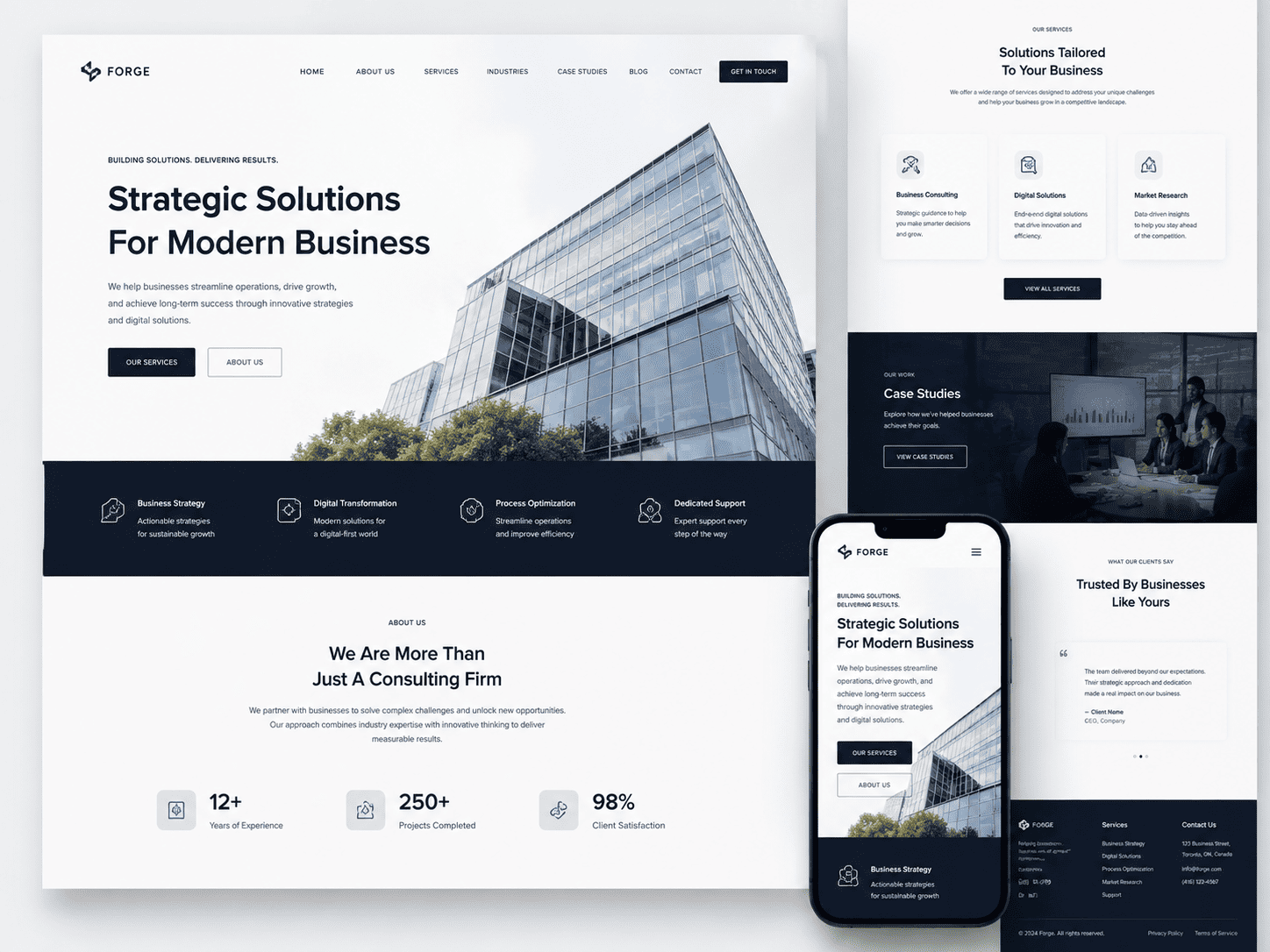
Responsive web design is not merely a technical feature; it is an architectural philosophy. In the Canadian context, it means that a single website uses fluid grids, flexible images, and CSS media queries to automatically adjust its layout, navigation, and content hierarchy based on the user’s device—be it a 5-inch smartphone in a Toronto subway, a 12-inch tablet in a Calgary coffee shop, or a 27-inch desktop monitor in a Montreal office. Unlike separate mobile sites (which require duplicate maintenance) or adaptive design (which targets specific breakpoints), true responsiveness provides a continuous and optimized experience. For Canadian businesses, this also involves considerations unique to the country: bilingual content handling for French and English, accessibility standards under the Accessibility for Ontarians with Disabilities Act (AODA) and similar provincial regulations, and variable internet speeds in rural versus urban areas. A genuinely responsive Canadian website must not only resize but also prioritize content, compress images for slower connections, and ensure that touch targets are large enough for fingers—all while maintaining brand consistency. The cost, therefore, reflects not just coding hours but the strategic thinking required to map user journeys across diverse devices and regions.
Why Cost Varies Across Provinces and Industries
Pricing for responsive web design in Canada is not uniform, and several factors create wide discrepancies:
- Labour rates by province: A web design agency in Toronto or Vancouver typically charges between $120 and $200 per hour, reflecting higher overhead and demand. In contrast, agencies in Winnipeg, Halifax, or smaller Ontario cities may charge $80 to $130 per hour. Freelancers across Canada range from $50 to $150 per hour, but often lack the project management and testing layers of established firms.
- Industry complexity: An e-commerce site with a product catalogue, payment gateways, and inventory integration will cost 40–60% more than a brochure-style site for a professional service firm. Regulated industries (healthcare, legal, finance) require additional compliance features, such as secure patient portals or multilingual legal disclaimers, which increase development time.
- Provincial regulations: Quebec’s strict French language requirements (under Bill 101) and Ontario’s AODA compliance standards mandate additional design and testing work. A responsive site that must be fully accessible or legally bilingual will incur extra costs for translation, accessibility audits, and code adjustments.
- Local competition: In saturated markets like the Greater Toronto Area, agencies may offer package deals to attract clients, while in smaller provinces, fewer providers can command premium rates due to limited options.
To provide a practical reference, consider the following indicative ranges based on recent Canadian project scopes, excluding ongoing maintenance and content creation:
| Project Type | Typical Cost Range (CAD) | Timeline | Typical Provider |
|---|---|---|---|
| Small business template (customized theme) | $2,500 – $6,000 | 2–4 weeks | Freelancer or small studio |
| Marketing site (5–10 pages, custom design) | $8,000 – $20,000 | 6–10 weeks | Mid-size agency |
| E-commerce (up to 50 products, payment integration) | $15,000 – $40,000 | 8–14 weeks | Specialized agency |
| Enterprise or custom web application | $50,000 – $150,000+ | 3–6 months | Full-service digital agency |
The Business Case for Investing in a Mobile-Ready Website
Viewing responsive web design as a pure expense misses its function as a revenue-generating asset. A mobile-ready website directly influences three critical business metrics in Canada. First, search engine optimization: Google’s mobile-first indexing means that a non-responsive site is effectively penalized in search results, pushing Canadian businesses below competitors—even those with inferior products. Second, conversion rate: data from Canadian e-commerce platforms consistently shows that mobile visitors who encounter a clunky, non-responsive layout abandon their carts at rates exceeding 70%, whereas a fluid, fast-loading experience can lift conversion rates by 20–30%. Third, customer lifetime value: a responsive site reduces bounce rates and encourages repeat visits, which is essential in a market where consumers frequently compare prices across devices before purchasing. Consider the cost of a $10,000 website against a modest 15% increase in annual online revenue for a business earning $200,000 from its digital channel—that represents a $30,000 gain, or a 200% return in the first year alone. Additionally, responsive design eliminates the need for a separate mobile maintenance budget, reduces development time for future updates (since there is only one codebase), and future-proofs the site against new device form factors, such as foldable phones and smart TVs. For Canadian businesses, the question is not whether they can afford responsive design, but whether they can afford to delay it while competitors capture an increasingly mobile-first customer base. The true cost of inaction—measured in lost rankings, abandoned carts, and eroded brand perception—far exceeds any line item on a web design invoice.
Average Cost Ranges for Responsive Web Design in Canada
When budgeting for a responsive website in Canada, the total cost in Canadian dollars (CAD) depends heavily on your business goals, the complexity of features, and the level of expertise you hire. While a simple brochure site costs far less than a custom e-commerce platform, every quote falls into one of three broad categories. Understanding these ranges—based on current industry data from Canadian web agencies and freelance marketplaces—will help you set realistic expectations before you receive proposals. Remember that these figures exclude ongoing maintenance, domain registration, and premium plugin subscriptions unless explicitly stated.
Budget-Friendly Options: DIY Builders and Templates ($500–$2,500)
For startups, local service providers, or hobby projects, this tier uses website builders like Wix, Squarespace, or WordPress with a premium theme. Costs break down as follows:
- Platform subscription: $20–$60 per month for hosting and builder access.
- Premium responsive theme: $80–$250 one-time (e.g., Astra Pro, Divi, or Elementor Pro).
- Essential plugins: $100–$400 annually for SEO, caching, and forms.
- Custom logo and basic copy: $200–$500 if outsourced to a freelancer.
This range is viable only if you have the time to configure layouts, test mobile breakpoints, and handle updates yourself. The largest hidden cost is your labour—a typical DIY project takes 40–80 hours. You must also accept template limitations: complex navigation or unique interactive elements often require custom code, pushing you toward the next tier. For a simple five-page restaurant site or a portfolio, this is the most cost-effective route, but you sacrifice uniqueness and scalability.
Mid-Range Professional Design ($2,500–$10,000)
This is the most popular bracket for small-to-medium Canadian businesses. A freelance web designer or a small agency (2–5 people) will deliver a fully custom responsive design built on WordPress, Webflow, or Shopify (for online stores). What you get at this price:
- Custom homepage and 5–10 inner page templates: tailored to your brand, not a pre-built skin.
- Mobile-first development: tested on real devices (iPhone, Android, tablets).
- Basic SEO setup: meta titles, schema markup, and sitemap submission.
- Contact forms and Google Maps integration.
- Two revision rounds on each page (additional revisions billed hourly at $75–$150/hour).
The price variance within this tier depends on your industry. A law firm needing a secure client portal will pay closer to $10,000, while a coffee shop with a menu and hours might pay $3,000. Expect a project timeline of 4–8 weeks. A typical contract includes 30–60 minutes of post-launch support, but any content entry beyond the agreed pages is extra. If you need custom illustrations or advanced animations, add $1,000–$2,500 to your quote.
High-End Custom Development ($10,000–$50,000+)
Enterprise-level projects, custom web applications, or multi-regional e-commerce platforms fall here. A full-service digital agency in Toronto, Vancouver, or Montreal will charge between $150–$250 per hour, and these projects require 100–300 hours of work. What justifies the premium:
- Full discovery and UX research: user personas, journey mapping, and competitor audits.
- Custom back-end development: integration with ERP, CRM, or inventory systems (e.g., SAP, Salesforce, or custom APIs).
- Headless or decoupled architecture: content delivered via REST or GraphQL for maximum speed.
- Dedicated project manager and QA tester: separate from the design and development team.
- Accessibility compliance (WCAG 2.2 AA) and multilingual support (French/English).
For example, a custom membership portal with a payment gateway, dynamic user dashboards, and a booking engine will start at $25,000. An e-commerce site with 1,000+ SKUs, product filtering, and real-time shipping quotes can reach $40,000–$60,000. The upper end of $50,000+ includes bespoke interactive tools, data visualizations, or a progressive web app (PWA). While the upfront cost is steep, these builds are engineered for high traffic, fast load times under 2 seconds, and easy future scaling—reducing long-term redevelopment costs.
When requesting quotes, always ask for a detailed breakdown of design hours versus development hours. A reputable agency will clarify that responsive design is not an add-on but a core requirement—not a separate line item. To compare apples to apples, request fixed-scope proposals with explicit deliverables and a list of what is excluded (e.g., stock photography or copywriting). Finally, never choose a vendor solely on price; inspect their portfolio on a mobile device and ask for references from Canadian clients in your sector.
Key Factors That Influence Responsive Web Design Pricing
In Canada, the cost of a responsive website is rarely a flat rate. Instead, it is determined by a combination of project scope, technical requirements, and the level of professional input you require. Understanding these drivers before you request quotes will help you compare proposals fairly and avoid budget surprises. Below, we break down the most significant cost elements, ranging from structural decisions to ongoing operational needs.
Number of Pages and Content Complexity
The sheer volume of pages directly dictates design, development, and testing time. A typical small business site with 5–10 pages (Home, About, Services, Contact, and a basic blog) will cost far less than a 50-page corporate portal. However, page count alone is not the only metric—the complexity of content on each page matters equally. For example:
- Text-heavy pages: Long-form articles, legal pages, or resource libraries require more layout planning and responsive typography adjustments.
- Media-rich pages: Video backgrounds, interactive infographics, or image galleries demand higher bandwidth optimization and custom breakpoints.
- Dynamic content blocks: Pages with accordions, tabs, or filters need extra front-end coding to function smoothly on mobile.
In practical terms, a simple 5-page brochure site may cost between $2,500 and $6,000 CAD, while a 20-page content-heavy site with custom layouts often ranges from $8,000 to $15,000 CAD. Agencies typically charge per page (from $150 to $500 CAD) but reduce the marginal rate as page count grows, since shared templates are reused.
Custom Features and Integrations (e.g., E-commerce, Booking Systems)
Responsive design is not just about resizing text and images; it also requires that every interactive feature adapts to touch screens, small viewports, and varying connection speeds. This is where costs escalate quickly. Common custom elements and their typical impact on pricing include:
- E-commerce functionality: Product catalogs, shopping carts, secure checkout, and inventory management add $5,000 to $20,000+ CAD, depending on the number of products and payment gateways.
- Booking or appointment systems: Calendar integration, timezone handling, and payment deposits typically add $2,000 to $7,000 CAD.
- Third-party integrations: Connecting to CRM, email marketing, or accounting software (e.g., Salesforce, Mailchimp, QuickBooks) costs $500 to $3,000 per integration.
- User accounts and member areas: Secure login, profile management, and gated content add $3,000 to $10,000 CAD.
Each custom feature requires additional testing across devices (iOS, Android, various screen widths) and often necessitates custom API work, which increases both design and development hours.
Branding, Copywriting, and Visual Assets
Many clients assume the quoted price includes logos, photos, and polished text. In reality, these are frequently billed separately or as an optional add-on. Your cost varies dramatically based on what you bring to the table versus what you ask the agency to produce:
| Asset Type | Provided by Client (Cost Impact) | Provided by Agency (Typical CAD Range) |
|---|---|---|
| Logo & brand guidelines | No extra cost (just integration time) | $800 – $3,000 |
| Professional photography (10–20 images) | No extra cost (you supply files) | $1,500 – $4,000 (stock or custom shoot) |
| Copywriting (per page, ~300 words) | No extra cost (you write or hire separately) | $200 – $600 per page |
| Custom icons or illustrations | No extra cost (use free sets) | $500 – $2,500 |
If you lack internal marketing resources, you may need to budget for these separately. Conversely, supplying your own optimized images and SEO-ready copy can reduce your total project cost by 10–20%. Also note that ongoing maintenance (typically $100–$300 CAD per month) covers software updates, security patches, and minor content edits—an expense that is often forgotten in initial quotes but essential for keeping your responsive site functional over time.
Freelancer vs. Agency vs. In-House: Cost Comparison
When budgeting for a responsive website in Canada, your primary decision is who builds it. The three main paths—freelancer, digital agency, or in-house team—differ not just in sticker price but in how that price is structured, what it covers, and where hidden expenses appear. For a typical small-to-mid-sized Canadian business, the total cost range can span from roughly $3,000 to over $100,000 depending on this choice alone. Below is a practical breakdown to help you compare apples to apples.
Freelance Web Designers: Rates and Expectations
Freelancers in Canada typically charge between $40 and $120 per hour, or offer flat project rates from $2,500 to $15,000 for a standard responsive marketing site (5–10 pages). Provincial variation is real: a Toronto-based freelancer with a strong portfolio may quote $90–$120/hour, while a designer in Winnipeg or Halifax might charge $50–$75/hour for comparable output.
What you get: direct communication, a single point of contact, and often more flexibility in timeline. However, scope discipline is critical. A common freelancer pitfall is underestimating responsive testing across devices; ensure your contract explicitly lists breakpoints (mobile, tablet, desktop) and browser coverage.
Pros:
- Lower upfront cost compared to agencies.
- Personalized attention; you often speak directly to the person doing the work.
- Faster for small, well-defined projects.
Cons:
- Limited bandwidth—if they fall ill or take another client, your project stalls.
- No built-in redundancy for copywriting, SEO, or advanced backend development—you’ll hire separately.
- Quality varies widely; vetting requires checking live responsive sites, not just mockups.
Full-Service Digital Agencies: What You Pay For
Agencies in Canada usually quote between $15,000 and $60,000 for a responsive business website, with e-commerce or custom web apps pushing that to $75,000–$150,000. Their hourly rates range from $100 to $200+, reflecting a team structure. That price includes project managers, UX designers, front-end developers, QA testers, and often a content strategist.
What your money buys: process and accountability. Agencies typically deliver documented responsive testing matrices, performance budgets (e.g., page load under 2 seconds on 4G), and post-launch support. They also handle cross-browser issues more systematically than a solo freelancer.
Pros:
- Scaled team means no single point of failure.
- Integrated SEO, accessibility (WCAG 2.1 AA), and analytics setup are usually included.
- Stronger project management—clear milestones, regular reporting.
Cons:
- Higher hourly cost—you pay for meetings, documentation, and overhead.
- Sometimes slower due to internal queues and multiple clients.
- You may not meet the actual developers; communication is filtered through an account manager.
In-House Development: Hidden Costs and Salaries
Hiring a full-time web developer in Canada costs $70,000 to $120,000+ annually in salary alone, before benefits, CPP, EI, and office space—which add roughly 15–20% on top. For a responsive redesign that takes four months, that’s an effective project cost of $25,000–$40,000 just in compensation, and that’s for only one person. You’ll also need a designer (contract or part-time) unless you overload the developer.
Hidden costs rarely budgeted:
- Software licenses (Adobe XD, Figma, code editors)—$500–$1,500/year.
- Testing devices: real iPhones, Android phones, and tablets for physical QA—$2,000–$5,000.
- Training time for responsive best practices; not all developers are equally skilled in fluid grids or media queries.
- Opportunity cost: while your team builds the site, they’re not maintaining your existing site or other digital projects.
Pros:
- Ongoing maintenance and iteration become easier after launch.
- Deep product knowledge—they live and breathe your brand daily.
- Direct control over priorities and revisions.
Cons:
- Highest fixed cost for a one-time project.
- Recruitment and onboarding take weeks.
- If your responsive needs are periodic, you’re paying full-time for part-time work.
Practical cost comparison table (typical Canadian project, 10-page responsive site):
| Hiring Model | Typical Total Cost | Timeline | Best For |
|---|---|---|---|
| Freelancer | $3,000 – $15,000 | 4–8 weeks | Small sites, startups, tight budgets |
| Agency | $15,000 – $60,000+ | 8–16 weeks | Mid-size to enterprise, complex features |
| In-House (1 dev + contract designer) | $30,000 – $50,000 for 4 months | 12+ weeks | Long-term continuous development |
Before choosing, ask each candidate for a fixed-price quote based on the same detailed brief—including specific responsive breakpoints, number of templates, and CMS requirements. That’s the only way to compare these three models fairly for your unique Canadian business context.
Additional Costs to Budget For Beyond the Initial Build
When you search for “How Much Does Responsive Web Design Cost in Canada,” most quoted figures focus on the one-time design and development phase. However, a responsive website is a living asset with ongoing financial obligations. Failing to plan for these recurring expenses can lead to budget shock, security vulnerabilities, or a degraded user experience within months of launch. To get a realistic picture of your total investment, you must account for the following categories.
Hosting, Domains, and Security Certificates
Your website must live on a server, and that server is not free. In Canada, shared hosting plans typically range from $10 to $30 per month, while managed WordPress or cloud hosting (like AWS or Google Cloud) can cost $50 to $200+ monthly depending on traffic and performance needs. You will also need to renew your domain name annually—usually $15 to $25 per year for a standard .ca or .com—and ensure you have a valid SSL certificate. While many hosts include a basic SSL certificate at no extra cost, premium validation or wildcard certificates for multiple subdomains can add $80 to $300 per year. Do not skip this: without SSL, browsers will flag your site as “Not Secure,” which directly harms trust and SEO rankings.
Ongoing Maintenance and Updates
Responsive design is not a “set and forget” project. Your website runs on a content management system (like WordPress), plugins, and server software—all of which require regular updates to patch security holes and remain compatible with evolving browser standards. A typical maintenance plan in Canada costs $50 to $150 per month and should include core updates, plugin updates, database backups, uptime monitoring, and malware scanning. If you neglect these tasks, your site may break on new devices or become a target for hackers, leading to expensive emergency repairs. Additionally, you should budget for minor content changes and bug fixes, which are rarely covered by the initial build contract. A monthly retainer of $100 to $300 is common for small businesses that want quick turnaround on edits without hourly billing surprises.
Marketing, SEO, and Analytics Tools
To attract visitors to your responsive site, you need visibility. While Google Analytics and Google Search Console are free, they require technical setup and ongoing interpretation. Many Canadian businesses invest in premium tools to streamline this process. Consider these recurring costs:
- SEO platforms (e.g., SEMrush, Ahrefs, or Moz): $99 to $449 per month for keyword tracking, competitor analysis, and site audits.
- Email marketing software (e.g., Mailchimp, Klaviyo): $20 to $300 per month depending on subscriber count and automation features.
- Heatmap and session recording tools (e.g., Hotjar, Crazy Egg): $39 to $99 per month to understand how mobile users interact with your responsive layouts.
- Accessibility testing tools (e.g., accessiBe, axe): $49 to $150 per month, especially important in Canada given provincial accessibility legislation.
These tools are not optional luxuries; they provide the data you need to tweak your responsive design for better conversion rates. Without them, you are guessing at what works for your audience.
In total, the annual recurring cost beyond the initial build can range from $2,000 for a lean setup to $10,000 or more for a robust, data-driven site. When planning your budget, add these figures to the initial design quote. The cheapest website is not the one with the lowest upfront price, but the one that remains secure, fast, and effective over its lifespan.
E-commerce Responsive Design Costs in Canada
E-commerce websites are the most expensive category of responsive design in Canada, and for good reason. Unlike a brochure-style business site, an online store must handle product catalogs, secure payments, complex navigation filters, and customer accounts—all while maintaining flawless performance on mobile devices. In Canada, you should expect to invest between $8,000 and $30,000+ for a professionally designed, responsive e-commerce site. The wide range depends on your platform choice, the number of products, and the level of custom functionality you require.
Platform Costs: Shopify, WooCommerce, and Custom Solutions
Your platform selection drives both upfront and long-term costs. Here is how the three most common options compare for Canadian businesses:
| Platform | Typical Setup Cost (CAD) | Monthly/Recurring Cost | Best For |
|---|---|---|---|
| Shopify | $2,000 – $8,000 (design + setup) | $38 – $399/month (plus transaction fees) | Businesses wanting speed, security, and managed hosting |
| WooCommerce (WordPress) | $3,000 – $12,000 (design + development) | Hosting $15 – $100/month + plugin costs | Those needing full control and existing WordPress content |
| Custom Solution | $15,000 – $40,000+ | Hosting and maintenance variable; often $500+/month | Unique business logic, integrations, or large catalogs |
Shopify offers the fastest path to launch, with responsive themes included, but customizing them to match your brand typically requires a developer. WooCommerce is more flexible but demands more technical upkeep. Custom builds give you total control over responsive behaviour, but you pay for every hour of development—and every future update.
Product Catalog Size and Payment Processing Setup
The single biggest cost variable is your product catalog. A store with 20 products is fundamentally different from one with 2,000. Here is what drives the price:
- Product pages: Each product template must be tested on phones, tablets, and desktops. Complex variants (size, colour, material) require extra responsive design work.
- Data migration: Importing hundreds of products with images, descriptions, and SKUs from spreadsheets or legacy systems adds $500 – $2,500.
- Payment gateway integration: Canadian-specific processors (e.g., Moneris, Stripe Canada, PayPal) require additional testing for mobile checkout flows. Setting up multiple gateways (credit card, Interac Online, Apple Pay) increases cost by $300 – $1,200.
- Responsive checkout: A poorly designed mobile checkout kills sales. Dedicated UX work here typically costs 10–15% of your total budget.
For a practical example, if you are using WooCommerce and need to ensure your checkout button is properly sized on mobile, you might add this snippet to your theme’s CSS:
@media (max-width: 480px) {
  .checkout-button {
    width: 100%;
    padding: 16px 0;
    font-size: 18px;
    min-height: 48px; /* WCAG mobile touch target */
  }
}
This simple adjustment prevents user frustration on small screens—something a professional developer will handle across all your key pages.
Ongoing E-commerce Maintenance and Transaction Fees
Your initial design cost is only the beginning. Canadian e-commerce sites face recurring expenses that many owners underestimate:
- Transaction fees: Shopify charges 2.4% – 2.9% per transaction unless you use Shopify Payments. WooCommerce via Stripe charges similar rates. For a store doing $50,000/month, that is $1,200 – $1,450 monthly in fees alone.
- Maintenance retainers: Expect to pay $150 – $500/month for security updates, plugin patches, and responsive design fixes as new devices launch.
- PCI compliance: While the platform handles most of this, you may need annual security scans ($200 – $600/year) and SSL certificate renewals (often included, but not always).
- Content updates: Adding new products or seasonal campaigns on a responsive template costs $50 – $150 per hour of developer time.
Budget for these recurring costs from day one. A $10,000 responsive e-commerce build can easily require $3,000 – $6,000 per year in ongoing care. The key is to choose a platform and developer who document their work well, so future changes do not break your mobile experience. Always request a maintenance plan that includes regular mobile testing—because new browser versions and devices appear constantly in Canada’s market.
Regional Price Variations Across Canadian Cities
When asking “How Much Does Responsive Web Design Cost in Canada?” the answer shifts dramatically depending on your postal code. A responsive website build in Canada is not priced on a national flat rate; instead, it is influenced by local operating costs, talent density, and competitive pressure. Understanding these regional differences helps you set a realistic budget and avoid sticker shock—or, conversely, overpaying for services that a smaller market could provide at a lower cost.
Toronto and Vancouver: Premium Market Rates
Canada’s two largest urban centres command the highest rates for responsive web design. In Toronto and Vancouver, agencies and independent freelancers face steep commercial rents, high salaries for senior developers, and a dense pool of enterprise clients. Consequently, a standard responsive marketing site (5–10 pages, custom design, CMS integration) typically ranges from $8,000 to $25,000 CAD for a freelance or small studio engagement. Mid-sized agencies in these cities often quote between $20,000 and $60,000 CAD for the same scope, with full-service digital firms exceeding $75,000 for complex e-commerce or custom web applications.
What drives these premium rates?
- Talent competition: Senior UX/UI designers and full-stack developers in Toronto or Vancouver command $80–$150 per hour.
- Overhead: Downtown office leases and insurance are factored into every quote.
- Brand positioning: Many clients in these hubs expect polished, award-calibre visuals and rigorous accessibility compliance.
However, the premium does not guarantee faster delivery. In fact, top-tier Toronto agencies often have waiting lists of 6–10 weeks, so you are paying for reputation as much as output.
Mid-Sized Cities: Calgary, Ottawa, Halifax
Moving to mid-sized metropolitan areas produces a noticeable cost relief without sacrificing professional quality. In Calgary, Ottawa, and Halifax, the same responsive website project that costs $15,000 in Toronto might be quoted at $6,000 to $18,000 CAD by established local studios. The hourly rates for experienced freelancers here hover around $60–$100, reflecting lower overheads and a less frantic marketplace.
Notable patterns in these regions:
- Calgary: Strong demand from energy and professional services sectors, but a growing independent contractor scene keeps prices competitive.
- Ottawa: Government and tech-adjacent clients push some firms toward higher compliance standards, yet many boutique agencies offer transparent fixed pricing.
- Halifax: A rising tech hub with a lower cost of living; you can often find junior-mid level teams producing solid responsive builds for under $10,000.
One trade-off: mid-sized cities may have fewer specialists in advanced interactions (e.g., custom animations, headless CMS architectures). If your project is a straightforward brochure site or service-based business, you will likely find excellent value here.
Remote and Rural Options: Cost Savings and Trade-Offs
Hiring a web designer based in a smaller community—such as Kelowna, Moncton, or the rural Prairies—can reduce your project cost by 20% to 40% compared to Toronto or Vancouver. Freelancers in these areas often charge $45–$75 per hour, and complete responsive sites may land between $4,000 and $12,000 CAD. This is an attractive option for startups, non-profits, and local brick-and-mortar businesses.
However, remote and rural hiring involves clear trade-offs:
| Aspect | Cost Saving | Potential Drawback |
|---|---|---|
| Hourly rate | Lower overhead supports cheaper billing | May lack senior-level experience |
| Communication | Often more personal, direct contact | Time zone differences or slower async replies |
| Specialized skills | Good for standard responsive layouts | Limited expertise in e-commerce or custom APIs |
| Ongoing support | Flexible retainer options at modest rates | Risk of solo freelancer burnout or availability gaps |
Before choosing a remote provider, ask for a portfolio that specifically shows mobile navigation, touch-friendly forms, and cross-browser testing. You may save money, but you must verify that the designer understands responsive breakpoints and performance optimization—skills that are not guaranteed by low pricing alone.
Ultimately, the correct answer to “How Much Does Responsive Web Design Cost in Canada?” is: it depends on where you buy. Premium hubs deliver polish and scale; mid-sized cities balance cost and competence; rural providers offer budget relief with manageable risks. Assess your project’s complexity, your tolerance for remote collaboration, and your timeline before locking in a region.
How to Get an Accurate Quote for Your Project
Securing a precise estimate for responsive web design in Canada requires more than a single email asking for “a price.” Because costs vary widely—from roughly $3,000 for a template-based brochure site to $50,000+ for a custom e-commerce build—the accuracy of your quote depends entirely on the clarity of your request. A vague inquiry invites vague pricing, and vague pricing often leads to budget overruns or missed deliverables. To receive a quote you can trust, you must treat the process as a collaborative specification, not a transaction.
Preparing a Detailed Project Brief
Your project brief is the single most influential document in the quoting process. It should not read like a wish list but like a functional specification. At minimum, include the following:
- Core pages and features: List every page template (e.g., homepage, product listing, blog) and every interactive element (forms, calculators, user logins).
- Content readiness: State whether you will supply final text, images, and video, or if you need the agency to create or source them. Missing content often adds 10–20% to a quote.
- Integrations: Name any third-party systems (CRM, payment gateway, email marketing platform) and specify whether you expect two-way data sync or simple embed codes.
- Timeline and milestones: Provide your launch deadline. Rush projects typically incur a 15–30% surcharge.
- Post-launch support: Clarify whether you need training, a maintenance retainer, or just bug-fixing for 30 days. This distinction changes monthly costs significantly.
A useful rule of thumb: if you cannot explain what your website does in two minutes, your brief is not detailed enough for an accurate quote.
Questions to Ask Before Signing a Contract
Not all quotes are created equal, and the cheapest option is rarely the most cost-effective. Before you sign, ask these five questions directly:
- “Which devices and browsers will you test on?” A responsive design is not “done” until it is verified on real iPhones, Androids, and tablets—not just resized in a desktop browser.
- “What is your revision policy?” Clarify how many revision rounds are included (typically 2–3) and what happens if you request changes beyond that scope.
- “Who owns the code and design files?” In Canada, you should retain full ownership after final payment. Some agencies license their work, which limits future modifications.
- “Do you handle performance optimization?” Responsive images, lazy loading, and mobile-first CSS are technical necessities. If these are not mentioned in the proposal, ask explicitly.
- “What is your communication cadence?” Weekly updates or a shared project dashboard (e.g., Trello or Asana) prevent costly misunderstandings.
Understanding What ‘Responsive’ Includes in a Proposal
The word “responsive” is often used loosely. In a professional proposal, it should mean the site adapts fluidly to all screen widths, from 320px phones to 4K monitors, and that this behaviour is tested on real devices. However, some agencies limit responsiveness to “mobile-friendly,” which is a lesser standard. To compare quotes fairly, look for these specific line items in the scope of work:
| Scope Item | Included in Full Responsive Design | Often Missing in Budget Quotes |
|---|---|---|
| Fluid grid & flexible images | Yes | Yes, but only for basic layouts |
| Breakpoint testing (320px, 768px, 1024px, 1440px) | Yes, minimum 4 breakpoints | Maybe only 2–3 breakpoints |
| Touch-friendly navigation & tap targets | Yes, with specific sizing standards | Not explicitly stated |
| Performance budget (load time under 3s on 4G) | Yes, with measured tests | No guarantee or testing |
| Cross-browser testing (Chrome, Safari, Firefox, Edge) | Yes, including iOS and Android | Chrome only |
| Retina/hi-DPI image optimization | Yes, with automated compression | No mention of image sizes |
When comparing proposals, place this table side by side with each quote. If a proposal does not explicitly list breakpoints or device testing, ask the agency to clarify in writing. A quote that omits these details may still be accurate for a simple brochure site, but for any site with e-commerce or custom functionality, such omissions signal a future change-order request. The goal is not to get the lowest number, but to get the most predictable number—one that reflects the true scope of building a site that works flawlessly on every screen your customers use.
Hidden Pitfalls and How to Avoid Overpaying
Understanding the average cost of responsive web design in Canada is only half the battle. The real financial damage often occurs after the initial quote is signed, through subtle process failures and poorly managed expectations. Overpaying rarely means a higher hourly rate; it usually means paying for work you did not request, fixing preventable errors, or redoing a site that fails to function on real devices. To keep your budget intact, you must recognize the traps that inflate invoices before they appear.
Scope Creep and How to Prevent It
Scope creep is the silent budget killer. It happens when small, unplanned requests—like “can you also make the logo slightly larger on mobile?” or “let’s add a pop-up for our newsletter”—accumulate without formal approval. Each request adds billable hours, and by project end, you may owe 30% to 50% more than the original estimate. The root cause is almost always a vague contract that lists deliverables as “website design” without specifying pages, revisions, or device breakpoints.
Prevent this by demanding a precise written scope before any work begins. Your contract must include:
- A numbered list of pages and templates (e.g., “homepage, 4 inner pages, 3 custom post layouts”)
- The exact number of revision rounds (typically 2 to 3) and what constitutes a “revision”
- Specific browser and device testing matrix (e.g., “latest Chrome, Safari, Firefox on iOS and Android”)
- A written change-order process: any new request requires a signed estimate before work proceeds
A practical safeguard is to request that all project communication happens in a shared tool (like Asana or Trello) where change requests are logged. If a developer verbally agrees to “just tweak that,” reply in writing: “Please confirm this is within the original scope or provide a cost estimate.” That single habit can save you thousands.
Red Flags in Low-Cost Proposals
The cheapest responsive design quote in Canada is rarely a bargain—it is often a loss leader. When a proposal comes in at $1,500 for a full responsive build, ask what is excluded. Common red flags include:
- No mention of mobile-specific navigation: They may simply shrink your desktop menu instead of designing a hamburger or bottom-tab layout.
- Template-based “custom” design: You pay for a pre-built theme with a color swap, not original code.
- No performance budget: Responsive images and lazy loading are ignored, leading to slow load times on 4G networks.
- Zero testing on physical devices: They test only in a browser window, missing real-world issues like touch target sizes or viewport clipping.
- Vague ownership terms: The contract may state you license the design but not the underlying code, trapping you with that developer for future edits.
If a proposal lacks a detailed breakdown of hours for design, development, and QA, assume the price is low because the work is outsourced or rushed. Ask for a sample of a previously delivered responsive site and test it on your own phone. If it feels janky, the low price reflects low skill.
The True Cost of a Poorly Built Responsive Site
A poorly built responsive site does not just look bad; it actively burns money. Consider the hidden expenses that emerge within the first year:
- Lost conversions: If buttons overlap on a 375px screen (iPhone SE), users abandon checkout. Even a 2% loss in mobile conversion on a $50,000/year revenue stream costs $1,000 annually.
- Emergency fixes: A developer who used fixed pixel widths instead of flexible grids may charge $200/hour to repair layout breakage after a browser update.
- SEO penalties: Google’s mobile-first indexing rewards fast, usable pages. A slow or broken mobile version drops your ranking, reducing organic traffic and forcing paid ad spend to compensate.
- Re-build costs: Many businesses pay twice: once for the cheap site, then again for a proper rebuild within 18 months. The second invoice often exceeds the first by 40% because the original code is unmaintainable.
A practical example: if your developer used CSS media queries without a mobile-first approach, you may see this pattern in the stylesheet:
/* Bad: desktop-first, requires overrides */
@media (max-width: 768px) {
  .sidebar { display: none; }
}

/* Good: mobile-first, progressive enhancement */
@media (min-width: 769px) {
  .sidebar { display: block; }
}
The desktop-first version forces the browser to download and parse desktop styles before hiding them on mobile—slower and more error-prone. A competent developer writes mobile-first from the start. If your audit reveals such shortcuts, budget for a code review before the site grows further. Paying for quality now is always cheaper than paying for recovery later.
Conclusion: Making an Informed Budget Decision
Understanding the full cost of responsive web design in Canada is not about finding the lowest quote; it is about aligning your spending with measurable business outcomes. As you have seen, prices range from roughly $3,000 for a template-based site to $50,000 or more for a fully custom, enterprise-level build. The critical takeaway is that your budget should be determined by your project’s scope, your required features, and the level of ongoing support you expect—not by a generic industry average. A responsive site is the digital storefront for your business, and treating it as a one-time expense rather than a strategic asset often leads to underfunding, technical debt, and a poor user experience that costs more in lost revenue over time.
Aligning Your Budget with Business Goals
Before you request a single proposal, define what success looks like for your organization. A small local bakery needs a different website than a national SaaS company, even if both ask for “responsive design.” Use the following checklist to structure your decision-making process:
- Define your primary conversion: Is it a phone call, an online sale, a newsletter signup, or a contact form submission? Your design features should support this goal first.
- Audit your current site: List every missing feature or pain point (e.g., slow load times, broken mobile menus). Assign a dollar value to the time you lose fixing these issues manually.
- Set a realistic range, not a fixed number: Budget for a 10–15% contingency for unexpected revisions or third-party integration costs.
- Prioritize functionality over aesthetics: A beautiful homepage is useless if your checkout process fails on a smartphone. Allocate more funds to UX testing and backend performance.
Remember that “responsive” is now the baseline, not a premium add-on. If an agency quotes you extra for mobile adaptation alone, that is a red flag. Your budget should instead reflect complexity: custom animations, e-commerce logic, CMS training, and accessibility compliance (WCAG) are what drive costs upward.
Long-Term ROI of a Responsive Website
Viewing responsive design as an investment changes how you evaluate proposals. A properly built site reduces your long-term costs in several concrete ways:
- Lower maintenance overhead: A single responsive codebase means you update one site, not separate mobile and desktop versions. This can save you hundreds of hours annually.
- Improved search rankings: Google’s mobile-first indexing rewards sites that perform well on all screen sizes. Higher rankings reduce your reliance on paid ads for traffic.
- Higher conversion rates: A seamless user journey across devices directly increases sales and lead quality. Even a 1% improvement in conversion can pay for a mid-range design within months.
- Reduced future redesign costs: A scalable, modular build allows you to add features without a full rebuild. You pay for incremental updates, not another $20,000 project in two years.
When comparing quotes, ask each agency how their design handles page speed on 4G connections, how they test across real devices, and what their post-launch support retainer includes. These answers reveal whether you are buying a temporary website or a long-term growth platform.
Next Steps: Research, Compare, and Launch
Your final step is practical and structured. Begin by compiling a shortlist of three to five Canadian agencies or freelancers, specifically from your province to account for local tax rates and labour laws. Send them a detailed brief that includes your business goals, your checklist from above, and a clear statement of your budget range. Do not hide your budget—transparency helps vendors propose realistic solutions rather than inflated packages.
When comparing proposals, create a simple scoring table with columns for: total cost, included pages, number of revisions, hosting fees, training hours, and post-launch support duration. Avoid making a decision based solely on the lowest price. Instead, ask each vendor for two references from similar industries and check their portfolio’s mobile performance yourself using Google’s free PageSpeed Insights tool.
Finally, schedule a discovery call to discuss your timeline and content readiness. Most delays in web projects come from missing copy, images, or product data, not from design work. By preparing these assets in advance, you can keep your project on schedule and avoid hourly overage charges. Launching a responsive website is a significant step, but with a clear budget tied to business outcomes, a focus on long-term ROI, and a structured comparison process, you will make an informed decision that serves your customers and your bottom line for years to come.
Frequently Asked Questions
What is the average cost of responsive web design in Canada?
In Canada, responsive web design costs vary widely based on complexity and experience. A small business website typically ranges from $3,000 to $10,000 CAD, while mid-range projects can cost between $10,000 and $30,000 CAD. Enterprise or custom solutions may exceed $50,000 CAD. Freelancers often charge lower rates than agencies, but may offer fewer services. Always get detailed quotes and compare portfolios.
How much do Canadian web designers charge per hour?
Canadian web designers’ hourly rates generally range from $50 to $200 CAD, depending on their experience and location. Freelancers in smaller cities might charge $50–$100, while senior designers in Toronto or Vancouver can command $150–$200. Specialized UX/UI designers may charge even more. For a typical responsive design project, hours can add up quickly, so confirm the estimated time and total cost upfront.
Why does responsive web design cost more than non-responsive design?
Responsive design requires additional planning, flexible layouts, and testing across multiple devices. Designers must create breakpoints, optimize images, and ensure usability on various screen sizes. This increases development time and technical complexity, which raises costs. However, responsive design eliminates the need for a separate mobile site, saving long-term maintenance costs. Investing in a responsive site improves user experience and SEO, often leading to higher conversions.
Are there ongoing costs after the initial responsive design?
Yes, you should budget for ongoing costs such as domain registration (about $15–$20/year), web hosting (from $10 to $50/month), SSL certificates (often free or included), and maintenance. Maintenance can cost $50–$150 per month for updates and security checks. You may also need content updates, SEO services, or marketing. Some designers offer monthly care plans. These costs ensure your site remains secure, functional, and up-to-date.
Can I get a responsive website for under $1,000 in Canada?
Yes, you can find basic responsive websites for under $1,000, but you may sacrifice quality and features. These are often built from templates by freelancers or DIY website builders. They may not be fully customized or optimized for SEO. If you have a simple portfolio or brochure site, this could work. However, for a business site with e-commerce or custom functionality, expect to invest more to get a professional, scalable solution.
How does the cost of responsive design compare to building a separate mobile app?
Building a separate mobile app is significantly more expensive, typically starting at $10,000–$50,000 per platform, plus ongoing maintenance. Responsive web design is a one-time investment that works across all devices, saving you thousands. If your goal is to provide a mobile-friendly experience, responsive design is the most cost-effective approach. Apps are only necessary for advanced features like push notifications or offline access.
What factors most affect the cost of responsive web design in Canada?
Key factors include the number of pages, custom features (e.g., e-commerce, booking systems), level of customization, and the designer’s expertise. Location also matters—agencies in major cities charge more. The amount of content, need for integrations, and complexity of the design can all increase costs. Also, if you require SEO optimization, accessibility compliance, or extensive testing, the price will rise.
Is it cheaper to redesign an existing website than to build from scratch?
Sometimes, but not always. Redesigning an existing site can be cheaper if the structure and content remain mostly intact. However, if you’re changing the platform, updating the codebase, or improving SEO, it could cost as much as a new build. The total cost depends on the scope of changes and the state of your current site. Always get a thorough audit to understand the work required.
Sources and further reading
- Statistics Canada – Business Performance and Web Presence
- Google Search Central – Mobile-First Indexing
- WebAIM – Web Accessibility in Mind
- Smashing Magazine – Responsive Web Design Articles
- A List Apart – Responsive Web Design
- Moz – Beginner’s Guide to SEO
- Payscale – Web Designer Hourly Rate in Canada
- Wix – How Much Does a Website Cost?
- Squarespace – Pricing
- Nielsen Norman Group – Responsive Web Design and User Experience
Need help with this topic?
Send us your details and we will contact you.







Comments (3)
Pingback: Small Business Web Design Canada: Practical Guide
Pingback: Custom Web Design for Local Service Businesses in Canada
Pingback: WordPress Web Design in Canada: Complete Guide