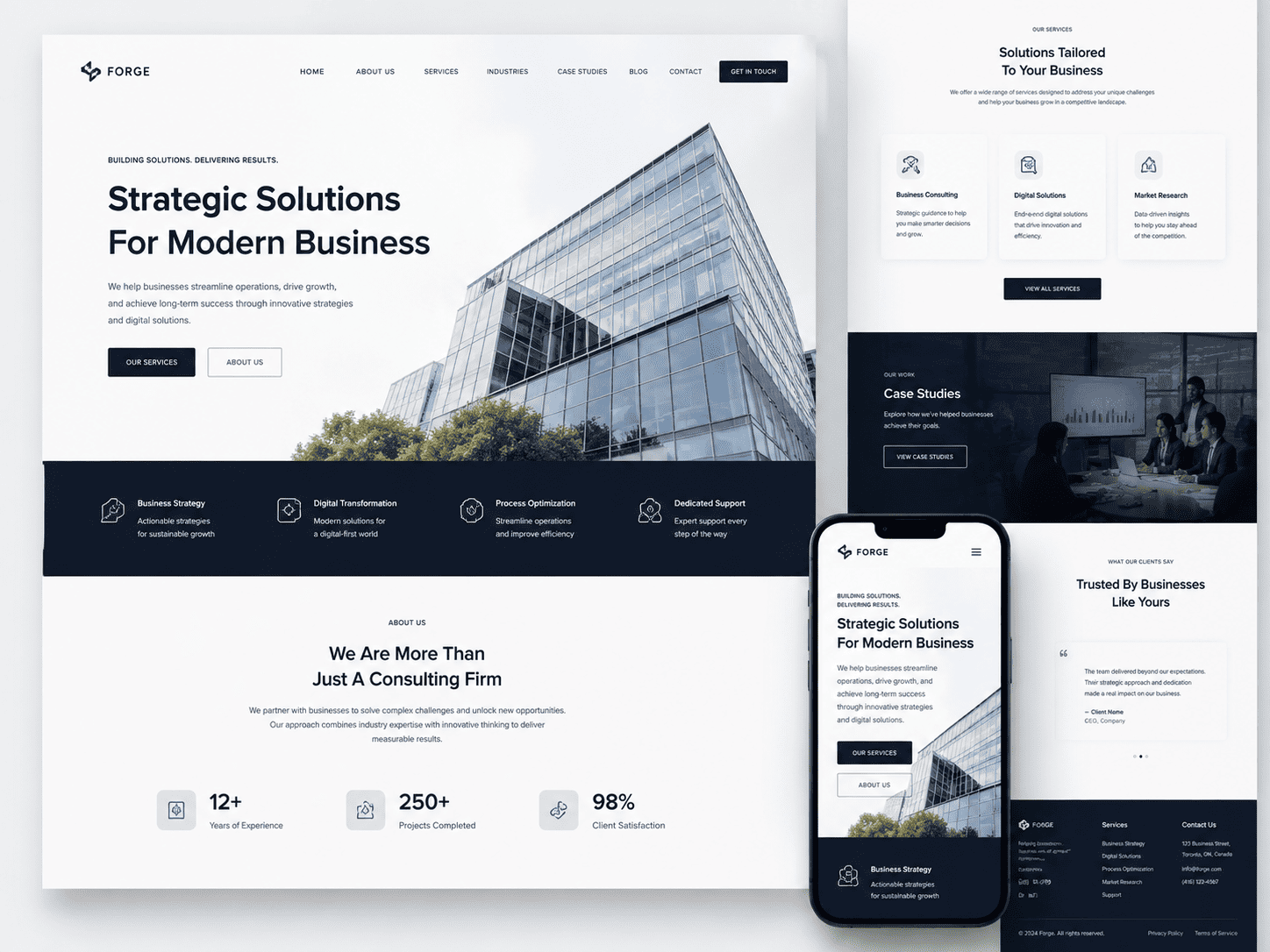
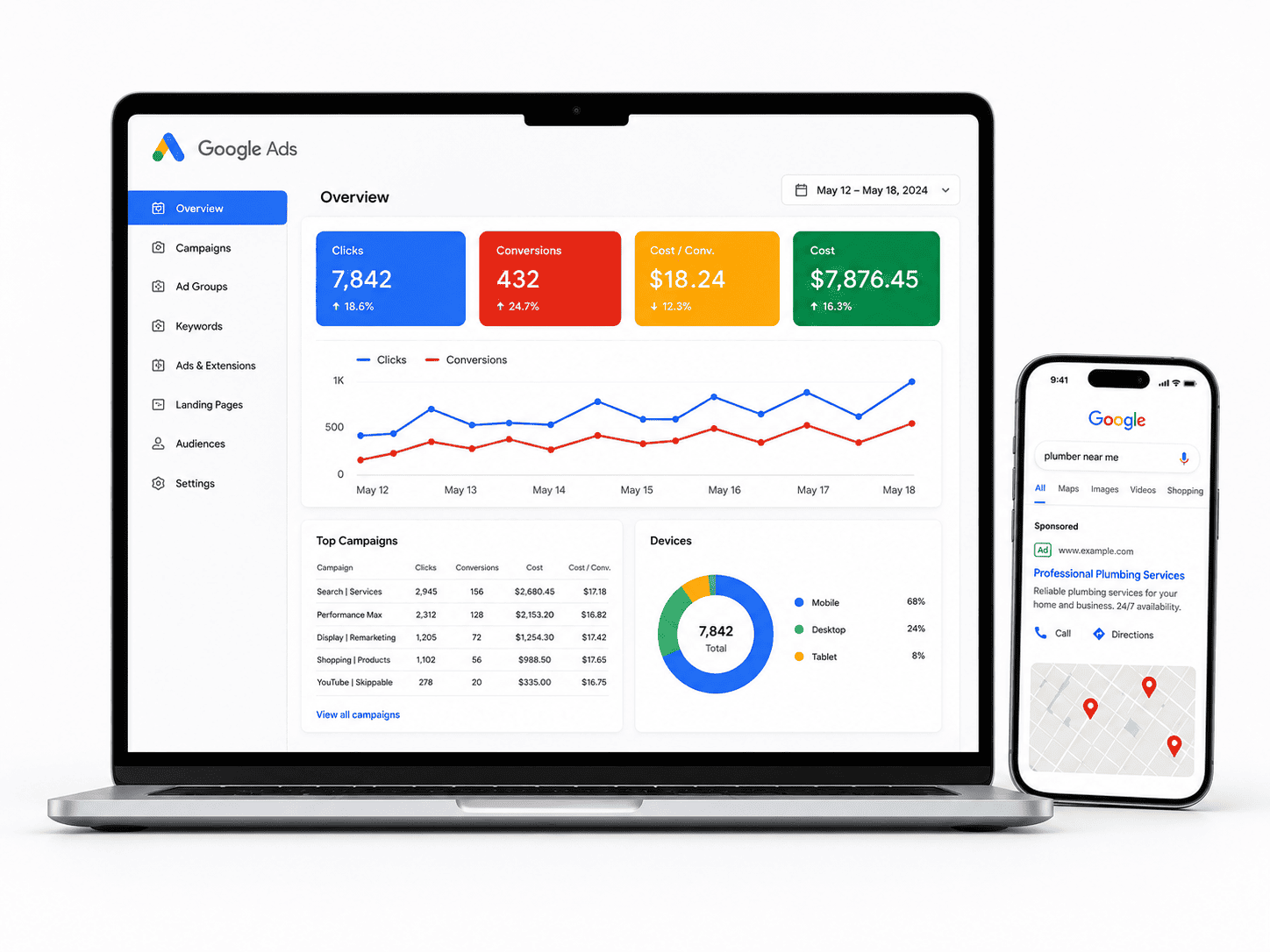


Introduction: Why Edmonton Small Businesses Need a Strategic Website
For many small business owners in Edmonton, the website has historically been treated as a digital afterthought—a static page with an address, a phone number, and perhaps a few photos. That era is over. In today’s competitive local market, your website functions as a 24/7 salesperson, a credibility marker, and a primary filter for customer decisions. A strategic website does not simply exist; it actively works to attract, inform, and convert visitors into paying clients. Without one, your business risks being invisible to the very customers who are searching for your products or services right now.
Edmonton’s business landscape is uniquely challenging. With a metropolitan population spread across distinct neighbourhoods—from Whyte Avenue’s retail corridors to the growing suburbs of Windermere and Summerside—local customers expect to find businesses quickly and assess their legitimacy within seconds. A poorly designed or outdated website signals neglect, which directly undermines trust. Conversely, a well-structured, fast-loading, and locally optimized site positions your small business as a professional, reliable choice, capable of competing with much larger organizations that have bigger marketing budgets.
The Shift to Digital-First Customer Behaviour
Customer behaviour in Edmonton has undergone a fundamental transformation. According to common industry observations (not a specific study), the majority of local consumers now begin their buying journey online—even for in-person services like restaurants, salons, or plumbing companies. The “near me” search has become reflexive. People check your website before they call, compare your offerings against three competitors, and read your about page to gauge your values. This digital-first mindset means that if your website is slow, confusing, or missing critical information like hours of operation or service areas, you lose the sale before you ever speak to the customer.
Consider the practical implications for an Edmonton bakery or a home renovation contractor. A customer searching for “custom cakes in Edmonton” or “basement development contractor” will scan search results. They will click on the websites that appear professional, load quickly on their phone, and clearly answer their questions. If your site only shows a logo and a contact form, they will bounce back to the search results and choose a competitor. The shift is not just about having a web presence—it is about having a presence that is engineered for how people actually search, browse, and decide.
How a Website Impacts Local Credibility and Sales
Credibility is the currency of small business. In a city where word-of-mouth still holds significant weight, your website acts as the digital handshake before any face-to-face meeting. A strategic design incorporates local signals—your Edmonton address, testimonials from local customers, and references to neighbourhoods you serve—which immediately reassures visitors that you are a real, operating business. Without these elements, you appear either as a fly-by-night operation or an out-of-town entity that does not understand the local market.
The impact on sales is direct and measurable. A website that is optimized for conversion does more than look pretty; it guides visitors toward a specific action. This could be booking a consultation, requesting a quote, or making a purchase. For example, a clear call-to-action button placed above the fold, combined with a phone number that is clickable on mobile, reduces friction and increases the likelihood of a lead. Furthermore, integrating local SEO elements—such as a Google Business Profile link, localized content about Edmonton events or weather, and proper schema markup—helps your business appear in the coveted map pack at the top of search results. That visibility translates into foot traffic and phone calls.
What This Guide Covers: Strategy, Budget, and Process
This guide is designed to demystify the entire web design journey for Edmonton small business owners. We will not focus on flashy trends or abstract theory. Instead, we will break down the process into three essential pillars that you must understand before spending a single dollar:
- Strategy: How to define your website’s core purpose, identify your target audience in the Edmonton market, and structure your content to answer their most pressing questions. This includes choosing the right pages, planning your user journey, and integrating local search tactics.
- Cost: A transparent breakdown of what you should expect to pay for different levels of quality. From a basic template site to a custom-built platform with e-commerce capabilities, we will outline realistic price ranges and explain what drives costs up or down, so you can budget without surprises.
- Process: A step-by-step walkthrough of what happens from the initial consultation to launch. You will learn about timelines, the importance of content creation, the revision cycle, and what ongoing maintenance looks like after your site goes live.
By the end of this article, you will have a clear roadmap for approaching your website project. You will know what questions to ask potential designers, what deliverables to expect, and how to measure the return on your investment. A website is not an expense; it is an asset that compounds in value. The goal here is to help you build one that genuinely works for your business, not just one that sits on the internet.
Understanding Your Edmonton Audience and Local SEO
Effective web design for a small business in Edmonton begins not with colours or fonts, but with a deep understanding of the people you serve. Your website must reflect how Edmontonians search, what they value, and the specific context of your neighbourhood or industry. A generic, nationally-focused site will feel disconnected, while a locally tuned design builds immediate trust and relevance. This section explains how to align your content, structure, and user experience with local search intent and real-world expectations.
Demographics and Search Trends in Edmonton
Edmonton’s population is younger and more diverse than the national average, with a strong presence of post-secondary students, young families, and a growing tech sector. This demographic mix means your audience is likely comfortable with mobile-first browsing and expects fast, straightforward answers. Search trends in the city often reflect seasonal and event-driven needs—think ice rink maintenance in winter, patio furniture in spring, or tax preparation before June. Local searches frequently include qualifiers like “near me,” “in Edmonton,” or specific district names such as “Whyte Avenue” or “Westmount.”
To capture this audience, your website copy should mirror their language. Use neighbourhood names naturally in headings and body text, mention local landmarks or intersections, and reference Edmonton-specific concerns (e.g., freeze-thaw cycles, parking restrictions, or LRT access). Avoid vague phrases like “serving all of Canada” when you can say “proudly serving Oliver, Strathcona, and surrounding areas.” This specificity signals to both users and search engines that you are a genuine local resource.
Local SEO Basics: Google Business Profile and Location Pages
Your website cannot succeed in Edmonton without a properly optimized Google Business Profile (GBP). This free tool controls how your business appears in Google Maps and local pack results. Ensure your business name, address, phone number, and hours are identical across your GBP and website footer. Add high-quality photos of your storefront or team, respond to reviews weekly, and post updates about seasonal offers. A common mistake is neglecting to select the correct primary category—choose “Plumber” rather than “Home Services” for maximum relevance.
For multi-location businesses or those serving distinct areas, create dedicated location pages. Each page must have a unique title, meta description, and at least 300 words of original content about that specific area. Do not duplicate the same text with only a name change. Instead, include a map embed, parking instructions, a local testimonial, and a photo of your team at that location. Here is a practical example of how to structure a location page URL correctly:
/services/edmonton-south-side/This URL is descriptive and readable. Avoid using parameters like ?loc=123 which provide no user or SEO value.
Designing for Local User Intent and Mobile Searches
Most Edmontonians will first find you on a smartphone, often while on the go. Your design must prioritize speed and thumb-friendly navigation. Use a single-column layout for mobile, with a sticky call button and a visible “Get Directions” link. Local user intent is typically transactional or navigational—people want to call you, find your hours, or book a service. Place your phone number and address in the header on desktop and in the bottom bar on mobile. Avoid large hero images that push key information below the fold.
Consider the practical needs of your local users. For example, a landscaping company should show a before-and-after slider of a Sherwood Park yard, not a generic stock photo. A dental clinic should highlight its proximity to a major bus stop. Use structured data (schema.org) for LocalBusiness to help search engines understand your geography. A simple example for your HTML head is:
<script type="application/ld+json">
{
  "@context": "https://schema.org",
  "@type": "LocalBusiness",
  "name": "Your Business Name",
  "address": {
    "@type": "PostalAddress",
    "streetAddress": "1234 Jasper Ave",
    "addressLocality": "Edmonton",
    "addressRegion": "AB",
    "postalCode": "T5K 0L3"
  },
  "telephone": "+17805551234"
}
</script>
Finally, test your site on a 4G connection in different parts of the city. If your pages take longer than three seconds to load in a basement suite or a crowded LRT station, you will lose visitors. Optimize images, enable browser caching, and reduce redirects. Local users are impatient—they have a problem now and need a solution nearby. Your design should feel like a helpful neighbour, not a distant corporate portal.
Core Strategy Elements Before You Design
Jumping straight into colors, fonts, and layouts is a common mistake for small business owners in Edmonton. A website that looks beautiful but fails to generate leads, calls, or online orders is an expensive vanity project. Before a single pixel is placed, you need a documented strategy that aligns your website with your business objectives. This foundational work ensures every design decision—from the placement of your contact form to the wording of your headlines—serves a measurable purpose rather than mere aesthetic preference.
Defining Your Website’s Primary Conversion Goals
Your website is not a brochure; it is a conversion tool. The first strategic step is to identify the single most important action you want visitors to take. While you may eventually want multiple actions, design works best when it prioritizes one primary goal. For a local Edmonton law firm, that might be booking a consultation. For a boutique coffee roaster, it could be signing up for a subscription box. For a home renovation contractor, it might be requesting a free estimate.
Write down your primary goal in a single sentence, then verify it against your business model. Avoid vague goals like “increase engagement” or “look professional.” Instead, choose measurable outcomes. Once defined, every homepage section, call-to-action button, and navigation item should funnel attention toward that goal. Secondary goals—such as downloading a guide or following your social media—should be visually subordinate, placed lower on the page or in the footer.
Creating Buyer Personas for Your Local Customers
Edmonton is a diverse city with distinct neighborhoods, industries, and seasonal behaviors. A generic “everyone” persona leads to generic design. Instead, build two or three detailed buyer personas based on real customer data, conversations, and local market knowledge. Each persona should include demographic details, pain points, online behavior, and the specific language they use when searching for your services.
For example, a West Edmonton retail store might target young professionals aged 25–35 who live in condos and value quick in-store pickup. A St. Albert dental clinic might target busy parents aged 35–50 who prioritize evening appointments and family-friendly amenities. Your design should speak directly to these personas through imagery, tone, and content structure. If you serve both, consider creating separate landing pages rather than one diluted homepage.
Mapping Out User Journeys and Conversion Paths
Once you know who your visitors are and what action you want them to take, map the steps they will follow from arrival to conversion. A user journey is not linear—it includes entry points, decision points, and potential friction. For a typical Edmonton service business, the journey might look like this: a user searches “emergency plumber near me,” clicks your Google Business Profile, lands on your homepage, checks your reviews, calls your number, and books a service.
Your design must support each step. This means having a click-to-call button visible on mobile, placing trust signals (like Better Business Bureau accreditation) near your contact form, and ensuring your service pages answer common objections before the visitor has to ask. Map out at least three distinct paths—one for new visitors, one for returning visitors, and one for mobile users—and identify where users currently drop off. Use this map to guide your wireframe layout, not your personal preference.
| Strategy Element | Key Question to Answer | Design Impact | Measurement Tool |
|---|---|---|---|
| Primary Conversion Goal | What one action must visitors take? | Determines placement of CTAs and hero content | Form submissions, phone calls, or sales |
| Buyer Persona | Who is your most profitable local customer? | Influences imagery, tone, and page copy | Customer surveys, analytics demographics |
| User Journey | What steps lead from arrival to conversion? | Shapes navigation, page hierarchy, and internal links | Session recordings, funnel analysis |
Investing time in these three strategic elements before you contact a designer will save you thousands of dollars in revisions and rework. A designer who receives a clear brief—complete with conversion goals, persona documents, and journey maps—can focus their creative energy on solving problems rather than guessing what you might need. When you later review mockups, you will evaluate them against data and objectives, not just “does this look nice.” That is the difference between a website that merely exists and one that actively grows your Edmonton small business.
Essential Features and Pages for Small Business Websites
For a small business in Edmonton, your website is often the first impression you make on a potential customer. It must do more than look good—it needs to clearly answer who you are, what you offer, and how to reach you. Skipping foundational pages or burying key information will cost you leads. Below is a practical checklist of pages and features that build trust and drive conversions, tailored to the local market.
Homepage, About, Services, and Contact Pages
These four pages form the backbone of your site. Do not treat them as afterthoughts.
- Homepage: Your homepage should immediately state what you do, who you serve (e.g., “Edmonton homeowners” or “local restaurants”), and what makes you different. Include one clear call-to-action (CTA) above the fold—such as “Get a Free Quote” or “Book a Consultation.” Avoid long paragraphs; use a short headline, a supporting sentence, and a visual of your team or work.
- About: Edmonton customers value local authenticity. Share your story, your qualifications, and why you started the business. Include photos of your actual team, not stock imagery. Mention your years of service in the city and any community involvement—this builds immediate familiarity and trust.
- Services: Dedicate a separate page to each core service you offer. Do not cram everything onto one page. For each service, explain the problem you solve, the process you follow, and the outcome the client can expect. Use bullet points for deliverables and include a specific CTA at the bottom, such as “Request a Service Quote for Your Edmonton Property.”
- Contact: This page must be unmissable. Provide your full business address, a local phone number (not a toll-free line), an email address, and business hours clearly displayed. Add a simple contact form, but also list your direct email and phone number in text form—some users prefer to copy them. If you have a physical location, embed a map of Edmonton with your exact pin.
Trust Signals: Testimonials, Reviews, and Certifications
Trust is the currency of local business. A stranger landing on your site needs proof that you deliver on your promises. Integrate these signals throughout, not just on a separate page.
- Testimonials: Place 2–3 short, specific quotes on your homepage and service pages. Use the client’s full name, their business or neighborhood (e.g., “Owner, Whyte Ave Café” or “Homeowner in Summerside”), and a photo if possible. Generic praise like “Great work!” is weak. Instead, seek testimonials that mention a specific challenge and result, such as “They fixed our leaky roof in one day, under budget.”
- Reviews: Embed your Google Reviews feed or a link to your Google Business Profile directly on the contact page. Edmonton consumers frequently check Google before calling. Do not cherry-pick only five-star reviews; a mix of ratings with thoughtful responses from you shows authenticity.
- Certifications and Memberships: Display logos for relevant industry certifications, trade licenses, or memberships like the Edmonton Chamber of Commerce or BBB Accredited Business. Place these in your footer or on your About page. If you are a licensed electrician or plumber, show your license number clearly—this is a legal requirement and a trust builder.
Must-Have Functional Elements: Forms, Maps, and Click-to-Call
Beyond content, your website needs functional tools that reduce friction for mobile users—who make up the majority of local searches.
- Contact Forms: Keep forms short. Ask for name, phone, email, and a brief message. Do not require a user to create an account. Use a clear submit button that says “Send My Request” or “Get My Free Estimate.” Set up an automated confirmation email so the user knows their message was received. Test the form monthly to ensure submissions land in your inbox, not spam.
- Embedded Maps: On your contact page, embed a Google Map showing your exact location. If you are a service-area business (e.g., mobile HVAC repair), state your coverage area textually—”Serving Edmonton and surrounding areas including St. Albert and Sherwood Park”—and show a map of that region. This prevents wasted calls from outside your range.
- Click-to-Call Buttons: On mobile, your phone number should be a tappable link that starts a call instantly. Use
tel:+17805551234in your HTML anchor tag. Place this button in the header and sticky footer on mobile views. Edmonton users often search on their phone while on the go; making them copy-paste a number is a conversion killer.
| Feature | Why It Matters for Edmonton SMBs | Implementation Tip |
|---|---|---|
| Local phone number | Builds trust over a 1-800 number | Show 780 or 587 area code |
| Service area map | Clarifies if you travel to client sites | Use an image with a boundary line |
| Short form | Reduces abandonment on mobile | Max 4 fields |
| Sticky call button | Allows one-tap action while scrolling | Add to mobile footer only |
By integrating these pages and features, you create a website that not only ranks for local searches but also converts a visitor into a paying customer. Review your current site against this checklist—missing even one trust signal or functional element could be the reason a potential client chooses a competitor down the street.
Design Trends and User Experience (UX) for 2025
For small businesses in Edmonton, the temptation to chase the latest visual fads on award-winning portfolio sites is strong. However, the most effective web design in 2025 is not about flashy animations or experimental layouts—it is about how quickly and effortlessly a visitor can complete a goal, whether that is calling your shop, booking a consultation, or making a purchase. User experience (UX) must always override visual trends. A beautiful site that confuses or slows down a customer will cost you revenue. The following priorities reflect what actually works for local businesses, balancing modern aesthetics with practical, conversion-focused design.
Mobile-First Design and Accelerated Page Speed
Over 60% of web traffic in Edmonton now comes from smartphones, and Google’s indexing is mobile-first. That means your site is judged on its mobile version, not the desktop one. A mobile-first approach is not simply “responsive”—it requires designing the smallest screen first, then scaling up. For 2025, this translates into:
- Thumb-friendly navigation: Menus and call buttons placed within easy reach, not at the top corner.
- Compressed imagery: Use modern formats like WebP and lazy loading so images do not block text rendering.
- Reduced JavaScript: Every third-party script (chat widgets, tracking pixels) delays load time. Audit and remove what is not essential.
Page speed is a direct ranking factor and a UX killer. A delay of just one second can reduce conversions by up to 7%. For a small business, a fast-loading page is often the simplest competitive advantage. Test your site on a 4G connection, not just Wi-Fi, and aim for a load time under 2.5 seconds. Tools like Google’s PageSpeed Insights provide free, actionable recommendations specific to your site.
Accessibility Standards and Inclusive Design
Accessibility is no longer an afterthought or a legal checkbox—it is a core UX principle that benefits every user. In 2025, following WCAG 2.2 guidelines is expected, not optional. For a small business, this means your website must be usable by people with visual, auditory, motor, or cognitive impairments. Practical steps include:
- Sufficient color contrast: Text must have a contrast ratio of at least 4.5:1 against its background.
- Keyboard navigation: Ensure all menus, forms, and buttons can be operated without a mouse.
- Descriptive alt text: Not just for SEO, but for screen readers to explain images to blind users.
- Form labels and error messages: Clearly associate each field with a label, and provide text-based error hints, not just color changes.
Inclusive design also means considering older Edmontonians who may have lower vision or less dexterity. Offering a “skip to content” link, resizable text (up to 200% without breaking layout), and avoiding auto-playing carousels are simple, high-impact choices. Accessible sites often rank higher in search because they have cleaner code and better structure.
Balancing Visual Trends with Usability and Clarity
That does not mean your site must look boring. Visual trends for 2025 that are both effective and safe for small businesses include:
| Trend | Why It Works | Usability Caution |
|---|---|---|
| Soft, muted color palettes | Feels modern and calm, less strain on eyes | Keep primary buttons in a high-contrast accent color |
| Large, bold typography | Creates hierarchy and personality | Limit to two font families; avoid script fonts for body text |
| Subtle micro-interactions | Provides feedback on clicks/hovers | Do not use motion that triggers vestibular disorders; keep under 200ms |
| Custom illustrations or photography | Builds local authenticity | Ensure images compress well and do not distract from calls-to-action |
The golden rule is clarity. Every page should answer three questions within five seconds: What do you offer? Why should I trust you? What do I do next? If a trendy design element—such as a full-screen video background or a complex hover menu—interferes with those answers, remove it. Use whitespace generously to guide the eye toward your primary call-to-action. Finally, conduct a simple five-user test: ask real Edmonton customers to find your phone number or service page. If they struggle, the design has failed, regardless of how modern it looks. Trends come and go, but a fast, accessible, and intuitive site will always outperform a visually stunning but frustrating one.
Content Strategy and Copywriting for Local Impact
Content is not an afterthought to web design; it is the structural foundation upon which user experience, search visibility, and conversion rates are built. In Edmonton’s competitive small business landscape, your website’s copy must do more than describe services—it must solve problems for a geographically specific audience. A visually stunning site with weak, generic text will fail to rank locally and will not persuade a hesitant visitor to pick up the phone. Effective content strategy begins before a single pixel is designed, aligning every headline, paragraph, and image with a clear narrative that addresses local pain points, seasonal needs, and neighbourhood-level concerns.
Writing for Your Ideal Customer (Not Just Search Engines)
The most common mistake small businesses make is writing website copy that reads like a company brochure—stiff, self-congratulatory, and devoid of personality. Your ideal customer in Edmonton does not care that you have “20 years of combined experience.” They care that your plumbing team can fix a frozen pipe in Oliver before their basement floods, or that your bakery can deliver a custom cake to a wedding in Strathcona on a Saturday. To write for this person, create a detailed persona: name, age, neighbourhood, income, and primary frustration. Then write as if you are speaking directly to them over a coffee at a local café.
- Use “you” and “your” more than “we” and “our” — shift the focus to the customer’s outcome.
- Address specific pain points with empathy: “Worried about winter tire installation delays? We offer same-day appointments in south Edmonton.”
- Keep paragraphs under three sentences for mobile readability, as over 60% of local searches occur on phones.
- End every service description with a clear, low-friction call to action — e.g., “Call now for a free estimate” or “Book your consultation online.”
Write in plain, confident language. Avoid industry jargon unless your customer is also an industry professional. If you are a commercial electrician serving warehouse clients, technical terms are fine. If you are a home daycare, speak like a parent. The goal is to make the reader feel understood, not impressed by your vocabulary.
Using Local Keywords and Geo-Targeted Messaging
Keyword research for a local business requires a different lens than national SEO. You are not competing for “best restaurant”; you are competing for “best family restaurant in Windermere” or “affordable HVAC repair near Whyte Avenue.” Begin by listing your services, then append Edmonton neighbourhoods, districts, or landmarks. Use Google’s auto-suggest and “People Also Ask” to uncover long-tail phrases your customers actually type. Then integrate these naturally into your headings, meta descriptions, and body copy—never force them. A practical example of a meta description that balances keyword and human appeal is:
<meta name="description" content="Professional deck building in Edmonton's west end. Custom cedar, composite, and low-maintenance designs. Free on-site quotes within 48 hours. Call today.">
Geo-targeted messaging goes beyond keywords. Mention local partnerships, delivery zones, or familiarity with city bylaws. For instance, a landscaping company could say: “We understand Edmonton’s freeze-thaw cycles and design patios that resist heaving.” This signals to both search engines and humans that you are not a generic national franchise. Also, create a dedicated “Service Areas” page listing each neighbourhood you cover—this improves local SEO and reassures customers you will actually travel to their location.
Incorporating Visual Content: Photography, Video, and Graphics
Text alone cannot carry the emotional weight of your brand. Professional photography and video are non-negotiable for building trust, especially for businesses where customers cannot inspect the product beforehand—restaurants, salons, contractors, and retail stores. Poor-quality phone photos of your work will instantly lower perceived value, regardless of your copywriting skill. Invest in a local photographer who understands Edmonton’s light and landscapes. Capture real team members, real projects, and real storefronts, not stock imagery of generic smiling people.
- Photography: Show before-and-after shots for renovation work, close-ups of food dishes, or the interior of your shop. Add alt text describing the image with local context, e.g., “Custom kitchen renovation in Edmonton’s Glenora neighbourhood.”
- Video: A 60-second “meet the owner” video or a quick walkthrough of your process builds immediate rapport. Embed videos natively (not just YouTube links) to improve page speed and dwell time.
- Graphics: Use infographics to explain complex services—like a step-by-step guide to winterizing your roof. Ensure all graphics are compressed (WebP format) to avoid slowing down your site.
Remember that visual content must support your local narrative. A photo of your team volunteering at the Edmonton Food Bank or a video testimonial from a client in St. Albert does more for conversion than a generic hero banner. Pair every visual with a caption that reinforces your keyword and call to action. For example, under a photo of a finished basement suite: “Legal basement suite finishing in Southeast Edmonton—ask about our permit assistance.” This integration of copy and imagery creates a cohesive, persuasive experience that no amount of generic stock photography can replicate.
Choosing the Right Platform and Technology Stack
Your website’s foundation determines how easily you can update content, add features, and scale as your Edmonton business grows. The platform you choose affects not only your upfront cost but also your long-term maintenance burden. For most small businesses, the decision comes down to balancing ease of use against flexibility and ownership.
Comparing Website Builders and CMS Options
Three main categories dominate the small business landscape: all-in-one website builders, open-source content management systems (CMS), and visual development platforms. Each serves a different type of owner.
WordPress (self-hosted) powers over 40% of the web and remains the most flexible option. You own everything—files, data, and content—but you also take responsibility for updates, backups, and security. It’s ideal if you plan to grow into a custom booking system or need specific plugins for your industry (e.g., real estate listings, job boards, or membership portals). Expect a steeper learning curve, but the ecosystem of themes and plugins is unmatched.
Squarespace and similar builders (Wix, GoDaddy) offer the fastest path to launch. You pay a monthly fee that includes hosting, SSL, and templates. Editing is drag-and-drop, and you don’t need technical skill. The tradeoff: you’re locked into their infrastructure, and exporting your content later can be messy. These work best for service-based businesses with fewer than ten pages—think salons, consultants, or local tradespeople who need a polished brochure site.
Webflow sits between the two. It gives you pixel-level design control without writing code, and it outputs clean, fast HTML. However, the learning curve is real, and ongoing costs are higher than WordPress if you use their hosting. Webflow shines for businesses that need a highly custom visual identity—like a boutique agency or a premium restaurant—but it’s overkill for a simple storefront.
| Platform | Best For | Monthly Cost (approx.) | Skill Required | Ownership |
|---|---|---|---|---|
| WordPress | Growing businesses, custom features | $15–$40 (hosting + domain) | Moderate | Full |
| Squarespace | Simple brochure sites, quick launch | $23–$49 | Low | Rented |
| Webflow | Design-heavy, custom interactions | $18–$45 | High | Partial |
Domain, Hosting, and Security Considerations
Your domain name (e.g., yourbusiness.ca) is a digital asset—register it separately from your website platform so you retain control. Use a reputable registrar like Namecheap or Google Domains. For hosting, avoid the cheapest shared plans if you use WordPress; they slow down under traffic and are common targets for hackers. Instead, look for managed WordPress hosting (e.g., Kinsta, WP Engine) or a reliable local Canadian provider with servers in the country to improve load times for Edmonton visitors.
Security is non-negotiable. Every site needs an SSL certificate (often free via Let’s Encrypt), and if you collect customer data—contact forms, payments—you must follow Canadian privacy laws (PIPEDA). For WordPress, install a security plugin like Wordfence and enable two-factor authentication for admin logins. Budget $100–$300 per year for premium security maintenance if you don’t handle it yourself.
Integrations: CRM, Email Marketing, and Booking Tools
A website that doesn’t connect to your business tools creates manual busywork. Before choosing a platform, list the tools you already use. If you rely on CRM software (like HubSpot, Salesforce, or Pipedrive), check that the platform has a native integration or a reliable plugin. WordPress offers the widest range via Zapier or API, while Squarespace has limited but growing native connections.
Email marketing is critical for Edmonton businesses—whether you send monthly newsletters or seasonal promotions. Mailchimp, Klaviyo, and ActiveCampaign all integrate with major platforms, but verify that form submissions flow directly into your list without extra steps. Avoid platforms where you must manually export and import leads.
For booking tools (appointments, consultations, or class registration), consider a dedicated service like Calendly or Acuity that embeds into your site. These handle time zones, reminders, and payments themselves, so your core website doesn’t need complex logic. Squarespace has native scheduling; WordPress requires a plugin (e.g., Amelia, Bookly) or an embed. Test the booking flow on mobile—many Edmonton customers will book from a phone while on the go.
Finally, think about scalability. If you expect to add e-commerce, a membership area, or a multi-location directory in two years, choose a platform that won’t force a rebuild. WordPress and Webflow scale well with proper architecture; drag-and-drop builders often require migrating to a new system entirely. When in doubt, invest a little more upfront in a flexible platform rather than paying for a redesign later.
Edmonton Web Design Costs: What to Expect and Why
For a small business in Edmonton, a website is often the first handshake with a potential customer. Yet pricing for this essential asset can feel opaque, ranging from a few hundred dollars to tens of thousands. Understanding where that money goes—and what you actually receive—prevents costly surprises and ensures your investment aligns with your business goals. Below is a realistic breakdown of current market rates and the variables that drive them.
Cost Ranges: Templates, Freelancers, and Agencies
Your primary choice is between three distinct service tiers. Each offers a different balance of cost, control, and customization. The table below summarizes typical starting points for a standard 5–10 page small business website in the Edmonton market (prices in CAD, excluding taxes).
| Option | Typical One-Time Cost | Time to Launch | Best For |
|---|---|---|---|
| DIY Template (Wix, Squarespace, WordPress theme) | $100 – $500 (plus your time) | 1–4 weeks (self-managed) | Very tight budgets, testing an idea, or owners who enjoy tinkering |
| Freelance Designer/Developer | $2,500 – $8,000 | 3–8 weeks | Established businesses needing a professional, custom look without agency overhead |
| Full-Service Agency (Edmonton-based) | $8,000 – $20,000+ | 6–12 weeks | Businesses requiring strategy, copywriting, branding, and ongoing support |
These ranges assume a standard informational site with a contact form, basic SEO setup, and mobile responsiveness. E-commerce, booking systems, or membership portals will push costs higher across all three tiers.
What Affects the Price: Scope, Features, and Revisions
Several concrete factors determine your final quote. Ignoring them leads to sticker shock later.
- Number of pages and content depth: A 5-page brochure site costs less than a 20-page resource hub. Each page requires design, layout, and copywriting (if included).
- Custom functionality: A simple contact form is standard. A quote calculator, client login area, online appointment scheduling, or integration with your inventory system adds significant development time.
- Copywriting and photography: Professional web copy (not placeholder text) and original images or custom graphics are often billed separately. Expect to pay $300–$1,000 for quality copywriting alone.
- Revisions and project management: Reputable providers include two or three revision rounds. After that, hourly rates ($75–$150 for freelancers, $125–$200 for agencies) apply. Clear communication upfront reduces this cost.
- Local SEO and launch setup: Configuring Google Business Profile, basic schema markup, and page speed optimization are not always included. Confirm this before signing.
Ongoing Costs: Hosting, Domain, Maintenance, and Updates
Your website is never a one-time purchase. Budget for recurring expenses to keep it secure and functional. A common mistake is neglecting these, leading to security breaches or outdated plugins.
- Domain name: $15–$25 per year (e.g., .ca or .com).
- Web hosting: $10–$50 per month for reliable, fast shared or cloud hosting. Avoid ultra-cheap plans ($2/month) as they often suffer from slow speeds and poor support.
- SSL certificate: Often free with better hosts (Let’s Encrypt), but some budget plans charge $50–$100/year.
- Maintenance retainer (recommended): $50–$300 per month. This covers plugin updates, security scans, backups, and minor content changes. Without it, you pay $75–$150 per hour for ad-hoc fixes.
- Content updates: If you need regular blog posts or new service pages, budget $100–$500 per month depending on volume.
Be cautious of any provider offering a “complete website” for under $1,000 that includes custom design, copy, and SEO. Such offers typically rely on recycled templates, hidden fees for essential features, or outsourced work that may not meet Canadian accessibility standards (AODA). A professional Edmonton firm will provide a transparent proposal detailing one-time and recurring costs, protecting your business from future headaches.
The Web Design Process: Step-by-Step What to Expect
Understanding the phases of a professional web design project removes the guesswork and helps you plan your time, budget, and internal resources. While every agency or freelancer has its own flavour, a typical Edmonton small business website project follows a clear, three-phase arc that lasts between four and eight weeks from kickoff to launch. Here is exactly what happens at each stage, and what you need to provide to keep things moving.
Phase 1: Discovery, Research, and Planning
This first phase is the foundation. It usually takes 5–7 business days, depending on how quickly you can answer questions and share existing materials. Your web designer will not start with pretty colours or fonts; they will start with your business goals.
- Kickoff meeting: A 60–90 minute call or in-person session to discuss your services, target customers, and competitors.
- Content audit: You provide your current website URLs, logos, brochures, and any copy you already have. If you lack written content, the designer will outline what you need to write or purchase separately.
- Research: The designer reviews your local Edmonton competitors, identifies keyword opportunities (e.g., “plumber in Sherwood Park” or “boutique coffee shop downtown”), and maps out a sitemap—the hierarchy of pages like Home, About, Services, and Contact.
- Project plan and quote: You receive a timeline, a list of deliverables, and a fixed cost or hourly estimate. No surprise charges later.
Your main task: Be honest about your budget and your must-have features (online booking, e-commerce, photo galleries). This is not the time to hide limitations—a good plan saves you from rework in Phase 2.
Phase 2: Design, Development, and Content Creation
This is the longest phase, typically 2–4 weeks. It splits into two parallel tracks: visual design and technical build.
Design first. You will see a homepage mockup (usually in Figma or a PDF) that sets the visual tone: colour palette, typography, imagery style, and layout. Expect two rounds of revisions. After you approve the homepage, the designer applies that look to inner pages.
Development second. The approved design is converted into a working website, often on WordPress, Webflow, or a custom HTML/CSS build. The developer integrates forms, maps, analytics, and mobile responsiveness. Meanwhile, content creation happens in parallel—you finalize your text, and the designer adds stock photos or edits yours.
Here is a practical example of what a developer might add to your site’s .htaccess file (on an Apache server) to force HTTPS and improve security—a common post-build step:
RewriteEngine On
RewriteCond %{HTTPS} off
RewriteRule ^(.*)$ https://%{HTTP_HOST}%{REQUEST_URI} [L,R=301]
This snippet ensures visitors always use the secure version of your site. You don’t need to understand the code, but knowing such steps exist helps you ask informed questions during the review.
Your main task: Review each page on desktop and mobile. Provide feedback in written bullet points, not vague comments like “make it pop.” Stick to the revision allowance in your contract to avoid cost creep.
Phase 3: Testing, Launch, and Post-Launch Optimization
The final phase takes 3–7 business days before launch, plus ongoing support afterward. Testing is not a single click—it is a checklist.
| Test Type | What Is Checked |
|---|---|
| Cross-browser | Chrome, Safari, Firefox, Edge—consistent appearance and function |
| Mobile | Tap targets, no horizontal scroll, readable fonts on a 375px screen |
| Forms | Contact form sends correctly, spam protection works, thank-you page appears |
| Performance | Page speed under 3 seconds on 4G, images compressed, scripts deferred |
| SEO basics | Page titles, meta descriptions, alt text, and XML sitemap are present |
After you approve the final test, the developer pushes the site live—switching DNS records or moving files to your production server. Then comes the often-overlooked post-launch period:
- 48-hour monitoring: Watch for broken links, form failures, or 404 errors.
- Search console setup: Submit your sitemap to Google and Bing for indexing.
- Training session: Learn how to edit text, add blog posts, or change photos yourself.
- Support window: Most Edmonton designers include 30 days of bug fixes at no charge. After that, you can purchase a monthly maintenance plan for updates, backups, and security patches.
Your main task: Use the site heavily in the first week. Click every link, submit a test form, and check your booking system if you have one. Report any issues immediately—fixing a bug on day 2 is far cheaper than discovering it on day 30.
By understanding these three phases, you can enter your project with confidence. You will know what to prepare, when to give feedback, and how to measure success—not just at launch, but in the months that follow.
Measuring Success and Planning for the Future
Launching your new website is not the finish line—it is the starting point for data-driven growth. A website is a living asset that requires ongoing attention, regular measurement, and iterative improvements. Without a clear framework for evaluating performance, you risk pouring budget into a digital storefront that quietly underperforms. The following practices will help you turn your Edmonton small business website from a static brochure into a measurable lead-generation tool.
Setting Up Analytics and Tracking Conversions
Before you can improve, you must measure. Begin by installing a robust analytics platform—Google Analytics 4 (GA4) is the industry standard and free for most small businesses. Ensure the tracking code is placed on every page, not just your homepage. Next, define what a “conversion” means for your specific business. For a restaurant, it might be a completed reservation form; for a law firm, a phone call or email inquiry; for an e-commerce store, a checkout. Set up conversion events in GA4 to capture these actions automatically. Additionally, implement call tracking if phone inquiries are a primary channel—services like CallRail or simple click-to-call links in your header can reveal which pages drive calls. Finally, connect your analytics to Google Search Console to see which queries bring organic traffic, and link your Google Business Profile to track local discovery paths.
Key Metrics to Monitor: Traffic, Bounce Rate, and Leads
Not all data is equally valuable. Focus on a concise set of metrics that directly reflect your business goals. Ignore vanity metrics like raw page views; instead, look at these three categories weekly or monthly:
- Traffic sources and volume: Track sessions by channel (organic, paid, social, direct). For an Edmonton business, pay special attention to local organic traffic—users searching “plumber near me” or “Edmonton bakery.” A healthy growth curve over 3–6 months indicates your SEO and content efforts are working.
- Bounce rate with context: A high bounce rate (above 70%) is only a problem if your goal is multi-page engagement. For a single-page service landing page, a high bounce rate may be normal if visitors convert quickly. Instead, examine “engaged sessions” (sessions lasting longer than 10 seconds or with a conversion event). If your contact page has a 90% bounce rate, that is a red flag—the page likely fails to load or lacks a clear call-to-action.
- Lead quality and conversion rate: The ultimate metric is the number of qualified leads your site generates. Set up a simple spreadsheet to track inquiries, their source, and whether they become paying customers. If your conversion rate is below 1% for service businesses, test different headlines, forms, or page speeds.
Review these numbers monthly. Use a simple table to compare month-over-month performance:
| Metric | Target (First 6 Months) | Action if Below Target |
|---|---|---|
| Organic traffic growth | +20% month over month | Publish 2 new blog posts or local landing pages |
| Contact form completion | 2–5% of visitors | Shorten form fields; add a phone number above the fold |
| Bounce rate on key service pages | Under 60% | Improve page load speed or rewrite intro paragraph |
When and How to Refresh or Redesign Your Website
Your website will not remain effective forever. Plan for two types of updates: incremental refreshes and full redesigns. A refresh—changing images, updating testimonials, revising service descriptions, or tweaking calls-to-action—should happen every 6 to 12 months. These small changes keep content fresh for search engines and visitors without a major budget outlay. A full redesign is necessary every 3 to 5 years, or sooner if you notice these warning signs: your site is not mobile-responsive, load time exceeds 3 seconds, your bounce rate has steadily climbed, or your competitors have clearly surpassed your user experience. Before redesigning, audit your analytics to see which pages and content perform best—preserve those elements in the new design. Always plan a content migration checklist, and set aside 10% of your redesign budget for post-launch fixes. Finally, schedule quarterly “website health checks” with your developer or marketing team to review analytics, update plugins, and test forms. Treat your website as an evolving employee, not a one-time expense, and it will consistently deliver leads for years to come.
Frequently Asked Questions
How much does small business web design cost in Edmonton?
For a small business in Edmonton, a professional website typically costs between $2,500 and $10,000 for a custom design, depending on complexity. A simple brochure site may start at $2,500, while an e-commerce or large custom site can exceed $10,000. Additional costs include domain registration, hosting, and ongoing maintenance. It’s important to get a detailed quote and understand what is included, such as copywriting, SEO setup, and training.
How long does it take to design and launch a small business website in Edmonton?
Most small business websites take 4 to 8 weeks from initial consultation to launch. The timeline depends on the project scope, how quickly you provide content and feedback, and the designer’s workload. A simple site with ready-made content can be done in 2-3 weeks, while a complex site with custom features or extensive copywriting may take 2-3 months. During the initial consultation, your designer should provide a detailed timeline.
What should I include in my Edmonton small business website?
At a minimum, your website should include a clear description of your services or products, your contact information, an about page that builds trust, and a way for visitors to take action (like a contact form or phone number). For local SEO, include your Edmonton address, service areas, and local testimonials. Consider adding a blog or resources section to demonstrate expertise and improve search rankings. Also, ensure your site is mobile-friendly and loads quickly.
How do I choose a web designer in Edmonton?
Start by reviewing portfolios to see if their design style matches your brand. Look for experience with small businesses and ask for client references. Check reviews on Google and social media. Make sure they offer ongoing support and can explain their process in plain language. Ask about their approach to SEO and mobile responsiveness. A good designer will ask about your business goals and target audience, not just talk about aesthetics.
What is the difference between a template and a custom web design?
A template is a pre-designed layout that you customise with your own content, colours, and images. It’s faster and cheaper (often $500–$2,000) but may not be unique. A custom design is built from scratch to match your brand and specific needs, offering more flexibility and originality. Custom designs typically cost more and take longer, but they can better represent your business and support advanced functionality. For many small businesses, a high-quality template with some customisation is sufficient.
Do I need a website if I have a Facebook page?
Yes, a website is essential for credibility and control. A Facebook page is a rented space; you don’t control what happens if Facebook changes algorithms or shuts down. A website is your own digital property where you can fully showcase your services, rank on Google, and build an email list. Many customers will look for your website to verify you’re a legitimate business. A website also allows for analytics and better conversion tracking.
What ongoing costs should I expect after my website is launched?
After launch, you’ll have ongoing costs for domain renewal (about $15–$30/year), hosting (about $100–$500/year), and SSL certificate (often included). You may also pay for website maintenance and updates, which can range from $50–$200/month depending on the provider. If you use a CMS like WordPress, you’ll need to update plugins and themes regularly for security. You may also invest in SEO, content marketing, or online ads to drive traffic.
Sources and further reading
- Statistics Canada – Business Performance
- W3C – Web Content Accessibility Guidelines (WCAG)
- Edmonton Public Library – Business & Non-Profit Resources
- Edmonton Chamber of Commerce
- Canadian Internet Registration Authority (CIRA) – .CA Domain
- Shopify – Ecommerce Website Cost
- Squarespace – How to Build a Website
- WordPress – Professional Web Design
- Google – Mobile-Friendly Test
- Google – PageSpeed Insights
Need help with this topic?
Send us your details and we will contact you.