Business Services
155 Minute
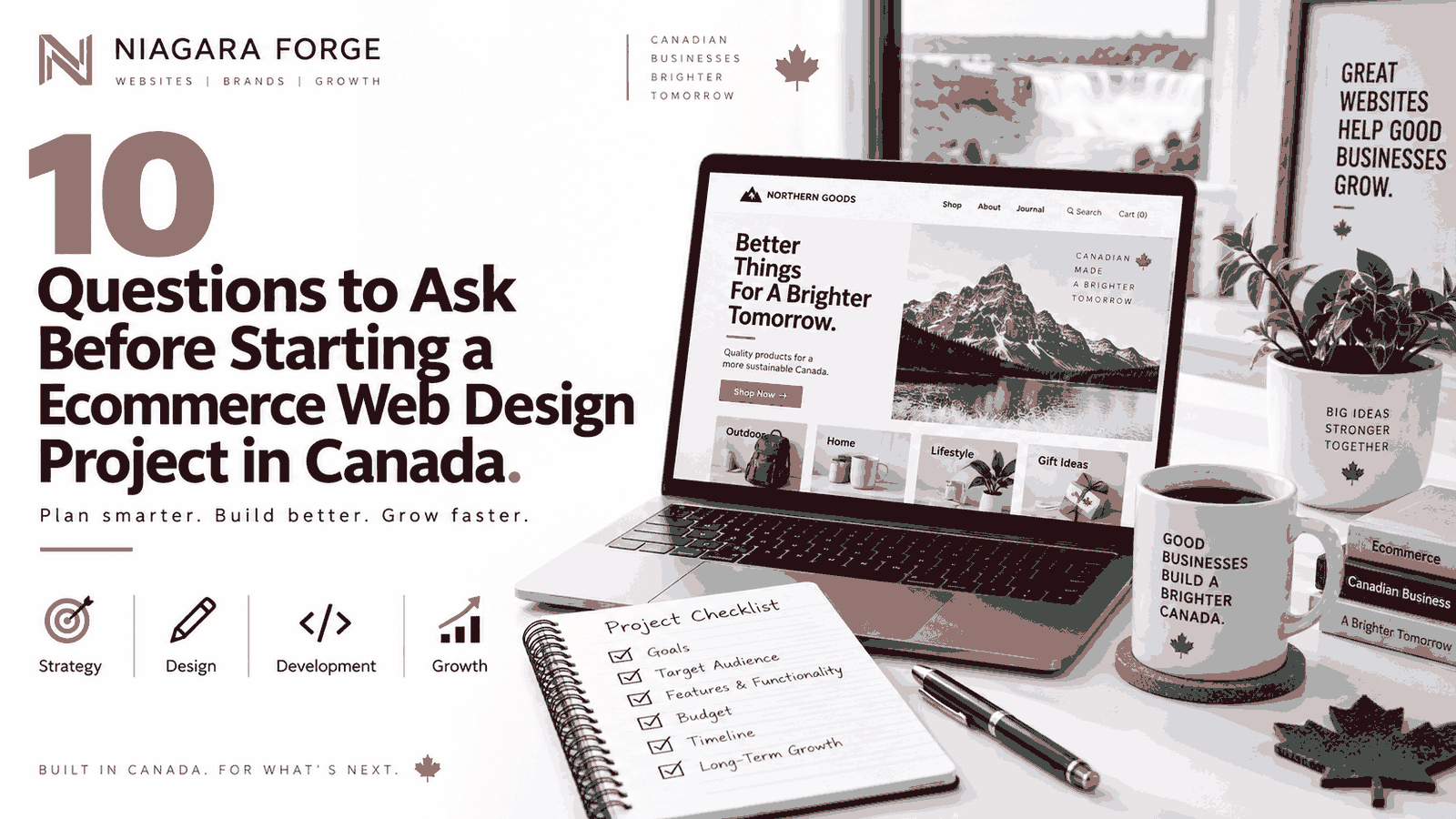
Web Design Company Audit: What to Check Before Hiring an Agency in Canada


Why a Pre-Hire Audit Matters for Canadian Businesses
Choosing a <a href=”https://niagaraforge.ca/service/web-design/”>web design agency is a high-stakes decision. A website is not just a digital brochure; it is your sales team, your customer service representative, and often your first impression. A web design company audit is a systematic evaluation of a potential agency’s capabilities, process, and past performance before you sign a contract. For Canadian businesses, this vetting step is not optional—it is essential. The market is crowded with agencies offering flashy portfolios, but few deliver the technical precision and local understanding required to convert visitors into paying customers. Skipping this audit can lead to months of lost revenue, a damaged brand reputation, and a costly redesign that could have been avoided with proper due diligence.
The High Cost of a Wrong Agency Choice
The financial impact of a poor agency selection extends far beyond the initial project fee. Consider the hidden costs that accumulate once a subpar website goes live:
- Lost conversion revenue: A slow-loading site or confusing checkout flow will silently drive customers to competitors. Every day with a broken user experience is a day of missed sales.
- Emergency remediation fees: When the site underperforms, you will likely need to hire another developer to fix bugs, improve speed, or redo entire templates. This “rescue work” often costs 30-50% more than the original build.
- SEO recovery time: A poorly coded site with broken redirects or thin content can drop your search rankings. Rebuilding authority takes months of content creation and technical fixes—time your business cannot afford.
- Opportunity cost: While you are managing agency disputes and delays, your marketing team cannot launch campaigns, and your sales team cannot rely on qualified leads from the website.
The wrong agency does not just waste money; it wastes momentum. A pre-hire audit helps you identify red flags—such as vague timelines, lack of portfolio case studies, or unwillingness to provide client references—before they become your problem.
How Canadian Market Differences Affect Web Design Needs
Canada is not a monolithic market. A website that works for a Montreal-based legal firm may fail for a Vancouver e-commerce startup. A proper audit must account for these regional and national nuances:
| Factor | Why It Matters for Canadian Businesses |
|---|---|
| Bilingual requirements | French-language content is legally required for many businesses in Quebec. An agency must demonstrate experience with proper translation, not just Google Translate, and handle character expansion in UI layouts. |
| Provincial regulations | Privacy laws like PIPEDA and Quebec’s Law 25 mandate specific cookie consent and data storage practices. Your agency must build compliant forms and analytics tracking from day one. |
| Cross-border e-commerce | Many Canadian businesses sell into the U.S. The agency must understand multi-currency pricing, duty/tax calculations at checkout, and shipping rate integrations for different provinces and territories. |
| Hosting and latency | Server location matters. An agency that recommends a U.S.-only hosting plan will deliver slower load times for users in Northern Ontario or the Maritimes. Canadian data residency may also be a client requirement. |
| Time zone and communication | An agency based in Toronto but managing projects from overseas contractors may miss critical meetings or delay urgent fixes. Confirm the actual work team’s location and working hours. |
These differences are not minor technical details. They affect user trust, legal compliance, and conversion rates. An agency that has only built sites for U.S. clients may overlook these factors entirely.
What a Comprehensive Audit Covers
A thorough web design company audit goes beyond checking a portfolio’s visual appeal. It examines the agency’s operational health and strategic fit. Use this checklist as a starting point:
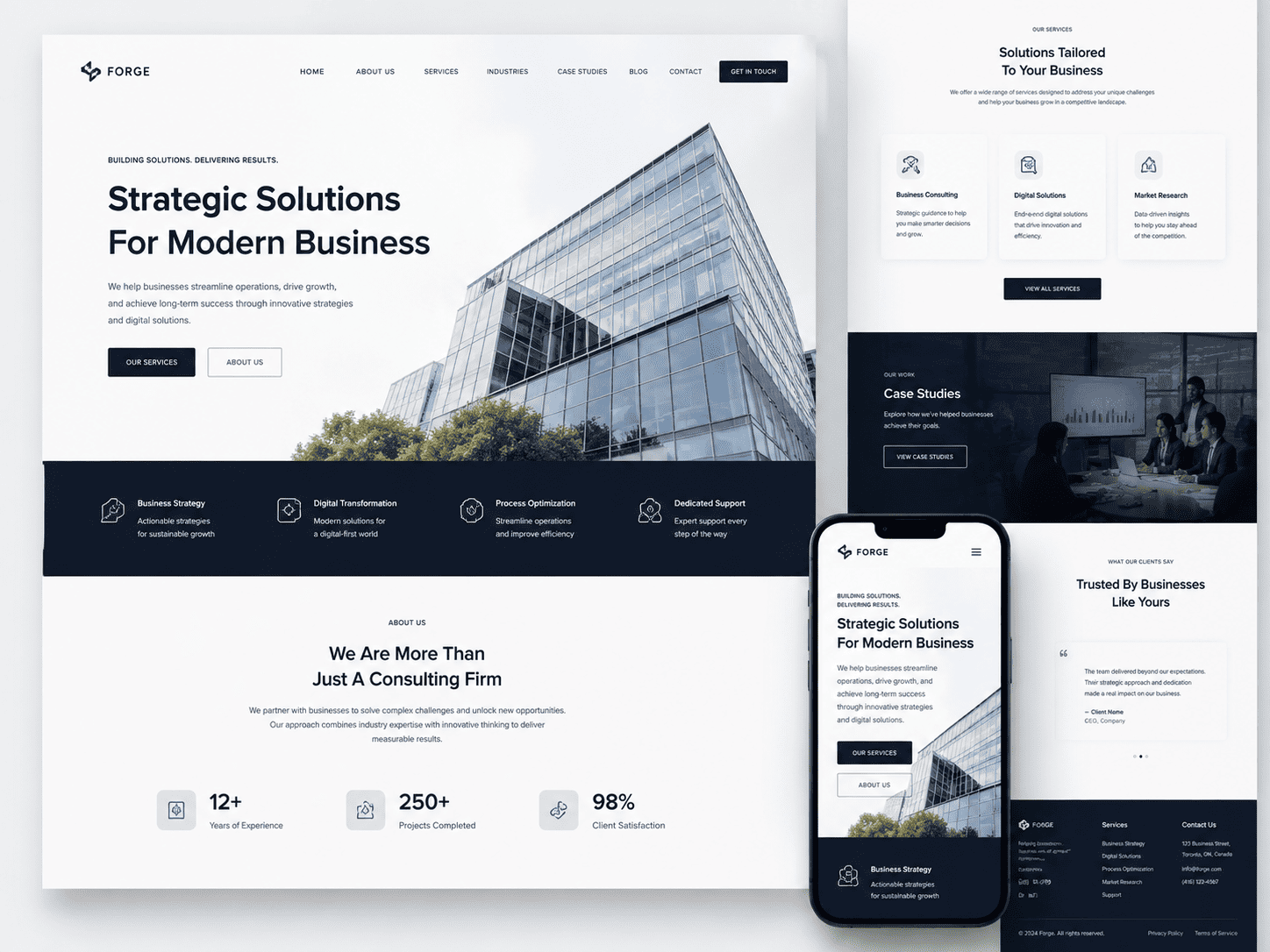
- Technical portfolio review: Do not just look at screenshots. Visit the live sites. Test their mobile responsiveness, page speed (using tools like Google PageSpeed Insights), and accessibility (WCAG compliance). Ask which parts of the build they actually did versus outsourced.
- Client references and retention: Ask for contact details of at least three clients from the last two years. Ask about post-launch support: How quickly do they respond to bug reports? Do they charge for every small change?
- Process and documentation: Request their project timeline and ask who owns the code, the domain, and the hosting accounts. A reputable agency will provide clear documentation and not hold your assets hostage.
- Content and SEO strategy: Does the agency offer keyword research and content structure planning? Or do they simply drop in placeholder text? For Canadian businesses, local SEO (like optimizing for “Toronto plumber” or “Vancouver dentist”) requires specific technical knowledge.
- Contract transparency: Scrutinize the proposal for hidden fees: what happens if you need an extra revision? What is the cost of a new page after launch? Is there a cancellation clause that is fair to you?
Conducting this audit takes time, but it is a fraction of the cost of a failed project. It ensures that the agency you hire is not just a vendor, but a partner who understands your Canadian market, your legal obligations, and your bottom line.
Verify Credentials and Industry Experience
Before signing a contract with a Canadian web design agency, you must move beyond the polished sales pitch and examine their actual track record. A credible agency will welcome scrutiny of their credentials, but a mediocre one will deflect or offer vague assurances. Your audit should focus on three concrete areas: the quality of their portfolio, the authenticity of their client references, and their demonstrated experience with Canadian businesses. Each element reveals a different layer of capability, and together they form a reliable picture of whether the agency can deliver relevant results for your specific sector.
Reviewing Portfolios for Quality and Relevance
A portfolio is not just a gallery of pretty screenshots; it is evidence of problem-solving. When reviewing an agency’s past work, do not merely scan for visual appeal. Instead, evaluate each project against a consistent checklist:
- User experience (UX): Does the navigation feel intuitive? Are calls-to-action placed logically? Test the live versions of their showcased sites if possible.
- Performance metrics: Look for any stated improvements in load time, conversion rate, or bounce rate. If the agency only shows design mockups without results, ask why.
- Content strategy: Is the copywriting tailored to the target audience, or is it generic filler? A good agency integrates content into the design, not as an afterthought.
- Mobile responsiveness: Check how the site behaves on a phone versus a desktop. Many agencies fail this simple test.
- Industry relevance: Have they built sites for businesses in your sector—e-commerce, legal, healthcare, manufacturing? While transferable skills exist, an agency familiar with your industry’s compliance requirements (e.g., PIPEDA for privacy, or specific e-commerce regulations) will save you time and costly revisions.
Be wary of portfolios that feature only large corporate clients. If you run a small or mid-sized business, ask to see projects of comparable scope and budget. A site designed for a national bank with a six-figure budget may not reflect what the agency can do for a regional retailer with a modest spend.
Checking Client References and Case Studies
Testimonials on an agency’s homepage are often cherry-picked and edited. To get the real story, request direct contact with at least two past clients—preferably ones whose projects are similar to yours. When you speak with them, ask pointed questions:
- Did the agency meet the original timeline and budget? If not, by how much did they overrun?
- How responsive were they during the post-launch support phase? Many agencies disappear after the final invoice.
- What specific problems did they solve that other vendors could not?
- Would they hire the agency again, and for what reason?
Also, demand to see full case studies, not just summaries. A credible case study will include the client’s original challenge, the agency’s proposed solution, the development process, and measurable outcomes—such as a 30% increase in organic traffic or a 20% reduction in cart abandonment. If the agency cannot provide numbers, treat that as a red flag. For a technical audit, you can also inspect the underlying code of their past projects. For example, if you have access to a live site they built, run a quick check for proper metadata and structured data using a simple command in your browser’s console:
document.querySelectorAll('meta[name="description"]').length;If this returns 0, the agency may have neglected basic on-page SEO—a sign of sloppy execution.
Assessing Experience with Canadian Businesses
Canada has unique digital requirements that an international or inexperienced agency might overlook. During your audit, specifically ask about their experience with:
- Bilingual content: If you serve both English and French markets, does the agency handle French translation and proper hreflang tags for Quebec?
- Canadian hosting and data residency: Do they recommend hosting providers with servers in Canada to comply with privacy laws like PIPEDA?
- Local SEO: Have they optimized sites for Google Business Profiles and Canadian-specific directories (e.g., YellowPages.ca, or provincial business registries)?
- Payment and shipping integrations: Are they familiar with Canadian payment gateways (e.g., Moneris, Stripe with Canadian tax calculations) and carriers like Canada Post or Purolator?
Ask for at least two references from Canadian clients who operate in a similar regulatory environment. If the agency claims Canadian experience but cannot name a single client outside Toronto or Vancouver, dig deeper. Also, verify their physical presence—do they have an office in Canada, or are they outsourcing to a third party? A local agency will understand regional nuances, from GST/HST calculations to the importance of French-language customer support in Quebec. Ultimately, an agency that has navigated Canada’s market will anticipate pitfalls you have not even considered, making your project smoother and more cost-effective. Do not settle for generic promises; demand proof of local expertise.
Evaluate Technical Expertise and Platform Proficiency
Technical expertise is the backbone of any successful web design project. A visually appealing site that fails to load quickly, lacks mobile responsiveness, or cannot connect to your existing business tools will undermine your investment. Before hiring a Canadian web design agency, you must verify that their technical stack aligns with your operational requirements. This goes beyond checking if they “know how to build websites”—it means confirming they can deliver a scalable, secure, and integrated solution that supports your growth for years to come.
CMS Platforms: WordPress, Shopify, or Custom Solutions
Your content management system (CMS) determines how easily your team can update pages, add products, or publish blog posts. Each platform serves different business models, and the agency must demonstrate deep proficiency in the one that matches your needs.
- WordPress: Ideal for content-heavy sites, blogs, and corporate websites. Look for agencies that contribute to the WordPress community or have certified developers. They should understand theme hierarchy, plugin security, and caching plugins like WP Rocket or LiteSpeed.
- Shopify: Best for e-commerce businesses, especially those selling physical products. Verify the agency’s experience with Shopify Liquid templates, app integrations (e.g., Klaviyo, ReCharge), and payment gateway configurations specific to Canadian merchants like Moneris or Stripe.
- Custom Solutions: If you require unique functionality—such as a proprietary booking system or a complex membership portal—a custom build using frameworks like Laravel or Next.js may be necessary. Ensure the agency can articulate why a custom solution is worth the higher cost and longer timeline compared to a CMS.
Ask for case studies that show how they handled migrations, plugins, or performance bottlenecks on their chosen platform. A competent agency will discuss trade-offs, not just promote one tool.
Responsive and Mobile-First Design Capabilities
With over half of Canadian web traffic originating from mobile devices, responsive design is non-negotiable. However, “responsive” is a baseline—what matters is whether the agency practices mobile-first design. This means they design for the smallest screen first, then progressively enhance for desktop, ensuring core content and navigation remain usable on a 320px-wide viewport.
During your audit, request to see live mobile versions of their recent projects. Check for:
- Touch-friendly buttons (minimum 44x44px tap targets)
- Legible font sizes without zooming (at least 16px body text)
- Fast load times on 4G networks (under 3 seconds)
- Proper handling of dynamic viewport units (e.g., no fixed heights that cause cut-offs)
Also ask about their testing process. Do they use real devices or only browser emulators? Agencies that rely solely on DevTools may miss issues with older Android browsers or Safari’s quirks.
Integration with CRM, Marketing, and Analytics Tools
A website is not an island. It must feed data into your CRM, trigger marketing automation, and report into analytics dashboards. The agency’s ability to handle these integrations separates a functional site from a strategic asset.
Common integrations to verify include:
- CRM: HubSpot, Salesforce, or Pipedrive—can they map custom fields and automate lead routing?
- Marketing: Mailchimp, ActiveCampaign, or Klaviyo—do they support double opt-in and newsletter signup forms without breaking GDPR/PIPEDA compliance?
- Analytics: Google Analytics 4, Matomo, or Search Console—do they set up event tracking for form submissions, clicks, and scroll depth?
| Integration Type | Key Question to Ask | Red Flag | Ideal Answer |
|---|---|---|---|
| CRM | How do you handle duplicate contact records between the site and our CRM? | “We use a third-party plugin and don’t test it.” | “We map unique identifiers and run a weekly deduplication script.” |
| Marketing | Can you set up abandoned cart emails for our Shopify store? | “That’s not part of web design.” | “Yes, we’ll connect Shopify to Klaviyo and configure the flow.” |
| Analytics | How do you measure form conversion rates? | “We just install the tracking code.” | “We use GA4 events with a dataLayer push for each form field.” |
Finally, ask about API rate limits, data synchronization frequency, and who owns the integration credentials. A reliable agency will provide documentation and a handover session, not just pass along passwords. By thoroughly auditing these technical areas, you reduce the risk of costly rework and ensure your website becomes a true business tool.
Analyze UX/UI Design Approach and User-Centricity
When auditing a Canadian web design agency, you must look beyond the visual polish of their portfolio. A beautiful website that fails to guide users toward a desired action—whether that is a quote request, a product purchase, or a newsletter subscription—is merely digital wallpaper. Your audit should focus on how the agency translates user needs into interface decisions. Ask for their design rationale, not just their mockups. Request to see how they documented user flows or usability testing results for past projects. A strong agency will articulate how each button placement, colour choice, and content block serves a specific user intent or business goal. If they speak only in terms of “modern aesthetics” or “trendy layouts,” treat that as a warning sign.
Red Flags in Design Portfolios
As you review their previous work, look for these specific indicators of shallow design thinking:
- Template uniformity: If every site in their portfolio shares the same layout structure, hero image style, and typography, they likely rely on pre-built themes rather than custom UX strategy.
- Navigation clutter: Portfolios that showcase sites with more than seven primary menu items, or with dropdown menus buried three levels deep, indicate a failure to prioritise user tasks.
- Stock-heavy imagery: Overuse of generic corporate photos (handshakes, smiling call-centre agents) suggests they are not investing in authentic visual communication that resonates with regional audiences.
- Missing mobile context: If their portfolio screenshots only show desktop views, ask to see the mobile versions. Many agencies still treat mobile as an afterthought, which is unacceptable in Canada where over 60% of web traffic is mobile-first.
- No accessibility evidence: Look for any mention of WCAG compliance, contrast ratio testing, or keyboard navigation testing. Absence of these terms in case studies is a major red flag.
User Journey Mapping and Persona Development
During your interview, ask the agency to walk you through their discovery phase. A user-centric agency will describe a process that includes creating detailed personas—fictional representations of your ideal customers based on real data, not assumptions. For a Canadian context, this should include regional nuances such as bilingual needs (English/French), seasonal purchasing patterns, and local trust signals (e.g., Canadian Privacy Laws, GST/HST transparency). Request to see a sample user journey map from a previous project. This map should plot every touchpoint a user has with the site, from first Google search to post-purchase follow-up. The agency should be able to explain where users drop off, what questions they have at each stage, and how the design eliminates friction. For example, a journey map for a Toronto-based legal firm might show that users need immediate access to fee structures and after-hours contact options. If the agency cannot provide a tangible example of how their design decisions originated from persona research, they are likely designing for their own taste, not your users.
Conversion-Centered Design Principles
Effective UX/UI is not about making the site “easy to use” in the abstract—it is about steering users toward specific conversion events. When auditing the agency, ask them to explain their approach to conversion rate optimisation (CRO). Key principles they should reference include:
- Visual hierarchy: The primary call-to-action (CTA) should dominate the viewport without competing elements. They should be able to explain why a particular CTA colour or placement outperforms another.
- Friction reduction: This includes minimising form fields, offering guest checkout, and providing clear error messages. Ask how they reduce cognitive load for users who are comparing your services against competitors.
- Trust signalling: Design elements such as customer testimonials, security badges, and transparent pricing near the CTA are not decorative—they are conversion tools. The agency should have a systematic method for placing these elements.
- A/B testing readiness: A mature agency will build their designs with testability in mind. They should be able to describe how they would structure a landing page to run a headline or layout experiment.
To assess their technical depth, you can ask them to explain how they would implement a simple conversion-tracking event. For instance, they should be comfortable with a basic JavaScript snippet for a button click:
document.getElementById('quote-btn').addEventListener('click', function() {
  dataLayer.push({'event': 'generate_lead', 'form_type': 'quote'});
});
This code example demonstrates that the agency understands the link between design and measurable outcomes. If they cannot articulate these principles or provide a concrete example of how they improved a client’s conversion rate through design iteration, you should proceed with caution. The right agency will treat every pixel as a lever for business growth, not just an ornament.
Check SEO and Performance Optimization Readiness
In Canada’s competitive digital landscape, a beautiful website that fails to rank or loads slowly is a costly liability. SEO and performance are not afterthoughts—they are foundational to visibility, user retention, and conversion. Before signing a contract, you must verify that your prospective agency treats technical optimization as a core discipline, not an add-on. A site that loads in under three seconds retains users, while one that lags by even a second can see engagement drop sharply. Similarly, proper SEO structure ensures search engines can crawl, index, and understand your content, which directly impacts your organic reach. Ask pointed questions about their process, tools, and deliverables in these three critical areas.
Technical SEO: Site Structure, Metadata, and Schema
Technical SEO is the backbone of your site’s discoverability. Without a logical hierarchy, search engines cannot prioritize your pages, and users will struggle to navigate. Your audit should cover how the agency plans to handle the following:
- Site architecture: Will they create a flat, logical hierarchy (home → services → service detail) with descriptive, keyword-rich URLs? Do they have a plan for internal linking to distribute authority?
- Metadata: Do they write unique title tags and meta descriptions for every page, or do they rely on generic templates? Ask for examples of how they optimize for Canadian search intent (e.g., “web design Toronto” vs. “web design Canada”).
- Schema markup: Will they implement structured data (e.g., LocalBusiness, FAQ, BreadcrumbList) to enable rich snippets? This is especially important for local Canadian businesses targeting city-specific queries.
- Indexation controls: How will they handle robots.txt, XML sitemaps, and canonical tags to prevent duplicate content issues?
Request a sample technical audit report from a past client. A credible agency will show you exactly how they identify crawl errors, broken links, and orphan pages—and how they fix them.
Core Web Vitals and Page Speed Optimization
Core Web Vitals are Google’s user-experience signals: Largest Contentful Paint (LCP), First Input Delay (FID), and Cumulative Layout Shift (CLS). These metrics directly affect rankings and bounce rates. Your agency should not only meet baseline thresholds but also demonstrate a proactive optimization strategy. Ask these specific questions:
- What is their target LCP? A good agency aims for under 2.5 seconds, not just the “passing” threshold of 4.0 seconds.
- How do they handle images and media? Do they use modern formats (WebP, AVIF), lazy loading, and responsive sizing? For Canadian users on mobile networks, this is critical.
- What about server response time? Will they use a Canadian content delivery network (CDN) or hosting provider to reduce latency for local visitors?
- How do they address CLS? Do they reserve space for fonts, ads, and embedded elements to prevent layout shifts?
Ask for a before-and-after performance report from a recent project. Look for improvements in Lighthouse scores and real-world field data from tools like CrUX. If they cannot provide metrics, that is a red flag.
Ongoing SEO Support and Reporting
SEO is not a one-time setup; it requires continuous monitoring and iteration. Your contract should clarify what happens after launch. Consider these points:
- Monthly reporting: Will you receive a clear dashboard showing organic traffic, keyword rankings, and conversion rates? Ensure they segment data by Canadian regions.
- Content updates: Do they offer regular on-page adjustments (e.g., refreshing metadata, adding new schema) as your business evolves?
- Technical maintenance: Who fixes issues like broken links, plugin updates, or server errors that emerge post-launch? Is that included in the retainer or billed separately?
- Algorithm changes: How do they stay updated with Google’s core updates, and how quickly can they adapt your site?
Finally, verify they use tools like Google Search Console and Analytics to track performance. A transparent agency will share access or at least provide annotated reports that explain changes and results. If they cannot articulate a post-launch roadmap, you are likely looking at a build-and-forget vendor—avoid that risk.
Review Web Accessibility and Compliance Standards
In Canada, web accessibility is not merely a best practice—it is a legal obligation with ethical weight. Provincial laws, most notably the Accessibility for Ontarians with Disabilities Act (AODA), mandate that public and private organizations with 50 or more employees make their web content accessible. Federally, the Accessible Canada Act (ACA) applies similar expectations to regulated entities. Beyond legislation, accessible design ensures that people with visual, auditory, motor, or cognitive disabilities can navigate your site independently. When auditing a web design company, you must verify that their process includes accessibility from discovery through post-launch, not as an afterthought. A failure here exposes your business to legal risk, reputational damage, and exclusion of a significant user base—approximately 22% of Canadians identify as having a disability.
Understanding AODA and WCAG Requirements
The AODA references the Web Content Accessibility Guidelines (WCAG) 2.0 Level AA as its technical benchmark, while the ACA aligns with WCAG 2.1 AA. These standards are organized into four principles: perceivable, operable, understandable, and robust. Key requirements include:
- Text alternatives for non-text content (e.g., alt attributes for images)
- Keyboard operability for all functionality
- Contrast ratio of at least 4.5:1 for normal text
- Captions and transcripts for multimedia
- Consistent navigation and predictable page behavior
Ask any agency you evaluate whether they design to WCAG 2.1 AA or higher, and whether they track updates to WCAG 2.2 (which adds criteria like focus appearance and draggable motion). A credible agency will cite specific success criteria and explain how they implement them in their component library. Beware of vague claims like “we make sites accessible” without reference to concrete standards.
Accessibility Testing and Remediation Services
An agency’s accessibility expertise is only as strong as its testing methodology. Automated tools like axe or WAVE catch roughly 30–50% of issues, so manual testing with screen readers (JAWS, NVDA, VoiceOver) and keyboard-only navigation is essential. During your audit, ask for a sample accessibility report from a past project. Verify that they test across:
- Desktop, tablet, and mobile viewports
- Multiple browsers (Chrome, Firefox, Safari, Edge)
- Screen reader combinations (e.g., NVDA with Firefox, VoiceOver with Safari)
Also confirm whether they offer remediation services post-launch. Accessibility is not a one-time fix; content updates, third-party widgets, and new features can introduce barriers. The agency should provide a documented process for ongoing monitoring, including periodic audits and a clear escalation path for reported issues. A practical code example of an accessible component they should handle correctly is a focus-visible style:
/* Ensure keyboard users see a clear focus indicator */
:focus-visible {
  outline: 3px solid #005fcc;
  outline-offset: 2px;
}
If the agency cannot explain how they would implement and test this simple pattern, that is a red flag.
Inclusive Design Best Practices
Beyond compliance checklists, leading agencies practice inclusive design—proactively addressing diverse user needs. This means involving people with disabilities in user testing, using plain language, and providing multiple ways to complete tasks. Ask potential partners how they handle:
- Form error identification with both text and icon indicators
- Alternative navigation for complex menus (e.g., skip links, breadcrumbs)
- Adjustable text spacing without breaking layout
- Reduced motion options for users with vestibular disorders
Inclusive design also extends to content strategy. For example, an agency should recommend descriptive link text (“Read the 2024 annual report” instead of “click here”) and ensure that PDFs served on the site are tagged or converted to accessible HTML. Request examples of how they have adapted a design system to support cognitive accessibility, such as simplifying forms or providing a glossary of jargon. A strong agency will treat accessibility as a continuous improvement cycle, not a box to tick. During your audit, ask to review their internal accessibility checklist and their team’s training credentials (e.g., IAAP certification). Ultimately, the right partner will demonstrate that accessibility is embedded in their workflow, from wireframes to QA, and will welcome your scrutiny as a sign of a serious client. Document your findings in a comparative matrix, scoring each agency on standards knowledge, testing depth, and inclusive design maturity, before you sign a contract.
Assess Content Strategy and Copywriting Support
In the Canadian digital landscape, your website’s content is the primary vehicle for conversion, search visibility, and brand credibility. A visually stunning site with weak or unstructured copy will underperform, regardless of its design polish. When conducting a Web Design Company Audit: What to Check Before Hiring an Agency in Canada, you must evaluate how the agency approaches content—not just as filler, but as a strategic asset. The right partner will treat content as a core component of the design process, ensuring that every page serves a clear user intent while aligning with your business goals. Without this alignment, even the most sophisticated layouts fail to engage visitors or generate leads.
Content Strategy and Editorial Planning
A reliable agency will begin with a documented content strategy before any visual mockups are created. This strategy should address your target audience’s pain points, the buyer’s journey, and the specific Canadian market nuances—such as bilingual considerations in Quebec or regional terminology. During your audit, ask for a sample editorial calendar or a content mapping document that shows how pages, blog posts, and CTAs will be structured. Key questions include:
- How do they conduct keyword research and topic clustering for your industry?
- Do they propose a content hierarchy that guides users from awareness to decision?
- Will they plan for ongoing content refresh cycles, or is it a one-time launch deliverable?
- How do they handle multilingual content, if applicable to your Canadian audience?
Editorial planning also involves governance—who approves copy, how revisions are tracked, and what the publishing workflow looks like. An agency that can show a clear process for content audits, gap analysis, and performance-based iteration demonstrates maturity. Avoid firms that treat copy as an afterthought or promise “SEO-friendly” text without showing you a structured outline for at least three key pages.
Copywriting for Web: Tone, Clarity, and Persuasion
Web copywriting is distinct from print or brochure writing. It must be scannable, concise, and action-oriented while maintaining a tone that resonates with your Canadian audience. During your audit, review the agency’s portfolio for live websites and read the copy aloud. Does it sound human or robotic? Are headlines benefit-driven? Persuasive web copy uses active verbs, addresses the reader directly, and includes clear calls to action without resorting to hype. For example, a Canadian law firm’s site should convey trust and authority, while a retail brand might use warmer, more casual language. The agency should be able to explain how they adapt tone to different sectors and how they test copy variations for conversion. Additionally, check whether they have in-house writers or subcontract to freelancers—this affects quality control and turnaround times. Ask for a short sample rewrite of one of your existing pages to gauge their ability to improve clarity and persuasion.
Content Management and Training Support
Post-launch, you need to manage your content without relying on the agency for every minor update. A thorough audit must include their content management system (CMS) capabilities and training provisions. Inquire about the following:
- Which CMS do they recommend (WordPress, Webflow, Craft CMS, etc.) and why?
- Do they provide a custom content model that makes adding new pages or blog posts intuitive?
- Will they offer hands-on training sessions for your team, and are those sessions recorded?
- Do they provide a style guide or content playbook that documents voice, formatting, and image usage?
- What is their support policy for content-related bugs or CMS issues after launch?
Some agencies will also offer ongoing content maintenance packages, which can be valuable if your team lacks writing or editing capacity. However, be cautious of lock-in contracts that make it difficult to move your content elsewhere. The best agencies empower you with documentation and clear ownership of your content assets. They should also demonstrate how they handle content migrations, including redirects and metadata preservation, to avoid losing SEO equity during a redesign. Ultimately, your content management experience determines whether your site remains fresh and relevant—so prioritize agencies that treat training as a core deliverable, not an optional extra. By scrutinizing these three areas, you ensure that your investment yields a site that not only looks good but also performs as a powerful communication tool for your Canadian audience.
Scrutinize Post-Launch Support and Maintenance Plans
Launching a website is not the finish line; it is the starting point of its operational lifecycle. Many Canadian businesses discover too late that a beautifully designed site becomes a liability without a structured maintenance agreement. Before signing a contract, you must evaluate how the agency handles updates, security patches, and emergency fixes. A vague “we’ll be there for you” promise is not a technical specification. Demand clarity on what happens the day after launch, and more importantly, six months later when your plugin conflicts with a new browser update. Here is what to verify in your agency’s support framework.
Definition of Support Scope and Response Times
First, request the exact list of activities covered under the monthly or annual fee. Does “maintenance” include content updates, or only bug fixes? Does it cover theme updates, plugin compatibility checks, and core CMS patches? Separate development hours from retainer hours. Many agencies offer a block of hours (e.g., 2 hours per month) but exclude major feature work. You also need tiered response times. For example:
- Critical (site down): response within 1 business hour, fix within 4 hours.
- High (broken checkout): response within 4 business hours, fix within 24 hours.
- Medium (layout bug): response within 1 business day, fix within 3 business days.
- Low (typo or minor styling): response within 2 business days, fix within next scheduled release.
Ask whether these times apply to business hours only (e.g., 9 AM–5 PM ET) or 24/7. Canadian agencies often operate on Eastern or Pacific time, so clarify which time zone governs. Also, confirm whether you have a named account manager or a ticket system with rotating staff. Rotating staff can lead to repetitive explanations; a named contact reduces friction.
Security Monitoring and Backup Services
Your audit must include cybersecurity hygiene. A basic plan should include daily malware scans, firewall configuration, and login attempt monitoring. More robust plans offer weekly off-site backups with a 30-day retention period. Crucially, verify how backups are tested. A backup that is never restored is not a backup—it is a hope. Ask for a quarterly restore test report. Additionally, check if the agency patches vulnerabilities within 48 hours of a disclosed CVE (Common Vulnerabilities and Exposures) for your CMS, plugins, and server software. Do they provide a security log you can review? For Canadian businesses, also confirm compliance with PIPEDA (Personal Information Protection and Electronic Documents Act) if you collect customer data. The agency should document where data is stored (ideally in Canada) and how they handle breach notification.
SLA Terms and Hidden Costs
Read the Service Level Agreement (SLA) as if it were a bank contract. Look for these red flags:
- “Best effort” language instead of guaranteed uptime or response metrics.
- Exclusions for third-party services (e.g., payment gateways, CDNs, or hosting providers) that shift liability to you.
- Per-incident fees after a certain threshold (e.g., first 3 support tickets free, then $150/hour).
- Automatic renewal clauses with 30-day cancellation windows that you might miss.
To compare offers, use the table below. It summarizes the critical dimensions you should request in writing from each agency.
| Feature to Audit | What to Ask For | Acceptable Standard |
|---|---|---|
| Support scope | Itemized list of included fixes and updates | Explicitly excludes new features; includes security patches |
| Response time (critical) | Guaranteed hours, not business days | 1 hour response, 4 hours to resolve |
| Backup frequency | Daily or weekly automated backups | Daily with 30-day retention and quarterly restore test |
| SLA penalty | Service credit for missed SLAs | 5–10% credit per missed incident |
| Hidden costs | Rate card for out-of-scope work | Fixed hourly rate, no “urgent” surcharge |
Finally, request a sample SLA document before you pay a deposit. If the agency hesitates to share it, treat that as a warning. A transparent SLA protects both parties and ensures your website remains a business asset, not a recurring expense with unpredictable surprises.
Compare Pricing Models and Contract Transparency
Before signing a web design agreement in Canada, you must understand how the agency charges and what the contract actually guarantees. Pricing models vary widely, and a lack of transparency here is the leading cause of budget overruns and disputes. This section breaks down the three common structures, how to spot hidden costs, and why payment schedules matter for your protection.
Fixed-Price vs. Hourly vs. Retainer Models
Each pricing model suits different project types, but they carry distinct risks and benefits for a Canadian business.
- Fixed-Price: You pay a set amount for a defined scope of work. Best for small, well-specified projects (e.g., a 5-page brochure site). Risk: any change request becomes a “change order” with extra costs. Always demand a detailed scope of work in the contract.
- Hourly: You pay for actual time spent. This is common for ongoing maintenance or when the project is exploratory. Risk: costs can balloon if the agency is slow or inefficient. Ask for a capped estimate or a “not to exceed” clause.
- Retainer: You pay a monthly fee for a set number of hours or services (e.g., updates, SEO, support). Best for long-term partnerships. Risk: you may pay for hours you don’t use. Ensure the contract specifies rollover or “use it or lose it” terms.
For a typical marketing website in Canada, fixed-price is often preferred because it aligns with a defined budget. However, if your project involves ongoing content changes or integrations, a hybrid (fixed for build + retainer for support) is more realistic.
Identifying Hidden Fees and Overages
Contracts often bury extra charges in fine print. Before signing, scan for these common overage triggers:
- Third-party licenses: Stock photos, fonts, plugins, or premium themes may be billed separately. Ask for a list of all paid assets and who owns them.
- Revisions beyond the included round: Most contracts include 2–3 revision rounds. Additional rounds are charged hourly or per revision. Confirm the definition of a “revision” (e.g., does a change to a single paragraph count?).
- Integration fees: Connecting your CRM, payment gateway, or marketing tools often triggers extra costs. Request a written list of supported integrations and any API setup fees.
- Hosting and domain: Some agencies bundle hosting at a markup. Compare their price to a comparable Canadian provider (e.g., AWS, Cloudflare, or local hosts).
- Post-launch support: A 30-day warranty is standard. Anything beyond that is usually billable. Clarify what “bug fix” means versus an “enhancement.”
To test transparency, ask the agency to provide a sample invoice from a past project. A reputable firm will share a redacted version.
Payment Milestones and Deliverables Schedule
Payment terms should mirror the project’s progress, not just a calendar. A typical Canadian web design contract uses 3–4 milestones:
| Milestone | Deliverable | Typical Payment % |
|---|---|---|
| Kickoff | Signed contract, project brief, sitemap | 25–30% |
| Design phase | Wireframes, mockups (approved) | 25–30% |
| Development | Staging site, functional build | 25–30% |
| Launch | Live site, final handoff, training | 10–20% |
Never pay more than 50% upfront. Also, require that each deliverable is explicitly defined in the contract — for example, “mockups for all pages” is vague; instead, demand “a clickable prototype for 10 page templates.”
Intellectual property (IP) is a critical clause. The contract must state that you own the final design, code, and content after full payment. Some agencies retain rights to their internal frameworks or pre-built components — that’s acceptable, but the custom work must be yours. If the agency uses open-source software (e.g., WordPress), confirm that you receive all admin credentials and that no proprietary lock-in exists.
Finally, include a termination clause. If you part ways mid-project, you should pay only for completed milestones and receive the work produced so far. A fair contract protects both parties, but the default should always favour your ownership of what you’ve paid for.
Finalize Your Audit Checklist and Decision Framework
By this point in your agency search, you have likely reviewed portfolios, interviewed candidates, and compared pricing structures. The final step is to consolidate your findings into a single, actionable framework. Without a structured approach, you risk choosing an agency based on a strong sales pitch rather than verifiable capability. This section provides a consolidated checklist and a scoring method to help you make a confident, data-driven decision—not an emotional one.
The Ultimate Web Design Agency Audit Checklist
Use this checklist as your non-negotiable reference during final meetings. Print it, keep it beside your laptop, and mark each item as “Pass,” “Fail,” or “Needs Clarification.” Do not skip any line item, even if the agency seems impressive.
- Legal & operational: Valid Canadian business registration (federal or provincial), GST/HST number, and clear contract terms regarding intellectual property, liability, and termination clauses.
- Portfolio relevance: At least two case studies from your industry or with similar technical requirements (e.g., e-commerce, multilingual, high-traffic). Ask for specific metrics like conversion rate lift or page speed improvement.
- Technical stack: Confirmation of the CMS (e.g., WordPress, Shopify, custom), hosting provider, and whether they use page builders or custom code. Verify they follow WCAG 2.1 AA accessibility standards.
- Team composition: Who is your daily contact? Will a senior designer or developer be assigned, or only juniors? Request a team chart with names and roles.
- Process transparency: A documented timeline with milestones, a communication cadence (weekly calls or Slack updates), and a revision policy (e.g., two rounds of feedback included).
- SEO & performance: A clear plan for core web vitals, structured data, meta tags, and sitemap submission. Ask how they handle image optimization and caching.
- Post-launch support: What is included in the first 30 days? What are hourly rates for ongoing maintenance, and is there a service-level agreement (SLA) for bug fixes?
- References: Contact at least two past clients. Ask about communication, adherence to deadlines, and what they would do differently.
Scoring Agencies Against Your Requirements
Not all checklist items carry equal weight. A small business may prioritize cost and speed, while an established enterprise may value scalability and security. Create a weighted scoring matrix to objectively compare finalists.
| Criteria | Weight (%) | Agency A Score (1–5) | Agency B Score (1–5) | Weighted Score (A) | Weighted Score (B) |
|---|---|---|---|---|---|
| Industry experience | 25% | 4 | 3 | 1.0 | 0.75 |
| Technical capability | 30% | 5 | 4 | 1.5 | 1.2 |
| Communication & process | 20% | 3 | 5 | 0.6 | 1.0 |
| Post-launch support | 15% | 4 | 2 | 0.6 | 0.3 |
| Budget fit | 10% | 2 | 4 | 0.2 | 0.4 |
| Total | 100% | — | — | 3.9 | 3.65 |
In this example, Agency A wins on technical strength, but Agency B is a close second due to superior communication. Your framework should reflect your strategic priorities, not just a gut feeling. If two agencies score within 0.5 points, schedule one final call to address remaining doubts.
Negotiating and Onboarding Successfully
Once you select a winner, do not rush to sign. Negotiate the contract in good faith, but focus on value, not just price. Request that the following items be written into the agreement:
- Fixed scope with clear deliverables: Specify every page, feature, and integration to avoid change-order fees later.
- Payment milestones tied to deliverables: For example, 30% upfront, 30% at design approval, 30% at development completion, and 10% at final launch.
- Source code and asset ownership: Ensure you own all files, including custom code, graphics, and content, upon full payment.
- A transition clause: Define what happens if you part ways mid-project—who owns the partial work and what data must be returned.
For onboarding, assign a single internal stakeholder as the primary point of contact. Provide the agency with all brand assets, access to hosting and domain accounts, and a clear list of your business goals. Schedule a kickoff meeting within the first week to align on communication tools, reporting formats, and escalation paths. A well-structured onboarding process reduces misunderstandings and sets the tone for a collaborative partnership. With your checklist scored and your contract negotiated, you can proceed with the confidence that your choice is based on evidence, not salesmanship.
Frequently Asked Questions
What should I look for in a web design agency’s portfolio?
Examine the portfolio for projects similar to your industry and business size. Look for a variety of design styles, mobile responsiveness, and user-friendly layouts. Check whether the sites are visually appealing and function well on different devices. Also, ask about the agency’s role in each project—did they handle both design and development? Reviewing portfolios helps you gauge the agency’s experience and whether their aesthetic aligns with your brand.
How can I verify a web design agency’s reputation in Canada?
Start by reading client testimonials on their website and third-party platforms like Google Reviews, Clutch, or LinkedIn. Ask for references and contact past clients directly to ask about their experience. Check if they have case studies with measurable results. Additionally, look for any complaints on the Better Business Bureau (BBB) or Canadian business registries. A reputable agency will have a track record of satisfied clients and transparent communication.
What essential clauses should be in a web design contract?
A solid contract should include a detailed scope of work, project timeline, payment schedule, intellectual property rights, and a clear revision process. It should also specify who owns the final website, content, and any custom code. Include clauses for confidentiality, data protection, and liability limitations. Ensure there are provisions for post-launch support and maintenance. Reviewing these clauses protects your investment and clarifies expectations for both parties.
Why is SEO important when choosing a web design agency?
SEO (Search Engine Optimization) determines how easily your target audience can find your website on search engines like Google. A well-designed website should have clean code, fast loading times, mobile optimization, and proper meta tags—all factors that affect SEO. An agency that understands SEO will create a site that is not only visually appealing but also ranks well. This leads to more organic traffic, better user engagement, and higher conversion rates.
What are the benefits of hiring a Canadian web design agency?
Hiring a Canadian agency offers several advantages: they understand the local market, cultural nuances, and legal requirements (such as bilingual content in French and English). They are in similar time zones, making communication easier. They are also familiar with Canadian hosting and data privacy regulations (PIPEDA). Additionally, local agencies can provide on-site meetings and ongoing support, which can be valuable for long-term collaboration.
How do I assess a web design agency’s technical expertise?
Ask about the technologies they specialize in (e.g., WordPress, Shopify, React) and their experience with content management systems. Inquire about their development standards, including code quality, security practices, and performance optimization. Check if they follow accessibility guidelines (WCAG) and responsive design principles. You can also request a technical audit of your current site or ask for a sample of their code. A competent agency should be transparent about their technical capabilities.
What should be included in post-launch support and maintenance?
Post-launch support typically includes bug fixes, security updates, backups, and monitoring. Some agencies offer monthly maintenance packages that cover software updates, content changes, and performance enhancements. Clarify the response time for urgent issues and whether there are additional costs for major updates. A reliable agency will provide a clear service level agreement (SLA) and ensure your website remains secure and up-to-date after the initial launch.
How can I ensure the web design agency will deliver on time?
Review their project management process and ask for a detailed timeline with milestones. Check if they have a dedicated project manager who will keep you updated. Look for reviews that mention timely delivery. Establish a clear communication plan and set expectations upfront. Include penalties for delays in the contract if necessary. A professional agency will have a structured workflow and a record of meeting deadlines.
Sources and further reading
- PIPEDA – Office of the Privacy Commissioner of Canada
- WCAG 2.1 – World Wide Web Consortium (W3C)
- Google Search Central – Search Engine Optimization (SEO) Starter Guide
- Better Business Bureau (BBB) – Canada
- Canadian Marketing Association (CMA) – Digital Marketing Standards
- Canadian Internet Registration Authority (CIRA) – .CA Domain Registry
- Canadian Anti-Fraud Centre – Online Scams
- Web Design and Development Standards – Government of Canada
- Google PageSpeed Insights – Performance Testing Tool
- W3C – Mobile Web Best Practices
Need help with this topic?
Send us your details and we will contact you.