


Introduction: Why Calgary Businesses Need a Strategic Web Design Partner
Calgary’s business environment is defined by resilience, rapid growth, and a distinct entrepreneurial energy. From energy sector innovators and technology startups to a thriving retail and professional services community, the city’s economy is diverse and competitive. In this landscape, your website is no longer a digital brochure—it is your most active salesperson, your first impression, and often the deciding factor in whether a potential customer chooses you over a competitor. A well-designed website does more than look polished; it must convert visitors into leads, communicate your unique value proposition clearly, and build trust within seconds.
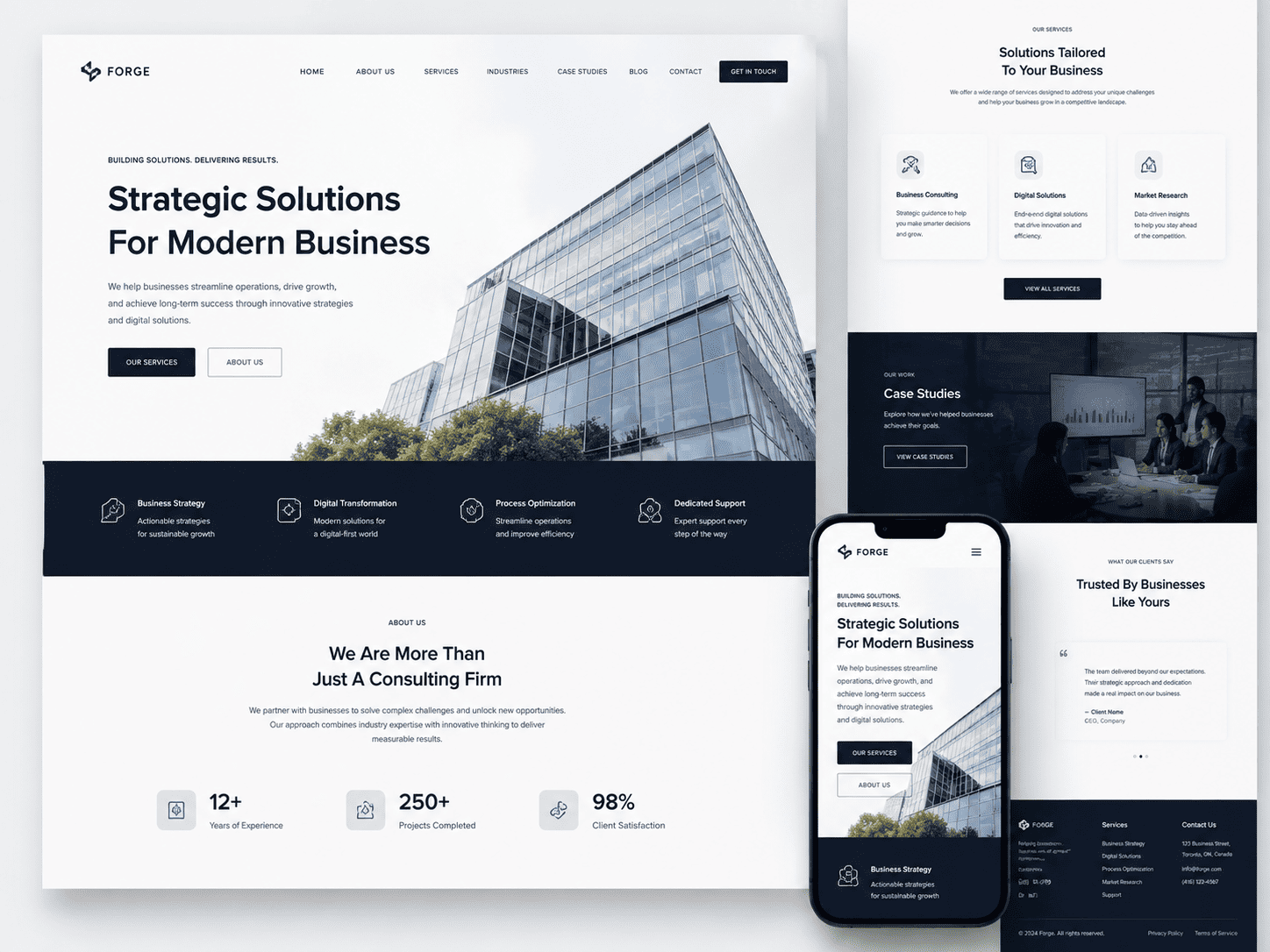
However, achieving that level of performance requires more than a template and a domain name. It requires a strategic partner who understands both the local market and the technical nuances of modern <a href=”https://niagaraforge.ca/service/web-design/”>web design. A professional web design company in Calgary brings more than coding skills—they bring a deep understanding of local consumer behavior, industry-specific challenges, and the digital tactics that drive measurable results. Without this strategic alignment, even the most visually appealing website can fail to generate inquiries, rank poorly in search engines, or simply feel disconnected from your business goals.
This guide will walk you through why a strategic website is essential for Calgary businesses, what it truly costs to build one that performs, and what you should expect when engaging a professional design partner. Whether you are launching a new venture, rebranding, or looking to overhaul an outdated site, understanding these elements will empower you to make informed decisions—and avoid costly mistakes.
The Digital Landscape in Calgary: Key Industries and Online Competition
Calgary’s economic pillars—energy, agriculture, finance, logistics, and a rapidly expanding technology sector—create a unique digital ecosystem. Each industry comes with its own competitive pressures and customer expectations. Consider the following:
- Energy and Oilfield Services: Companies in this sector often serve B2B clients who research extensively online before making contact. A website must showcase technical expertise, project case studies, and compliance certifications in an accessible format. Poor mobile performance or slow load times here can cost six-figure contracts.
- Technology and SaaS Startups: With Calgary’s growing innovation hub, startups face intense competition for funding and early adopters. Their websites must communicate complex product value quickly, often using interactive demos, clear feature comparisons, and strong calls-to-action.
- Professional Services (Legal, Accounting, Consulting): Trust is paramount. These businesses need clean, authoritative design, client testimonials, and clear service pathways. A dated or cluttered site erodes credibility immediately.
- Retail, Hospitality, and Local Services: For consumer-facing businesses, local search visibility is critical. The website must integrate seamlessly with Google Business Profile, include location-specific content, and make it effortless for users to book, call, or find directions.
The common thread is that online competition in Calgary is no longer just about having a presence; it is about out-positioning competitors in search results, delivering a superior user experience, and building a brand that resonates locally. A generic, outsourced website cannot achieve this. Only a partner who understands the nuances of Calgary’s market can tailor your digital presence to your specific audience.
How a Strategic Website Drives Local Lead Generation and Brand Credibility
A strategic website is engineered with a clear purpose: to generate qualified leads and establish your brand as the credible choice in your field. This goes far beyond aesthetics. It involves a deliberate architecture that guides users through a journey—from awareness to consideration to conversion. Here is how a professional web design company in Calgary achieves this:
| Strategic Element | Impact on Lead Generation | Impact on Brand Credibility |
|---|---|---|
| Local SEO Optimization | Targets keywords like “Calgary web design” or “oilfield safety services Calgary” to capture users with high purchase intent. | Ranking high on Google for local searches signals authority and relevance to your community. |
| Clear Value Proposition | Headlines and subheadings immediately communicate what you do, for whom, and why you are better. This reduces bounce rates and increases time on site. | Clarity builds trust. Users are more likely to contact a business that explains its offering without jargon or confusion. |
| Conversion-Focused Design | Strategic placement of forms, phone numbers, and chat widgets removes friction. Each page has a single, obvious next step. | A seamless, intuitive interface reflects your operational efficiency and attention to detail. |
| Performance and Speed | Fast-loading pages improve user engagement and reduce abandonment, directly increasing form submissions and calls. | Slow websites are perceived as unprofessional or even insecure, damaging your reputation. |
| Mobile-First Responsiveness | Over 60% of local searches happen on mobile devices. A responsive site captures these users at the moment of need. | A flawless mobile experience shows you understand how your customers actually work and shop. |
| Trust Signals | Testimonials, case studies, certifications, and client logos placed strategically near conversion points reduce hesitation. | Social proof is the fastest way to establish credibility in a new or competitive market. |
When these elements are combined, your website becomes a 24/7 lead generation machine. It answers questions, addresses objections, and makes it easy for potential customers to take the next step. Without this strategic foundation, you are essentially paying for a digital sign that no one can find or trust.
What This Guide Covers: Strategy, Investment, and the Engagement Process
Understanding the “why” is only the first step. The next is understanding the “how” and the “how much.” This guide is structured to give you a complete, transparent view of what working with a professional web design company in Calgary entails. The following sections will delve into three critical areas:
- Strategy: We will explore the discovery and planning phase, including how a professional team audits your current digital presence, defines your target audience, and creates a sitemap and content strategy that aligns with your business objectives. You will learn what questions you should ask before any design work begins.
- Investment: We will break down realistic cost ranges for different types of websites—from small business brochure sites to complex e-commerce platforms. We will also explain what factors influence pricing, such as custom design versus templates, e-commerce functionality, integrations, copywriting, and ongoing maintenance. This will help you budget accurately and avoid surprise quotes.
- What to Expect: We will walk you through the typical engagement timeline, from the initial kickoff meeting to design mockups, development sprints, quality assurance testing, and final launch. We will also highlight the importance of post-launch support, training, and analytics setup, so you know exactly what level of service to demand from your partner.
By the end of this guide, you will be equipped with the knowledge to evaluate potential web design partners, ask the right questions, and make a confident investment in your digital future. The goal is not to sell you on a single approach, but to provide a clear framework that ensures your website becomes a true business asset—not just an expense. In Calgary’s fast-paced market, the right strategic partner is the difference between being found and being overlooked.
Defining Your Web Design Strategy: Goals, Audience, and Positioning
Before a single pixel is placed or a line of code is written, the most critical phase of any web design project in Calgary is strategic definition. A website is not a digital brochure; it is a functional business asset. Without a clear strategy, you risk investing thousands of dollars into a site that looks attractive but fails to generate leads, convert visitors, or differentiate your brand. The strategic groundwork determines whether your website becomes a revenue engine or an expensive liability. This phase involves three interconnected pillars: measurable goals, deep audience understanding, and competitive positioning. Skipping these steps is the primary reason projects fail to meet expectations, leading to costly redesigns within 18 months. For Calgary businesses, where the market is both tight-knit and competitive, a strategy-first approach is non-negotiable.
Setting Measurable Goals: Lead Generation, E-Commerce, or Brand Awareness
Your website must serve a specific business function, and that function must be quantified. In Calgary’s diverse economy—spanning energy, technology, real estate, and retail—the goals of a law firm, a boutique fitness studio, and an oilfield supply company will differ radically. Defining these goals upfront ensures your design choices, content architecture, and calls-to-action (CTAs) align with measurable outcomes. Without metrics, you cannot evaluate return on investment (ROI), nor can you iterate effectively.
Consider the three primary goal categories:
- Lead Generation: If your business relies on inquiries, your site must prioritize conversion paths. This means prominent contact forms, click-to-call buttons, live chat integration, and gated content (e.g., downloadable guides). Key metrics include form submissions, phone calls, and email signups. For example, a Calgary plumbing company should track “emergency call” clicks as a primary KPI.
- E-Commerce: If you sell products online, your strategy revolves around transaction completion. This requires streamlined product pages, secure checkout, inventory integration, and abandoned-cart recovery. Metrics include add-to-cart rate, checkout completion rate, and average order value. A local craft brewery selling merchandise needs a different UX than a national retailer, but both need frictionless payment.
- Brand Awareness: For organizations focused on thought leadership or community presence, the goal is engagement and recall. This might involve blog traffic, video views, or time-on-page. Metrics include unique visitors, bounce rate, and social shares. A Calgary non-profit or a professional services firm aiming to establish authority might prioritize educational content over direct sales.
To operationalize these goals, use the SMART framework (Specific, Measurable, Achievable, Relevant, Time-bound). For instance, instead of “get more leads,” define: “Increase qualified contact form submissions by 25% within six months by optimizing the service page layout and adding a live chat widget.” This precision allows your web design company to make data-driven decisions. It also enables A/B testing post-launch. If you cannot articulate what a successful website looks like, you will never know if you have achieved it.
A practical tool for this phase is a goal matrix. Create a simple table with columns for “Primary Goal,” “Secondary Goal,” “Key Metric,” “Target Value,” and “Measurement Tool.” For example:
| Primary Goal | Key Metric | Target Value | Measurement Tool |
|---|---|---|---|
| Lead Generation | Form submissions | 30/month | Google Analytics + CRM |
| E-Commerce | Checkout completion rate | 2.5% | Shopify Analytics |
| Brand Awareness | Average session duration | 3 minutes | Google Analytics |
This table should be shared with your design team at the kickoff meeting. It becomes the benchmark for every decision, from homepage hero imagery to footer navigation.
Creating User Personas for Calgary’s Diverse Demographics
Calgary is not a monolithic market. The city’s population includes young tech professionals in the Beltline, established oil and gas executives in Springbank Hill, growing immigrant communities in Forest Lawn, and university students near SAIT and the University of Calgary. A website that speaks to all of them equally often speaks to none. User personas are semi-fictional representations of your ideal customers, based on real data, market research, and informed assumptions. They humanize your audience and force you to design for specific needs, pain points, and behaviors.
For a Calgary web design project, create at least three distinct personas. Each should include:
- Demographics: Age, income, education, occupation, and family status.
- Geographic context: Which quadrant or neighborhood they live in, and whether they commute downtown or work remotely.
- Goals and frustrations: What they are trying to achieve on your site, and what barriers they face.
- Digital behavior: Device preference (mobile vs. desktop), social media usage, and search habits.
Example persona for a Calgary home renovation company:
“Suburban Renovator Rachel” is a 42-year-old project manager living in Tuscany. She earns $140,000/year, has two children, and owns a 1990s infill that needs a kitchen upgrade. She is time-poor, searches on her iPhone during lunch breaks, and is frustrated by contractors who don’t show before-and-after portfolios. She values transparency in pricing and expects to see completed project timelines. Her primary goal is to find a trustworthy company that can handle permits and provide a fixed quote. She will abandon a website that lacks clear service descriptions or has no mobile-friendly gallery.
Now consider a contrasting persona: “Downtown Tech Tom”, a 29-year-old software developer renting in East Village. He is researching a custom PC build service. He is technically savvy, uses ad blockers, and compares specs across five different sites. He expects fast load times and detailed technical specifications. A website with heavy imagery and vague copy will lose him immediately. These personas drive different design choices: Rachel needs large, reassuring visuals and trust signals (e.g., BBB accreditation, warranty badges), while Tom needs dense, scannable data and a minimalist layout.
To gather real data for personas, conduct stakeholder interviews, analyze existing customer databases, and use tools like Google Analytics to review audience demographics. If you are a new business, look at competitors’ customer reviews on Google Maps and Yelp to identify common complaints and praise points. The key is to avoid stereotypes. Calgary’s diversity also includes a significant Indigenous population, a growing South Asian community, and a large Filipino workforce. Ensure your personas reflect the actual mix of your target market, not a generic “average Canadian.”
Competitive Analysis: Positioning Your Brand Against Local and National Rivals
Calgary’s business landscape is dominated by a few large players (e.g., ATB Financial, WestJet, The City of Calgary) but is rich with mid-sized and small enterprises. Your website must carve out a distinct position against both local competitors who understand the market intimately and national chains that have bigger budgets. A competitive analysis is not about copying what others do; it is about identifying gaps and opportunities to differentiate.
Start by listing your top five direct competitors in Calgary. For each, evaluate their website across several dimensions:
- User experience: How many clicks to get a quote? Is the navigation intuitive?
- Content quality: Do they publish blogs, case studies, or local guides? Is their tone corporate or conversational?
- Technical performance: Test their page speed using Google PageSpeed Insights. Check mobile responsiveness.
- SEO strategy: What keywords do they rank for? Use tools like SEMrush or Ahrefs (even free trials) to see their top pages.
- Visual design: Are they using outdated stock photos? Do they have a unique brand identity or a generic template?
After this audit, create a positioning map. Plot competitors on two axes—for example, “Price (Low to High)” and “Service Depth (Basic to Premium).” Identify where the white space is. If all competitors are mid-price and generic, you might position yourself as the premium, specialized option. Alternatively, if everyone is flashy, you could win with a stark, utilitarian design that emphasizes speed and clarity.
For instance, a Calgary accounting firm competing against national firms like KPMG and local boutiques. The national firms have massive authority but often feel impersonal. The boutiques are friendly but lack technical depth. Your position could be “high-touch expertise for Calgary’s tech startups,” using case studies from local SaaS companies and a design that feels modern but trustworthy. Your competitive analysis should also reveal content gaps. If no competitor has a comprehensive guide to “Alberta small business tax changes for 2024,” you can create that resource and dominate search results for that query.
Finally, use this analysis to define your unique value proposition (UVP). This is a single sentence that explains why a customer should choose you. For example: “We are the only Calgary web design agency that guarantees a 90-day SEO roadmap post-launch.” Your UVP should appear prominently on your homepage and in your meta descriptions. It is the strategic bridge between your internal goals and your external audience’s needs.
In summary, the strategy phase is where you answer the “why” and “who” before the “how.” By setting measurable goals, building detailed personas, and conducting rigorous competitive analysis, you provide your web design company with the blueprint needed to create a site that performs. This upfront investment of time—typically two to three weeks—saves months of revision cycles and ensures your Calgary business stands out in a crowded digital ecosystem.
Core Services Offered by Calgary Web Design Companies
When you engage a professional web design company in Calgary, you are not simply hiring someone to make a website look attractive. A full-service digital partner provides a comprehensive ecosystem of services designed to take your project from strategic concept to a live, high-performing asset. Understanding this spectrum of services is critical before you sign a contract, because the depth and quality of these offerings directly impact your return on investment. A typical engagement covers five distinct pillars: user experience (UX) and user interface (UI) design, front-end and back-end development, content strategy, search engine optimization (SEO), and post-launch maintenance. Below, we break down the core services you should expect from a reputable Calgary firm, with a specific focus on how they deliver tangible business results.
UX/UI Design: Crafting Intuitive and Engaging User Journeys
The foundation of any successful website is not its visual flair, but its usability. Calgary web design companies invest heavily in the UX/UI phase because this is where user behaviour is analysed and converted into a logical, frictionless flow. UX (User Experience) design begins with research: understanding your target demographic, mapping their pain points, and creating user personas. This research informs the information architecture—how pages are structured, how navigation menus are labelled, and how many clicks it takes for a visitor to reach a conversion point, such as a contact form or a product checkout.
UI (User Interface) design then takes that structural blueprint and applies visual language. This includes typography, colour psychology, spacing, iconography, and interactive micro-elements. A Calgary-based agency will tailor these visual choices to your brand identity while also considering local market nuances. For example, a professional services firm in downtown Calgary might benefit from a clean, conservative palette, while a tech startup in the Beltline could leverage bold gradients and asymmetrical layouts. The key deliverable from this phase is a clickable prototype, which allows you to test the user journey before a single line of code is written. This iterative process—design, test, refine—reduces costly errors and ensures that when the site launches, it converts visitors into leads or customers efficiently.
Responsive Web Development: Mobile-First and Performance Optimized
Once the design is approved, the project moves into development. Modern Calgary web design companies adopt a mobile-first development approach. This is not a stylistic preference; it is a technical necessity. With over 60% of all web traffic originating from mobile devices, and Google’s indexing now being mobile-first, your site must perform flawlessly on smartphones and tablets before it is even considered for desktop. Development teams use a combination of technologies—HTML5, CSS3, JavaScript, and robust back-end frameworks like React, Laravel, or WordPress—to bring the design to life.
Performance optimization is a non-negotiable component of this service. A slow-loading site is a conversion killer. In Calgary’s competitive market, users expect pages to load in under two seconds. A professional development team will conduct code minification, image compression, lazy loading, and server-side caching to ensure your site meets Core Web Vitals benchmarks. They also ensure cross-browser compatibility, meaning your site functions identically on Chrome, Safari, Firefox, and Edge. Furthermore, they build an accessible site that complies with WCAG (Web Content Accessibility Guidelines), ensuring that users with disabilities can navigate your content. The result is a fast, stable, and inclusive platform that supports your marketing efforts rather than undermining them.
Content Strategy and SEO Integration for Calgary Search Visibility
A beautifully designed and technically sound website is useless if no one can find it. This is where content strategy and SEO integration come into play. Calgary web design companies do not just build pages; they build content ecosystems designed to rank for local search terms. The process begins with keyword research specific to the Calgary market—terms like “Calgary plumber,” “best dental clinic in NW Calgary,” or “oilfield safety training provider.” These keywords are then woven into the site’s architecture, meta descriptions, header tags, and body copy.
Content creation goes beyond writing blog posts. It involves developing strategic landing pages for each of your services, writing compelling calls-to-action, and producing multimedia elements like video scripts and infographics. The agency will also implement technical SEO foundations, including XML sitemaps, schema markup for local businesses, and clean URL structures. This ensures that when a potential customer in Airdrie or Cochrane searches for your service, your website appears prominently. Moreover, a reputable firm will set up Google Search Console and Bing Webmaster Tools, allowing you to monitor your search performance. The table below illustrates the typical service tiers and their associated deliverables, giving you a clear comparison when evaluating proposals from different firms.
| Service Tier | Core Deliverables | Typical Timeline | Ideal For |
|---|---|---|---|
| Starter Package | 5-page responsive site, basic on-page SEO, mobile optimization, contact form integration | 3–4 weeks | Small local businesses, freelancers, sole proprietors |
| Business Growth Package | Up to 15 pages, custom UX/UI design, blog setup, advanced SEO keyword mapping, analytics dashboard, speed optimization | 6–8 weeks | Growing companies needing lead generation and content marketing |
| Enterprise / E-commerce Package | Unlimited pages, custom web application development, payment gateway integration, multi-language support, dedicated server configuration, ongoing A/B testing | 12+ weeks | Large organizations, retail operations, or firms with complex booking systems |
Beyond the initial build, ongoing maintenance is a critical service that many Calgary firms offer as a retainer. This includes security patches, plugin updates, daily backups, and uptime monitoring. It also involves periodic content refreshes and conversion rate optimization (CRO) audits. A full-service partner will not disappear after launch; they will provide a monthly report on traffic, user behaviour, and search rankings, allowing you to make data-driven decisions. When you engage a web design company in Calgary, you are buying a long-term asset. The services outlined above—UX/UI design, responsive development, and SEO-integrated content—are not optional extras. They are the fundamental pillars of a website that generates leads, builds trust, and scales with your business. By understanding these core offerings, you can ask the right questions during your discovery calls and select a partner who delivers measurable value, not just a digital brochure.
The Web Design Process: Step-by-Step from Discovery to Launch
Engaging a web design company in Calgary is not a single transaction; it is a structured collaboration. Understanding the project lifecycle before you sign a contract will save you from surprises, scope creep, and missed deadlines. While every agency has its own flavour, the core phases remain consistent: discovery, design, development, and launch. Below is what you can realistically expect at each stage, including typical timelines, communication cadence, and the deliverables you will receive.
Discovery and Research: Workshops, Audits, and Requirements Gathering
This first phase is the foundation. A reputable Calgary web design firm will not open a page builder and start choosing fonts. Instead, they will invest significant time in understanding your business, your users, and your competitive landscape. The discovery phase typically lasts one to three weeks, depending on the complexity of your project.
What happens during discovery:
- Stakeholder workshops: You will participate in a 2–4 hour facilitated session (in-person or virtual) where the agency asks about your business goals, target audience, and success metrics. Expect hard questions about what your current site does poorly and what you need it to do better.
- Technical audit: If you have an existing website, the team will run performance tests, review your CMS, and analyze your SEO health. They will look for broken links, slow load times, and indexing issues.
- Competitive analysis: The agency reviews three to five direct competitors in the Calgary market (or your specific industry) to identify gaps in functionality, messaging, and visual design.
- Requirements document: You will receive a detailed specification listing every page, feature, and integration (e.g., booking systems, e-commerce, CRM). This document becomes the contract for what is built.
Communication and deliverables: Expect one kickoff meeting, one or two follow-up calls, and a written strategic brief. The agency will share a project roadmap with milestones. This is your window to raise concerns — once you approve the requirements document, changes become change orders (and cost extra).
Practical tip: For the workshop, bring analytics data from your current site (if you have it), customer personas, and your top three revenue-driving pages. This reduces guesswork and speeds up the process.
Design and Prototyping: Wireframes, Mockups, and Client Feedback Loops
Once discovery is approved, the design phase begins. This stage typically takes two to four weeks. The goal is not to show you pretty pictures; it is to validate structure, user flow, and visual direction before a single line of code is written.
The design sequence you will experience:
- Wireframes (low-fidelity): Black-and-white layouts that show content hierarchy, navigation, and placement of elements. No colours, no images. This allows you to focus on functionality, not aesthetics.
- Visual mockups (high-fidelity): After wireframes are approved, the designer applies your brand colours, typography, imagery, and spacing. You will typically see mockups for the homepage and one or two inner pages first (e.g., service page, contact page).
- Interactive prototype: Many Calgary agencies use tools like Figma or Adobe XD to create a clickable prototype. You can navigate between pages as if it were a real site. This is the closest you get to feeling the user experience before development.
Client feedback loops: Plan for two to three rounds of revisions. The agency will present mockups in a scheduled meeting, then give you a 48–72 hour window to submit consolidated feedback. Avoid sending comments line-by-line in email; instead, use a shared annotation tool (like Loom video or Figma comments). The agency will compile all feedback into a single revision list.
Deliverables at this stage: Approved wireframes, a style guide (colours, fonts, button states), and a clickable prototype. Do not proceed to development until you are fully satisfied with the prototype. Changes after this point are exponentially more expensive.
What to watch for: A common mistake is asking for “a modern look” without specifics. Instead, reference two or three websites you admire and explain why — is it the whitespace, the card layouts, or the typography? This gives the designer actionable direction.
Development, Testing, and Launch: Quality Assurance and Deployment
This is the longest phase, typically four to eight weeks for a standard business website, and longer for e-commerce or custom web applications. The design is now translated into HTML, CSS, JavaScript, and a CMS (often WordPress, Webflow, or a custom framework).
Development milestones:
- Front-end build: The developer creates the static pages, ensuring responsiveness across mobile, tablet, and desktop. This is where your design is pixel-perfectly implemented.
- Back-end integrations: Forms get connected to your email or CRM, e-commerce is linked to payment gateways, and any third-party tools (like Google Analytics, live chat, or booking software) are configured.
- Content migration: If you have existing content, the team will move it over. You are responsible for providing final copy and images at this stage — missing content is the #1 cause of launch delays.
Quality assurance (QA) testing: Before you ever see the live site, the agency runs a rigorous QA checklist. This includes:
- Cross-browser testing (Chrome, Safari, Firefox, Edge)
- Mobile device testing (real devices, not just emulators)
- Link checking (all internal and external URLs)
- Form submission tests (including error states)
- Performance checks (page speed, image compression)
- Accessibility scans (WCAG 2.1 AA compliance)
Your role in testing: The agency will provide you with a staging URL (a private test site) and a checklist for user acceptance testing (UAT). You should spend at least one full day clicking through every page, submitting forms, and testing on your own phone. Log any bugs directly in a shared spreadsheet or project management tool like Trello or Asana.
Launch day: The deployment process is not a single click. A typical launch sequence involves:
- Final backup of your old site.
- DNS changes to point your domain to the new hosting.
- SSL certificate installation (for HTTPS).
- Redirect mapping (301s) from old URLs to new ones to preserve SEO equity.
- Post-launch monitoring for 24–48 hours to catch any server errors or broken assets.
Communication cadence: During development, expect weekly status reports (email or video) and a shared project board. Do not expect daily updates — that is inefficient. Instead, the agency will flag blockers immediately, such as missing content or delayed approvals from your side.
Post-launch handover: You will receive a training session (recorded for reference) on how to update content, plus documentation for your CMS. A typical agency includes 30 days of post-launch bug fixes free of charge. After that, support is billed hourly or via a maintenance retainer.
Practical example of a launch command you might see used by the development team: If the site is hosted on a Linux server and uses a static build, the developer might run a command to clear the cache post-deployment:
ssh user@yourserver.com "cd /var/www/html && wp cache flush && wp rewrite flush"This is a WordPress-specific command that flushes cached pages and regenerates permalink rules after the new files are uploaded. You won’t need to run this yourself, but seeing it in your handover notes confirms the deployment was handled properly.
Budget and timeline expectations summarized:
| Phase | Typical Duration | Deliverables | Your Required Input |
|---|---|---|---|
| Discovery | 1–3 weeks | Requirements doc, project roadmap | Stakeholder availability, analytics access |
| Design | 2–4 weeks | Wireframes, mockups, clickable prototype | Feedback within 72-hour windows |
| Development | 4–8 weeks | Staging site, tested code, CMS configured | Final content, UAT testing |
| Launch | 1–2 days | Live site, redirects, SSL, training | DNS access, final approval |
The web design process is a partnership. The best Calgary agencies will keep you informed, but they also expect you to be responsive. If you delay feedback by a week, the launch date shifts by a week. By understanding each phase and preparing your input in advance, you will not only get a better website — you will build a working relationship that pays off in the long run.
Understanding Web Design Costs in Calgary: Budget Ranges and Pricing Models
When you begin researching web design in Calgary, the first question is almost always about cost. The honest answer is that there is no single price. A professional website can range from a few thousand dollars to well over six figures, depending on what you need. Rather than offering a fixed number, this section breaks down the structures, variables, and realistic expectations that shape your investment. Understanding these elements will help you compare proposals, ask better questions, and align your budget with your actual business goals.
Pricing Models: Fixed-Price, Hourly, and Monthly Retainers
Calgary web design agencies and independent freelancers typically use one of three pricing models. Each has distinct advantages and trade-offs, and the right choice depends on your project’s clarity, your timeline, and how you prefer to manage ongoing work.
- Fixed-Price (Project-Based): You agree on a set scope of work (e.g., a 5-page marketing site, a custom e-commerce build) and pay a single, predetermined amount. This model works best when your requirements are well-defined before the project starts. The benefit is predictability—you know the total cost upfront. The risk is that any changes to scope (new pages, added features, extra revisions) will trigger a change order and increase the price. Agencies in Calgary often quote fixed prices for standard business websites, but they will build in a buffer for unexpected complexity.
- Hourly or Time & Materials: You pay for the actual time spent on design, development, and project management, usually at an agreed hourly rate. This model is common for smaller tasks, ongoing maintenance, or projects with evolving requirements. Rates in Calgary vary widely based on the professional’s experience, from junior developers to senior UX designers. The main advantage is flexibility—you only pay for work performed. The downside is that final costs can be unpredictable unless the agency provides a detailed estimate and you monitor progress closely. This model is also useful for troubleshooting or adding features after your initial launch.
- Monthly Retainer: Instead of a one-time payment, you pay a recurring monthly fee for a defined set of services. Retainers often cover ongoing design updates, content changes, security monitoring, and technical support. Some Calgary firms also offer retainer-based design where the initial build is included, followed by a monthly maintenance plan. This model is ideal for businesses that need continuous improvements, blogging, or seasonal campaign landing pages. It builds a long-term relationship and often provides better value per hour for steady work, but it requires a commitment and may include services you don’t always use.
Many agencies blend these models. For example, a fixed-price build might be followed by a monthly retainer for hosting and updates. When you receive a proposal, always clarify which model is being used and what exactly is included in the quoted price.
Cost Factors: Scope, Features, and Level of Customization
Three primary factors drive the final cost of any web design project in Calgary: the number of pages and content types (scope), the complexity of the features (functionality), and how much the design is tailored to your brand (customization). Understanding these levers helps you prioritize where to spend.
Scope: The simplest cost driver is the size of your website. A one-page landing site with a contact form requires far fewer design and development hours than a 20-page corporate site with a blog, team profiles, and a resource library. Each additional page requires content strategy, copywriting (or editing), visual layout, and testing. Calgary agencies will often price per page or per section, but beware of low per-page rates that exclude critical elements like navigation design or mobile responsiveness.
Features and Functionality: Custom features add significant cost because they require specialized coding, third-party integrations, and testing. Common features that increase price include:
- E-commerce functionality (product catalogs, shopping carts, payment gateways, inventory management).
- User accounts, login portals, or membership areas.
- Custom forms with conditional logic or multi-step workflows.
- Integration with CRM (Customer Relationship Management) systems, email marketing platforms, or booking software.
- Multilingual support or dynamic content personalization.
- Advanced animations, interactive elements, or custom data visualizations.
Each feature requires not only initial development but also ongoing maintenance and potential compatibility issues. If your budget is tight, consider launching with a minimal viable set of features and adding more later.
Level of Customization: There is a spectrum between using a pre-designed template and building a fully bespoke design from scratch. Template-based designs are the most affordable because they rely on existing layouts, which are then customized with your colors, fonts, and content. However, they may limit your unique positioning. A hybrid approach—using a custom theme or a heavily modified template—offers a balance of cost and uniqueness. A fully custom design involves original wireframes, unique user interfaces, and tailored user experience (UX) research. This is the most expensive option but provides a distinctive brand presence that can be crucial for competitive industries in Calgary. Your choice here directly impacts both the initial price and the perceived quality of your site.
Typical Budget Ranges for Small Business, Mid-Market, and Enterprise Sites
While exact numbers vary by agency and project specifics, you can use general budget tiers to set realistic expectations. These ranges are not definitive quotes but rather a framework for understanding what different investment levels typically include. Always request a detailed proposal from multiple Calgary providers to see how they align with these tiers.
| Budget Tier | Typical Scope | What You Can Expect |
|---|---|---|
| Small Business (Entry-Level) | 1–10 pages, basic contact form, mobile-responsive design, standard hosting setup. | A professional, clean website using a premium template or a light custom design. Includes basic SEO setup (meta tags, alt text), a content management system (like WordPress) for easy editing, and a simple contact/email integration. Limited custom graphics or animations. This is suitable for a local service provider, a new startup, or a restaurant. Expect a shorter timeline (2–4 weeks) and limited post-launch support unless you buy a maintenance package. |
| Mid-Market (Growing Business) | 10–30 pages, custom design elements, blog or news section, advanced forms, CRM or email marketing integration, basic e-commerce (if needed). | A fully custom or heavily tailored design that reflects your brand identity. Includes user experience research, custom page layouts, and more sophisticated features like appointment scheduling, live chat, or a resource library. The agency will likely provide content strategy guidance and more thorough QA testing. The timeline extends to 6–10 weeks. You will also receive more comprehensive training on managing the site. This tier is appropriate for established Calgary businesses with a clear marketing strategy. |
| Enterprise (Complex & High-Stakes) | 50+ pages, complex e-commerce with multiple product categories, user accounts, custom integrations (ERP, payment gateways, third-party APIs), advanced security, and multi-language support. | A dedicated project team including a project manager, UX designer, developers, and QA specialists. The process starts with deep discovery and stakeholder interviews. You will get a fully bespoke design system, custom-built features, and rigorous performance and security testing. The timeline is often 3–6 months or longer. The investment includes ongoing support and a service-level agreement (SLA) for uptime and bug fixes. This is for corporations, large non-profits, or high-growth tech companies that require a mission-critical web presence. |
It’s important to note that the boundaries between these tiers are fluid. A small business with a complex online store might fall into the mid-market or even enterprise range. Conversely, a mid-market company with a simple brochure site might stay in the lower tier. The key takeaway is that your budget should be driven by your business objectives, not just a desire for a cheap website. A poorly planned, underfunded project can end up costing more in the long run through lost leads, rework, and poor performance.
Before you contact agencies, define your must-have features and your “nice-to-haves.” This clarity will help you get accurate quotes and avoid paying for capabilities you don’t need. Also, ask every Calgary agency for a written breakdown of their pricing model, what is included in their scope, and how they handle change requests. Transparency at this stage prevents surprises later. Ultimately, the right investment is one that matches your current needs, your growth trajectory, and the value a well-designed website brings to your customer experience.
What to Look for in a Calgary Web Design Company
Choosing a web design partner in Calgary is not a decision to make lightly. Your website is often the first impression a potential customer has of your business, and it works around the clock. The right agency will do more than make things look pretty; they will build a strategic asset that generates leads, supports your sales process, and reflects your brand’s credibility. The wrong choice can cost you time, money, and missed opportunities. To help you evaluate your options, use this checklist as a practical filter. It covers the three critical dimensions of any professional web design engagement: proven results, technical depth, and the quality of your working relationship.
Portfolio and Case Studies: Evidence of Past Success
A portfolio is not a gallery of pretty pictures; it is a record of problem-solving. When you review a Calgary web design company’s past work, do not just look at the visual style. Dig into the substance behind each project. Ask for case studies that show the business challenge, the solution, and the measurable outcome. Did the new site increase time-on-page? Did it reduce bounce rate? Did it generate a specific number of qualified leads per month? A reputable agency will gladly share these details—if they have them.
Here is what to evaluate when reviewing a portfolio:
- Relevance to your industry: While not mandatory, experience in your sector (e.g., legal, construction, e-commerce) means the team already understands your audience’s expectations and regulatory quirks.
- Design diversity: Look for a range of styles, not a single template applied to every client. This indicates they listen to each client’s unique brand rather than forcing a one-size-fits-all aesthetic.
- Mobile responsiveness: Open their case studies on your phone. Does the site adapt smoothly? Is the navigation usable? Over 60% of Calgary web traffic comes from mobile devices, so this is non-negotiable.
- Performance metrics: Ask for before-and-after numbers. A credible case study will mention page load speed, conversion rate changes, or search rankings. Vague statements like “we redesigned their site” are a red flag.
- Real client testimonials: Ideally, get direct references. A quick phone call with a past client can reveal how the agency handled deadlines, budget changes, and post-launch support—details that never appear in a polished PDF.
Also, request to see a live site they manage on an ongoing basis. This shows you how they handle maintenance, updates, and long-term evolution. A portfolio that only shows one-off launches may indicate they disappear after the project goes live.
Technical Capabilities: CMS Platforms, Integrations, and Security
Your website is not a static brochure. It needs to connect with your CRM, your email marketing tool, your payment gateway, and sometimes your inventory system. The technical stack matters more than you might think. A solid Calgary web design company will be fluent in multiple content management systems (CMS) and will recommend one based on your team’s ability to manage content, not just on their own preference.
Consider these technical questions:
- CMS expertise: Do they specialize in WordPress, Webflow, Shopify, or a custom Laravel build? Each has trade-offs. WordPress offers flexibility and a huge plugin ecosystem, but it requires disciplined maintenance. Webflow gives precise design control but has a steeper learning curve for your content editors. Shopify is excellent for e-commerce but limits customization. The agency should explain why a specific platform fits your long-term goals.
- Integration capability: Ask if they have experience with APIs. For example, if you need to sync your website forms with HubSpot or Salesforce, or if you want real-time inventory from QuickBooks, they should be able to build that. Avoid an agency that only knows how to embed a “contact us” form with no backend connection.
- Security practices: Cybersecurity is not optional. Inquire about their approach to SSL certificates, regular core and plugin updates, malware scanning, and daily backups. For Calgary businesses handling customer data, compliance with PIPEDA (Canada’s privacy law) is a must. The agency should have a clear protocol for handling data breaches or at least a documented disaster recovery plan.
- Page speed optimization: A technically sound team will optimize images, leverage browser caching, and minify CSS/JavaScript. They should also be familiar with Core Web Vitals—Google’s ranking factors that measure loading performance, interactivity, and visual stability. A slow site will kill your SEO regardless of how beautiful it looks.
Here is a practical example of what you might expect from their technical documentation. Suppose they recommend a security header configuration for your Nginx server. A competent team would provide something like this in their handover notes:
add_header X-Frame-Options "SAMEORIGIN" always;
add_header X-Content-Type-Options "nosniff" always;
add_header Referrer-Policy "strict-origin-when-cross-origin" always;
add_header Permissions-Policy "geolocation=(), microphone=(), camera=()";
If the agency cannot explain what these headers do or why they matter, that is a warning sign. They should be able to walk you through security hardening, not just hand you a login to a WordPress dashboard with no maintenance plan.
Communication and Project Management: Responsiveness and Transparency
Technical skill and a beautiful portfolio are useless if the agency does not communicate well. A web design project involves dozens of decisions—from color palettes to form fields—and the process can stretch over several months. You need a partner who keeps you informed, sets realistic expectations, and responds to your concerns promptly.
Evaluate their communication style during the first sales call. Do they listen more than they talk? Do they ask about your business goals, your target audience, and your existing pain points? Or do they immediately start talking about design trends? The latter is a red flag.
Here is a checklist for their project management approach:
- Defined milestones: They should provide a timeline with clear phases—discovery, wireframing, design, development, testing, and launch. Each phase should have a deliverable and a review deadline.
- Single point of contact: You should not have to repeat your story to five different people. Ask who your day-to-day project manager will be. Is that person also the designer or developer, or do they have a dedicated coordinator?
- Transparent pricing: Avoid vague estimates like “$5,000 to $15,000.” A professional agency will give you a detailed quote that breaks down design, development, copywriting, and project management hours. They should also clarify what is not included—for example, stock photography, custom illustrations, or third-party software licenses.
- Change management: Scope creep is the enemy of every web project. Ask how they handle additional requests. A good agency will have a formal change order process where new features are quoted separately and agreed upon in writing before work begins.
- Post-launch support: What happens after the site goes live? Is there a 30-day bug-fix window? Do they offer a maintenance retainer? How quickly do they respond to urgent issues like a site outage? Get these answers in writing.
Transparency also means sharing analytics access. A trustworthy partner will set up Google Analytics and Search Console for you and show you how to interpret the data. They will not hide behind jargon like “we’ll handle the SEO” without explaining their strategy. If they refuse to let you own your domain name or your hosting account, walk away immediately. You should always have full administrative control over your own property.
Finally, trust your gut. If a Calgary web design company is slow to respond to your initial inquiry, that is a preview of their service level. If they are dismissive of your questions, they will likely be dismissive of your feedback during the design phase. The right partner will feel like an extension of your team—proactive, honest, and genuinely invested in your success. Take your time, ask the hard questions, and choose a company that earns your trust before you sign a contract.
Red Flags to Avoid When Hiring a Web Design Agency
Choosing the right web design partner in Calgary is a high-stakes decision. Your website is often the first impression you make on potential customers, and a poorly executed project can cost you far more than the initial investment. While many agencies deliver exceptional work, the industry also has its share of operators who rely on vague promises and hidden fine print. Knowing what to look for before you sign a contract can save you from months of frustration, budget overruns, and a digital storefront that underperforms. Below are the most common warning signs you should treat as non-negotiable deal-breakers.
Vague Proposals and Unclear Deliverables
A proposal that reads like a marketing brochure rather than a technical specification is a giant red flag. If the agency cannot clearly articulate what you are paying for, how many pages will be designed, which features are included, or what the final product will look like, you are setting yourself up for scope creep and disappointment. A professional web design company in Calgary will provide a detailed breakdown that leaves no room for interpretation.
Here is what a clear, trustworthy proposal should include:
- Exact page count and template usage: For example, “15 custom-designed pages, plus a blog template” rather than “a complete website.”
- Specific functionality list: Contact forms, e-commerce checkout, booking systems, and third-party integrations should be named individually.
- Content and media responsibilities: Will the agency write copy and source stock photos, or are you responsible for providing all text and images? This is a common source of misalignment.
- Revision limits and process: How many rounds of feedback are included for each page? What happens if you request changes after those rounds are exhausted?
- Technology stack and ownership: Will the site be built on WordPress, a custom CMS, or a static site generator? Who owns the code and design files upon completion?
If the agency responds to your request for clarity with phrases like “we will handle everything” or “trust the process,” walk away. A reputable firm will welcome your questions and provide a written scope of work that you can review with your team. Remember, if the proposal does not specify deliverables, the agency can deliver almost anything—and often will, while charging you for extras along the way.
No Post-Launch Support or Maintenance Plans
Your website is not a finished product once it goes live. It requires ongoing updates, security patches, plugin upgrades, and occasional bug fixes. A major red flag is an agency that goes silent after the launch date or offers only a 30-day warranty with no option for continued support. Without a maintenance plan, you are left to manage technical issues yourself—or worse, you discover that your site breaks after a simple WordPress update and no one is available to help.
When evaluating a web design company, ask directly about their post-launch services. A reliable agency will offer one of the following:
| Support Option | What It Should Include | Typical Cost Range (CAD/month) |
|---|---|---|
| Basic Care Plan | Monthly backups, core updates, uptime monitoring, and security scans | $50 – $150 |
| Standard Maintenance | All of the above, plus plugin updates, minor content changes, and email support | $150 – $400 |
| Full-Service Retainer | Priority support, content additions, A/B testing, and monthly performance reports | $400 – $1,000+ |
Also, be wary of agencies that charge exorbitant hourly rates for small fixes after launch. A $200 charge to change a phone number is a sign that they are not invested in a long-term relationship. Instead, look for a partner who proactively schedules check-ins, provides a clear service-level agreement (SLA) for response times, and includes a transparent renewal process. If the agency cannot articulate how they will keep your site secure and functional six months from now, they are not thinking about your business beyond the initial invoice.
Unrealistic Timelines and Hidden Costs
Every project has a deadline, but an agency that promises a full e-commerce site in two weeks is either lying or planning to cut corners. Unrealistic timelines are often paired with hidden costs—the agency rushes the build, then charges you for “urgent fixes” or “additional revisions” that should have been included in the original scope. This combination can derail your budget and leave you with a subpar product.
To protect yourself, ask for a detailed project timeline that breaks down each phase: discovery, wireframing, design, development, content integration, testing, and launch. A realistic schedule for a standard business website is typically 6 to 10 weeks, while more complex projects can take 12 to 16 weeks or longer. If an agency quotes you a shorter timeframe without explaining how they will achieve it, ask for specifics. Do they have a dedicated team working on your project, or are they outsourcing to freelancers? Are they planning to use pre-built templates rather than custom designs?
Hidden costs are equally dangerous. Review the contract for the following red flags:
- Exclusions for “standard” features: Mobile responsiveness, basic SEO setup, and SSL certificates should never be billed as extras. If they are, the agency is nickel-and-diming you.
- Third-party fees: Some agencies mark up domain renewals, hosting, and premium plugins by 50% or more. Ask for the actual cost and whether you can purchase these directly.
- Change order clauses: While changes are inevitable, the contract should define a clear process for additional work, including a written estimate before any new charges are incurred. Avoid agencies that can add costs at their discretion.
- Deposit and payment terms: A large upfront payment (50% or more) before any work begins is risky. Insist on milestone-based payments tied to completed deliverables, such as 30% at kickoff, 30% at design approval, and 40% at launch.
Finally, ask for references from past clients in Calgary or similar markets. A reputable agency will happily share case studies and contact information. If they hesitate or provide only vague testimonials, treat that as a major warning sign. The right partner will be transparent about costs, timelines, and their own limitations—because they want you to succeed as much as you do.
By keeping these red flags in mind, you can approach your search with confidence. A solid web design company will welcome scrutiny, provide detailed answers, and put everything in writing. If an agency makes you feel like you are asking too many questions, that is the clearest signal yet to move on to the next candidate.
The Role of SEO and Digital Marketing in Web Design
For businesses in Calgary, a website is no longer a static brochure; it is a primary sales channel, a credibility marker, and often the first interaction a potential client has with your brand. Yet many companies treat web design and search engine optimization (SEO) as separate projects—design first, optimization later. This approach is a costly mistake. When SEO is integrated into the design process from the outset, the website is built on a foundation that search engines can understand, crawl, and rank. A web design company in Calgary that truly understands its role will not just build something that looks good; it will build something that performs. The distinction between a visually appealing site and a high-ranking one hinges on how deeply SEO is woven into the site’s architecture, code, and content strategy. Below is what you should expect from a firm that treats search optimization as a core design principle, not an afterthought.
On-Page SEO: Site Architecture, Keyword Strategy, and Metadata
On-page SEO is the practice of optimizing individual web pages to rank higher and earn more relevant traffic. In the context of web design, this begins with site architecture. A Calgary web design company should map out a logical hierarchy before a single pixel is rendered. This means organizing pages into clear categories and subcategories that reflect user intent. For example, a Calgary law firm might structure its site as Home > Practice Areas > Family Law > Divorce. This flat, logical structure helps search engines understand the relationship between pages and ensures that link equity—the ranking power passed from one page to another—flows efficiently throughout the site.
Keyword strategy is equally foundational. Rather than stuffing keywords into headings after the fact, the designer and strategist must agree on target phrases during the wireframe stage. For a Calgary-based business, this often means balancing local keywords (e.g., “Calgary web designer,” “IT support in Calgary”) with broader industry terms. The selected keywords should then dictate the content outline for each page, including where they appear in title tags, H1s, and body copy. A reputable firm will also pay close attention to metadata—the title tags and meta descriptions that appear in search results. These elements are not just administrative details; they are the first ad copy a user sees. A well-crafted title tag (under 60 characters) and a compelling meta description (under 155 characters) can improve click-through rates by 5-10%, according to industry benchmarks. Expect the design company to provide a metadata spreadsheet for every page, with unique, keyword-rich titles and descriptions that avoid duplication.
Technical SEO: Page Speed, Mobile Usability, and Structured Data
Technical SEO is the backbone of a well-designed website, and it is often where poorly executed projects fail. The most critical factor is page speed. Google has used page speed as a ranking signal for desktop since 2010 and for mobile since 2018. A Calgary web design company should optimize images (using modern formats like WebP), minify CSS and JavaScript, and leverage browser caching. Ask for a target load time—ideally under 2.5 seconds on a 4G connection. If the firm cannot articulate how they will achieve this, consider it a red flag.
Mobile usability is non-negotiable. With over 60% of searches now coming from mobile devices, Google uses mobile-first indexing, meaning it crawls and indexes the mobile version of your site first. A design that looks stunning on a desktop but requires pinch-to-zoom or horizontal scrolling on a phone is a failure. The design company must adopt a responsive design approach, where layouts fluidly adapt to any screen size. Moreover, they should test the site on real devices, not just browser emulators, to ensure tap targets are large enough and fonts are legible without zooming.
Structured data, also known as schema markup, is a technical enhancement that many Calgary firms overlook but which delivers measurable results. This code added to your pages helps search engines understand the context of your content—whether it’s a product, a review, an event, or a local business. For example, a Calgary restaurant can use LocalBusiness schema to display its address, hours, and cuisine type directly in search results. An e-commerce site can use Product schema to show star ratings and price ranges. This markup does not directly improve rankings, but it increases the likelihood of rich snippets, which can boost click-through rates by 20-30%. A competent web design company will implement structured data as part of the build, not as a paid add-on.
Post-Launch Marketing: Content, Analytics, and Conversion Optimization
The launch of a website is not the finish line; it is the starting point for ongoing digital marketing. A web design company that integrates SEO will provide a clear post-launch roadmap. Content is the first pillar. Search engines reward fresh, authoritative content, so the firm should either offer content creation services or provide a content calendar that aligns with your keyword strategy. This includes blog posts, service page updates, and local landing pages targeting specific Calgary neighbourhoods or nearby areas like Airdrie or Cochrane. Without a steady stream of new content, even the most technically perfect site will stagnate in rankings.
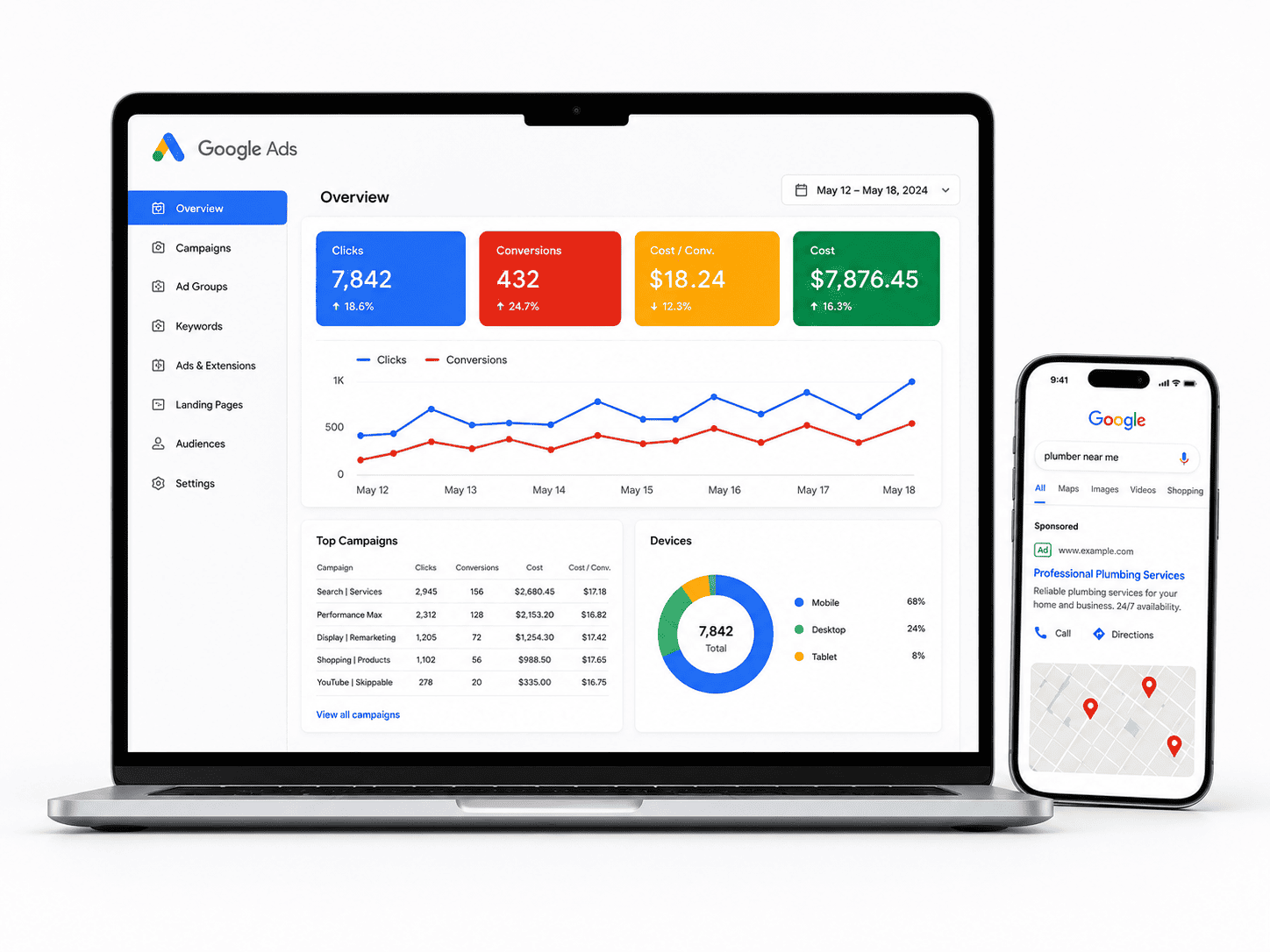
Analytics is the second pillar. Expect the design company to install Google Analytics 4 (GA4) and Google Search Console before launch. But installation is not enough. They should configure goals and conversions—such as form submissions, phone calls, or product purchases—so you can measure return on investment. A transparent firm will provide a monthly dashboard that shows organic traffic, keyword rankings, bounce rates, and conversion paths. They should also set up event tracking for interactions like clicks on your “Contact Us” button or downloads of a PDF brochure.
Conversion optimization is the final, often neglected, component. A site that ranks number one but fails to convert visitors into leads is a wasted investment. The design company should use heatmaps, session recordings, and A/B testing to refine calls-to-action, form lengths, and page layouts. For example, a Calgary plumbing company might test whether a “Call Now” button in the header outperforms a “Get a Free Quote” form on the homepage. The goal is to improve the percentage of visitors who take a desired action. A reputable firm will set a baseline conversion rate (typically 1-3% for B2B sites) and work to improve it over six to twelve months.
| SEO Component | What to Expect from a Professional Firm | Red Flags to Watch For |
|---|---|---|
| Site Architecture | Logical, flat hierarchy with descriptive URLs (e.g., /services/calgary-seo) | Deep nesting (e.g., /category/subcategory/page) or vague URLs like /page1 |
| Keyword Strategy | Research-backed keyword map applied to each page before design | No keyword research or stuffing same keyword into every page |
| Metadata | Unique title tags and meta descriptions for all pages, delivered in a spreadsheet | Generic titles like “Home” or auto-generated descriptions |
| Page Speed | Optimized images, minified code, target load time under 2.5 seconds | Heavy sliders, unoptimized stock photos, no performance testing |
| Mobile Usability | Responsive design tested on real devices; no horizontal scroll | Separate mobile site (m.example.com) or desktop-only design |
| Structured Data | Schema markup for local business, products, or articles included in build | No schema, or incorrect implementation that triggers Google errors |
| Post-Launch Content | Content calendar and monthly blog or service page updates | No content plan; site goes live and is never updated |
| Analytics & CRO | GA4 configured with goals; monthly reporting and A/B tests | No analytics installed, or no follow-up after launch |
Ultimately, the role of SEO and digital marketing in web design is to ensure your Calgary business does not just exist online, but competes effectively. When a design company treats search engines as a primary user, alongside your human visitors, the result is a site that ranks well, loads fast, and converts. Before signing a contract, ask for a detailed breakdown of how each of the above elements will be handled. The cost of neglecting these areas is not just a lower ranking—it is lost revenue and a diminished brand presence in a competitive local market.
Post-Launch Support and Maintenance: What to Expect
Launching a new website is a milestone, but it is not the finish line. A professional web design company in Calgary will frame the launch as the beginning of a continuous partnership. The ongoing relationship is defined by structured maintenance, proactive security, and strategic growth. Without a clear post-launch plan, even the most polished site can degrade quickly—through outdated plugins, broken user flows, or missed search engine ranking opportunities. This section details what you should expect from a reputable agency after your site goes live, breaking down the three core pillars of post-launch care.
Maintenance Packages: Security Updates, Backups, and Uptime Monitoring
Every website runs on a stack of software—a content management system (CMS), plugins, themes, and server-side scripts. These components receive regular updates to patch vulnerabilities and improve performance. A Calgary web design company typically offers tiered maintenance packages, usually billed monthly or annually. The base tier covers the essentials, while higher tiers include more frequent checks and faster response times.
Here is what a standard maintenance package should include:
- Security updates: Applying patches to the CMS core, plugins, and themes within 24–48 hours of release. This is not optional—outdated software is the primary vector for malware injections and data breaches.
- Automated backups: Daily or weekly off-site backups, with a retention policy (e.g., 30 days). You should also verify that backups are restorable, not just created. Ask for a quarterly backup restoration test.
- Uptime monitoring: Continuous checks every 1–5 minutes from multiple global locations. Alerts are sent to both the agency and you if the site goes down. The best packages include a public uptime dashboard.
- Malware scanning and removal: Regular scans for known signatures and suspicious file changes. If an infection is found, the agency should clean the site and harden the server.
- Performance checks: Monthly review of page load speed, server response time, and database query efficiency. Slowdowns are often silent until users leave.
For a typical Calgary small business site (5–20 pages), expect to pay between $75 and $250 CAD per month for these services. A larger e-commerce site with custom integrations will cost more, often $300–$600 CAD monthly. The contract should specify response times—for example, critical issues addressed within 4 business hours, minor issues within 24 hours.
If you manage your own hosting, the agency may also handle server-level configuration. For example, a common task is setting up a cron job for automated backups. Below is a practical command you might find in your maintenance documentation, used to schedule a daily database backup on a Linux server:
0 2 * * * mysqldump -u username -p'password' your_database | gzip > /backups/db_$(date +%Y-%m-%d).sql.gz
This cron entry runs at 2:00 AM daily, compresses the database, and names the file with the date. Your agency should handle such tasks, but knowing what it looks like helps you ask informed questions.
Content Updates and Feature Enhancements
Beyond technical upkeep, your website is a living marketing tool. The agency relationship should include a clear process for content changes—from swapping a team photo to adding a new service page. Most firms offer a set number of “small change” hours per month (e.g., 1–2 hours) within the maintenance retainer. Anything beyond that is billed at an agreed hourly rate, typically $100–$150 CAD for Calgary agencies.
What counts as a small change? Usually:
- Text edits (up to 500 words per page)
- Image replacement (crop, resize, and upload)
- Adding or removing a blog post
- Updating contact information or hours
- Fixing broken links or formatting issues
Larger feature enhancements—such as adding a booking system, a customer portal, or a new payment gateway—require a separate scope of work. A professional agency will provide a written estimate with a timeline and a fixed quote. Avoid firms that quote “time and materials” without a cap for feature work. Instead, expect a clear breakdown: design hours, development hours, testing, and deployment.
Another key expectation is version control. Your agency should maintain a staging environment where changes are tested before going live. For example, if you want to add a new FAQ section, the developer will build it on a staging URL, you review it, and then they push it to production. This prevents broken layouts or data loss on your live site. Insist on this workflow—it is a hallmark of a mature Calgary web design company.
Performance Tracking and Reporting: KPIs and Continuous Improvement
Post-launch is also the time to measure whether your website meets business goals. A strategic agency will not just “keep the lights on”; they will monitor key performance indicators (KPIs) and suggest improvements. You should receive a monthly or quarterly report, usually via email or a shared dashboard. The report should be plain-language, not buried in jargon.
Core KPIs to track include:
| KPI Category | Specific Metric | Why It Matters |
|---|---|---|
| Traffic health | Organic sessions, bounce rate, average session duration | Shows if search engines and users find your content relevant |
| Conversion | Form submissions, phone calls, or e-commerce checkout rate | Measures if the site turns visitors into leads or sales |
| Technical stability | Page load time (under 3 seconds), server error rate (under 1%) | Directly affects user experience and Google rankings |
| SEO progress | Keyword rankings, indexed pages, backlink growth | Indicates whether your content strategy is gaining traction |
Continuous improvement means acting on this data. For example, if your bounce rate on the homepage exceeds 70%, the agency might recommend simplifying the hero section or improving internal linking. If a blog post drives 40% of traffic, they may suggest a related downloadable lead magnet. This iterative loop—measure, analyze, adjust—is what separates a maintenance contract from a true growth partnership.
In your reporting, demand transparency on the tools used. Google Analytics 4 (GA4), Google Search Console, and a heatmap tool like Hotjar are standard. The agency should explain what each number means and what they plan to do about it. If they only send a PDF with screenshots and no recommendations, that is a red flag.
Finally, schedule a quarterly strategy call. This is a 30–45 minute meeting where the agency reviews the previous quarter’s performance, proposes two or three actionable improvements, and aligns with your business priorities. For example, if you are launching a new service line, they might suggest a dedicated landing page and a paid search campaign. This proactive approach ensures your website evolves alongside your company, not as an afterthought.
In summary, a reliable Calgary web design company will treat post-launch as a partnership. You should expect clear maintenance packages with defined security, backup, and uptime protocols; a fair and transparent system for content updates and feature work; and regular performance reporting that drives continuous improvement. Before signing a contract, ask to see a sample maintenance report and a list of current clients’ uptime stats. The right agency will happily provide both—because they are confident in what happens after the launch.
Measuring Success: KPIs and ROI for Your Calgary Website
Launching a redesigned website with a Calgary web design company is a significant investment of time, capital, and strategic energy. However, the launch day is not the finish line; it is the starting point for a continuous evaluation cycle. Without a structured measurement framework, you are navigating blind, relying on subjective opinions rather than objective data. To truly understand whether your new website is performing, you must track a blend of quantitative performance indicators and qualitative user insights. This dual approach allows you to see not only what users are doing but also why they are doing it, enabling data-driven refinements that compound over time.
Quantitative KPIs: Traffic, Conversion Rates, and Bounce Rates
Quantitative metrics provide the hard numbers that reveal the health of your website’s core functions. These are the metrics you will review weekly or monthly, and they form the backbone of your performance dashboard. While many metrics exist, three stand out as foundational: organic traffic, conversion rate, and bounce rate.
Organic Traffic is the volume of visitors arriving from search engines. After a redesign, expect fluctuations. A temporary dip can occur as search engines recrawl and re-index your new structure. The real signal is the trend over 60 to 90 days. Compare your current organic sessions against the same period pre-redesign. Look deeper than total sessions: analyze traffic by landing page. Are your highest-value service pages (e.g., “commercial HVAC repair” or “custom home renovation”) attracting more qualified visitors? A healthy redesign should improve keyword relevance and click-through rates from search results, leading to a steady upward trajectory in organic sessions.
Conversion Rate is the percentage of visitors who complete a desired action. For most Calgary businesses, this includes form submissions, phone calls, live chat initiations, or quote requests. This metric is the most direct line to revenue. Set clear conversion goals in your analytics platform before launch. After the redesign, monitor the conversion rate for each goal. A successful redesign will typically show an increase here, often by 15% to 30% or more, because of improved user flow, clearer calls-to-action, and faster load times. Be careful, however, to segment your traffic. A high conversion rate from paid ads but a low rate from organic traffic might indicate a mismatch between your content and user intent.
Bounce Rate measures the percentage of single-page sessions where the user leaves without interacting further. A high bounce rate (above 70% for most B2B sites) is a red flag, suggesting that either your landing page content is irrelevant or the user experience is confusing. However, context matters. A blog post that answers a specific question may have a high bounce rate yet still be successful because the user found the answer immediately. For your core service pages, aim for a bounce rate below 50%. Compare bounce rates page-by-page against your pre-redesign benchmarks. If your redesigned “About Us” page has a bounce rate of 80%, the content or layout is likely failing to engage.
Beyond these three, track average session duration and pages per session as secondary indicators of engagement. A redesign that improves internal linking and content quality should increase both metrics. Use a simple table to track your monthly progress:
| Metric | Pre-Redesign Baseline | Post-Redesign (Month 1) | Post-Redesign (Month 3) | Target |
|---|---|---|---|---|
| Organic Sessions | 2,500 | 2,100 | 2,900 | 3,200 |
| Conversion Rate (Form) | 1.8% | 2.4% | 2.9% | 3.5% |
| Bounce Rate (Service Pages) | 62% | 55% | 48% | 45% |
| Avg. Session Duration | 1:45 | 2:10 | 2:35 | 3:00 |
Do not obsess over daily fluctuations. Instead, look at weekly and monthly trends to identify patterns, then investigate anomalies.
Qualitative Metrics: User Feedback and Usability Testing
Numbers tell you what is happening, but they rarely tell you why. Qualitative metrics fill this gap by capturing the human experience behind the clicks. This is where you learn about friction points, confusing navigation, or content that resonates. Two primary methods are essential: structured user feedback and usability testing sessions.
User Feedback can be collected passively and actively. Passive methods include on-site surveys triggered by exit intent (e.g., “What prevented you from completing your request?”) or a simple feedback widget. For Calgary businesses, local context matters: ask about “neighborhood service areas” or “response time expectations” to get specific insights. Active feedback involves sending a short post-interaction survey to users who just submitted a form or made a call. Ask them to rate the ease of finding information and the clarity of your service descriptions. Open-ended questions like “What was the most challenging part of your visit?” yield actionable quotes that can pinpoint exact issues.
Usability Testing is more rigorous. Recruit five to seven participants who match your target customer profile—for example, a Calgary homeowner looking for a roofer, or a local retail manager seeking a POS system. Give them realistic tasks, such as “Find our warranty information” or “Request a quote for a 2000 sq. ft. office renovation.” Observe them as they navigate your new site, noting where they hesitate, click incorrectly, or express frustration. You do not need a formal lab; screen-sharing software works fine. Run these sessions within the first month post-launch. Common findings include hidden navigation elements, overly long forms, or text that uses industry jargon unfamiliar to clients. Usability testing often reveals issues that analytics cannot, such as a button that looks clickable but is not, or a menu that is too small on mobile devices.
Combine qualitative feedback with quantitative data. If your analytics show a high drop-off on the “Contact” page, usability testing will likely reveal that the form is too long or asks for irrelevant information. The qualitative insight gives you the exact fix, while the quantitative data shows the scale of the problem.
Calculating ROI: Comparing Costs to Lead Value and Revenue (with caveats)
Ultimately, your Calgary web design investment must be justified by a return. Calculating return on investment (ROI) for a website is not as straightforward as measuring sales from a paid ad campaign, but it is achievable with a structured approach. The basic formula is: (Incremental Revenue Attributed to Website – Total Website Cost) / Total Website Cost. However, the nuances lie in the attribution and the time horizon.
First, determine your total cost. This includes not just the design and development fee from your web design company, but also ongoing costs like hosting, maintenance, content creation, and any premium plugins or tools. Spread this over a realistic lifespan, typically 3 to 5 years, to get an annual cost. Next, calculate the average lifetime value (LTV) of a lead. For a service business, this means tracking how many website inquiries convert into paying customers and the average revenue per customer. For example, if 10% of web form submissions become clients and the average project value is $5,000, then each form submission is worth $500 in expected revenue. If your new website generates 20 extra qualified leads per month, that is an additional $10,000 in monthly revenue potential.
Now, apply the ROI formula. Suppose your redesign cost $30,000 total (including two years of maintenance). If the new website generates an additional $60,000 in revenue over two years that you can directly attribute to improved conversion rates or increased traffic, your ROI is (($60,000 – $30,000) / $30,000) = 100% over two years. This is a healthy return.
However, several caveats are critical. First, attribution is imperfect. A customer may visit your site, then call you, then see a billboard, then return to your site before purchasing. Use call tracking numbers and UTM parameters to get closer to the truth, but acknowledge that some revenue is multi-touch. Second, the time lag matters. SEO improvements take months to mature. Do not expect a full ROI in the first quarter. Set a 12-month review period. Third, non-revenue benefits have value. A faster, more professional website builds brand credibility, reduces support calls (if you added a FAQ section), and improves employee recruitment. These are soft benefits that should be noted but not forced into the ROI calculation. Finally, compare your ROI against a baseline. If you did nothing, would your old website have generated the same leads? Typically, an outdated site loses rankings and trust, so the incremental gain from a redesign is often larger than you think.
To make this practical, track your cost per lead (CPL) before and after the redesign. If your CPL decreases from $120 to $80, that is a clear efficiency gain. Multiply that improvement by your monthly lead volume to see your monthly savings. This tangible number is often the most persuasive way to demonstrate the value of your investment to stakeholders, because it directly links website performance to the bottom line.
Frequently Asked Questions
How much does a web design company in Calgary typically charge?
Calgary web design costs vary widely based on project scope, features, and the agency’s experience. A basic small business website might range from $3,000 to $8,000 CAD, while a more complex e-commerce or custom site can cost $10,000 to $30,000+ CAD. Many Calgary agencies offer fixed-price packages or hourly rates ($75–$150/hr). Always get a detailed quote that includes design, development, content, and post-launch support. According to industry surveys, Canadian businesses spend an average of $5,000 to $15,000 for a professional website, but custom functionality will increase this.
What should I look for when choosing a web design company in Calgary?
Look for a company with a strong portfolio that shows work in your industry or with similar goals. Check client testimonials and case studies to gauge reliability and results. Ensure they follow best practices for responsive design, SEO, and accessibility. Ask about their process, timeline, and post-launch support. A good agency will provide a clear contract, a project roadmap, and transparent pricing. Also, verify they use modern technologies and can integrate with your current tools (e.g., CRM, analytics). Finally, ensure they offer ongoing maintenance options, as websites need updates and security patches.
How long does it take to design and launch a website in Calgary?
A typical website project in Calgary takes 6 to 12 weeks, depending on complexity. A simple brochure site with 5–10 pages might be done in 4–6 weeks. Larger sites with custom features, e-commerce, or extensive content can take 3–4 months or more. The timeline depends on how quickly you provide content, feedback, and approvals. A professional agency will provide a detailed project plan with milestones. Delays often occur when clients don’t supply copy or images on time. Good communication and a dedicated project manager help keep the process on track.
What is the typical process of a Calgary web design project?
Most Calgary web design companies follow a structured process: 1) Discovery & strategy – understanding your business, goals, and audience; 2) Planning – creating a sitemap, wireframes, and content strategy; 3) Design – producing visual mockups and getting your feedback; 4) Development – building the site with coding and integrating a CMS; 5) Testing – checking functionality, responsiveness, and SEO; 6) Launch – deploying to a live server and configuring analytics. After launch, they provide training and support. A clear process ensures transparency and reduces the risk of misunderstanding.
Should I include SEO in my web design project from the start?
Absolutely. Integrating SEO from the beginning is more effective and cost-efficient than adding it later. A good Calgary web design company will structure your site with clean code, fast loading times, mobile responsiveness, and proper heading tags. They will also create user-friendly URLs, optimize images, and ensure a logical site architecture. This foundational work helps search engines crawl and index your site. Discuss SEO services like keyword research and on-page optimization with your designer. This will give your site a better chance to rank for relevant Calgary searches.
What hidden costs should I be aware of when hiring a web design company?
Be aware of potential extra costs such as domain registration, hosting, premium plugins, stock photography, and ongoing maintenance fees. Some agencies may charge extra for content creation, copywriting, or advanced features like booking systems. Ask for a detailed breakdown of what’s included and what’s not. Also, consider post-launch costs like security updates, backups, and monthly support retainers. According to industry reports, hosting and maintenance can cost $50 to $200 per month. Always clarify the terms of the contract to avoid surprises.
Can I update my website myself after it’s built?
Yes, most modern websites are built on content management systems like WordPress, which allow you to update text, images, and blog posts without coding knowledge. Your web design company should provide training and documentation on how to use the CMS. They may also offer a maintenance package to handle updates and technical issues. Ensure you have administrator access and that the site is user-friendly. This gives you control over your content and reduces dependence on the agency for simple changes.
Why is local expertise important for a Calgary web design company?
A local Calgary company understands the local market, consumer behavior, and industry trends. They can tailor your site to appeal to Calgary customers and may have experience with local SEO, including Google Business Profile optimization and local citations. Being in the same time zone makes communication easier, and you can meet in person to discuss your project. Local agencies also have a reputation to maintain in the community, so they are often more accountable and invested in your success.
Sources and further reading
- Web Design Statistics and Trends – WebFX
- Calgary Economic Development – Website
- Canadian Internet Registration Authority (CIRA) – Domain Costs
- Google Webmaster Guidelines – Google Search Central
- W3C Web Accessibility Initiative
- WordPress.org – Official Website
- Shopify Pricing – Shopify
- Search Engine Journal – SEO Basics
- Calgary Chamber of Commerce – Website
- WebAIM – Web Accessibility in Mind
Need help with this topic?
Send us your details and we will contact you.







Comments (2)
Pingback: Custom Web Design in Vancouver: Strategy, Cost & What to Expect
Pingback: Responsive Web Design Checklist for Canadian Businesses