
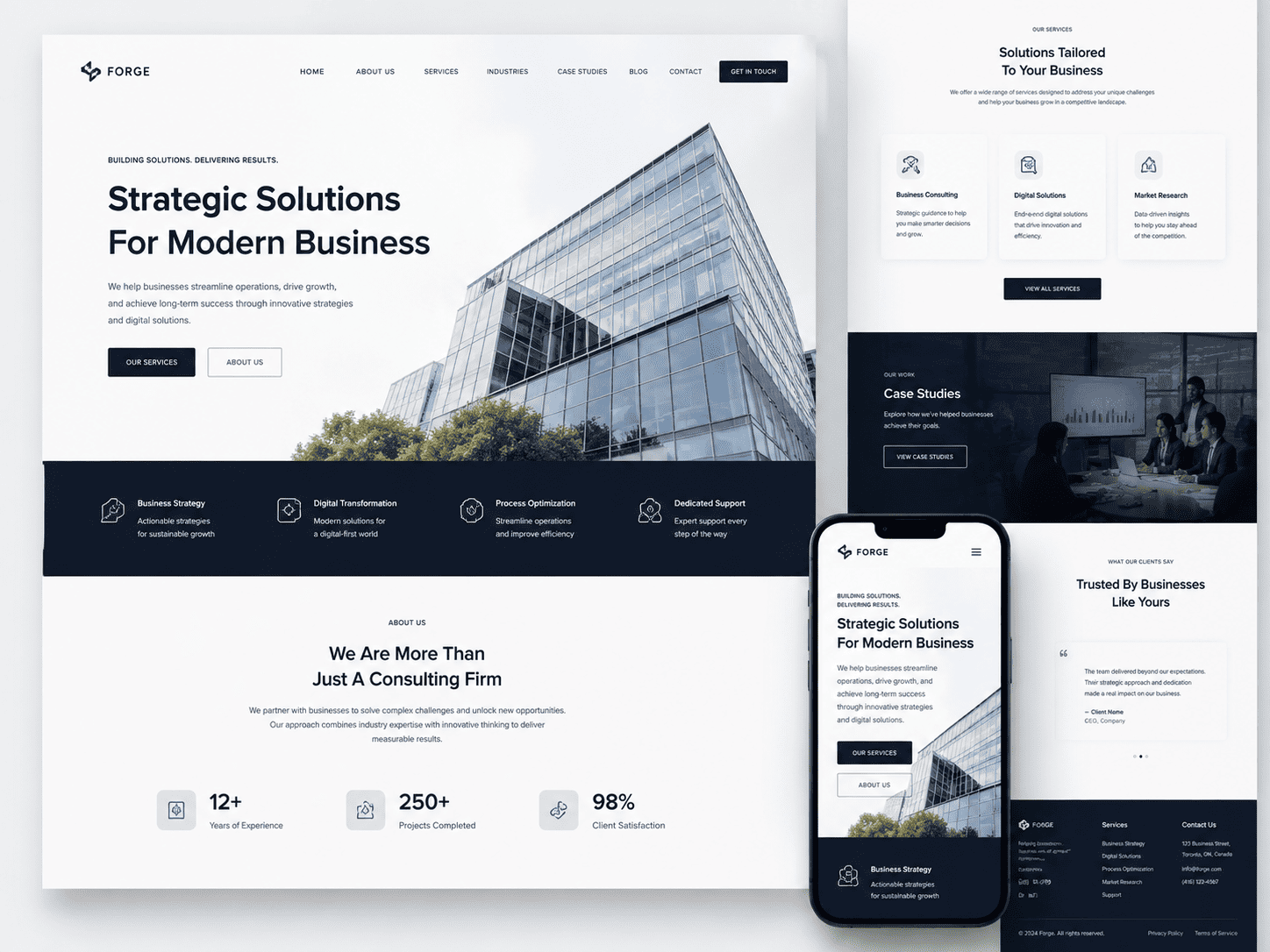
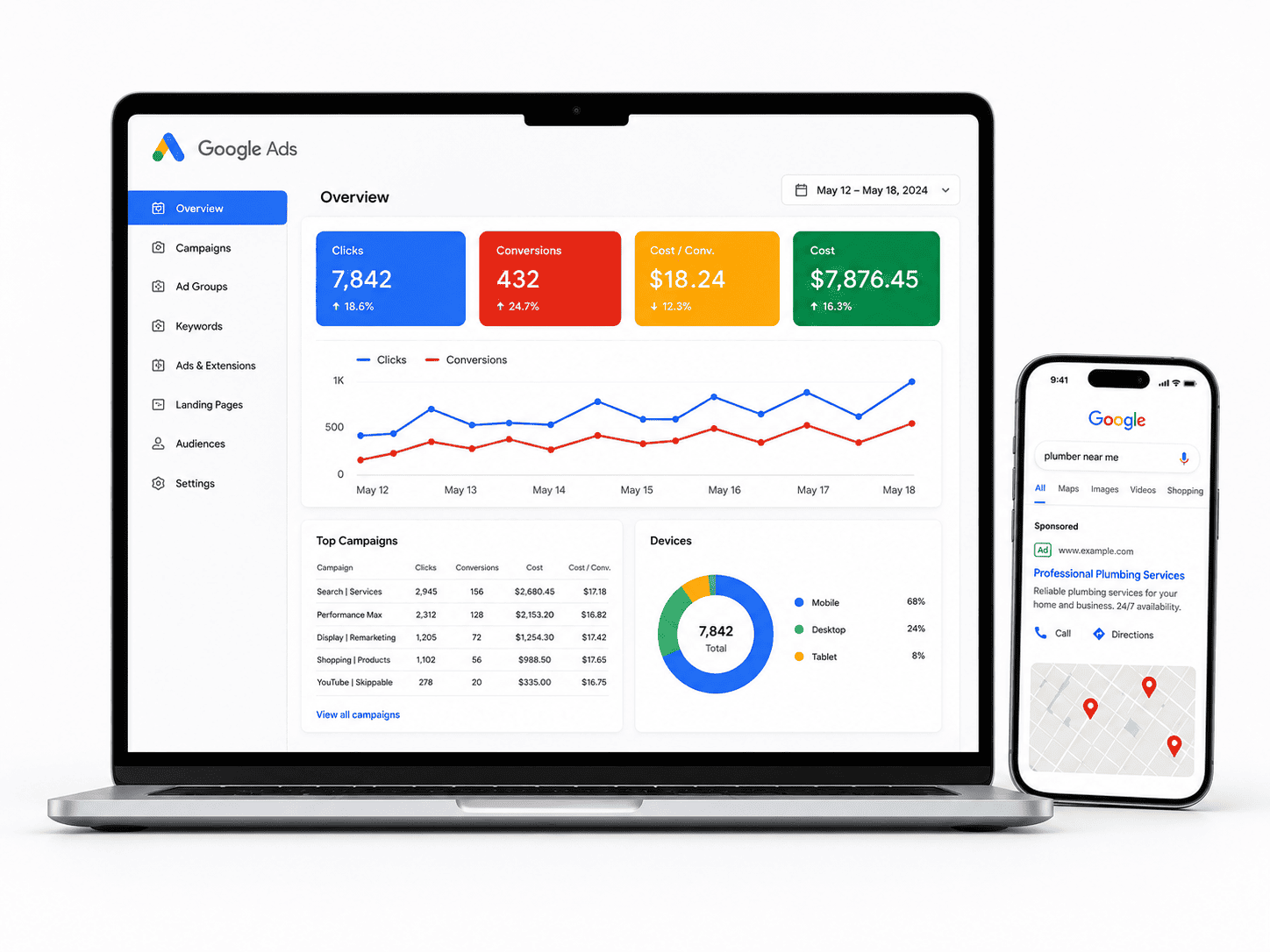


Introduction: Why Toronto Businesses Need a Strategic Web Design Partner
Toronto is not just Canada’s largest city; it is a commercial battlefield where first impressions are often digital. With over 200,000 businesses operating across the Greater Toronto Area, from financial services in the Financial District to creative agencies in Queen West and tech startups in Liberty Village, the competition for customer attention is relentless. In this environment, a website is no longer a simple company brochure—it is your most active salesperson, your 24/7 customer service representative, and the primary evidence of your credibility. Yet many Toronto businesses treat web design as a one-time aesthetic exercise, choosing a template or a low-cost freelancer without considering strategy. The result is a beautiful digital storefront with no foot traffic, a site that fails to rank, converts, or communicate value.
This article argues that the only way to succeed in Toronto’s crowded digital ecosystem is to work with a strategic web design partner—not just a vendor who builds pages, but a team that aligns your online presence with measurable business objectives. A strategic partner begins with questions, not mockups: Who is your customer? What is your competitive edge? What action should a visitor take in the first five seconds? These questions drive a design process that goes beyond aesthetics, integrating user experience (UX), search engine optimization (SEO), conversion rate optimization (CRO), and brand storytelling into a cohesive whole. The cost of such a partnership is not an expense; it is an investment with a defined return, whether that means more qualified leads, higher average order value, or reduced customer acquisition costs.
To help you navigate this critical decision, this guide breaks down three essential pillars: the strategic context of Toronto’s market, the real cost of professional web design, and the step-by-step process you should expect from a reputable agency. You will learn how to evaluate proposals, why the cheapest quote is often the most expensive in the long run, and what questions to ask before signing a contract. By the end, you will have a clear roadmap for selecting a partner who treats your website as a growth engine, not a static asset. Let’s begin by examining why the Toronto market demands this level of rigor.
The Toronto Digital Landscape: Standing Out in a Crowded Market
Toronto’s digital landscape is defined by three forces: density, diversity, and sophistication. Density means your potential customer is bombarded with thousands of marketing messages daily—from Instagram ads to Google search results to LinkedIn sponsored posts. A generic website simply disappears into this noise. Diversity means your audience spans multiple languages, cultural contexts, and digital behaviors. A website that works for a 45-year-old Bay Street executive may alienate a 25-year-old creative entrepreneur in Parkdale. Sophistication means Toronto consumers are highly educated and skeptical; they research extensively before purchasing, comparing reviews, checking social proof, and scrutinizing your site’s usability. A slow-loading page, a confusing navigation menu, or a missing trust signal will send them to a competitor within seconds.
In this environment, standing out requires more than a clever logo or a trendy color palette. It requires strategic differentiation: a clear value proposition that answers “why should I choose you?” within the first viewport. Consider the difference between a typical local law firm’s website and one designed by a strategic partner. The former lists services, office hours, and a contact form. The latter leads with a specific outcome—“We help startups secure seed funding in under 90 days”—followed by client testimonials, a video explainer, and a clear call-to-action for a free consultation. The second site wins because it speaks to a defined persona, addresses a specific pain point, and guides the visitor toward a desired action. This is the level of intentionality required in Toronto, where your competitors are not just local but also national and international players who view the city as a prime market.
Furthermore, the Toronto market is mobile-first. Over 60% of web traffic in the city comes from smartphones, according to industry-wide analytics patterns. A strategic web design partner will prioritize responsive design, accelerated mobile pages, and thumb-friendly navigation. They will also consider local SEO mechanics: claiming your Google Business Profile, embedding a map with accurate location data, and building local citations that mention your Toronto neighborhood. Without these elements, your site may look good on a desktop but fail to appear in “near me” searches—the highest-intent queries in the city. In short, the Toronto digital landscape rewards businesses that treat their website as a strategic asset, not a digital placeholder. The next section explains why this mindset is essential for growth.
Website as a Growth Engine, Not Just a Digital Brochure
The metaphor of a “digital brochure” is the single most damaging misconception in web design. A brochure is a passive object: it informs, but it does not act. A growth engine, by contrast, is an active system that attracts, converts, and retains customers. It is designed with a funnel in mind: top-of-funnel content that draws organic traffic through blog posts and SEO; mid-funnel pages that educate and build trust through case studies and detailed product comparisons; and bottom-funnel conversion elements like lead magnets, live chat, and streamlined checkout processes. A strategic web design partner builds all of these components, then connects them to analytics tools to measure performance and iterate.
Consider the tangible functions of a growth-oriented website. First, it generates leads autonomously. An integrated booking system allows a dental clinic in Etobicoke to fill appointment slots without phone tag. A smart quote calculator lets a renovation company in Scarborough pre-qualify leads before a sales call. Second, it reduces friction in the customer journey. A well-designed site loads in under two seconds, uses clear headings and bullet points, and places the primary call-to-action above the fold on every page. Third, it builds trust through social proof: video testimonials, trust badges, client logos, and detailed case studies with measurable results. Fourth, it supports your broader marketing efforts. Every paid ad, social media post, or email campaign sends traffic to your website; if that site does not convert, your advertising budget is wasted. A strategic partner ensures that your site is the highest-converting destination for all your marketing channels.
Beyond conversion, a growth engine website also collects data. By integrating tools like Google Analytics 4, heatmaps, and session recordings, your partner can show you where visitors drop off, which pages perform best, and what content drives the most engagement. This data becomes the foundation for continuous improvement—A/B testing headlines, tweaking form fields, or repositioning a product image. In contrast, a brochure website is static: it is built once and forgotten, gradually decaying in search rankings and user experience. The cost of this decay is invisible but real: lost traffic, lower conversion rates, and a tarnished brand image. Therefore, when you hire a web design company in Toronto, you are not paying for a deliverable; you are paying for a system that compounds value over time. The final section of this introduction outlines exactly what this guide will cover to help you make that investment wisely.
What This Guide Covers: Strategy, Investment, and the Roadmap
This guide is structured to answer the three questions every Toronto business owner asks before engaging a web design partner: What should the strategy be? How much will it cost? And what does the process look like? We will address each in depth, providing practical frameworks and realistic expectations.
Strategy: We will explore how to define your website’s core objectives, identify your target audience through persona development, and map out a user journey that aligns with your sales funnel. You will learn how to audit your current online presence, analyze competitor websites for gaps and opportunities, and articulate a unique value proposition that differentiates you in the Toronto market. We will also cover content strategy—the often-overlooked foundation of SEO and user engagement—and how to structure your site’s information architecture for both search engines and human users.
Cost: We will demystify the pricing landscape for web design in Toronto, which ranges from inexpensive template-based builds to custom enterprise solutions. You will learn what drives the cost—scope, complexity, custom functionality, copywriting, and ongoing maintenance—and how to evaluate quotes from different agencies. We will provide a transparent breakdown of typical budget tiers, what you can expect to receive at each level, and the hidden costs that often surprise business owners, such as licensing fees, plugin subscriptions, and post-launch support. Crucially, we will explain why a higher upfront investment often yields a lower total cost of ownership when you factor in conversion rates, scalability, and avoided redesigns.
The Roadmap: Finally, we will walk you through the typical project lifecycle from discovery to launch and beyond. You will learn what happens during the discovery phase (stakeholder interviews, market research, technical audit), the design phase (wireframes, mockups, feedback loops), the development phase (coding, content integration, testing), and the launch phase (migration, QA, analytics setup). We will also cover post-launch responsibilities, including training, documentation, and ongoing optimization. By understanding this process, you will be equipped to hold your partner accountable, communicate effectively, and ensure that the project stays on schedule and within budget.
In summary, the following sections are designed to be your practical manual for navigating the Toronto web design landscape. Whether you are launching a startup, rebranding an established company, or overhauling an outdated site, this guide will help you make informed decisions that turn your website into a measurable business asset. Let’s start with the strategy.
Defining a Web Design Company vs. a Freelancer or Template
When you search for a “Web Design Company in Toronto: Strategy, Cost and What to Expect,” the first fork in the road is choosing who actually builds your site. Three primary paths exist: a full-service agency, an independent freelancer, or a do-it-yourself template builder. Each option claims to deliver a professional website, but the strategic depth, accountability, and long-term scalability differ dramatically. Understanding these distinctions before you sign a contract will save you from budget overruns, stalled projects, and costly redesigns.
In Toronto’s competitive market, your website is often the first impression you make on potential clients. It must load quickly, rank for local searches, convert visitors into leads, and reflect your brand’s credibility. A template might get you online in an afternoon, but it won’t diagnose your customer journey. A freelancer might craft a beautiful homepage, but they may disappear when you need a security patch. A dedicated web design company, however, treats your site as a business asset—not just a digital brochure. Below is a detailed breakdown of what each option truly offers.
Full-Service Agencies: Strategy, Design, Development, and Support
A full-service web design company in Toronto is a team of specialists—project managers, UX/UI designers, developers, content strategists, and SEO analysts—who work under one roof. Their value proposition is not merely “making a website”; it’s building a conversion-focused digital presence aligned with your business goals. Here’s what you actually get:
- Discovery and strategy phase: Before any pixel is placed, the agency conducts stakeholder interviews, competitor audits, and user persona research. They define success metrics (e.g., form fills, e-commerce sales, or phone calls) and map the site architecture to guide visitors toward those actions.
- Custom design and development: Design is created from scratch in Figma or Sketch, then coded with modern frameworks (React, Next.js, or Laravel). This ensures no template limitations—custom animations, complex filtering, or integration with your CRM are all possible.
- Copywriting and SEO foundation: Agencies often include on-page SEO (meta titles, header hierarchy, schema markup) and content creation or optimization. They understand that Toronto search results require local schema and Google Business Profile integration.
- Quality assurance and launch: Cross-browser testing, mobile responsiveness checks, and performance optimization (image compression, lazy loading) are handled by dedicated QA testers.
- Ongoing support and maintenance: Most agencies offer retainers that include security monitoring, plugin updates, weekly backups, and uptime tracking. Some also provide monthly performance reports and A/B testing recommendations.
Accountability is the strongest differentiator. A registered agency has a legal contract, a project timeline with milestones, and a dedicated account manager. If something breaks after launch, you have a ticketing system and a service-level agreement (SLA) that guarantees response times. For example, a typical retainer might specify: “Critical issues resolved within 4 business hours; minor bugs within 2 business days.” This formal structure is impossible to replicate with a freelancer or a template.
Scalability is another key advantage. If you launch a new product line, need a multilingual site for a French-speaking audience, or require a custom booking system, the same agency can extend your existing architecture without a full redesign. Their team grows with your needs—from adding a blog to integrating a payment gateway like Stripe or PayPal. In contrast, a template might require you to rebuild from scratch when your business model evolves.
However, this depth comes at a price. A typical Toronto agency project for a small-to-mid-sized business ranges from $10,000 to $50,000 CAD, depending on complexity. You are paying for expertise, process, and risk mitigation—not just hours. If your budget is under $5,000 and you have no deadline pressure, an agency might be overkill.
Freelancers: Flexibility and Cost Savings vs. Limited Resources
Freelance web designers and developers in Toronto offer a middle ground. You hire a single person—or a small team of two—who handles everything from initial consultation to coding. Their hourly rates typically range from $50 to $150 CAD, making a straightforward business site (5–10 pages) cost between $3,000 and $8,000. This is appealing for startups and local service providers who need a professional presence without agency overhead.
The primary benefit is flexibility. Freelancers often work evenings and weekends, adapt to your communication style (Slack, email, or phone), and can pivot quickly if you change your mind about a feature. They may also specialize in a niche—such as Shopify stores for boutique retailers or WordPress sites for law firms—giving you targeted expertise. Many freelancers in Toronto are ex-agency designers who offer senior-level skills at a fraction of the cost.
But the trade-offs are significant. A freelancer is a single point of failure. If they fall ill, take on too many projects, or simply stop responding, your website is stuck in limbo. There is no internal team to cover deadlines, and you have no recourse beyond your contract—which may be informal. Additionally, their resources are limited:
- No dedicated SEO specialist: The freelancer might know basic on-page SEO, but they won’t conduct keyword research or build a backlink strategy. You’ll need to hire another vendor for that.
- No ongoing support guarantee: After launch, freelancers often charge hourly for every small change. A security update or a broken contact form might take days to fix if they’re busy with other clients.
- Limited scalability: If your site grows to 50 products or requires a custom API integration, the freelancer may not have the bandwidth or the full-stack knowledge to handle it. You might end up hiring a second freelancer to patch their work.
Accountability is also looser. A freelancer might work with a simple invoice and a verbal agreement, leaving you without legal protection if they miss the launch date. To mitigate this, always ask for a written contract that includes milestones, payment terms, intellectual property transfer, and a post-launch support window (e.g., 30 days of bug fixes).
For a small business with a tight budget and a clear scope (e.g., a 5-page brochure site with a contact form), a freelancer can be a smart choice. Just be prepared to manage the project yourself—you are the project manager, QA tester, and content provider. If you don’t have time for that, the agency model is safer.
Template Builders: Quick and Cheap, but What’s the Real Cost?
Template builders like Wix, Squarespace, or WordPress with a pre-built theme promise a live website in under a day, often for less than $50 per month. They market themselves as “no coding required” and offer drag-and-drop editors, which is undeniably attractive. However, the real cost is not just the subscription fee—it’s the hidden inefficiencies and long-term limitations that can hurt your business.
Let’s start with the visible costs. A basic plan on Squarespace or Wix is about $16–$30 per month, but that typically includes only a subdomain (e.g., yourname.wixsite.com). To get a custom domain (e.g., yourname.ca), you’ll pay an additional $20–$50 per year. E-commerce functionality, custom forms, or removing platform ads requires higher-tier plans, which can reach $50–$100 per month. Over three years, you might spend $1,800–$3,600—not including the time you spend building the site yourself.
But the real cost is strategic. Template sites are designed for the average user, not for your specific conversion funnel. They come with bloated code, which slows down page speed. A slow website (over 3 seconds) can increase your bounce rate by 50% and decrease your Google rankings—especially in a competitive market like Toronto, where local competitors have faster sites. Furthermore, templates are not inherently SEO-optimized; you must manually configure meta tags, alt text, and schema markup, which most business owners don’t know how to do correctly.
Here’s a practical example of the hidden cost: suppose you use a WordPress template and install a popular page builder plugin. After a year, the plugin’s developer discontinues support, leaving your site vulnerable to security exploits. Without a maintenance plan, you might find your site hacked, losing customer data and your search rankings. Recovering from a hack costs $500–$2,000 in emergency cleanup—far more than the $30 you saved monthly.
Another major issue is scalability. Templates are rigid. You might want to add a custom booking calendar, a membership portal, or a dynamic product filter. With a template, you’re limited to the widgets and blocks the builder offers. If you need a custom feature, you’ll need to hire a developer to modify the template’s code—which often results in a patchwork of workarounds that break with the next update. In contrast, a custom-built site from an agency or a skilled freelancer is designed with your future needs in mind.
To illustrate the technical difference, consider a simple task: adding a custom “request a quote” form that sends data to your CRM. In a template builder, you might use a third-party plugin like WPForms, which costs $99/year for a basic license. The plugin adds 10–15 extra HTTP requests, slowing your site. In a custom build, a developer would write a lightweight PHP or JavaScript function that handles the form submission via an API, with no additional plugins. Here’s a minimal example of what that custom code might look like in a WordPress theme’s functions.php file:
add_action('rest_api_init', function () {
    register_rest_route('custom/v1', '/quote', array(
        'methods' => 'POST',
        'callback' => function ($request) {
            $name = sanitize_text_field($request->get_param('name'));
            $email = sanitize_email($request->get_param('email'));
            $message = sanitize_textarea_field($request->get_param('message'));
            // Send email or push to CRM via API
            wp_mail('sales@yourcompany.ca', 'New Quote Request from ' . $name, $message, 'Reply-To: ' . $email);
            return array('success' => true);
        }
    ));
});
This code is fast, secure, and has no dependency on third-party plugins. A template builder cannot offer this level of control without significant effort.
Finally, consider the “real cost” of your time. Building a template site yourself takes 20–40 hours, even with a drag-and-drop interface. If your hourly rate as a business owner is $100, that’s $2,000–$4,000 of your time—equivalent to hiring a freelancer for a custom site. And the result is often generic: thousands of other Toronto businesses use the same template, making your brand look indistinguishable.
In summary, template builders are suitable for a personal portfolio or a temporary placeholder, but for a business that relies on leads and credibility, they are a false economy. The lack of strategic planning, custom SEO, and professional support will cost you more in lost revenue than you save in subscription fees.
When you compare the three options, the decision hinges on your business stage and goals. A web design company in Toronto provides the highest level of strategy, accountability, and scalability, but requires a significant upfront investment. A freelancer offers flexibility and lower cost, but you must manage the risks. A template is quick and cheap, but the hidden costs—time, performance, and lost conversions—are substantial. For any business that treats its website as a core revenue channel, investing in a professional team is the only sustainable choice.
The Strategic Role of Your Toronto Web Design Partner
In a competitive market like Toronto, your website is not a digital brochure—it is your most active salesperson, your first impression, and often the deciding factor between a lead and a lost opportunity. A strategic web design company understands that aesthetics serve a higher purpose: they are the vehicle for business growth. When you partner with a firm that treats design as a strategic discipline, every pixel, every line of code, and every word of copy is deliberately chosen to move a visitor closer to a desired action. This approach moves far beyond making a site “look nice” and instead focuses on measurable outcomes, user behaviour, and long-term scalability. Below, we break down the core pillars that define a truly strategic Toronto web design partner, what you should expect from the engagement, and how cost aligns with the value delivered.
Aligning Web Design with Your Business Objectives and KPIs
The most effective web design projects begin not with colour palettes or font choices, but with a deep interrogation of your business goals. A strategic partner will ask challenging questions before any mockup is created: What is your primary revenue driver? Are you generating qualified leads, selling products directly, or building a membership base? What does a “successful” visit look like in 30, 60, or 90 days? The answers directly shape the information architecture, the hierarchy of content, and the calls-to-action (CTAs) placed throughout the site.
Once these objectives are defined, they must be translated into concrete Key Performance Indicators (KPIs). A strategic web design company in Toronto will not just deliver a site; they will deliver a framework for measuring its effectiveness. Common KPIs include:
- Conversion Rate: The percentage of visitors who complete a desired action (e.g., form submission, phone call, purchase).
- Bounce Rate: The percentage of visitors who leave after viewing only one page—a high rate often signals a disconnect between user intent and page content.
- Average Session Duration: How long users stay engaged, which indicates content relevance and usability.
- Goal Completions: Specific micro-conversions, such as downloading a whitepaper, watching a demo video, or clicking to chat.
- Return on Ad Spend (ROAS): For clients running paid campaigns, the website’s landing page quality directly impacts this metric.
By aligning design decisions with these KPIs, your partner ensures that every design element has a job. For instance, a Toronto-based law firm might prioritize a prominent “Free Consultation” form above the fold, while a boutique e-commerce store might focus on seamless product filtering and a frictionless checkout. The strategic partner does not guess—they design based on data, user research, and your specific business model. They will also establish a baseline of your current performance, so that post-launch, you can clearly measure the improvement the new site delivers.
User Experience (UX) and Conversion Rate Optimization (CRO) as Core Strategy
User Experience (UX) is often conflated with usability, but in a strategic context, it is the science of removing friction and guiding user behaviour. A Toronto web design partner treats UX as the foundation upon which all visual design is built. This involves creating user personas based on your actual customer base, mapping out user journeys, and wireframing layouts that prioritize logical flow. The goal is to answer the user’s question (“Can I find what I need?”) before they even consciously ask it.
Conversion Rate Optimization (CRO) takes UX a step further by focusing on the specific actions that drive revenue. A strategic partner will use heatmaps, session recordings, and A/B testing to understand where users drop off and what messaging resonates. They will then apply proven CRO principles to the design, including:
- Clear Value Proposition: Your headline and subheadline must communicate your unique selling point within 5 seconds.
- Visual Hierarchy: Using size, contrast, and whitespace to direct attention to primary CTAs.
- Social Proof: Strategically placing testimonials, client logos, and case studies near decision points.
- Form Optimization: Reducing the number of fields, using inline validation, and providing clear error messages.
- Mobile-First Design: Ensuring that the mobile experience is not an afterthought but a primary design driver, given that over 60% of web traffic now comes from mobile devices.
The integration of UX and CRO means that your website is not static—it is a learning system. The design partner should build in analytics from day one, allowing for continuous iteration post-launch. For example, if a Toronto real estate agency sees that users are abandoning a mortgage calculator, the partner can suggest design tweaks to improve clarity. This iterative cycle is what separates a strategic partner from a mere design vendor.
SEO-Ready Architecture: Building for Search Engines from Day One
Many businesses make the costly mistake of treating SEO as a post-launch add-on. A strategic web design company in Toronto understands that search engine optimization is fundamentally an architectural discipline. The structure of your URLs, the hierarchy of your headings, the speed of your page loads, and the semantic meaning of your code all contribute to how well you rank on Google. If your site is not built with SEO in mind, you will be playing catch-up for months after launch.
During the design phase, your partner should address the following SEO-critical elements:
- Keyword Mapping: Each page is assigned a primary keyword and related secondary keywords, which then inform the page title, meta description, and content structure.
- Clean URL Structure: URLs that are short, descriptive, and include target keywords (e.g.,
/toronto-web-design-servicesinstead of/page?id=123). - Semantic HTML: Proper use of header tags (H1, H2, H3) to create a logical content hierarchy that search engines can easily crawl.
- Mobile-First Indexing: Google predominantly uses the mobile version of your site for ranking, so responsive design is non-negotiable.
- Page Speed Optimization: Compressing images, minifying CSS/JavaScript, and leveraging browser caching to ensure sub-3-second load times.
- Schema Markup: Adding structured data to help search engines understand your content and display rich snippets (e.g., reviews, FAQs, business hours).
Moreover, a strategic partner will coordinate with your content team to ensure that on-page copy is written for both users and search engines. This means avoiding keyword stuffing, using natural language, and ensuring that each page answers a specific user query. The result is a website that is not only visually appealing but also discoverable.
Cost Expectations and What You Get for Your Investment
Understanding the cost of a strategic web design project in Toronto requires looking beyond a simple price tag. The investment varies widely based on scope, complexity, and the level of strategic input required. Below is a comparison table to help you set realistic expectations:
| Project Scope | Typical Investment Range (CAD) | What’s Included | Typical Timeline |
|---|---|---|---|
| Small Business Website (5-10 pages) | $5,000 – $15,000 | Custom design, basic UX/CRO principles, on-page SEO, mobile responsiveness, CMS setup (e.g., WordPress). | 4 – 8 weeks |
| Mid-Size Corporate Site (10-25 pages) | $15,000 – $40,000 | Advanced UX research, user journey mapping, custom functionality (e.g., booking systems, resource libraries), comprehensive SEO architecture, integration with CRM/analytics. | 8 – 14 weeks |
| E-commerce Platform (20-50+ pages) | $30,000 – $100,000+ | Full product catalogue design, checkout optimization, payment gateway integration, inventory management, advanced CRO testing, performance marketing alignment. | 12 – 20+ weeks |
| Enterprise / Custom Application | $100,000+ | Custom web applications, multi-user portals, complex data integration, dedicated UX research team, ongoing iteration and support. | 20+ weeks (often phased) |
It is crucial to note that these ranges are indicative. A strategic partner will provide a detailed proposal that breaks down costs by phase: discovery, design, development, and launch. They will also be transparent about ongoing costs, such as monthly maintenance, hosting, and content updates. When evaluating proposals, do not simply choose the lowest bid. Instead, assess the value of the strategy included—a slightly higher upfront cost that includes robust UX research and SEO architecture will save you thousands in future marketing expenses and lost conversions.
Finally, a strategic partner will not vanish after launch. They will offer a post-launch support plan, monitor analytics, and recommend improvements based on real user data. This ongoing relationship ensures that your website remains an effective business tool, not a static artifact. In Toronto’s fast-paced digital landscape, that long-term partnership is often the difference between a website that merely exists and one that actively grows your business.
Pre-Project Discovery: What a Top Toronto Agency Does First
The most successful web design projects in Toronto do not begin with color palettes, font choices, or even a homepage mockup. They begin with a structured discovery phase—a period of intensive listening, research, and strategic mapping that typically lasts one to three weeks. A top-tier Toronto agency treats this phase as the foundation upon which every pixel and line of code will rest. Skipping discovery to save time or money almost always leads to a beautiful website that fails to convert, ranks poorly, or confuses visitors. In a competitive market like Toronto—where consumers have high expectations and businesses operate across a dense, multicultural landscape—discovery is not a luxury; it is a necessity. This article walks through the three core pillars of that pre-project phase, explaining what happens, why it matters, and what you should expect from your agency partner.
Stakeholder Interviews and Audience Persona Development
Before any design or development work begins, a professional agency will schedule a series of stakeholder interviews. These are not casual brainstorming sessions. They are structured conversations with key decision-makers, including the CEO, marketing director, sales lead, and sometimes customer service managers. The goal is to uncover the business’s strategic objectives, pain points, competitive pressures, and internal definitions of success. A skilled interviewer will ask questions like: “What does a successful website look like for you in eighteen months?” or “What is the single biggest frustration your customers express about your current digital experience?” These answers provide the raw material for the project’s success metrics.
Following the interviews, the agency synthesizes the findings into audience personas—semi-fictional representations of your ideal website visitors. In the Toronto context, this step is particularly nuanced. Toronto is one of the most diverse cities in the world, with over half of its residents born outside Canada. A generic “customer” persona will not suffice. A top agency will segment audiences by factors such as language preference (English, Mandarin, Punjabi, Tagalog, and others), cultural shopping behaviors, geographic location within the GTA, and even transit accessibility. For example, a downtown financial services firm might target a persona named “Priya, 34, a Bay Street analyst who commutes via TTC and expects mobile-first navigation,” while a home renovation company might focus on “Marcus, 52, a Scarborough homeowner who compares three quotes before booking.” Each persona includes demographics, goals, frustrations, and digital habits.
These personas are not decorative. They drive every later decision, from copy tone to image selection to the placement of calls-to-action. The agency will typically present these personas in a shared document or slide deck, and you should expect to review and refine them before moving forward. This collaborative step ensures that the design team does not rely on assumptions about your customers—they rely on evidence and agreed-upon definitions.
Competitor and Market Analysis in the Toronto Context
Toronto’s business environment is dense, fast-paced, and often saturated. A reputable agency will conduct a competitor analysis that goes far beyond “their site looks nice.” This analysis examines three specific layers: direct competitors, adjacent competitors, and aspirational competitors. Direct competitors offer the same services to the same audience. Adjacent competitors solve a similar problem but for a different market segment (e.g., a premium boutique versus a discount retailer). Aspirational competitors are brands outside your industry whose digital experience you want to emulate—often global leaders or award-winning sites.
The agency’s research team will audit each competitor’s website across several dimensions:
- User experience (UX): How many clicks does it take to complete a key action (e.g., booking a consultation)?
- Content strategy: What topics do they cover? What gaps exist that you could fill?
- Technical performance: Page speed, mobile responsiveness, and accessibility compliance (AODA is a legal requirement in Ontario).
- Local SEO signals: How well do they optimize for “near me” searches, Google Business Profiles, and Toronto-specific landing pages?
- Conversion elements: Forms, chat widgets, trust badges, and review integration.
This analysis is then contextualized within Toronto’s unique market dynamics. For instance, a restaurant website in Toronto must account for high delivery-app competition and seasonal patio demand. A legal firm must address the fact that many clients search in languages other than English. A retail store must optimize for both in-store visits and online purchases, given Toronto’s mixed shopping habits. The agency will produce a comparative matrix or a written report highlighting your opportunities—not just a list of what competitors do well. This becomes the strategic basis for positioning: you might decide to lead with transparency (published pricing) if competitors hide costs, or with speed (same-day response) if competitors are slow.
One practical output of this phase is a clear understanding of your unique value proposition (UVP). The agency will help you articulate, in one sentence, why a Toronto customer should choose you over the five other options in their browser tabs. Without this step, your website risks becoming a generic brochure that blends into the noise.
Information Architecture: Sitemaps and Wireframes That Guide Design
Once the strategy is clear, the agency moves into information architecture (IA)—the structural blueprint of your website. This is a technical and logical process that determines how content is organized, labeled, and connected. The first deliverable is usually a sitemap: a hierarchical outline of every page on the site, from the homepage down to the deepest legal page. A top Toronto agency will not simply list pages; they will map user flows. For example, a service-based business might have the following primary navigation: Home, Services, About, Case Studies, Blog, Contact. Under Services, there will be child pages for each service line. But the sitemap also shows what happens after a user lands on a service page—where do they go next? To a pricing page? A booking form? A portfolio item? This flow is designed to guide visitors toward conversion at every step.
Wireframes come next. These are low-fidelity, grayscale layouts that show the placement of elements—headlines, images, buttons, forms—without any visual styling. Wireframes are not about aesthetics; they are about function and hierarchy. You might see a wireframe for the homepage that places the primary value proposition at the top, followed by a trust-building testimonial, then a product demo, and finally a contact form. The agency will test these wireframes against the personas and competitor analysis. For instance, if your audience persona is a busy professional on mobile, the wireframe will prioritize thumb-friendly buttons and collapsed menus. If your competitor analysis revealed that every rival has a cluttered footer, your wireframe might deliberately keep the footer minimal.
This phase also involves a practical technical check. The agency will review your existing domain structure, current URLs, and any legacy content that needs to be migrated. They will also plan for redirects—a critical step for SEO. Here is a simple example of what that planning looks like in practice, using an Apache server’s `.htaccess` file to redirect an old page to a new one:
Redirect 301 /old-services-page.html /services/web-designThis command tells search engines and browsers that the old URL has permanently moved to the new location, preserving your search rankings and preventing broken links. A professional agency will create a full redirect map for every page that changes, which is often dozens or hundreds of URLs. This is a detail that separates a strategic partner from a template shop.
By the end of the discovery phase, you should have three concrete deliverables: a documented strategy memo, a sitemap with user flows, and a set of wireframes for key templates. You will also have a clear cost estimate and timeline, because the agency now knows the true scope of the project. What you will not have is a single design mockup—and that is exactly the point. Discovery ensures that when the visual design begins, it is built on a foundation of research, not guesswork. In Toronto’s fast-moving market, this preparation is what makes the difference between a website that merely exists and one that performs as your hardest-working salesperson.
Design and Development Phases: From Mockups to Launch
The journey from a static wireframe to a fully functional website is rarely linear. It is an iterative, collaborative process that demands clear communication between your team, the design agency, and the developers who will bring everything to life. For a business in Toronto, where the digital landscape is fiercely competitive, understanding this phased approach is essential. It helps you set realistic expectations, manage your budget effectively, and ensure the final product not only looks stunning but also performs flawlessly under real-world conditions. This phase typically spans four to eight weeks, depending on the complexity of your features, the volume of content, and how quickly you can provide feedback.
UI Design and Brand Integration: Creating a Visual Language
Once your wireframes are approved, the design team shifts focus to the user interface (UI). This is where your brand’s personality is translated into a visual language that resonates with your Toronto audience. The goal is not just to make the site “pretty,” but to create a functional, emotionally engaging experience that guides users toward conversion. During this stage, your designer will develop a style guide that includes:
- Color Palette: Choosing hues that reflect your brand’s tone, while ensuring sufficient contrast for accessibility and readability on both desktop and mobile screens.
- Typography: Selecting font pairings that establish hierarchy, improve legibility, and load quickly. For a Toronto audience, this often means balancing modern, clean sans-serifs with distinctive display fonts.
- Imagery and Iconography: Sourcing or commissioning custom photography, illustrations, and icons that feel authentic to the local market, avoiding generic stock photos that dilute your brand’s credibility.
- Component Library: Building a reusable set of UI elements—buttons, forms, navigation menus, and cards—that maintain consistency across every page.
Brand integration goes deeper than just placing your logo in the header. It involves applying your brand’s voice, values, and visual cues to every interactive element. For instance, a Toronto law firm might use muted, authoritative colors and serif typography, while a local craft brewery would opt for bold, vibrant hues and playful micro-interactions. Your design team will create high-fidelity mockups for key pages (homepage, product/service pages, contact) and then apply those designs across the entire site. Expect two to three rounds of revisions at this stage. Each round should be structured, with clear feedback from your stakeholders. Avoid subjective comments like “I don’t like it” without specifying the issue; instead, reference the design in terms of your business goals and user needs.
Content Strategy and Copywriting: Engaging Your Toronto Audience
While visual design captures attention, content is what converts visitors into leads. This phase runs parallel to UI design, but it is often underestimated in terms of time and effort. A skilled web design company in Toronto will not simply insert your existing brochures into the new layout. They will develop a content strategy that aligns with your search engine optimization (SEO) goals and speaks directly to the local demographic. This involves:
- Keyword Research: Identifying the specific terms your Toronto customers use when searching for your products or services, such as “best patio in Liberty Village” or “emergency plumber North York.”
- Content Inventory and Gap Analysis: Auditing your existing copy, blog posts, and media to determine what can be reused, refreshed, or deleted.
- Page-Level Messaging: Crafting headlines, subheadings, and body copy that address user pain points, highlight your unique value proposition, and include clear calls to action (CTAs).
- Localized Nuance: Weaving in references to Toronto neighborhoods, local events, or regional regulations to demonstrate that you are a homegrown business, not a faceless national chain.
During this stage, you will work with a copywriter who might interview your subject matter experts to extract technical details. The copywriting process is iterative as well. You will receive drafts in a shared document, where you can leave inline comments. Be prepared to provide factual accuracy checks, especially for legal, financial, or medical content. Also, remember that great web copy is scannable. Use short paragraphs, bullet points, and bold keywords to break up text. Your designer will integrate the final copy into the mockups, adjusting spacing and typography to accommodate the word count. A common mistake is writing content after the design is locked in, which often leads to awkward text overflow or truncated headlines. By developing content in tandem, you avoid costly design rework.
Development, CMS Setup, and QA Testing: Ensuring a Flawless Launch
With approved mockups and finalized content, the project moves into the development phase. Here, front-end developers translate the static designs into HTML, CSS, and JavaScript, while back-end developers configure the server, database, and content management system (CMS). If you are using a platform like WordPress, Webflow, or a custom Laravel application, this is where the technical architecture comes to life. The development process is typically broken into sprints, with a working version of the site available on a staging server. This allows you to see the site in action—not just static images—and test interactions like dropdown menus, form submissions, and mobile navigation.
During development, the team will also set up your CMS. This is not merely installing software; it involves customizing the admin interface to match your team’s technical comfort level. For example, if you have non-technical editors, the developer will create custom post types, reusable content blocks, and user permission settings so that your staff can update the site without breaking the layout. They will also integrate third-party tools such as analytics tracking, CRM forms, and email marketing platforms.
Quality assurance (QA) testing is the final gate before launch. This is a rigorous, multi-layered process that goes beyond checking for typos. A typical QA checklist includes:
| Test Category | What is Checked | Common Issues Found |
|---|---|---|
| Cross-Browser Compatibility | Rendering on Chrome, Safari, Firefox, Edge, and mobile browsers. | Inconsistent margins, broken grid layouts, missing fonts. |
| Responsive Design | Functionality on various screen sizes (375px to 1920px). | Overlapping text, non-tappable buttons, horizontal scroll. |
| Performance & Speed | Page load times, image compression, server response times. | Large unoptimized images, excessive JavaScript requests. |
| Functionality | Form validation, e-commerce checkout, search filters, login flows. | Broken links, missing error messages, failed payment gateways. |
| Accessibility | Keyboard navigation, screen reader compatibility, color contrast. | Missing alt text, low contrast text, unlabeled form fields. |
| Security | SSL certificate installation, SQL injection prevention, user authentication. | Exposed admin URLs, insecure password storage. |
After the initial QA pass, you will receive a link to the staging site for your own user acceptance testing (UAT). This is your opportunity to click through every page, submit every form, and test the site on your own devices. Compile a list of bugs and change requests, prioritizing critical issues (e.g., a broken checkout) over minor aesthetic tweaks. The development team will fix the critical bugs first, then address the cosmetic items in a second round. Only after all critical and major issues are resolved will the site be ready for migration to the live server.
Launch day itself is not an end—it is a beginning. A professional web design company will coordinate the DNS switch, monitor server logs for errors, and be on standby for the first few hours after go-live. They will also conduct a final post-launch audit to confirm that your redirects are working, your SSL certificate is active, and your analytics are tracking correctly. By following this structured, phased approach, you eliminate guesswork, reduce the risk of costly rework, and ensure that your Toronto website is not just a digital brochure, but a high-performing business asset.
Cost Breakdown: How Much Does a Web Design Company in Toronto Charge?
Toronto’s web design market is as diverse as the city itself, with pricing that ranges from a few thousand dollars to well over six figures. The variance is not arbitrary; it reflects the depth of strategy, the complexity of development, and the level of ongoing support baked into each proposal. To make an informed decision, you need to understand not just the sticker price, but the underlying structure of what you are paying for. This breakdown will walk you through the typical tiers, what each quote should contain, and the often-overlooked expenses that can catch even experienced business owners off guard.
Before diving into numbers, it’s critical to frame the conversation around value rather than cost alone. A $3,000 website that fails to convert visitors is more expensive than a $30,000 site that pays for itself within six months. Toronto agencies and freelance teams price their work based on the hours required, the seniority of the people involved, and the strategic overhead needed to ensure your site doesn’t just look good—it performs. Below, you’ll find a realistic snapshot of the market as of early 2025, based on common industry practices and public portfolio data.
Typical Pricing Tiers: Entry-Level, Mid-Range, and Premium Projects
Web design projects in Toronto generally fall into three distinct budget bands. Each tier corresponds to a different level of customisation, functionality, and strategic input. Here is what you can expect to pay and receive at each level.
Entry-Level Projects: $2,500 – $7,500
This tier is typically reserved for small business websites, portfolio sites, or landing pages. You are usually working with a solo freelancer or a very small studio. The design is often based on a premium template that is customised with your branding, colours, and content. Development is straightforward: a content management system (CMS) like WordPress, a contact form, and basic on-page SEO. Turnaround time is fast, often four to six weeks. You should expect up to five pages, mobile responsiveness, and basic analytics integration. What you won’t get is extensive custom illustration, complex e-commerce functionality, or a dedicated project manager. This is a viable option if you have a clear vision, existing copy, and limited functional needs.
Mid-Range Projects: $7,500 – $20,000
This is the most common bracket for established small-to-medium businesses in Toronto. At this level, you are hiring an agency or a senior-level freelancer with a small support team. The design is fully custom, not template-based, and includes user experience (UX) research such as competitor audits and user flow mapping. You can expect a more robust CMS, integration with third-party tools (e.g., CRM, email marketing platforms), and a more detailed content strategy. The project typically includes 10–20 pages, custom graphics, and a more rigorous testing phase. You will have a designated point of contact, and the timeline extends to eight to twelve weeks. This tier is ideal if you need a site that acts as a lead generation engine, with clear calls-to-action and conversion tracking set up from day one.
Premium Projects: $20,000 – $60,000+
Premium pricing is reserved for complex, enterprise-level builds or those requiring bespoke functionality. Think custom web applications, membership portals, advanced e-commerce with inventory management, or multi-language support. The team is larger—often including a strategist, UX designer, visual designer, front-end and back-end developers, and a QA specialist. The process is deeply collaborative and iterative, with wireframes, prototypes, and multiple rounds of user testing. You will also receive a detailed technical documentation handover and priority support post-launch. Timelines range from three to six months or more. If your project requires integrations with legacy systems, high-level security compliance (e.g., handling health or financial data), or a headless CMS architecture, this is the tier you’ll be in. The cost reflects not just more hours, but more senior hours and a higher degree of project risk management.
| Tier | Price Range | Typical Client | Key Features |
|---|---|---|---|
| Entry-Level | $2,500 – $7,500 | Solo entrepreneurs, local service providers | Template-based design, up to 5 pages, basic CMS |
| Mid-Range | $7,500 – $20,000 | Growing businesses, professional firms | Custom design, UX research, 10–20 pages, integrations |
| Premium | $20,000 – $60,000+ | Enterprises, e-commerce, custom applications | Bespoke functionality, advanced security, full team |
Remember that these ranges are not rigid. A project with a complex e-commerce build could easily exceed $40,000 even if it only has five product categories, while a straightforward brochure site for a law firm might sit comfortably at $8,000 with a premium design. The key is to align your business goals with the appropriate tier rather than simply picking the cheapest option.
What’s Included in the Quote: Design, Development, Copy, and More
One of the most common sources of friction between clients and web design companies is a mismatch between what was quoted and what was delivered. To avoid this, you must read the proposal carefully. A professional Toronto web design company will break down their quote into clear line items. Here is what a transparent quote should cover.
Discovery and Strategy
This includes initial stakeholder interviews, a review of your current website analytics, competitor analysis, and a sitemap. A good agency will spend 10–15% of the project budget here. If your quote doesn’t mention strategy at all, you’re likely just getting a prettier version of your old site, not a solution to a business problem.
User Experience (UX) and Visual Design
This covers wireframing (the skeletal layout of each page), interactive prototyping, and the final visual design—colour palettes, typography, imagery, and motion effects. You should expect two rounds of revisions at each stage. The quote should specify how many revision rounds are included, as extra rounds often incur additional fees.
Development and Technical Build
Front-end development (what the user sees in the browser) and back-end development (server-side logic, database integration) are the core of this line item. It also includes setting up the CMS, ensuring the site is responsive across all devices, and implementing basic security measures like SSL certificates. Some agencies write custom code; others use page builders like Elementor or Webflow. The quote should state which approach they use, as this affects long-term maintainability.
Copywriting and Content Creation
Professional copywriting is often billed separately from design. A quote that includes “content” might mean only that they will take your existing text and format it into the design. True copywriting—writing fresh, SEO-optimised headlines and body copy—is a separate service. Expect to pay $500 to $2,000 per page for high-quality copy, depending on the complexity of your industry. If you have in-house writers, make sure the quote states that the design team will wait for your content and that delays in content delivery won’t push the timeline or incur rush fees.
Testing and Quality Assurance
This is non-negotiable. The quote should include cross-browser testing (Chrome, Safari, Firefox, Edge), mobile device testing, and a functional test of all forms, buttons, and integrations. A reputable company will not launch a site that hasn’t been through at least two rounds of QA. The cost is usually folded into development, but if it’s not explicitly listed, ask.
Project Management and Communication
Larger agencies will allocate a project manager who schedules meetings, tracks milestones, and communicates with the team. This is a real cost—typically 10–15% of the total project fee. If you’re working with a freelancer, they may not have a separate PM, but they should still commit to regular status updates (e.g., weekly email summaries) as part of the quote.
To give you a concrete sense of how a quote might be itemised, here is an example breakdown for a mid-range $15,000 project:
- Discovery & Strategy: $1,800
- UX & Visual Design (12 pages): $4,500
- Front-end & Back-end Development: $5,700
- Copywriting (5 key pages): $1,500
- Testing & QA: $800
- Project Management & Communication: $700
This is a simplified example, but it illustrates how the budget is distributed. If you see a quote that lumps everything into a single “web design fee” with no breakdown, be cautious. You’re entitled to know what you’re paying for.
Hidden Costs to Watch For: Hosting, Plugins, and Post-Launch Maintenance
Your initial quote is rarely the final number you’ll pay over the first year of your website’s life. Several recurring or one-time costs are often excluded from the proposal, and failing to budget for them can lead to unpleasant surprises. Here are the most common hidden costs in Toronto web design projects.
Domain Registration and Hosting
Most agencies do not include hosting in their design quote. You’ll need to purchase a domain name (around $15–$30 per year) and choose a hosting plan. For a small business site, shared hosting from providers like SiteGround or Cloudways will cost $10–$40 per month. For a larger site with e-commerce, you may need a virtual private server (VPS) or dedicated server, which runs $50–$200 per month. Some agencies offer managed hosting as a service, which can be $50–$150 per month, but this usually includes backups, security monitoring, and uptime guarantees. Make sure to ask whether the agency resells hosting or expects you to use a specific provider.
Premium Plugins and Third-Party Licenses
If your site uses WordPress or another CMS, you’ll likely need premium plugins for functionality like advanced forms, SEO tools, security, or caching. These are often one-time purchases (e.g., $100–$300 per plugin) or annual subscriptions (e.g., $200–$500 per year). For example, a popular e-commerce plugin like WooCommerce is free, but its extensions for payment gateways, shipping calculators, and subscription management can add up quickly. The agency’s quote should list any plugins they plan to install, but it may not include the cost of the licenses themselves. Always ask for a list of required premium plugins and their annual fees.
Post-Launch Maintenance and Support
Websites are not static; they require updates to the core software, plugins, and security patches. Many agencies offer a maintenance retainer that covers these updates, plus a certain number of hours for content changes. This typically costs $100–$300 per month for a basic plan, or 10–15% of the original build cost per year. If you decline the retainer, you’ll be responsible for updates yourself, which can be risky if you’re not technical. Also, ask about the hourly rate for changes that fall outside the retainer—most Toronto agencies charge $100–$200 per hour for post-launch work. Without a retainer, a simple text change could cost you $150 if it takes an hour of their time.
Content Migration and SEO Setup
If you are redesigning an existing site, the cost to migrate your old content (blog posts, product descriptions, images) is often billed separately. This is tedious work that involves copying, reformatting, and checking for broken links. Expect to pay $500–$2,000 depending on the volume. Similarly, a basic SEO setup—meta titles, descriptions, and XML sitemap—is usually included, but a more comprehensive SEO audit or keyword research might be an add-on service. If the agency proposes a 301 redirect strategy for your old URLs, confirm whether that is included or billed as an extra.
Training and Documentation
You should receive a training session on how to update your site. Some agencies include this for free; others charge $150–$500 per hour. Written documentation on how to use the CMS, manage users, and handle common issues is also valuable. If it’s not mentioned in the proposal, ask for it. A good agency will provide this without hesitation, but they may not volunteer it if they assume you’ll never touch the backend.
To avoid surprises, get a written statement from the agency that explicitly lists what is not included in the quote. For example, a simple line in the contract stating “Hosting, domain, premium plugin licenses, and post-launch maintenance are billed separately
Factors That Influence the Cost of Your Toronto Web Design Project
When you begin researching web design costs in Toronto, you will quickly discover that no two quotes look alike. A sleek one-page site for a freelance photographer might come in at a few thousand dollars, while a multi-location restaurant chain with online ordering could require a six-figure investment. The difference does not come down to arbitrary pricing. Instead, it reflects a series of concrete variables that every reputable Toronto web design company evaluates before preparing a proposal. Understanding these factors before you reach out will help you budget accurately, compare quotes fairly, and avoid the unpleasant surprise of hidden fees appearing mid-project.
Toronto’s market is unique. The city is home to a dense cluster of agencies, freelancers, and boutique studios, each with different overheads, specializations, and levels of experience. A downtown agency with a team of strategists, copywriters, and developers will naturally charge more than a solo freelancer working from a home office in Scarborough. However, higher cost does not always mean better quality—it often means more hands on deck and a more comprehensive process. The key is to align your project’s complexity with the right partner, and that starts with understanding what actually drives the price upward.
Complexity and Custom Features: Tailoring the Build to Your Needs
The single largest cost driver in any web design project is the level of custom development required. A template-based website, where the design is adapted from a pre-existing theme, is relatively inexpensive—often between $2,000 and $6,000 in Toronto. These sites are perfect for small businesses that need a professional online presence quickly and do not require unique functionality. However, the moment you ask for bespoke design elements, custom animations, or a proprietary user interface, the price climbs steeply. Custom web design in Toronto typically starts around $10,000 and can easily reach $50,000 or more for a mid-sized business site.
Why does custom work cost so much more? Consider the process. A custom build requires a discovery phase where the design team interviews stakeholders, maps user journeys, and creates wireframes. Then comes visual design, where every pixel is intentionally placed. After that, front-end and back-end developers write original code, test it across browsers and devices, and integrate it with your content management system. None of this can be automated or reused from a previous project. The following table breaks down how different levels of complexity affect the final invoice:
| Project Type | Typical Page Count | Custom Features | Estimated Cost Range (CAD) |
|---|---|---|---|
| Template-based brochure site | 5–10 | None or minimal (contact form, map) | $2,000 – $6,000 |
| Custom-designed business site | 10–20 | Custom layouts, blog, newsletter signup | $10,000 – $25,000 |
| Advanced custom build | 20+ | Member portals, dynamic content, API connections | $30,000 – $60,000+ |
Beyond the page count, specific features can act as line-item multipliers. For example, a custom booking system for a dental clinic requires database design, calendar logic, and email notifications—none of which are included in a standard five-page quote. Similarly, a multilingual site (common in Toronto’s diverse market) requires translation management tools and careful handling of text expansion, which adds 15–20% to the base cost. Before you approve a proposal, ask the design company to itemize every custom feature separately. That way, you can see exactly what you are paying for and can trim features that are nice-to-have but not essential for launch.
E-Commerce and Third-Party Integrations: Cost Multipliers
If your business sells products or services online, expect your web design budget to grow significantly. E-commerce functionality is not a single feature but a collection of interconnected systems: product catalogs, shopping carts, payment gateways, tax calculations, shipping rules, inventory management, and customer accounts. A basic Shopify-based store with a custom theme might cost between $8,000 and $15,000 in Toronto. However, if you need advanced features like subscription billing, configurable products (e.g., custom engraving), or real-time shipping quotes from multiple carriers, the price can double or triple.
Third-party integrations are another major cost multiplier. Toronto businesses often ask for connections to CRM platforms (like HubSpot or Salesforce), accounting software (QuickBooks), marketing automation tools (Mailchimp or Klaviyo), or booking systems (OpenTable or Mindbody). Each integration requires development time to set up API calls, handle error states, and test data synchronization. A single straightforward integration—say, syncing form submissions to a CRM—might cost $500 to $1,500. A complex integration, such as real-time inventory sync between your website and a warehouse management system, can run $5,000 or more. The list below shows common integrations and their typical impact on project cost:
- Payment gateway (Stripe, PayPal, Square): $500 – $2,000 (setup and test)
- CRM sync (one-way, basic): $800 – $2,500
- Email marketing platform integration: $500 – $1,500
- Custom API development (e.g., shipping, inventory): $3,000 – $10,000+
- Single sign-on (SSO) or LDAP authentication: $2,500 – $6,000
Another hidden cost factor is the choice of e-commerce platform. Open-source solutions like WooCommerce have lower licensing fees but require more ongoing maintenance and security patching. Hosted platforms like Shopify or BigCommerce charge monthly fees but handle hosting, security, and updates for you. A Toronto design company will often recommend a hosted platform for small to mid-sized stores because it reduces long-term risk, but you should be aware that the monthly subscription is an ongoing operational cost, not a one-time design fee. Always ask for a breakdown of platform costs versus design and development costs so you can compare the total cost of ownership over three to five years.
The Importance of Ongoing Maintenance and Support Contracts
Many Toronto business owners make the mistake of treating web design as a one-time expense. The truth is that a website is a living asset that requires regular care. Software updates, security patches, plugin compatibility checks, and content refreshes all demand attention. Without a maintenance plan, your site can become vulnerable to hacking, break on new browser versions, or simply look dated as your business evolves. This is why most reputable web design companies in Toronto offer monthly maintenance packages, typically ranging from $150 to $500 per month depending on the complexity of your site.
What does a maintenance contract actually cover? At a minimum, it should include regular backups, uptime monitoring, security scans, and updates to the core platform, plugins, and themes. More comprehensive plans add content updates (e.g., changing text, adding blog posts, swapping images), performance optimization, and priority support with a guaranteed response time. Some agencies also include a certain number of development hours per month for small tweaks, which can be valuable if you frequently adjust your site. The table below outlines typical tiers:
| Maintenance Tier | Monthly Cost (CAD) | What’s Included |
|---|---|---|
| Basic | $150 – $250 | Backups, updates, uptime monitoring, security scans |
| Standard | $300 – $400 | Everything in Basic, plus content updates (up to 2 hours/month) and priority email support |
| Comprehensive | $500+ | Everything in Standard, plus 5+ development hours, phone support, and quarterly performance reports |
You should also consider the cost of a support contract for your specific content management system. WordPress sites, which power a large portion of Toronto small business websites, require more frequent maintenance due to the sheer number of third-party plugins. A custom-built site on a framework like Laravel or Next.js may have fewer security risks but will require a developer with specialized skills, which can make hourly support rates higher ($150–$250 per hour in Toronto). When reviewing a proposal, ask the design company to include at least six months of maintenance in the initial quote. This gives you a safety net during the launch phase when bugs are most likely to surface, and it also gives you a realistic picture of the ongoing cost of ownership.
Finally, do not overlook the strategic planning component of your project. A web design company that invests time in understanding your target audience, your competitors, and your conversion goals will deliver a site that performs better—but that strategic work is not free. Most Toronto agencies allocate 10–15% of the total project budget to discovery and strategy. This includes user research, sitemap creation, content strategy, and conversion rate optimization planning. While it may be tempting to skip this phase to save money, doing so often leads to a beautiful site that fails to generate leads or sales. In the end, the true cost of your web design project is not just the initial build—it is the combination of design, development, integrations, and ongoing care that keeps your digital storefront working for your business year after year.
What to Expect During the Project Timeline: A Realistic Schedule
When you hire a web design company in Toronto, the timeline you are quoted is rarely a simple countdown to launch. A custom website build is a collaborative process with distinct phases, each dependent on inputs from both your team and the agency. Most professional Toronto firms will give you a range of 6 to 12 weeks for a standard marketing website, but complex e-commerce builds or projects with heavy integrations can stretch to 16 weeks or more. Understanding the structure of that timeline—and where delays typically originate—will help you plan resources, manage internal expectations, and avoid costly surprises.
Typical Phases and Milestones: 6 to 12 Weeks or More
While every agency has its own methodology, a standard custom web design project in Toronto follows a predictable arc. The schedule below assumes a mid-sized project (10 to 15 pages, no custom software development) and a responsive client who provides materials on time.
| Phase | Typical Duration | Key Milestones | Primary Deliverable |
|---|---|---|---|
| Discovery & Strategy | 1–2 weeks | Kickoff meeting, stakeholder interviews, competitor audit, sitemap approval | Project brief, sitemap, and content inventory |
| UX & Wireframing | 1–2 weeks | Low-fidelity wireframes for key templates, user flow diagrams | Approved wireframes for all page types |
| Visual Design | 2–3 weeks | Mood boards, home page design, inner page templates, design revision rounds | Final high-fidelity mockups (desktop + mobile) |
| Development | 2–4 weeks | HTML/CSS build, CMS integration, responsive testing, plugin setup | Staging site with functioning CMS |
| Content Integration & QA | 1–2 weeks | Copy placement, image optimization, cross-browser testing, mobile QA | Fully populated staging site |
| Launch & Post-Launch | 1 week | DNS migration, SSL setup, 301 redirects, analytics verification, training | Live website + handover documentation |
Note that the design phase is often the longest single step, not because designers are slow, but because it involves subjective feedback. A typical agency will allow for two to three revision rounds on the home page and one to two rounds on inner templates. If your team takes five days to respond to each revision, the project timeline will stretch by two weeks without any fault of the agency. Similarly, development can only begin after the visual design is fully approved—not when you have “mostly approved” it. This dependency is the most common source of schedule creep.
For e-commerce projects, add at least two weeks for product data migration, payment gateway setup, and tax/shipping configuration. For projects requiring custom API integrations (CRM, ERP, booking systems), expect an additional 2 to 4 weeks on top of the base schedule. Toronto agencies often work with multiple vendors, so third-party response times also factor into the timeline. Always ask your account manager which parts of the schedule are agency-controlled versus client-controlled versus vendor-controlled.
Client Responsibilities: Content, Feedback, and Decision-Making
The most realistic expectation you can set is that your agency will move as fast as you do. Three client-side responsibilities consistently determine whether a project finishes in 8 weeks or 14 weeks: content delivery, feedback velocity, and decision-making authority.
Content delivery. Professional copywriting is often the last thing a client prepares, yet it is needed in the design phase for page layout decisions. If you are writing content yourself, commit to a production schedule that starts on day one, not after the wireframes are approved. A good rule of thumb: have 80% of your final copy drafted before the kickoff meeting. If you cannot write it, budget for the agency’s copywriting service—it will save you two to three weeks of back-and-forth. Also, gather all brand assets (logos, fonts, product photos, team headshots) in a single shared drive before the project begins. Every email asking for a missing logo is a small delay that adds up.
Feedback velocity. Decide internally who gives feedback and how it gets consolidated. A single point of contact (one person, not a committee) should collect comments from your team, resolve conflicting opinions, and present one unified list to the agency. Staggered feedback—where you send a few comments on Monday, then a few more on Wednesday—forces the designer into inefficient partial revisions. Instead, wait until your internal deadline and send all feedback in one organized document. Most agencies will turn around a revision set within 48 to 72 hours, so a 5-day internal review cycle is acceptable, but a 10-day cycle is not.
Decision-making authority. Confirm that the person who approves the budget is also the person who approves the design. If your CEO only looks at the design on the final revision round, you will likely need three more rounds. Before the project starts, hold a short meeting with all stakeholders to agree on the project’s primary goal (e.g., lead generation, brand awareness, or e-commerce sales) and the non-negotiable design elements. Write these down and refer to them when feedback becomes subjective. For example, if your goal is lead generation, then a “boring but clear” call-to-action button is a better decision than a “creative” one that users ignore.
How to Keep the Project on Schedule: Communication Best Practices
Toronto’s web design industry is competitive, and most agencies are managing multiple projects simultaneously. Your project’s priority is directly proportional to how easy you are to work with. The following communication practices are not just polite—they are schedule-saving tools.
First, establish a weekly check-in rhythm. A 15-minute video call every Monday morning, or a structured email update every Friday, keeps both sides accountable. During that check-in, review three things: what was completed last week, what is due this week, and any blockers that need escalation. Do not let a blocker sit for more than 48 hours. If you are waiting on a third-party vendor (e.g., a financial institution for API credentials), tell your agency immediately so they can reorder tasks and work around the delay.
Second, use a shared project management tool. Many Toronto agencies use platforms like Asana, Trello, or Monday.com. If your agency provides you with access, use it actively. Comment on tasks, mark approvals, and attach files directly to the relevant item. Avoid mixing project communication across email, Slack, and phone calls. If a decision is made verbally, the agency should follow up with a written summary in the project tool. This prevents the “I thought we agreed on X” problem that causes rework and schedule slips.
Third, set explicit response-time expectations. Agree at the kickoff meeting that you will respond to any agency question within two business days. If you cannot give a full answer, send a holding reply: “Received, we will provide a decision by Thursday.” This acknowledges the item and prevents the agency from assuming you are stuck. Also, designate a backup approver. If you are on vacation during the design review, someone else should have the authority to approve revisions. A single week of no response during the design phase can add ten days to the overall timeline because the design team will likely move to another project and then have to context-switch back.
Finally, plan for a launch buffer. Even with perfect communication, technical issues can arise—a DNS propagation delay, a plugin conflict, or a missed email from the hosting provider. Build one extra week into your internal expectations, not as a formal part of the contract, but as a mental cushion. If you launch early, you are a hero; if you launch on time, you are a satisfied client. The most successful projects in Toronto are those where the client treats the timeline as a shared responsibility, not a fixed promise. By preparing content early, consolidating feedback, and communicating in structured, frequent loops, you will not only keep your project on schedule—you will likely finish ahead of it.
Post-Launch: Training, Analytics, and Ongoing Optimization
Launch day is a milestone, not a finish line. When your new website goes live, the real work of making it perform begins. A professional web design company in Toronto will not simply hand over the keys and disappear. Instead, the post-launch phase determines whether your investment delivers measurable business results or becomes a static digital brochure. This period covers three critical areas: empowering your team to manage content independently, establishing analytics that tie directly to your business goals, and committing to a cycle of continuous improvement through testing and refinement. Understanding this phase before you sign a contract will help you set realistic expectations and budget for success.
CMS Handover and Staff Training: Empowering Your Team
Your content management system (CMS) is the engine room of your website. Whether you chose WordPress, Webflow, or a custom-built solution, the handover process should be structured and thorough. A reputable web design company in Toronto will provide a formal training session—not just a quick walkthrough—so your staff can perform everyday tasks without frustration or fear of breaking something.
Expect the training to cover, at minimum, the following practical areas:
- Content editing: How to create, edit, and schedule blog posts, service pages, and landing pages.
- Media management: Uploading images, optimizing file sizes, and maintaining an organized asset library.
- User roles and permissions: Setting up different access levels (e.g., editors vs. administrators) to maintain security and accountability.
- Form submissions and lead management: Where inquiries go, how to export them, and how to integrate with your CRM or email marketing tool.
- Basic troubleshooting: What to do when a plugin conflicts or a page fails to load—including whom to contact for emergency support.
Do not underestimate the importance of documentation. A good agency will leave you with a written or video-based manual tailored to your specific CMS setup. This is not a luxury; it is a deliverable. Ask your Toronto web design company whether they provide ongoing training for new staff members or if that is an additional service. Some agencies offer a “training retainer” where you can book refresher sessions as your team changes.
A practical example of what you might learn: if your site runs on WordPress and you need to add a new team member, you should be able to do it via the command line or the dashboard. Most non-technical users will use the dashboard, but a simple command-line check for your site’s health might be part of advanced training. For instance, using wp user list in your server’s terminal (via SSH) shows all current users and their roles, which helps confirm permissions are set correctly before you grant access.
| Training Component | Typical Duration | Who Should Attend |
|---|---|---|
| CMS basics and content editing | 2–3 hours | Marketing and communications staff |
| Advanced settings and user management | 1–2 hours | IT or designated site administrator |
| Analytics and reporting walkthrough | 1 hour | Marketing manager and decision-makers |
Setting Up Analytics and Measuring Success Against KPIs
If you cannot measure it, you cannot improve it. A web design company in Toronto that prioritizes long-term value will configure analytics before launch, not as an afterthought. This means more than simply pasting a Google Analytics tracking code into your header. It involves setting up goals, conversion events, and dashboards that align with your specific key performance indicators (KPIs).
Your KPIs should be defined during the strategy phase, but post-launch is when they become operational. Common KPIs for Toronto businesses include:
- Lead generation: Number of form submissions, phone calls tracked, or chat conversations initiated.
- E-commerce performance: Conversion rate, average order value, and cart abandonment rate.
- Engagement: Time on page, pages per session, and scroll depth on key landing pages.
- Search visibility: Organic sessions, keyword rankings, and impressions from Google Search Console.
Your agency should set up a measurement plan that maps each KPI to a specific analytics event. For example, a “contact form submission” should be tracked as a conversion event in Google Analytics 4 (GA4). You should also receive a custom dashboard that shows your most important metrics at a glance—not a standard template that requires you to dig through dozens of reports.
One critical step is setting up search console and analytics integration. This allows you to see which queries bring users to your site and how often they convert. A simple command-line example for verifying your site ownership with Google Search Console is not necessary for most users, but for developers, a DNS TXT record or an HTML file upload is standard. As a business owner, you should simply verify that your agency has completed this step and that you have access to both accounts. Do not accept vague promises; request a 30-minute walkthrough where they show you exactly where to find your conversion data.
Remember that analytics is not a one-time setup. You should schedule a monthly or quarterly review with your web design company to assess performance. During these sessions, you will look at trends, identify underperforming pages, and decide whether your KPIs need adjustment based on seasonality or new business objectives.
The Value of Ongoing Optimization: Iterating for Better Results
A website is never truly “finished.” Search engines update their algorithms, user behavior shifts, and your own business offerings evolve. The most successful Toronto companies treat their website as a living asset that requires regular attention. Ongoing optimization is the practice of using data to make incremental improvements that compound over time.
Two primary methods drive this optimization: A/B testing and SEO updates. A/B testing involves creating two versions of a page element—such as a headline, call-to-action button color, or form length—and showing each version to a random segment of visitors. After a statistically significant sample, you keep the version that performs better. For example, you might test whether a red “Get a Quote” button outperforms a blue one, or whether a shorter form increases completion rates by 15%. A web design company in Toronto can run these tests for you, but you should understand the basic logic so you can propose ideas.
SEO updates are equally important. Your launch-day keyword strategy is a starting point. Over time, you will discover new search terms, see shifts in ranking, and notice content gaps. Ongoing SEO work might include:
- Refreshing old blog posts with updated statistics and internal links.
- Adding new service pages based on customer questions.
- Improving page speed by compressing images or leveraging browser caching.
- Building quality backlinks through digital PR or partnerships.
- Fixing technical issues like broken links or duplicate content.
To illustrate how iterative SEO works, consider a simple command-line task: checking for broken URLs on your site using a tool like curl. If you have a list of URLs in a file called pages.txt, you can run:
while read url; do curl -s -o /dev/null -w "%{http_code} $urln" "$url"; done < pages.txtThis command outputs the HTTP status code (200, 404, etc.) for each URL, helping you identify broken pages that need redirects or fixes. While your agency will handle this technically, understanding the concept helps you appreciate why regular technical audits matter.
Budgeting for ongoing optimization is essential. Many web design companies in Toronto offer maintenance and optimization retainers that include monthly analytics reporting, a set number of content updates, and quarterly SEO reviews. The cost typically ranges from a few hundred to a couple of thousand dollars per month, depending on the scope. Before you sign, ask for a clear breakdown of what is included—some agencies charge extra for A/B testing tools, while others include them in a higher-tier package.
Ultimately, the post-launch phase is where your website’s return on investment is realized. By investing in staff training, robust analytics, and continuous optimization, you ensure that your site does not just look good on launch day but also generates leads, builds authority, and adapts to changing market conditions for years to come. Choose a Toronto web design partner who treats this phase as a core part of their service, not an upsell. That commitment is the difference between a website that exists and one that performs.
How to Choose the Right Web Design Company in Toronto
Selecting a web design partner in Toronto is not a casual procurement decision; it is a strategic investment that will shape your digital presence for years. The city’s agency landscape is dense, ranging from solo freelancers to full-service studios with fifty-person teams. While a polished website is the obvious deliverable, the process behind it—the strategy, communication, and technical execution—determines whether that website actually drives revenue or simply sits as a digital brochure. To make the right choice, you must move beyond surface-level aesthetics and evaluate agencies with the same rigor you would apply to a senior hire. This means dissecting their past work, interrogating their process, and confirming that their operational culture aligns with your long-term goals.
Evaluating Portfolios: Look for Strategy, Not Just Pretty Pictures
When you first review a Toronto agency’s portfolio, your instinct will be to judge the visual appeal of each site. Resist that urge. A beautiful homepage can mask a site that fails to convert, loads slowly, or ignores search engine fundamentals. Instead, evaluate each case study through a strategic lens. For every project you examine, ask yourself: What business problem did this design solve? Did the agency articulate a clear target audience and a corresponding user journey? Look for evidence of research—personas, user testing, or competitive analysis—mentioned in the project description. A credible agency will not just show you “before and after” screenshots; they will explain the rationale behind layout choices, call-to-action placement, and content hierarchy.
Pay close attention to industry relevance, but do not over-index on it. A Toronto real estate developer might prefer an agency that has built sites for condo launches, but a firm with experience in high-stakes service industries (legal, finance, healthcare) often brings transferable skills in trust-building and compliance. More important than vertical alignment is the diversity of the portfolio. If every project looks identical—same fonts, same grid, same color palette—that signals a template-driven approach rather than custom problem-solving. Look for responsive design that works seamlessly on mobile, clear navigation on complex sites, and attention to accessibility standards (WCAG 2.1 AA at minimum). Finally, ask for links to live sites and actually click through them. Test the load speed, try the contact form, and view the site on your phone. If the agency’s own portfolio site is slow or broken, that is a glaring warning sign.
Asking the Right Questions in Your Initial Consultations
The first consultation is your opportunity to move from portfolio impressions to operational reality. Come prepared with a structured list of questions that probe beyond marketing talk. Start with process: “Walk me through your discovery phase. Who do you interview, and what deliverables do I receive at the end of it?” A strong agency will describe a defined discovery sprint that includes stakeholder interviews, user research, and a technical audit. Next, ask about content strategy. Many Toronto agencies design first and ask for copy later, which leads to awkward filler text and diluted messaging. The best firms will either employ an in-house copywriter or partner with one, and they will insist on content being drafted before visual design begins.
Ownership is a critical question that is often forgotten until it is too late. Ask directly: “Who owns the final website, the domain, the content, and the analytics account?” The answer should always be you, the client. If an agency hesitates or claims ownership as a leverage point, walk away. Then, shift to technical specifics. Inquire about their content management system (CMS) of choice and why. A custom WordPress build with a page builder like Elementor is common, but you need to know if the agency uses a headless CMS or a proprietary platform that locks you into their maintenance services. Ask about hosting: do they manage it, or do you have a separate vendor? What is their uptime guarantee and security protocol? Finally, discuss post-launch support. What happens after the site goes live? Is there a 30-day bug-fix window? What is their monthly retainer for updates, security patches, and performance monitoring? These questions reveal whether the agency views you as a one-off project or a long-term partner.
Red Flags to Avoid: Vague Pricing, No Process, or Overpromising
Toronto’s web design market is competitive, but that does not excuse sloppy business practices. You will encounter a handful of red flags during your vetting process, and ignoring them can lead to budget overruns, missed deadlines, and a subpar product. The first and most common red flag is vague pricing. If an agency refuses to provide a detailed quote—itemizing design, development, copywriting, project management, and testing—until you sign a non-disclosure agreement or attend three sales calls, treat that as a warning. Reputable firms will give you a transparent range (e.g., $15,000–$25,000 for a standard five-page marketing site) after a brief discovery call. They will also clearly state what is not included: stock photography, custom illustrations, advanced e-commerce functionality, or ongoing SEO.
The second red flag is the absence of a documented process. If the agency’s pitch is all enthusiasm and no methodology, you will be the one managing them instead of the reverse. Ask for a timeline with milestones. A typical project has distinct phases: discovery (1–2 weeks), content strategy (1–2 weeks), visual design (2–3 weeks), development (3–6 weeks), and quality assurance (1 week). If the agency cannot articulate this structure, or if they promise a full custom site in two weeks, they are either lying or planning to use a template. The third red flag is overpromising outcomes. Beware of any firm that guarantees a #1 Google ranking, a specific conversion rate, or a set number of leads. No agency can control search engine algorithms or user behavior. What they should promise is a well-researched strategy, clean code, and measurable analytics so you can track performance. A related warning sign is a salesperson who is not the person doing the work. If you are sold by a charming account executive but never meet the lead designer or developer until after you sign, you are at risk of project drift.
Additionally, watch for red flags in communication style. Does the agency return your emails within 24 hours? Are they transparent about their current workload? If they are “too busy” to answer your questions during the sales process, they will be impossible to reach during the project. Finally, check references—not just the two they provide, but also ask for one client from two years ago who is no longer on a retainer. That conversation will reveal how the agency handles long-term maintenance, unexpected issues, and relationship decay.
To streamline your evaluation, use a simple scoring matrix when comparing agencies. Consider these criteria and weight them according to your priorities:
| Evaluation Criterion | What to Look For | Weight (1–5) |
|---|---|---|
| Strategic alignment | Case studies show clear business goals and measurable outcomes | 5 |
| Technical expertise | Proficiency in your required CMS, e-commerce, and integrations | 4 |
| Process transparency | Documented milestones, clear deliverables, and named project manager | 5 |
| Communication | Responsive, direct, and willing to challenge your assumptions | 4 |
| Post-launch support | Defined maintenance plan, SLA, and security updates | 3 |
Beyond these criteria, cultural fit matters more than you might think. You will be working with this team for three to six months or more. If they communicate in a style that clashes with your internal culture—whether that is too informal, too bureaucratic, or too slow—the project will suffer. Schedule a video call with the actual team members, not just the sales lead. Ask them how they handle feedback and revision cycles. A healthy agency will welcome constructive criticism and offer alternatives rather than defending every design choice. They should also be willing to educate you on why certain decisions are made, fostering a collaborative dynamic rather than a vendor-client transaction.
Finally, consider the long-term partnership potential. Your website is never “done.” It will need content updates, feature additions, security patches, and periodic redesigns. Choose an agency that views the launch as the beginning of the relationship, not the end. Ask about their client retention rate and how they handle evolving business needs. A Toronto agency that has kept clients for five years or more demonstrates reliability, adaptability, and genuine interest in your success. By applying this level of scrutiny—reviewing portfolios for strategy, asking pointed questions, and heeding red flags—you will select a partner who not only builds a website but also contributes to your business’s digital growth for years to come.
Frequently Asked Questions
What does a web design company in Toronto typically charge?
Pricing varies widely based on project scope. A basic small business website might range from $3,000 to $8,000, while a custom e-commerce or large corporate site can cost $15,000 to $50,000 or more. Toronto agencies often charge hourly rates between $75 and $150, but many offer fixed project pricing. Costs depend on features, custom design, content creation, integrations, and ongoing maintenance. Always request a detailed quote and clarify what’s included, such as revisions, training, and post-launch support.
How long does it take to design and launch a website in Toronto?
A typical website project takes 6 to 12 weeks from kickoff to launch. Simple brochure sites may be done in 4–6 weeks, while complex e-commerce or custom web applications can take 3–6 months. The timeline depends on your content readiness, approval speed, and the agency’s workload. A good agency will provide a project timeline with milestones. Delays often happen when clients provide feedback late or don’t have final text and images ready. Plan ahead to keep your project on schedule.
What is the process of working with a Toronto web design agency?
Typically, the process includes: discovery (understanding your goals and audience), strategy (sitemap, wireframes, and content plan), design (visual mockups and UX), development (coding and CMS setup), testing, and launch. After launch, agencies often provide training and support. Communication is usually through a project manager, with regular check-ins and demos. A good agency will involve you at key decision points but also guide you with expertise. Ensure you know who does what and how feedback is handled.
What should I prepare before hiring a web design company?
Before you start, define your website goals (e.g., generate leads, sell products), identify your target audience, gather brand assets (logo, colors, fonts), and prepare example websites you like or dislike. Also think about the pages you need and any specific features (contact forms, online booking, e-commerce). Having content drafts, even rough, can speed up the process. Budget and timeline expectations are also essential. The more clarity you have, the more accurate the agency’s proposal will be.
Will my website be mobile-friendly and SEO-optimized?
Yes, professional Toronto web design agencies build responsive websites that work on all devices. SEO is also a core part of modern web design. This includes fast load times, clean code, proper heading structure, meta tags, and image optimization. However, ongoing SEO like keyword research and content marketing is usually a separate service. Ask your agency what SEO tasks are included in the design package and what you might need to handle separately.
Do I own my website and content after it’s built?
Yes, you should own the final website files, content, and any custom code, provided you’ve paid in full. However, some agencies use proprietary frameworks or plugins that may require licensing. Clarify ownership before signing a contract. Also, ensure you have access to your domain name and hosting accounts. A reputable agency will transfer these to you or keep them in your name. Always read the contract carefully and ask about ownership rights.
What ongoing support and maintenance do Toronto web agencies offer?
Most agencies offer monthly maintenance plans that include security updates, backups, uptime monitoring, and minor content changes. These plans can cost $50 to $300 per month depending on the level of support. Some also offer performance optimization, SEO updates, and emergency fixes. After launch, you may need to update content yourself or rely on the agency. Discuss post-launch support options and pricing before you sign, so you know what to expect.
How do I choose the best web design company in Toronto?
Look for agencies with a strong portfolio that matches your style and industry. Read client testimonials and case studies. Check their expertise in SEO, UX, and the technologies you need. Ask about their process, communication, and project management. Get at least three quotes and compare not just price but value. Also, consider their location and timezone for easier collaboration. A good agency will ask questions about your business and show genuine interest in helping you succeed.
Sources and further reading
- City of Toronto Official Website
- Ontario Government – Business and Economy
- Web Content Accessibility Guidelines (WCAG) 2.1
- Google Search Central – SEO Starter Guide
- Mozilla Developer Network – Responsive Design
- Canadian Internet Registration Authority (CIRA)
- Toronto Board of Trade
- Digital Main Street – Ontario
- Shopify – Ecommerce Website Costs
- Smashing Magazine – Web Design
Need help with this topic?
Send us your details and we will contact you.






Comments (2)
Pingback: Custom Web Design in Ottawa: Strategy, Cost & What to Expect
Pingback: 10 Key Questions Before Custom Web Design in Canada