


Introduction: Understanding Responsive Web Design Costs in Canada
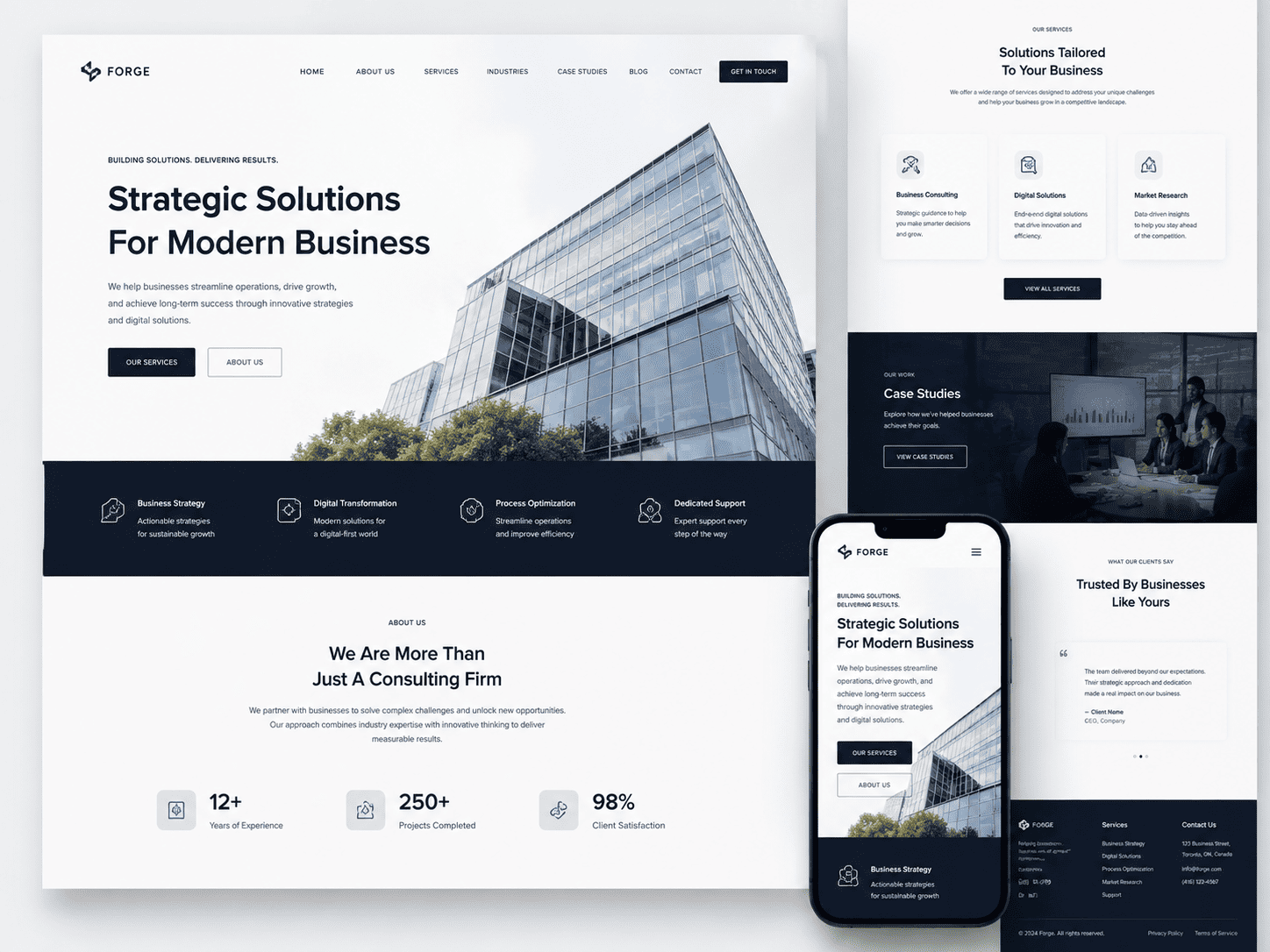
Responsive web design is no longer a luxury—it is the baseline standard for any Canadian business with an online presence. A responsive website uses flexible grids, fluid images, and CSS media queries to automatically adjust its layout, content, and navigation to fit the screen size of any device: a desktop monitor, a tablet, or a smartphone. Instead of building separate mobile sites, a single responsive codebase serves all users, ensuring a consistent experience across every viewport. In Canada, where mobile traffic consistently accounts for over half of all web visits, investing in responsive design is directly tied to user retention, search engine rankings, and conversion rates.
However, the cost of responsive web design in Canada is anything but uniform. You will encounter quotes ranging from $2,000 for a simple brochure site built by a freelance developer in a smaller province, to $50,000 or more for a complex, custom-coded e-commerce platform from a full-service agency in Toronto or Vancouver. This wide variance stems from several core factors: the scope of your project, the experience level of your chosen provider, the geographic location of that provider, and the specific features your business requires. A basic five-page marketing site for a local restaurant will inherently cost far less than a multi-language, database-driven portal for a national logistics company.
Budgeting for a website without understanding these cost drivers often leads to unpleasant surprises. Many Canadian business owners focus solely on the initial design fee, overlooking recurring costs like hosting, domain renewal, content creation, plugin licenses, and ongoing maintenance. Others fail to factor in the cost of revisions, accessibility compliance (which is legally required in many provinces under AODA or similar standards), or the hidden expense of a poorly optimized site that ranks low on Google. The result is a project that either goes over budget or underdelivers on its intended purpose.
Why Responsive Design is Non-Negotiable for Canadian Businesses
Consider the reality of the Canadian digital landscape. According to recent industry reports, roughly 60% of all web traffic in Canada originates from mobile devices. If your website is not responsive, you are effectively turning away more than half of your potential customers. Beyond user experience, Google has used mobile-first indexing for years, meaning the search engine primarily evaluates the mobile version of your site to determine rankings. A non-responsive site will suffer in search results, making it nearly invisible to users actively searching for your products or services.
Furthermore, Canadian consumers expect seamless interactions across devices. A potential customer might browse your services on their phone during a commute, then revisit your site on a desktop at lunch to make a purchase. If the experience is broken on either device, they will abandon you for a competitor. Responsive design also simplifies your analytics and SEO efforts—you maintain one URL structure instead of managing separate mobile and desktop domains, which streamlines reporting and link building. In a market as competitive as Canada’s, from local trades in Calgary to tech startups in Kitchener-Waterloo, a responsive site is the price of admission, not a differentiator.
What This Guide Covers: Pricing Factors, Averages, and Hidden Costs
This guide provides a transparent breakdown of what you should expect to pay for responsive web design across Canada in 2025. We will dissect the primary pricing factors that influence your final invoice, including:
- Project scope: Number of pages, custom features, integrations (payment gateways, CRM systems), and content management requirements.
- Provider type: Freelancers, boutique studios, and large agencies each have different overhead and hourly rates.
- Geographic variance: How costs differ between major metropolitan areas (Toronto, Montreal, Vancouver) and smaller cities or rural regions.
- Design complexity: Custom illustrations, animations, and unique layouts versus template-based designs.
- Functionality: E-commerce capability, booking systems, user accounts, and third-party API integrations.
You will also find realistic average price ranges for different types of websites, from small business sites to enterprise-level builds. Crucially, we will expose the hidden costs that often catch first-time buyers off guard—such as ongoing maintenance contracts, security updates, content migration fees, and the cost of editing content yourself after launch. By the end, you will be equipped to evaluate quotes not just on the sticker price, but on the total cost of ownership over your site’s lifespan.
How to Use This Article to Plan Your Web Design Budget
Start by reading the full article to understand the landscape, but do not stop there. Use the pricing tables and factor lists as a checklist when you begin contacting potential partners. Before you reach out, define your project’s core objectives: Are you selling products online, generating leads, or providing information? Write down the must-have features versus the nice-to-haves. This clarity will help you avoid scope creep during the quoting process.
Next, compare at least three different quotes from different types of providers—for example, one freelancer, one small studio, and one mid-sized agency. When you receive each proposal, use the hidden cost section of this guide to ask pointed questions about post-launch support, training, and performance optimization. Finally, add a contingency buffer of 10–20% to your chosen budget to accommodate unexpected revisions or technical challenges. With that preparation, you can approach your responsive web design project with confidence, knowing that your investment aligns with both your business goals and the realities of the Canadian market in 2025.
The Average Cost of Responsive Web Design in Canada
In 2025, Canadian businesses should expect to pay between $3,000 and $150,000+ CAD for a fully responsive website. The wide range reflects project complexity, the number of custom features, and the level of strategic input required. Before you request quotes, understand that “responsive design” is no longer a premium add-on—it is the baseline standard. Costs below include mobile-first layouts, fluid grids, flexible images, and cross-browser testing. They exclude copywriting, stock photography, ongoing maintenance, and digital marketing retainers unless explicitly stated.
Freelancer Rates vs. Agency Rates: What to Expect
The most significant pricing split in Canada is between independent freelancers and full-service agencies. Freelancers typically charge $50–$120 per hour or offer fixed project pricing from $3,000 to $15,000. Their overhead is lower, but you are buying their individual skill set—not a team. Agencies, ranging from boutique studios to large firms, charge $120–$250 per hour and quote projects between $15,000 and $100,000+.
What does that difference buy you? With an agency, you get a project manager, dedicated UX designer, front-end developer, and QA tester. With a freelancer, you often work directly with one person who handles design and development. Consider this trade-off carefully:
- Freelancer advantage: Lower cost, direct communication, faster turnaround for simple sites.
- Agency advantage: Scalability, specialized roles, stronger post-launch support, and better redundancy if a team member leaves.
- Hidden costs to ask about: Third-party plugin licenses, CMS training, and accessibility audits (WCAG compliance) are often billed separately.
Provincial Price Variations: Toronto, Vancouver, Montreal, and Beyond
Geography still matters in Canada, though remote work has flattened some differences. The highest quotes consistently come from Toronto and Vancouver, where commercial rents and senior talent salaries inflate overhead by 15–25% compared to the national median. Montreal remains a competitive outlier—offering world-class design talent at roughly 10–15% lower rates due to lower provincial operating costs. Mid-sized cities like Calgary, Ottawa, and Halifax fall between these extremes.
For a typical 10-page small business site, expect these baseline fixed-price ranges (excluding taxes):
| City | Freelancer Range | Small Agency Range |
|---|---|---|
| Toronto | $5,000–$12,000 | $15,000–$30,000 |
| Vancouver | $5,500–$13,000 | $16,000–$32,000 |
| Montreal | $4,000–$10,000 | $12,000–$25,000 |
| Calgary/Ottawa | $4,500–$11,000 | $13,000–$28,000 |
Do not automatically choose the lowest bid from a different province. Verify their portfolio includes responsive breakpoints for common viewports (360px, 768px, 1440px) and that they test on real devices, not just browser resizing.
Typical Cost Ranges for Small Business, E-commerce, and Enterprise Sites
Project type is the strongest cost driver. Below are realistic 2025 budgets for each category, assuming custom design rather than a template with minor tweaks:
- Small business (5–15 pages): $4,000–$15,000 (freelancer) or $12,000–$30,000 (agency). Includes contact forms, blog, basic SEO structure, and a standard CMS like WordPress or Webflow.
- E-commerce (20–100+ products): $10,000–$40,000 (freelancer) or $25,000–$75,000 (agency). Includes product catalog architecture, payment gateway integration, cart logic, and inventory management. Add 20–30% for custom product configurators or subscriptions.
- Enterprise (custom web app or portal): $50,000–$150,000+ (agency only, typically). Includes user authentication, third-party API integrations (CRM, ERP), multi-language support, and advanced security compliance.
For a quick technical reference, confirm your developer uses responsive image syntax like this in the front-end code:
<img src="hero-desktop.jpg"
     srcset="hero-480.jpg 480w, hero-768.jpg 768w, hero-1200.jpg 1200w"
     sizes="(max-width: 600px) 100vw, 60vw"
     alt="Responsive hero image">
Finally, remember that the cheapest quote is rarely the most cost-effective. A responsive site that fails to convert mobile visitors will cost more in lost revenue than the savings from a cut-rate build. Always request a written scope of work that lists every page, component, and breakpoint before signing.
Key Factors That Influence the Cost of Responsive Web Design
In Canada, responsive web design is rarely priced as a standalone line item. Instead, it is an integral layer of the entire web development process, meaning your final quote reflects the total scope of building a site that adapts flawlessly across devices. While a basic responsive brochure site might start around $3,000 CAD, a complex platform can exceed $50,000 CAD. Understanding the specific variables that drive these figures helps you budget accurately and avoid surprise overages. Below, we break down the three most significant cost drivers for 2025.
Number of Pages and Content Volume
The sheer volume of content directly dictates both design time and development effort. Each page requires its own responsive layout considerations—not just for desktop, but for tablet and mobile breakpoints. A 5-page site with minimal text is fundamentally cheaper than a 30-page corporate site with blogs, case studies, and resource libraries. Content volume also influences testing: more pages mean more cross-device checks, which increases hourly costs.
- 1–10 pages: Typically $2,500–$8,000 CAD. Ideal for small businesses or portfolios.
- 11–25 pages: Usually $8,000–$20,000 CAD. Common for growing companies with service breakdowns.
- 26+ pages: Often $20,000–$50,000+ CAD. Includes advanced navigation structures and content strategy.
If you need professional copywriting, photography, or video production, add $1,500–$10,000 CAD to your total. Many Canadian agencies charge per page for content creation, while freelancers may bundle it. Always clarify whether your quote includes content migration from an old site—this can add 10–20% in labour.
Custom Features: E-commerce, Booking Systems, and Integrations
Responsive design costs escalate sharply when you add dynamic functionality. An e-commerce store requires product templates, cart logic, and secure checkout flows that must work on a 5-inch screen as smoothly as a 27-inch monitor. Similarly, booking systems (e.g., for salons or clinics) need calendar interfaces, timezone handling, and mobile-friendly input fields. Third-party integrations—such as CRM, email marketing, or payment gateways—demand additional API work and testing.
| Feature Type | Typical Cost Range (CAD) | Responsive Complexity Added |
|---|---|---|
| Basic contact form & Google Maps | $500–$2,000 | Low – simple resizing |
| E-commerce (up to 50 products) | $5,000–$15,000 | High – cart, filters, mobile payments |
| Booking/calendaring system | $3,000–$10,000 | High – date pickers, touch gestures |
| CRM or email integration | $1,500–$7,000 | Medium – data syncing across devices |
Note that these are incremental costs on top of base design. A custom membership portal or real-time chat feature can push your budget into the $20,000+ range alone. Always request a detailed feature breakdown in your proposal.
Design Complexity: Templates vs. Custom UI/UX Design
The visual and interaction design layer is where costs diverge most sharply. Using a pre-built responsive template (e.g., from ThemeForest or a platform like Squarespace) might cost $500–$2,000 CAD in licensing and minor customization. However, templates often require significant CSS overrides to match your brand, and they may not be fully optimized for Canadian accessibility standards (AODA). A custom UI/UX design, by contrast, involves user research, wireframing, prototyping, and iterative testing—typically $8,000–$25,000 CAD for a mid-sized site.
Custom design is not just about aesthetics. It ensures that navigation collapses logically on mobile, touch targets are adequately sized, and load times are optimized for slower cellular connections. Canadian businesses in regulated industries (finance, healthcare) often prefer custom design to meet compliance and brand differentiation needs. If you choose a hybrid approach—custom homepage plus template interior pages—expect to pay $5,000–$12,000 CAD, but be aware that this can create inconsistent user experiences across breakpoints. Ultimately, your choice should balance brand impact against long-term maintenance costs; custom designs are easier to extend, while templates may require costly rebuilds when you add features later.
Responsive Design vs. Mobile App Development: Cost Comparison
For Canadian businesses weighing their digital presence options, the financial gap between a responsive website and a native mobile app is often the deciding factor. While both deliver mobile experiences, they differ drastically in upfront investment, maintenance, and long-term scalability. A responsive website—one that adapts fluidly to any screen size—typically costs a fraction of a native app’s price tag, making it the preferred choice for companies targeting broad audiences across provinces, from Ontario to British Columbia.
Why Responsive Web Design is Cheaper Than a Native App
The primary cost driver is development scope. A responsive website requires a single codebase that works across all browsers and devices. A native app, by contrast, demands separate codebases for iOS (Swift) and Android (Kotlin or Java), effectively doubling or tripling initial development hours. Here’s a practical breakdown of typical Canadian market rates:
| Cost Factor | Responsive Website | Native Mobile App (per platform) |
|---|---|---|
| Initial design & development | $5,000 – $15,000 (small business) | $30,000 – $80,000 |
| Ongoing maintenance (annual) | $500 – $2,000 | $5,000 – $15,000 (updates, app store compliance) |
| App store fees | None | $99/year (Apple) + $25 one-time (Google) |
| User acquisition | Free via SEO and links | Paid install campaigns, often $2–$5 per user |
Beyond development, ongoing costs compound. A website update—like adjusting a menu or adding a blog post—requires no approval process. An app update must be re-submitted to Apple and Google, incurring review delays and potential rejection fees. Additionally, responsive sites leverage a single content management system (CMS), so your team updates one page that instantly reflects everywhere. With an app, you manage separate release cycles for each OS, which eats into your marketing budget and staff time.
When a Mobile App Might Be Worth the Extra Investment
Despite the higher price, certain Canadian businesses justify native apps. Consider an app if you meet any of these criteria:
- Heavy offline functionality: Field workers in remote Alberta oil sites or Quebec forestry teams need data access without cellular coverage.
- Deep hardware integration: A fitness clinic using the phone’s accelerometer or a retail store needing Bluetooth beacons for loyalty check-ins.
- Recurring engagement: Apps excel at push notifications for daily deals, appointment reminders, or subscription content—features that email or SMS from a website cannot replicate as reliably.
- Complex transactions: A stock trading platform or a telehealth service requiring secure biometric login and camera-based document scanning.
If your business model depends on these capabilities, the $60,000+ investment for dual-platform development may pay off. However, for a restaurant, law firm, or e-commerce store serving the general public, an app’s download friction (users must visit an app store, install, and grant permissions) often results in lower conversion than a simple URL click.
Cost Benefits of a Mobile-First Responsive Strategy
Adopting a mobile-first responsive design—where the layout is built for small screens first, then scaled up—yields measurable savings beyond the initial build. First, you reduce iteration costs. Because 60% of Canadian web traffic now comes from mobile devices, designing for that constraint first means fewer revisions later. Second, you eliminate the need for separate mobile and desktop versions of your site, which historically required two content teams and two hosting bills.
Third, responsive sites improve your search engine ranking on Google, which prioritizes mobile-friendly pages. Higher organic rankings reduce your reliance on paid ads—a significant line item for Canadian SMEs. Finally, consider the total cost of ownership over five years. A responsive site might cost $10,000 upfront and $1,000 annually in hosting and updates, totaling $15,000. A native app at $50,000 per platform, with $10,000 yearly maintenance and $5,000 in app store compliance, easily surpasses $100,000. For most Canadian businesses—from a Halifax boutique to a Vancouver consultancy—that difference funds three years of additional marketing or a full-time junior developer.
In practical terms, a mobile-first responsive strategy also future-proofs your investment. As new devices with foldable screens or unusual aspect ratios emerge, your CSS media queries adapt without a redesign. Native apps, however, must be recompiled and re-tested for each new hardware release. Choosing responsive design today is not just a cost-saving move; it is a strategic hedge against a fragmented device landscape.
Hidden Costs and Ongoing Expenses to Budget For
When you receive a quote for responsive web design in Canada, the headline number rarely tells the full story. Most initial estimates cover the design and development phase—building the layout, coding the breakpoints, and launching the site. However, the true cost of owning a responsive website extends far beyond that launch date. To avoid unpleasant surprises in your first year, you must account for recurring fees and services that are often itemized separately or omitted entirely from your proposal. Budgeting for these hidden costs from the start ensures your site remains fast, secure, and functional—not just for launch day, but for years to come.
Domain, Hosting, and SSL: Annual Recurring Fees
Every website needs a digital address and a place to live online. These are not one-time purchases; they are annual subscriptions that you must renew to keep your site accessible. Many designers bundle the first year into their quote, but you will be responsible for renewal costs thereafter. Here is what to expect in Canada:
- Domain registration: Typically $15 to $30 per year for a standard .ca or .com domain. Premium domains or uncommon extensions (like .io or .design) can cost $50 to $200+ annually.
- Web hosting: Shared hosting for a small business site ranges from $10 to $40 per month ($120–$480/year). Managed WordPress or cloud hosting (faster and more secure) costs $30 to $100 per month ($360–$1,200/year).
- SSL certificate: Many hosts include a free SSL certificate (Let’s Encrypt) in their package. If not, expect to pay $50 to $150 per year for a standard certificate that keeps your site secure and displays the padlock icon.
Do not overlook these fees. If your quote says “hosting included,” ask for how many years and what the renewal price will be. A $1,500 design fee can quickly become a $2,000 annual commitment when you add domain, hosting, and SSL renewals.
Maintenance, Updates, and Security Monitoring
A responsive website is not a “set it and forget it” asset. Your content management system (like WordPress), plugins, and themes require regular updates to patch security vulnerabilities and fix bugs. Without ongoing care, your site can become slow, break on new mobile devices, or—worse—get hacked. Most agencies and freelancers offer maintenance plans, which are separate from the design cost. Typical Canadian pricing:
| Service Level | What’s Included | Approximate Monthly Cost |
|---|---|---|
| Basic | Core updates, daily backups, uptime monitoring | $25 – $75 |
| Standard | All basic features, plus plugin updates and monthly security scans | $75 – $150 |
| Premium | Standard features, plus priority support, malware removal, and performance tuning | $150 – $300 |
If you skip a maintenance plan, you may face emergency repair fees of $150–$500 per incident when something breaks. Budgeting $50 to $150 per month for proactive care is far cheaper than a single crisis fix.
Additional Costs: Copywriting, Photography, and SEO Setup
Your responsive design is only as good as the content it displays. Many clients assume the designer will fill in text and images, but professional copywriting and custom photography are almost always billed separately. Poor-quality content can undermine even the most polished layout. Plan for these add-ons:
- Copywriting: Professional web copy ranges from $0.25 to $1.00 per word. A typical homepage (300–500 words) plus five service pages (400 words each) could cost $800 to $2,500+.
- Photography: Stock photos cost $10–$50 per image (or a subscription of $200+/year). Custom photography or branded illustrations start at $500 per day and can reach $3,000 for a full shoot.
- SEO setup: Technical SEO (meta tags, schema markup, sitemap, page speed optimization) is often quoted as an extra $500 to $2,000. Ongoing SEO services run $500–$2,500 per month, but at minimum, budget for the initial setup to ensure search engines can index your responsive site correctly.
When reviewing your design quote, ask directly: “Does this include content creation and basic SEO?” If not, add these line items to your total budget. A fully optimized, responsive site with professional copy and images will outperform a bare-bones design—and the upfront investment pays off in conversions and search rankings.
DIY vs. Professional Web Design: Cost and Quality Trade-Offs
When budgeting for a website in Canada, the most fundamental fork in the road is choosing between a DIY platform (Wix, Squarespace, Shopify) and a hired professional (freelancer or agency). The sticker price difference is obvious—DIY seems almost free by comparison. But the real question—how much does responsive web design cost in Canada when you factor in your time, lost opportunities, and future fixes—is rarely that simple. This section breaks down the true trade-offs, so you can decide where your dollar (and your hours) are best spent.
Website Builder Subscription Costs vs. One-Time Professional Fees
Let’s start with the advertised numbers. A Canadian small business on Wix or Squarespace will pay between $23 and $49 CAD per month for a business plan that removes ads, adds a custom domain, and provides basic e-commerce. Over three years, that’s $828 to $1,764 CAD—and that’s before you add premium apps, extra storage, or transaction fees (typically 2.9% + $0.30 per sale on top of payment processor fees).
A professional responsive design project in Canada, by contrast, typically runs as a one-time fee of $3,000 to $12,000 CAD for a marketing site, or $8,000 to $25,000+ CAD for a custom e-commerce build. That sounds steep until you realize that the professional site is yours outright—no monthly software tax, no platform lock-in, and no per-transaction penalties. Here’s a realistic cost comparison over five years:
| Cost Factor | DIY (Wix/Squarespace) | Professional (Freelancer/Agency) |
|---|---|---|
| Setup year (year 1) | $300–$600 CAD | $4,000–$15,000 CAD |
| Annual subscription/hosting (years 2–5) | $350–$700 CAD/year | $150–$400 CAD/year (hosting only) |
| Premium plugins/apps (cumulative) | $200–$800 CAD | $0 (included in build) |
| E-commerce transaction fees (on $50k sales/yr) | $1,500–$2,500 CAD/year | $0–$500 CAD/year (depends on gateway) |
| 5-year total (typical) | $6,000–$12,000 CAD | $4,500–$17,000 CAD |
Notice the crossover: for a serious business with meaningful sales, DIY platforms often cost more over five years due to transaction fees and forced upgrades. The professional’s upfront fee buys you an asset—not a rental.
Time and Expertise: The Hidden Cost of DIY
Your hourly rate is the silent line item in every DIY project. Building a polished, responsive site on Wix or Squarespace takes a non-designer 40 to 120 hours for the first version—choosing templates, dragging widgets, fighting with mobile breakpoints, and troubleshooting why your contact form breaks on an iPhone. At even a modest $50/hour value for your own time, that’s $2,000 to $6,000 CAD in opportunity cost.
Professionals, meanwhile, deliver the same scope in 2–4 weeks of focused work. They also bring expertise that DIY platforms cannot replicate through templates:
- Responsive testing across real devices—not just desktop and a generic phone preview.
- Core Web Vitals optimization—DIY templates often score poorly on Google’s mobile speed metrics, hurting your local SEO in Toronto, Vancouver, or Calgary.
- Custom forms, booking systems, or API integrations that require code, not just drag-and-drop blocks.
- Security and maintenance—a professional will set up automated backups, SSL renewals, and update protocols that a DIY user often forgets until the site goes down.
One practical example: to fix a common DIY issue—images that don’t scale on mobile—a professional would write a simple CSS rule like img { max-width: 100%; height: auto; }. On Wix, you’d have to manually adjust every image’s settings or risk blurry, broken layouts. That 30-second fix is the difference between a developer who knows the underlying code and a user who is stuck with the platform’s defaults.
When DIY is Sufficient and When You Need a Professional
DIY is genuinely sufficient for three scenarios: (1) a personal portfolio or side project with no revenue goals, (2) a local service business with fewer than 20 pages and no e-commerce, or (3) a temporary landing page for a product launch. In these cases, the subscription cost is justified because your “website” is really a digital business card—not a sales engine.
You need a professional when any of the following apply:
- You sell products or services online, and transaction fees eat into margins above 5%.
- Your site must rank in local search results for competitive keywords (e.g., “plumber in Mississauga” or “Ottawa wedding photographer”).
- You need custom functionality—client portals, multilingual support, or booking systems that integrate with your accounting software.
- Your brand depends on unique design, not a template that thousands of other Canadian businesses are using.
- You cannot afford to lose business to a slow, broken mobile experience.
The bottom line for Canadian business owners: if your website is a cost center, DIY is fine. If it’s an investment that generates leads or sales, the professional fee pays for itself in the first few months of proper responsive performance. Calculate your own time cost honestly, and the answer usually becomes clear.
How to Get Accurate Quotes from Canadian Web Designers
When you ask “how much does responsive web design cost in Canada,” the first number you receive is rarely the final one. Quotes vary wildly—from a freelancer’s $2,000 flat fee to a full agency’s $25,000 proposal—because the underlying scope differs. The difference between a vague estimate and a precise, comparable bid comes down to how you prepare and what you ask. Without structure, you will compare a basic brochure site against an e-commerce build with custom integrations. The following steps will help you extract realistic, apples-to-apples pricing from any Canadian designer or agency.
Defining Your Project Scope Before Contacting Designers
Do not reach out for quotes until you have written a one-page project brief. This brief forces you to make decisions that directly impact cost. At minimum, specify:
- Number of pages (e.g., 5 core pages, 10 service pages, or 30+ blog templates)
- Core functionality (contact form, booking system, payment gateway, user login, or content management)
- Responsive breakpoints (mobile, tablet, and desktop—state if you need a custom 4K layout)
- Content readiness (will you provide copy and images, or does the designer need to create or source them?)
- Integration needs (CRM, email marketing, analytics, or third-party APIs)
- Post-launch support (how many months of maintenance do you expect?)
Also decide whether you need a template-based build (cheaper, faster) or a fully custom design (premium, unique). Canadian designers often price custom work at 40–60% higher than template adaptations. Write down your deadline and budget range, even if approximate. This transparency allows designers to tell you early whether your expectations are realistic, saving you both time.
Questions to Ask: Deliverables, Revisions, and Timelines
To compare quotes fairly, you must force every provider to answer the same set of operational questions. Use this checklist during your initial calls or emails:
| Category | Question to Ask | Why It Matters |
|---|---|---|
| Deliverables | “Does your quote include responsive wireframes, a clickable prototype, and final HTML/CSS files, or only design mockups?” | Some quotes omit development entirely, leaving you with images instead of a working site. |
| Revisions | “How many rounds of revisions are included per page or per section?” | Standard is 2–3 rounds. Unlimited revision promises often hide inflated base prices. |
| Timeline | “What is the exact launch date, and what happens if content is delayed on your side or theirs?” | Clarify whether the quoted timeline assumes you deliver all assets within one week. |
| Testing | “Which devices and browsers will you test on? Is cross-browser testing included?” | Responsive design fails without real-device testing on older iPhones and Android browsers. |
| Ownership | “Do I receive full intellectual property rights to the code and design files upon final payment?” | Some agencies retain rights or charge licensing fees for continued use. |
| Hosting & domain | “Is hosting setup, SSL certificate, and domain migration included or billed separately?” | These can add $200–$600 annually, often omitted from the headline quote. |
Request a written breakdown of hours per task (design, development, testing, project management). This reveals whether you are paying for a junior designer’s slow pace or an efficient senior team. Also ask for two references from Canadian clients with similar project sizes—then actually call them.
Red Flags in Quotes: What to Watch Out For
Certain patterns signal a quote that will balloon later. Be wary if you encounter any of the following:
- No mention of responsive testing. If the proposal never references mobile layouts, tablet breakpoints, or touch interactions, the designer may treat responsive as an afterthought.
- “Starting at” pricing without a fixed scope. A quote that says “responsive website from $3,500” but does not list what that includes is a trap. You will pay extra for every page beyond a vague “basic” set.
- Ultra-low ball offers under $1,500. In Canada, this typically means pre-built templates with minor text swaps, no custom functionality, and no post-launch support. You will pay more later to fix broken responsiveness.
- Unlimited revisions as a selling point. This usually leads to endless back-and-forth, delayed launch, and a designer who eventually rushes to finish. Fixed revision rounds protect your timeline.
- Vague ownership language. Phrases like “we retain the right to showcase your site in our portfolio” are normal, but “we retain code ownership until full payment” is fine—however, “we retain perpetual rights to the underlying framework” is not.
- No written change-order process. Ask: “What happens if I request a new feature halfway through?” A professional will state a rate (e.g., $75/hour) and a process. Vague answers mean surprise invoices.
Finally, request that all quotes expire after 30 days. This prevents price anchoring if you delay your decision. Compare the total cost of ownership—not just the design fee—including hosting, domain, plugin licenses, and one year of maintenance. A quote that appears cheaper upfront often costs more by year two. With these questions and red flags in hand, you can confidently request quotes that are transparent, comparable, and aligned with the true cost of responsive web design in Canada.
Case Studies: Realistic Budget Scenarios Across Canada
To move beyond abstract ranges, it helps to see how the focus keyword, How Much Does Responsive Web Design Cost in Canada?, translates into real projects. The following anonymized scenarios reflect typical 2025 market conditions in major Canadian metros (Toronto, Vancouver) versus secondary cities (Halifax, Winnipeg). Each budget includes design, development, content migration, and basic SEO setup, but excludes ongoing maintenance and third-party software subscriptions unless noted.
Small Business Website: $3,000–$7,000
Case: “The Corner Bistro” – a 40-seat independent restaurant in Calgary needing a menu, hours, contact form, and photo gallery. The owner wanted mobile-first navigation and online reservation links (but not a full booking system).
Breakdown of expenses:
- Custom WordPress theme (premium base, customized): $1,500
- Copywriting for 5 pages (from existing content): $800
- Responsive layout testing on 15 device sizes: $600
- Basic on-page SEO (meta tags, schema for local business): $400
- Contact form + Google Maps integration: $300
- Project management & revisions (2 rounds): $900
Total: $4,500 – within range, but a simpler template with less customization could drop to $3,200, while adding a custom illustration set or French/English bilingual version would push toward $6,800.
E-commerce Store: $8,000–$20,000
Case: “Maple & Co.” – a Vancouver-based startup selling artisan candles and skincare. They needed a Shopify Plus build with 30 products, custom filters, abandoned cart recovery, and a responsive checkout flow optimized for mobile conversion.
Breakdown of expenses:
- Shopify theme customization (not from scratch): $3,200
- Product photography styling guide + 30 image optimizations: $1,800
- Payment gateway setup (Stripe + PayPal) and tax rules: $900
- Custom product filter functionality: $1,400
- Mobile-specific A/B testing for cart page: $1,100
- Inventory sync with shipping app (ShipStation): $700
- Project management & QA across browsers/devices: $2,000
Total: $11,100 – the lower end ($8,000) would use a stock theme with fewer custom filters; the upper end ($20,000) would include a custom headless build or subscription-based personalization.
Corporate Website with Custom Features: $20,000–$50,000+
Case: “Northbridge Financial Advisory” – a mid-sized Toronto firm (40 employees) needing a multilingual (English/French) site with a secure client portal login, team directory, and dynamic resource library. They required WCAG 2.1 AA accessibility and integration with their CRM (Salesforce).
Breakdown of expenses:
- Custom WordPress or Laravel build (not a theme): $14,000
- Client portal with two-factor authentication: $6,500
- Bilingual content management (French/English toggle): $3,800
- CRM integration for form pre-fill and lead routing: $4,200
- Accessibility audit and fixes (WCAG AA): $2,500
- Load testing for 500 concurrent users: $1,800
- UI/UX prototyping (3 rounds): $3,200
- Project management, documentation & training: $4,000
Total: $40,000 – a leaner version without the client portal could land near $22,000, while adding custom data visualization dashboards or a full intranet pushes beyond $55,000.
| Project Type | Typical Timeline (weeks) | Hourly Rate Range (CAD) | Main Cost Driver | Example Location Impact |
|---|---|---|---|---|
| Small business (restaurant) | 4–6 | $75–$110 | Number of custom pages | Halifax: −15% vs. Toronto |
| E-commerce store | 8–12 | $90–$140 | Payment & inventory integrations | Vancouver: +10% vs. Winnipeg |
| Corporate with custom features | 12–20 | $120–$180 | Security, multilingual, CRM | Toronto: +20% vs. Calgary |
These cases confirm that location matters less than scope. A restaurant in Toronto might cost $6,500, while a similar one in Moncton costs $3,800 – but the gap narrows when you need specialized features like online ordering or accessibility compliance. Always request a fixed quote with itemized line items, as hourly billing can inflate costs by 25–40% if discovery is vague.
Cost-Saving Strategies Without Compromising Responsive Quality
Reducing the cost of a responsive website in Canada does not mean settling for a broken layout on mobile devices. The key is to make deliberate choices about where your budget goes. By focusing on structure, reusable components, and staged development, you can cut expenses by 30% to 50% while still delivering a site that passes Google’s mobile-friendly test and feels native on every screen size. Below are three proven tactics used by Canadian startups and small businesses to keep their 2025 budgets in check.
Using Pre-Built Responsive Themes and Customizing Them
Custom design from a Canadian agency typically costs $8,000 to $20,000. A premium responsive theme (e.g., from ThemeForest or a framework like Bootstrap or Tailwind UI) costs $59 to $300 for a single-use license. The savings are substantial, but the real cost trap is leaving the theme untouched. A stock theme signals “template” to users and often includes unnecessary scripts that slow load times.
Instead, hire a developer for 10 to 20 hours ($50–$100/hour in most provinces) to perform targeted customization. Prioritize these changes:
- Modify breakpoints to match your actual content, not just the theme’s defaults (e.g., adjust from 768px to 820px if your analytics show tablet usage).
- Replace placeholder imagery with your own compressed WebP files (under 200KB each).
- Disable unused CSS/JS modules in the theme’s builder to reduce render-blocking resources.
- Add a single custom component (like a sticky mobile call button) that makes the site feel bespoke.
If you are comfortable with code, you can audit your theme’s responsive behaviour directly. For example, to test a custom breakpoint in your browser’s console:
// Check current viewport width against your theme's main breakpoint
if (window.innerWidth < 768) {
  console.log('Mobile layout active – verify menu collapses correctly');
} else if (window.innerWidth < 1024) {
  console.log('Tablet layout active – check two-column grid');
} else {
  console.log('Desktop layout active – confirm max-width container is set');
}
Prioritizing Features: Launch MVP and Scale Later
The most expensive mistake in responsive design is paying for every feature upfront. A typical quote balloons when you add live chat, multi-language support, advanced filtering, and animations all at once. Instead, define a Minimum Viable Product (MVP) that covers only three things: core content readability, primary conversion action (form, call, or purchase), and navigation on a 375px-wide phone.
For a Canadian small business, an MVP might include:
| Feature | Cost if included at launch | Cost if deferred to Phase 2 |
|---|---|---|
| Responsive image sliders (carousel) | $1,200 – $2,500 | $800 (after revenue justifies it) |
| Multi-region pricing (CAD/USD toggle) | $1,500 – $3,000 | $1,000 |
| Blog with responsive tables | $2,000 – $4,000 | Use a free plugin or CMS later |
By launching with only a responsive header, a single-column text layout, and one clear call-to-action button, you reduce initial quotes by 40%. You also avoid the “scope creep” that drives hourly billing upward. After three months of traffic data, you will know exactly which features users actually tap on mobile—then pay for only those.
Leveraging Local Talent and Off-Peak Season Discounts
Canadian web agencies in Toronto and Vancouver charge premiums of 20% to 35% over firms in Winnipeg, Halifax, or Moncton. You do not need to sacrifice quality—many Atlantic Canadian developers have strong portfolios in responsive design because they serve local tourism and retail clients who depend on mobile traffic. Request quotes from three provinces, and compare hourly rates versus fixed-project bids.
Timing also matters. Most agencies in Canada see a slowdown between mid-November and mid-January (after holiday retail projects) and again in July (when many clients pause for vacation). Approach developers in these windows and ask for a 10% to 15% discount in exchange for a flexible start date. Additionally, consider hiring a freelancer who works in a different time zone within Canada—for example, a developer in Newfoundland (NST) can start work at 8:30 AM while you are still sleeping in BC, effectively compressing your project timeline and reducing total billed hours.
Finally, negotiate a two-phase payment structure: 50% upfront for the responsive core, and 50% upon passing a live mobile test (e.g., using Chrome DevTools’ device toolbar and Lighthouse’s mobile audit). This keeps the developer accountable and ensures you only pay the final half when the site truly works on a 4-inch screen.
Conclusion: Making a Smart Investment in Your Website’s Future
As you navigate the landscape of web development in Canada, one truth becomes clear: responsive web design is not an optional feature or a decorative afterthought—it is the structural foundation upon which your entire digital presence rests. From a solo entrepreneur in Halifax to a growing team in Vancouver, the decision to invest in a mobile-friendly, adaptive website carries implications far beyond the initial launch date. This guide has walked you through the current pricing realities for 2025, and now it is time to synthesize that information into a practical framework for your next move.
Recap of Cost Ranges and Influencing Factors
To anchor your budgeting process, here is a concise snapshot of what you can expect to pay across different project scopes in Canada, based on current market rates and typical agency or freelancer structures:
| Project Type | Estimated Range (CAD) | Typical Timeline |
|---|---|---|
| Small Business (5–10 pages, template-based, basic responsiveness) | $2,500 – $6,000 | 2–4 weeks |
| Custom Business Site (10–25 pages, tailored design, CMS integration) | $6,000 – $15,000 | 6–10 weeks |
| E-commerce or Complex Web App (responsive + advanced functionality) | $15,000 – $40,000+ | 10–16+ weeks |
Several variables consistently drive these numbers upward or downward. The most significant include:
- Geographic location: Agencies in Toronto, Vancouver, and Calgary typically charge 15–25% more than their counterparts in smaller cities or rural provinces due to higher overhead and labour costs.
- Level of customization: A fully bespoke design with unique interactions, animations, or custom illustrations will cost substantially more than using a premium theme or pre-built component library.
- Content migration and SEO: If you have an existing website with hundreds of indexed pages, the cost of properly redirecting URLs, preserving metadata, and auditing content will add $1,000–$3,000 to your total.
- Ongoing maintenance: Many Canadian developers offer monthly retainers (typically $150–$500/month) for security updates, backups, and minor content changes—factor this into your annual budget.
The Long-Term Value of a Responsive Website
When you focus solely on the sticker price, you risk missing the bigger picture. A responsive website is a revenue-generating asset, not a one-time expense. Consider the following long-term benefits that directly impact your bottom line:
- Lower acquisition costs: Google’s mobile-first indexing means that a non-responsive site will rank lower in search results. Every percentage point of organic traffic you lose to a competitor with a better mobile experience is money you spend on paid ads to recover that visibility.
- Reduced maintenance overhead: Maintaining one responsive website is significantly cheaper than managing separate desktop and mobile versions. You avoid duplicate content updates, double hosting fees, and the administrative headache of syncing two codebases.
- Higher conversion rates: Mobile users who encounter a fluid, fast-loading site are far more likely to complete a purchase, fill out a contact form, or call your business. Even a 1–2% improvement in conversion rate can pay for the entire project within the first year for most service-based businesses.
- Future-proofing: As new devices with unusual screen sizes (foldables, wearables, smart TVs) enter the market, a responsive foundation ensures your site adapts without requiring a complete redesign.
In practical terms, a $10,000 responsive website that generates just five additional qualified leads per month—at a typical closing rate of 20% and an average customer value of $2,000—will recoup its cost in under six months. That is the true measure of return on investment.
Next Steps: Research, Compare, and Choose Wisely
Now that you understand the cost landscape, your next actions should be methodical rather than rushed. Begin by compiling a shortlist of three to five Canadian web design firms or independent freelancers. For each candidate, request a detailed proposal that includes not just the build price, but also:
- A breakdown of hours per task (design, development, testing, project management).
- Clear deliverables for each phase, including mobile prototypes and cross-browser testing reports.
- Post-launch support terms—what happens if a bug appears after three months?
- Ownership of the code, domain, and content, so you are never locked into a single vendor.
Do not automatically choose the lowest bid. Instead, evaluate each proposal against your business goals: Will this site load in under three seconds on a 4G connection? Can your team update content without contacting the developer? Does the proposed design accommodate your future product lines or service expansion? Ask for references from Canadian clients in similar industries, and review those clients’ live websites on your own phone to test responsiveness firsthand.
Finally, set aside a contingency of 10–15% of your total budget for unforeseen requirements—a new payment gateway, additional accessibility fixes, or extra revisions. This buffer prevents scope creep from derailing your timeline or forcing you to compromise on quality. By approaching the project with a clear budget, a realistic timeline, and a focus on long-term value, you will not only get a website that looks good on every screen—you will secure a digital asset that works as hard as you do, year after year.
Frequently Asked Questions
What is the average cost of responsive web design in Canada in 2025?
In 2025, Canadian businesses typically pay between $2,500 and $15,000 for a responsive website. Freelancers often charge $2,500–$8,000, while agencies range from $8,000–$30,000+ depending on features and complexity. Small business brochure sites sit at the lower end, while e-commerce or custom web apps increase costs. Always request itemized quotes, as ongoing maintenance and content creation are usually billed separately.
Why does responsive web design cost more than a non-responsive site?
Responsive design requires additional planning, flexible layouts, and testing across multiple screen sizes (mobile, tablet, desktop). Developers must adjust breakpoints, optimize images, and ensure touch-friendly navigation. This adds 15–30% to development time compared to a fixed-width site. However, the investment is essential for SEO and user experience, as Google prioritizes mobile-friendly sites and over 60% of Canadian web traffic comes from mobile devices.
How much do Canadian freelancers charge for responsive web design?
Canadian freelance web designers typically charge $50–$150 per hour or a flat project fee of $2,500–$8,000 for a standard responsive site. Mid-level freelancers with portfolio experience often land at $75–$100/hour. Complex projects with custom features or e-commerce functionality may exceed $10,000. Always check their portfolio for mobile examples and ask about post-launch support costs.
What do web design agencies charge in Canada for responsive sites?
Canadian agencies generally charge between $8,000 and $30,000+ for a responsive website. This includes dedicated project management, UX/UI design, development, QA, and often basic SEO setup. Mid-sized agencies in cities like Toronto or Vancouver average $15,000–$25,000 for a custom business site. Enterprise-level with integrations can reach $50,000+. Agency pricing also includes ongoing support retainers.
Are there cheaper alternatives like website builders for responsive design?
Yes, website builders like Wix, Squarespace, and Shopify offer responsive templates for $20–$50/month, plus domain and app costs. They are cost-effective for small businesses, but customization is limited. For a more professional look, hiring a developer to customize a builder theme costs $1,000–$3,000. However, for unique functionality or advanced SEO, a custom WordPress site may be more scalable.
What hidden costs should I budget for with responsive web design in Canada?
Beyond initial design, budget for domain renewal ($15–$25/year), hosting ($100–$500/year), SSL certificate (often free), and ongoing maintenance ($50–$200/month). Content creation, copywriting, and stock photos add $500–$2,000. Also, expect costs for plugin licenses, accessibility compliance, and future feature updates. Clarify with your provider what is included to avoid surprises.
How can I get an accurate quote for responsive web design in Canada?
To get an accurate quote, prepare a clear brief: number of pages, required features (e.g., booking, e-commerce), examples of sites you like, and your target audience. Ask each provider for a fixed-price quote rather than an hourly estimate. Compare at least three quotes from different types of providers (freelancer vs agency). Ensure the quote includes responsive testing and post-launch support.
Sources and further reading
- W3C: Mobile Web Best Practices
- W3C: Responsive Web Design – Techniques
- Government of Canada: Web design and usability standards
- WebAIM: Web Accessibility in Mind
- MDN Web Docs: Responsive design
- Shopify: How much does a website cost in Canada?
- Wix: Pricing plans
- Squarespace: Pricing
- WordPress.com: Pricing
- Canadian Marketing Association – Digital Trends
Need help with this topic?
Send us your details and we will contact you.
Tagged with :







Comment (1)
Pingback: Ecommerce Web Design for B2B Companies in Canada