


Why Vancouver Small Businesses Need a Strategic Website
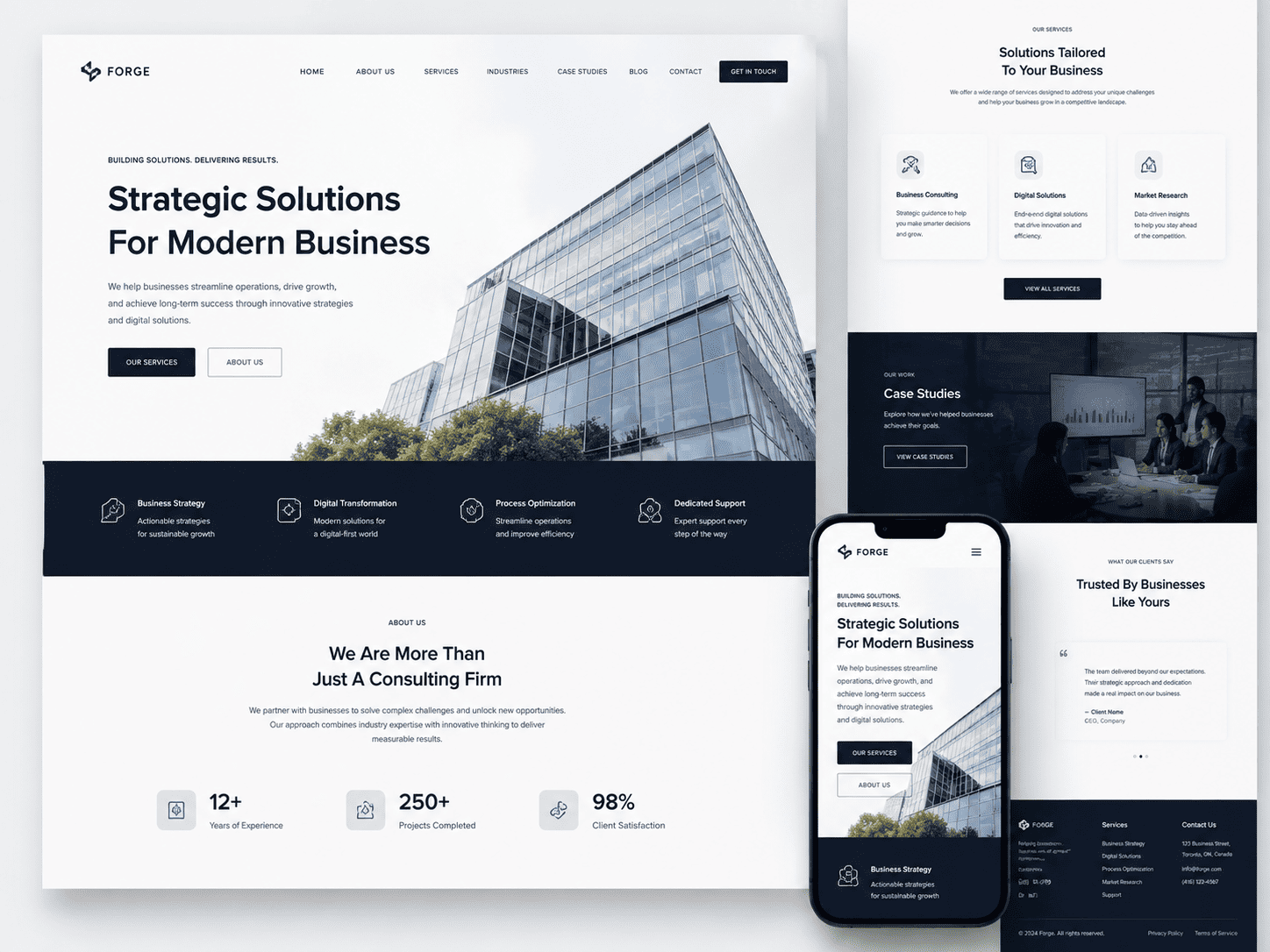
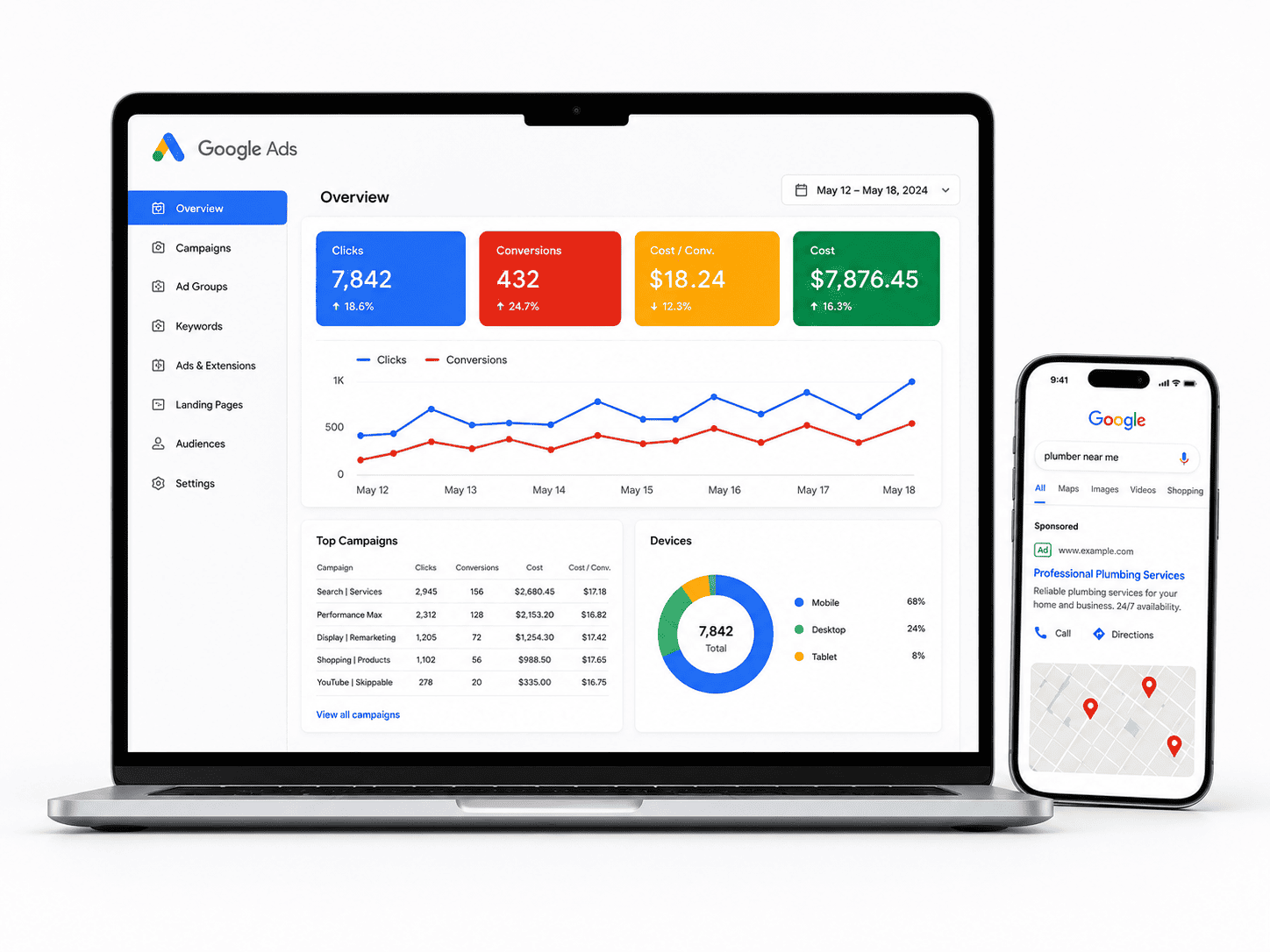
In a city as dynamic and digitally fluent as Vancouver, a website is no longer a digital brochure—it is a primary business asset. From Kitsilano coffee shops to Yaletown consulting firms, customers increasingly expect to find, vet, and engage with local businesses online before ever stepping through a door. A strategic website does more than list services; it actively works to convert local search interest into scheduled appointments, phone calls, and foot traffic. Without this foundation, even the most established Vancouver business risks being invisible to the exact audience it needs to reach.
The Local Competitive Landscape and Digital Presence
Vancouver’s commercial environment is dense and varied, spanning Gastown tech startups, South Granville retailers, and North Shore tradespeople. This density means that your competitors are not just across the street—they are one Google search away. A strategic website gives you a measurable edge in a market where consumers compare three to five options before making contact. Consider what your local competitors are likely doing:
- Running locally targeted keyword content that references neighbourhoods, landmarks, and civic events.
- Embedding map-based directions and service-area pages that align with Vancouver’s distinct geographic zones (e.g., East Van, West Side, Burnaby, Richmond).
- Displaying clear, scannable service menus with transparent pricing or consultation pathways.
The reality is that a dated, slow, or generic website signals to a Vancouver customer that your business may be equally out of touch. Conversely, a fast, mobile-optimized site with local context positions you as a credible, active participant in the city’s economy. Digital presence is not about being found everywhere; it is about being found with the right message at the right moment in a hyper-local search.
How a Website Drives Trust and Credibility for Local Brands
Trust is the currency of Vancouver’s relationship-driven business culture. A strategic website builds credibility in ways that a social media profile or a directory listing cannot. First, it offers control over your narrative: your history, your team, your process, and your proof. Second, it provides a stable home for third-party validation. When a potential client in Mount Pleasant reads your Google reviews, they will likely click through to your website to confirm your legitimacy. What they find there—or do not find—makes an immediate impression.
Key trust-building elements for a Vancouver-based site include:
| Element | Why It Matters Locally |
|---|---|
| Clear contact information and physical address | Confirms you are a real, local operation, not a ghost or remote entity. |
| Professional photography of your space, team, or work | Shows authenticity and helps customers recognize you on arrival. |
| Testimonials with full names and neighbourhood references | Adds a layer of social proof that generic “happy customer” quotes lack. |
| Up-to-date business hours and holiday closures | Prevents frustration and demonstrates attention to customer experience. |
Without these signals, your website can actively undermine your reputation. A Vancouver consumer who encounters a broken form, missing phone number, or outdated portfolio will likely assume your service quality is similarly inconsistent. A strategic website, by contrast, reinforces a cycle of trust: clear information leads to confident inquiries, which leads to satisfied customers who then share your site with their own networks.
Aligning Web Design with Business Goals and Customer Journeys
A strategic website is not designed for its own sake; it is designed for a specific outcome. For a Vancouver-based business, that outcome might be booking a consultation, selling a product for local pickup, or generating leads for a service area that spans the Lower Mainland. The structure of your site must mirror the path your customer takes from first discovery to final decision.
Start by mapping your typical customer journey. A tourist looking for a downtown restaurant has a different need than a homeowner in North Vancouver seeking a plumber. Your website should address these distinct journeys with tailored entry points. For example, a home services business might use a dedicated “Service Areas” page with clear calls to action for each municipality, while a retail boutique might prioritize an Instagram-linked product grid and a seamless checkout process.
Practical alignment steps include:
- Defining one primary conversion goal per page (e.g., “Call Now,” “Book a Free Estimate,” “View Menu”).
- Creating separate landing paths for mobile users who are often “near me” searchers with urgent intent.
- Reducing friction in contact forms by asking only for essential information, such as name, email, and a brief message.
- Using analytics to track which pages lead to conversions and which cause visitors to exit without action.
When your web design is aligned with your business goals, every visual choice, text block, and navigation link serves a purpose. The result is not just a website that looks good, but one that performs as a quiet, tireless salesperson—guiding a local customer from curiosity to commitment in a matter of clicks.
Core Components of an Effective Small Business Website
A high-performing small business website in Vancouver is not merely a digital brochure. It is a strategic asset that must convert local visitors into paying customers while competing against larger, better-funded competitors. To achieve this, every element—from the first pixel on a smartphone to the server response time—must work in concert. Below are the non-negotiable components that separate a functional site from a costly liability.
User Experience and Mobile-First Design
More than half of all web traffic in Vancouver originates from mobile devices, and Google indexes your site based on its mobile version first. This means designing for a 375-pixel-wide screen is no longer optional. A mobile-first approach forces you to prioritize content, streamline navigation, and reduce visual clutter. Your primary action—whether it is “Call Now,” “Book a Consultation,” or “Get Directions”—must appear within the first screen without requiring a zoom or a hamburger-menu hunt.
Key user experience (UX) factors for local small businesses include:
- Thumb-friendly navigation: Buttons and links at least 48 by 48 pixels, with generous spacing to prevent accidental taps.
- Readable typography without zoom: A base font size of 16 pixels or larger, with line height of 1.5 for body text.
- Instant load feedback: Visual indicators (spinners, button state changes) for any form submission or booking action.
- No horizontal scrolling: All content fits the viewport width, including tables and images.
Test your site on an actual older iPhone or Android device, not just a desktop browser’s developer tool. Touch targets behave differently on real glass. If a user cannot complete a task in under three taps on a slow 4G connection, your UX is failing.
Content Architecture and Clear Calls to Action
Small business websites often suffer from “content soup”—too many paragraphs explaining history, mission statements, and generic service descriptions. Instead, structure your content for the way locals actually search. A Vancouver plumber, for example, needs a page for “emergency burst pipe repair,” not a single “services” page listing everything. Each service should have its own URL, title tag, and a clear call to action (CTA) that matches the user’s intent at that moment.
Effective content architecture follows a simple hierarchy:
- Primary CTA (one per page): The only action you want the user to take after reading the page’s main content. Place it above the fold, repeat it mid-content, and again at the bottom.
- Supporting information: Bullet points, short paragraphs, and high-quality images that answer “how,” “how much,” and “how long.”
- Trust signals: Google reviews, Better Business Bureau accreditation, or a photo of your physical storefront with a real street address.
- Footer and secondary CTAs: Links to “Request a Quote” or “Download Pricing Guide” for users who are not ready to call.
Every CTA button must use action-oriented text (“Book My Free Estimate”) rather than vague labels (“Learn More”). Also, ensure your phone number is clickable (using tel: protocol) and appears in the header on mobile. A user should never have to copy a number into their dialer.
Technical SEO and Performance Basics
Without technical foundations, even the best content will never rank. For a Vancouver small business, three technical factors matter most: local schema markup, page speed, and crawlability.
First, implement LocalBusiness (or a more specific subtype like Plumber or Restaurant) structured data on your homepage. This tells search engines your operating hours, geo-coordinates, and service area. A basic JSON-LD snippet looks like this:
{
  "@context": "https://schema.org",
  "@type": "Plumber",
  "name": "True North Plumbing",
  "telephone": "+16045551234",
  "address": {
    "@type": "PostalAddress",
    "streetAddress": "2210 Main St",
    "addressLocality": "Vancouver",
    "addressRegion": "BC",
    "postalCode": "V5T 3C7"
  },
  "openingHours": "Mo-Sa 08:00-18:00"
}
Second, performance. Use a tool like Google PageSpeed Insights and target a score above 90 on mobile. Common fixes include compressing images to WebP, enabling gzip compression, and eliminating render-blocking JavaScript. For a typical small business site, aim for a Largest Contentful Paint (LCP) under 2.5 seconds. A slow site not only hurts rankings but also drives potential customers to your competitors’ faster pages.
Third, ensure every important page is internally linked from your homepage or main navigation. Use descriptive anchor text (“Vancouver Roof Repair Cost Guide”) rather than “click here.” Finally, submit an XML sitemap to Google Search Console and verify that your site has no duplicate content issues, particularly for “www” versus non-www versions and trailing slashes. These technical details may seem minor, but they collectively determine whether your website is a lead generator or a digital ghost town.
Strategic Planning Before Design: Defining Your Digital Blueprint
Before any pixel is placed or any colour palette is chosen, the most critical phase of small business web design in Vancouver is strategic planning. This discovery stage determines whether your website becomes a passive brochure or an active sales asset. In a competitive market like Vancouver—where industries from tourism to tech vie for attention—a website built without a strategic foundation will underperform, regardless of how visually appealing it may be. The strategy phase aligns your business goals with user needs, ensuring every design decision serves a measurable purpose.
Identifying Your Target Audience and Their Pain Points
Your website cannot speak to everyone. Effective small business web design in Vancouver begins with a precise definition of who you serve. This involves creating detailed buyer personas that go beyond basic demographics. Consider psychographics: what are their daily frustrations, their preferred communication channels, and their buying triggers? For example, a Vancouver-based accounting firm serving restaurant owners will design differently than one targeting freelance tech workers. The former needs content about GST/PST compliance and payroll, while the latter needs content about quarterly tax instalments and incorporation. Pain points must be addressed explicitly in your copy and visual hierarchy. If your audience struggles with time scarcity, your site should feature quick-loading pages, clear navigation, and prominent “Book a Consultation” buttons. Conducting interviews or surveys with existing clients, or mining online reviews of competitors, provides raw, unfiltered language you can mirror in your web copy.
Competitor Analysis and Differentiation Opportunities
A thorough competitor analysis is not about copying what others do; it is about finding gaps. Review the websites of three to five direct competitors in Vancouver. Examine their messaging, service offerings, user experience, and technical performance. Ask yourself: Do they all use generic stock photos of Vancouver’s skyline? Do their calls-to-action lack urgency? Are their contact forms buried? These patterns reveal differentiation opportunities. Perhaps your competitors offer no transparent pricing—you can feature a clear pricing table. Maybe their sites are not mobile-optimized for on-the-go users—you can prioritize a flawless mobile experience. Also, note their content strategy. If none of them publish neighbourhood-specific case studies, you can become the authority by highlighting projects in Mount Pleasant or Kitsilano. This analysis ensures your small business web design in Vancouver does not blend into the digital background but stands out for a defined, strategic reason.
Setting KPIs and Conversion Goals
Strategy without metrics is guesswork. Before design begins, define what success looks like. Key Performance Indicators (KPIs) should be tied directly to your business model. For a service-based business, the primary KPI might be the number of qualified contact form submissions per month. For an e-commerce store, it could be the average order value or cart abandonment rate. Secondary KPIs include time on page, bounce rate for key landing pages, and organic search rankings for your primary service keywords. Conversion goals must be specific, such as increasing phone calls by 20% within three months or growing email newsletter signups by 150 new subscribers per quarter. The table below outlines common differences in strategic focus based on business type:
| Business Type | Primary Conversion Goal | Key KPI to Track | Strategic Web Focus |
|---|---|---|---|
| Local Service Provider (e.g., plumbing, law) | Phone call or quote request | Click-to-call rate, form completion rate | Trust signals, local SEO, prominent contact options |
| Retail / E-commerce | Completed purchase | Conversion rate, average order value | Product photography, seamless checkout, inventory integration |
| Professional Consultant / B2B | Scheduled discovery meeting | Meeting booking rate, lead quality score | Case studies, thought leadership content, clear process explanation |
By setting these targets early, your design choices—from button placement to content length—become deliberate experiments aimed at achieving those objectives. Without a clear digital blueprint, you risk spending thousands of dollars on a website that looks fine but fails to generate qualified leads for your Vancouver small business. The strategy phase is the difference between a digital presence and a digital asset.
Understanding the Cost of Small Business Web Design in Vancouver
Vancouver’s web design market is as diverse as its skyline, and pricing reflects a wide spectrum of capability, experience, and service depth. For a small business owner, the challenge is not finding a designer—it is deciphering why quotes range from $2,000 to $20,000 for seemingly similar work. The truth is that cost correlates less with “a website” and more with the strategy, content architecture, and ongoing support bundled into the proposal. Before you compare numbers, clarify what the quote includes: a template with custom colours, or a bespoke build with conversion optimization, copywriting, and post-launch maintenance. This distinction will frame every dollar you evaluate.
Typical Price Ranges for Different Project Types
While every project is unique, Vancouver’s current market clusters around three practical tiers. These figures assume a standard 5–10 page business site, not e-commerce or custom web applications.
| Project Type | Typical Range (CAD) | What You Get |
|---|---|---|
| DIY website builder (Squarespace, Wix) | $20–$60/month + your time | Pre-built template, limited customization, no dedicated support |
| Freelancer (solo designer/developer) | $2,500–$7,500 | Custom template or light bespoke design, 1–2 revision rounds, basic SEO setup |
| Small agency (2–5 person team) | $8,000–$18,000 | Strategy workshop, custom design, copywriting, CMS training, QA testing, 30–90 days post-launch support |
| Full-service digital agency | $18,000–$40,000+ | Brand identity, advanced interactions, marketing automation, ongoing analytics, dedicated account manager |
Do not treat the lower end of a range as the “real” price. Most Vancouver freelancers quote $75–$150 per hour, while agencies bill $120–$250 per hour internally. A $3,000 freelancer project often implies 20–30 hours of work—enough for a polished brochure site, but not for a lead-generation machine.
Factors That Drive Costs Up or Down
Several variables explain why two identical-looking websites carry vastly different price tags. Understand these before you push back on a quote:
- Number of custom pages and templates: A homepage, service page, and contact form are cheaper than a site with 20 unique interior layouts.
- Copywriting and content strategy: Professional SEO copywriting adds $500–$2,000, but it is the single highest-ROI investment for local search.
- Integrations: Booking systems, payment gateways, CRM syncs, or multilingual support each add 5–15 hours of development and testing.
- Revisions and project management: Agencies include structured feedback rounds; freelancers may charge hourly for “scope creep” beyond written agreements.
- Local business context: Vancouver’s high cost of living means labour rates are 15–25% higher than in smaller Canadian cities—but you gain proximity for in-person meetings and faster response times.
- Post-launch care: A maintenance retainer ($150–$500/month) is often excluded from the initial quote. Ask about it upfront to avoid surprise invoices.
To keep costs down, prepare your content (text, images, logos) before engaging a designer. Every hour they spend sourcing stock photos or rewriting your “About Us” page is an hour they are not building your conversion funnel.
Comparing Agency, Freelancer, and DIY Options
Each route serves a different stage of business maturity. A freelancer is ideal if you have clear content, a defined brand, and a modest budget. You will work directly with the person doing the work, which often yields faster turnarounds—but you also inherit their risk (illness, overbooking, or a narrow skill set). Ask for two references and a portfolio of live Vancouver sites, not just mockups.
An agency makes sense when your website must generate measurable leads, integrate with your POS system, or reflect a complex service model. You pay for process: discovery sessions, wireframes, usability testing, and a project manager who shields you from technical jargon. The downside is overhead—you may wait longer for approvals, and the “senior designer” in the pitch may not be the person coding your site.
DIY builders are tempting for their low monthly fees, but they hide a real cost: your time. A business owner spending 40 hours wrestling with a template could have earned $4,000 in billable work during that same week. If you choose this route, at least invest in a professional logo and custom photography—the two elements that most separate amateur sites from professional ones.
Finally, beware of “cheap” quotes under $1,500 from overseas providers. They often use pirated themes, ignore Canadian accessibility laws (AODA), and provide no legal contract for intellectual property. A single lawsuit or a Google penalty will erase any savings. Your final decision should balance three things: your timeline, your tolerance for managing the project, and the lifetime value of a customer acquired through the site.
The Web Design Process: What to Expect from Start to Launch
Embarking on a small business web design project in Vancouver can feel daunting, especially if you have never managed one before. However, when you work with a structured agency or freelance designer, the journey follows a predictable arc. Understanding this process upfront eliminates guesswork, aligns expectations, and ensures your investment yields a site that performs—not just a pretty brochure. Below is a phase-by-phase breakdown of what typically happens from your first conversation to the day your site goes live and beyond.
Discovery and Proposal Phase
Every successful project begins with listening. During the discovery phase, your designer will conduct a deep-dive consultation—usually in person or via video call—to understand your business model, target audience, local competition, and specific goals for the website. Expect questions about your current pain points, desired customer actions (e.g., booking a consultation, purchasing products, or capturing email leads), and brand personality.
Following this conversation, the designer will produce a formal proposal that outlines:
- Project scope: Number of pages, features (e.g., booking system, e-commerce, blog), and integrations like Google Maps or social feeds.
- Timeline: Realistic milestones for design, development, and launch—typically 4 to 8 weeks for a standard small business site.
- Cost breakdown: Fixed price or hourly estimate, plus any third-party fees (premium plugins, stock photography, custom domain setup).
- Deliverables: What you receive at the end, including source files, login credentials, and training materials.
Once you approve the proposal and pay a deposit (often 50%), the project enters the next phase. Do not skip this step—a clear proposal protects both parties and prevents “scope creep” later.
Design, Development, and Content Integration
This is the longest and most collaborative phase. It typically unfolds in two overlapping tracks: visual design and technical development. First, the designer creates wireframes (low-fidelity layouts) to map user flow and content hierarchy. After you approve these, they move to high-fidelity mockups showing colours, typography, and imagery. You will receive one or two rounds of revisions—use them wisely by consolidating feedback from key team members.
Simultaneously, the developer builds the site on a content management system (CMS) like WordPress or Webflow. They will set up the hosting environment, install security protocols, and ensure mobile responsiveness. Content integration is where your role becomes critical. You must supply final copy, images, and business details (hours, addresses, staff bios) by agreed deadlines. If you lack copywriting skills, many Vancouver agencies offer content creation as an add-on service. Without your content, the project stalls, so treat this as a non-negotiable milestone.
A typical mid-project checklist includes:
| Task | Owner | Deadline |
|---|---|---|
| Approve homepage mockup | Business owner | Week 2 |
| Deliver final text and images | Business owner | Week 3 |
| Build and style all internal pages | Designer/Developer | Week 4 |
| Install SEO basics (meta titles, alt tags) | Developer | Week 5 |
Testing, Launch, and Post-Launch Handover
Before going live, the site undergoes rigorous testing—not just on your laptop, but on real mobile devices, tablets, and multiple browsers (Chrome, Safari, Firefox). The designer will check for broken links, slow-loading images, form submissions, and payment gateway errors if applicable. You will receive a staging link to click through yourself. Do not rush this review; test every button and read every page on your phone. Once you give final approval, the developer moves the site to your live domain and configures SSL certificates and redirects from any old URLs.
Launch day is not the finish line. A professional handover includes a 30-minute training session where you learn to edit text, upload blog posts, and manage basic updates. You should also receive:
- Admin login details and hosting account credentials
- A list of all installed plugins or extensions
- A post-launch support window (often 30 days) for bug fixes
- An optional maintenance plan for ongoing updates, backups, and security monitoring
After the support window ends, you own the site outright. However, consider a retainer for monthly updates—this keeps your site secure and your content fresh, which directly benefits your search rankings and customer trust. By understanding each phase, you move from passive observer to active partner, ensuring your Vancouver small business website launches on time, within budget, and ready to convert visitors into customers.
Designing for Local SEO and Vancouver Search Visibility
Your website’s design is not just about aesthetics—it directly determines how well you rank in Vancouver’s local search results. Search engines evaluate page structure, load speed, mobile responsiveness, and content relevance before showing your business to nearby customers. A strategically designed site ensures that when someone searches for “plumber in Kitsilano” or “best coffee shop near Gastown,” your business appears prominently. Below are the core design decisions that bridge visual appeal and local search performance.
On-Page SEO Elements and Local Keywords
Every page on your small business website should be built around a primary local keyword phrase. This means moving beyond generic terms like “web design” and targeting “Vancouver web design for restaurants” or “affordable legal services in Burnaby.” Your design template must accommodate these elements cleanly:
- Title tags: Keep under 60 characters, include the neighbourhood or city name, and place the keyword near the front.
- Meta descriptions: Use 150–160 characters with a clear call-to-action and local modifier.
- Header hierarchy: Use only one H1 per page that states your service and location, then structure H2s and H3s with secondary local phrases.
- Image alt text: Describe the image with location context, e.g., “North Vancouver electrician inspecting a breaker panel.”
- URL structure: Keep slugs short and descriptive, such as
/vancouver-roofing-repair/rather than/page?id=4472.
Your design system should also support schema markup (structured data). Use JSON-LD to tag your business type, service area, and operating hours. This code snippet illustrates a basic local business schema you can embed in your page <head>:
<script type="application/ld+json">
{
  "@context": "https://schema.org",
  "@type": "LocalBusiness",
  "name": "Harbour City Plumbing",
  "areaServed": "Vancouver, BC",
  "telephone": "+1-604-555-0199",
  "address": {
    "@type": "PostalAddress",
    "streetAddress": "123 Main St",
    "addressLocality": "Vancouver",
    "addressRegion": "BC",
    "postalCode": "V6A 2T4"
  }
}
</script>
Google Business Profile Integration and NAP Consistency
Your website design must reinforce your Google Business Profile (GBP) rather than compete with it. The most critical factor is NAP consistency—your business Name, Address, and Phone number must appear identically on every page footer, contact page, and privacy policy. If your GBP lists “Suite 200” but your website omits it, Google loses trust and drops your local rankings.
Practical integration steps include:
- Place a click-to-call button in the site header on mobile—this reduces friction and sends positive engagement signals.
- Embed a Google Map on your contact page using the iframe generated from your GBP listing, not a generic map link.
- Link your website’s footer to your GBP Q&A section, review page, and photo gallery.
- Use the same categories on your website (e.g., “Plumber,” “Emergency Plumber”) as you selected in GBP.
Avoid embedding a contact form as your sole call-to-action. Vancouver searchers often want immediate directions or phone numbers. Design for speed of action: place your phone number in the top navigation and your address in the footer on every single page. If you have multiple locations, create a dedicated page per address and match each to its corresponding GBP listing.
Creating Location-Specific Content and Landing Pages
Your design should support a content architecture that targets distinct Vancouver neighbourhoods and search intents. A single generic “services” page will not outrank a competitor with dedicated landing pages for “Yaletown dog grooming” and “Mount Pleasant dog grooming.” For each location-specific page, your template must include:
- A unique introductory paragraph referencing local landmarks, transit routes, or community events—never duplicate content across neighbourhood pages.
- Embedded customer reviews from that specific area, pulled from your GBP.
- A table comparing your service response times or pricing across different Vancouver zones to provide useful, scannable data.
| Neighbourhood Page | Primary Keyword | Local Signal Included |
|---|---|---|
| /downtown-vancouver/cleaning | downtown Vancouver office cleaning | Nearby skytrain station mention |
| /west-end/cleaning | West End residential cleaning | Reference to English Bay proximity |
| /south-granville/cleaning | South Granville carpet cleaning | Mention of Granville Island traffic |
Each landing page should also include a short FAQ block with questions phrased as Vancouverites would ask, such as “How much does house cleaning cost in East Van?” or “Do you serve Richmond during rush hour?” These questions naturally incorporate long-tail local keywords and improve your chance of appearing in featured snippets. Finally, ensure your design includes internal links from your homepage to these neighbourhood pages using descriptive anchor text like “Vancouver plumbing services by area” rather than generic “click here.” This structure tells search engines that your site is the authoritative resource for your service across the entire city.
Conversion-Focused Design: Turning Visitors into Customers
In Vancouver’s competitive digital landscape, a beautiful website is not enough. Your small business site must actively persuade visitors to take a specific action—whether that is booking a consultation, requesting a quote, or making a purchase. Conversion-focused design aligns every visual and textual element with that single goal. This approach reduces bounce rates and maximizes the return on your web design investment, ensuring that traffic translates into tangible revenue.
Crafting Compelling Value Propositions and Headlines
Your headline is the first—and often only—chance to capture a visitor’s attention. Within five seconds, a user decides whether to stay or leave. A strong value proposition answers three questions immediately: What do you offer? Who is it for? Why should they choose you over a competitor? Avoid generic phrases like “Welcome to Our Website.” Instead, lead with specificity and outcome. For example, a Vancouver plumbing company might use: “Same-Day Emergency Repairs for Burnaby Homeowners—No Overtime Fees.”
To craft a compelling proposition, follow these steps:
- Identify the primary pain point your customer faces.
- State the unique benefit only your business provides.
- Include a tangible differentiator, such as speed, warranty, or local expertise.
- Keep it under 10 words where possible, and test variations with A/B testing.
Subheadlines and supporting copy should reinforce the proposition without repeating it. Use plain, direct language that speaks to the reader’s self-interest, not your company’s history. Every paragraph must justify why the visitor should continue scrolling.
Effective Call-to-Action Placement and Design
A call-to-action (CTA) is the tipping point between passive browsing and active engagement. Its placement should follow the natural eye path—typically an F-shaped pattern where users scan left to right, then down. The most effective positions include the top navigation bar, immediately after the value proposition, and again at the end of each major section. For longer pages, a sticky CTA button that remains visible while scrolling can increase conversions by up to 30%.
Design matters as much as location. Use these guidelines for high-performing CTAs:
- Choose a contrasting colour that stands out from your brand palette, but avoid red if it clashes with your overall scheme.
- Use action-oriented, first-person text: “Get My Free Quote” outperforms “Submit.”
- Keep buttons large enough to tap on mobile—at least 44 by 44 pixels.
- Place a single primary CTA per viewport; too many options cause decision paralysis.
For Vancouver service businesses, consider contextual CTAs. A landscaping page might offer “View Our Seasonal Packages” before a final “Book a Site Visit” button. This layered approach guides users gently down the funnel rather than demanding immediate commitment.
Using Trust Signals and Social Proof
Vancouver consumers are savvy and skeptical. They will research reviews, check Google ratings, and look for evidence of legitimacy before contacting you. Trust signals are visual cues that reduce perceived risk. These include industry certifications, Better Business Bureau accreditation, secure payment icons, and clear privacy policies. However, the most powerful trust signal is social proof—real experiences from real customers.
Implement social proof strategically rather than burying it in a testimonial page. Place short, relevant quotes near your CTAs. For example, a dental clinic might show “Over 500 Five-Star Google Reviews from Kitsilano Patients” beside the booking button. Video testimonials from local clients carry even more weight, as they feel authentic and geographically relevant to Vancouver users.
Additional trust elements to consider:
| Trust Signal | Placement | Impact |
|---|---|---|
| Client logos (if applicable) | Footer or above the fold | Builds immediate authority |
| Real-time review widget | Sidebar or before contact form | Provides fresh, verifiable proof |
| Certification badges | Near CTA or checkout | Reduces last-minute hesitation |
| Case study summaries | Mid-page, linking to full story | Demonstrates measurable results |
Remember that trust is cumulative. Consistency across your design, copy, and user experience signals professionalism. A single broken link or outdated copyright year can undermine otherwise strong social proof. Audit your site regularly to ensure every trust element is current and functional.
Content Strategy for Vancouver Small Business Websites
Your website’s content is the bridge between your services and your customer’s needs. In Vancouver’s competitive market, generic copy will not convert. A thoughtful content strategy does double duty: it engages local visitors with relevant information while signaling to search engines that your business is a credible answer to their queries. Without a plan, you risk publishing scattered updates that dilute your message and confuse your audience.
Developing a Content Plan That Reflects Your Brand
Before writing a single line, map out your brand voice and core value propositions. Are you a heritage hardware store in Gastown or a tech-forward marketing agency in Yaletown? Your tone should match your physical presence and clientele. A content plan starts with a simple audit: list your primary services, your unique selling points, and the common questions customers ask you in person or over the phone. Then, create a content matrix that pairs each service with a specific page or blog post.
For example, a Vancouver landscaping company might plan pages for “Residential Lawn Care,” “Commercial Maintenance,” and “Japanese Garden Design.” Each page needs a distinct purpose, not just a keyword swap. Your plan should also include a call to action for every piece—whether it’s “Book a free consultation” or “Call our Kitsilano office.” This keeps content purposeful and measurable.
Writing for Both Users and Search Engines
The best local content reads naturally to a human but contains clear signals for search engines. Avoid keyword stuffing; instead, use semantic variations. If your focus keyword is “Vancouver web design,” naturally include phrases like “website design in Vancouver,” “local web developer,” and “digital agency near False Creek.” Place your primary keyword in the title tag, first paragraph, and one H2 or H3 heading, but only where it fits logically.
For users, prioritize scannability. Break paragraphs into short sentences, use bullet points for key features, and answer the “who, what, where, when, and why” within the first 100 words. For search engines, structure your content with descriptive subheadings and ensure your metadata (title and description) is unique per page. A practical rule: if you wouldn’t say a sentence out loud to a customer, don’t publish it.
Incorporating Blogging and Local Resources
Blogging is not dead—it is the engine for local authority. Vancouver businesses benefit from posts that answer neighborhood-specific questions, such as “Best permits for a laneway house in East Vancouver” (for a contractor) or “How to prepare your restaurant for the Dine Out Vancouver Festival” (for a hospitality consultant). Each blog post should target a long-tail keyword and link back to a relevant service page.
Additionally, create a “Local Resources” page or section on your site. This can include links to the City of Vancouver business licensing office, local chambers of commerce, neighborhood business improvement associations (like the Mount Pleasant BIA), and industry-specific regulations. This not only helps your users but also builds a web of local relevance that search engines recognize. See the comparison below for how different content types serve distinct goals.
| Content Type | Primary User Goal | Primary SEO Benefit | Example for Vancouver Business |
|---|---|---|---|
| Core service page | Understand a specific offering and its price/process | Targets high-intent commercial keywords | “Commercial Cleaning Services in Burnaby” |
| Blog post | Learn something useful or solve a problem | Captures long-tail questions and earns backlinks | “How to Choose a Moving Company for a Downtown Vancouver Condo” |
| Local resource page | Find regulations, permits, or community links | Builds local relevance and domain authority | “Vancouver Business Permits & Licensing Guide” |
Finally, consistency beats volume. Publishing one well-researched, locally grounded article per month outperforms five thin posts. Update your service pages annually to reflect pricing changes or new neighborhoods you serve. A content strategy for Vancouver is not about filling a calendar—it is about becoming the most helpful, trustworthy local resource in your niche.
Choosing the Right Web Design Partner in Vancouver
Vancouver’s web design market is dense with talent, but density does not equal alignment. The right partner understands your industry, communicates in plain language, and builds a site that serves your business goals—not just their portfolio. Before you compare prices or timelines, clarify your own success metrics: lead generation, online sales, or service inquiries. Then evaluate candidates against those outcomes, not just aesthetics.
Questions to Ask Before Hiring a Web Designer
Start with questions that reveal process and accountability, not just technical skill. Avoid vague queries like “Do you do responsive design?”—everyone says yes. Instead, ask:
- “Who will handle content migration and SEO setup?” Many projects stall because neither party owns these tasks.
- “Can you show me a case study from my industry or a similar B2B/B2C model?” This exposes whether they solve problems or just rearrange templates.
- “What does your revision process look like after the initial mockup?” You want a defined number of feedback rounds, not open-ended back-and-forth.
- “How do you test for mobile performance on slower connections?” Vancouver customers often browse on the go; a 4G test is more realistic than a desk Wi-Fi check.
- “Will I have direct access to the developer, or am I filtered through a project manager?” Direct access reduces miscommunication, especially for small budgets.
Also request a sample of their code quality if you have technical staff. A quick check for semantic HTML and compressed images tells you more than a polished demo.
Red Flags and Warning Signs in Proposals
Proposals that look too clean often hide important omissions. Watch for these patterns:
| Red Flag | Why It Matters |
|---|---|
| No mention of hosting or domain setup | You may be locked into their preferred vendor with hidden markup. |
| “All content included” without a content strategy | You will receive generic placeholder text that hurts your SEO. |
| Unlimited revisions for a flat fee | This often leads to endless scope creep or rushed, low-quality iterations. |
| No analytics or training plan | You cannot measure ROI or update the site yourself without extra costs. |
Another common warning is a proposal that specifies “WordPress” but never mentions page speed optimization or security hardening. Vancouver’s local search landscape requires fast load times—Google’s Core Web Vitals are non-negotiable. If the proposal lacks a performance budget, ask for one. For example, a simple command to test your site’s response time after launch:
curl -o /dev/null -s -w "Time to first byte: %{time_starttransfer}sn" https://yourvancouverbusiness.caIf your partner cannot explain how they will keep that number under 1.5 seconds, they are likely building a brochure, not a business tool.
Understanding Contracts, Ownership, and Support Terms
Your contract should answer three questions: who owns what, who fixes what, and what happens in a year. Ownership is the biggest pitfall. In Canada, the default under copyright law is that the creator owns the work unless the contract assigns it to you. Ensure the agreement explicitly states that you own the final design, all source files, plugins, and custom code. If you do not own the code, you cannot switch developers without starting from scratch.
Support terms are equally critical. Many agencies offer 30 days of post-launch bug fixes—that is standard. But what about content updates, security patches, or plugin updates after that window? Define hourly rates or a monthly maintenance retainer in writing. Also specify response times for critical issues: a broken checkout button on a Friday night should not wait until Monday. Finally, confirm what happens if your designer goes out of business. Ask for a “handover clause” that requires them to provide full documentation and file access within 14 days of a written request. A reputable Vancouver partner will not hesitate to include this—it signals confidence in their work and respect for your long-term investment.
Long-Term Maintenance and Growth: Beyond the Website Launch
Launching your small business website in Vancouver is not the finish line—it is the starting point. A website is a living asset that requires deliberate care to remain secure, fast, and aligned with your evolving business goals. Without a maintenance plan, even the most polished design can degrade into broken links, outdated information, and lost search rankings. The following practices ensure your investment continues to generate leads and build trust long after the launch celebration ends.
Regular Updates, Backups, and Security Checks
Your website runs on a stack of software—content management systems, plugins, themes, and server scripts—all of which receive periodic updates. Ignoring these updates exposes your site to security vulnerabilities and compatibility issues. For Vancouver small businesses, a proactive maintenance routine should include:
- Monthly core updates: Apply patches to your CMS and plugins to close known security holes.
- Automated daily backups: Store copies offsite (e.g., cloud storage) so you can restore quickly after a hack or accidental deletion.
- Weekly malware scans: Use security tools to detect suspicious code or unauthorized changes before they affect visitors.
- Quarterly uptime monitoring: Verify your site loads quickly and reliably, especially during peak local traffic hours.
A simple maintenance schedule, whether handled in-house or outsourced to a Vancouver agency, prevents costly emergency fixes. For example, a dated plugin on a restaurant site could lead to a booking form failure—directly costing you reservations. Budget $50–$150 per month for basic upkeep, depending on complexity.
Tracking Performance and Iterating with Analytics
Your website contains answers about your customers—if you bother to read them. Setting up analytics (like Google Analytics or privacy-friendly alternatives) allows you to move from guesswork to evidence-based decisions. Focus on these key metrics monthly:
| Metric | What It Tells You | Action to Take |
|---|---|---|
| Bounce rate | Visitors leave without engaging | Rewrite headlines or improve page load speed |
| Conversion rate | Percentage of visitors who contact you or buy | Test different calls-to-action or simplify forms |
| Top exit pages | Where users drop off | Update content or fix navigation pain points |
Review analytics at least once a month. For instance, if a Vancouver landscaping company notices high traffic to its “service areas” page but low inquiry rates, the issue may be a missing phone number on mobile. Iterating based on real data—not opinions—turns your website into a conversion tool that improves with age.
Scaling Your Website as Your Business Grows
Your needs today will not match your needs in two years. A website built for a solo consultant may struggle to handle a product catalog or a blog with hundreds of articles. Scaling involves both technical and content upgrades. Plan for these growth phases:
- Add functionality: Integrate online booking, e-commerce, or a customer portal when your service offerings expand.
- Improve performance: Upgrade hosting plans or use a content delivery network (CDN) as traffic from search engines grows.
- Refresh design: Update visuals and user flow every two to three years to match current brand positioning and user expectations.
- Expand content: Add case studies, service pages, or a resource library to capture more long-tail search queries relevant to Vancouver customers.
Schedule a bi-annual review with your web designer or developer. During that meeting, audit your current hosting capacity, load times, and user feedback. Proactive scaling prevents the painful scenario of a slow, outdated site that turns away potential clients during peak seasons. Remember: your website is not a one-time expense but a recurring investment in your business’s digital presence.
Frequently Asked Questions
How much does small business web design cost in Vancouver?
In Vancouver, a professional small business website typically costs between $3,000 and $10,000 CAD for a custom design, depending on the number of pages, features, and content needs. A simple one-page site might start around $1,500, while a more complex e-commerce site can exceed $15,000. Many agencies offer fixed packages or hourly rates ($75–$150/hr). Remember to budget separately for domain, hosting, and ongoing maintenance.
What is the typical timeline for a small business website project?
A typical small business website project in Vancouver takes 4 to 8 weeks from discovery to launch. The exact timeline depends on project complexity, content readiness, and how quickly you provide feedback. A simple informational site may be ready in 2–3 weeks, while a larger site with custom functionality can take 10–12 weeks. Regular communication and timely approvals help keep the project on schedule.
What should I prepare before meeting with a web designer?
Before meeting a web designer, gather your brand assets (logo, colors, fonts), examples of websites you like, your business goals (e.g., generate leads, sell online), and any existing content or images. Also define your target audience and key differentiators. Having a clear sitemap or list of pages is helpful but not required—your designer can assist. This preparation saves time and ensures a more accurate quote.
How do I choose the right web designer in Vancouver?
Look for a designer or agency with experience in your industry and a portfolio that demonstrates mobile-friendly, user-centered design. Check reviews or ask for references. Ensure they understand local SEO and can integrate analytics. Compare quotes but don’t choose solely on price—consider their process, communication, and post-launch support. Ask about who will handle content, SEO, and training.
What is included in a professional web design package?
A professional web design package typically includes a custom homepage and inner page templates, responsive design, basic on-page SEO (meta tags, headings), contact forms, and integration with analytics. Many packages also include a content management system (like WordPress), basic speed optimization, and a training session. Some include content creation or copywriting as an add-on. Always clarify what’s included and what costs extra.
Why is local SEO important for Vancouver small businesses?
Local SEO helps your website appear in Google searches for “near me” or “in Vancouver” queries, driving nearby customers to your business. For small businesses, this is crucial because most customers are local. Local SEO includes optimizing for location-specific keywords, embedding a Google Map, creating location pages, and ensuring your NAP (name, address, phone) is consistent across directories. A well-optimized site can significantly increase foot traffic and calls.
Should I use WordPress for my small business website?
WordPress is an excellent choice for most small business websites because it is flexible, scalable, and user-friendly. It powers over 40% of the web, offering thousands of themes and plugins. With WordPress, you can easily update content, add blogs, and integrate e-commerce or booking systems. However, regular updates and security maintenance are necessary. If you prefer a simpler managed solution, website builders like Squarespace or Wix are also viable, but they lack some customization.
What are the ongoing costs after launching a website?
After launch, you’ll have recurring costs: domain registration (~$15–$30/year), hosting (~$150–$500/year), and SSL certificate (often included). Maintenance costs, if you hire a professional, range from $50–$200/month, covering updates, backups, and security monitoring. Additional costs may include premium plugins, content updates, and digital marketing services. Budgeting for these ensures your site remains secure, fast, and up to date.
Sources and further reading
- Web Design Services in Vancouver – BC Business
- WordPress vs. Website Builders – WordPress.org
- Web Content Accessibility Guidelines (WCAG) – W3C
- Website Speed and Performance – Google Developers
- How to Write for the Web – Nielsen Norman Group
- Small Business Marketing Statistics – Statistics Canada
- Digital Marketing for Small Business – BC Small Business BC
- Web Design Trends – Awwwards
- Understanding Web Hosting Costs – HostingAdvice
- Google’s Mobile-Friendly Test – Google
Need help with this topic?
Send us your details and we will contact you.





Comments (2)
Pingback: Ecommerce Web Design for Canadian Professional Services
Pingback: How to Choose the Right Agency for WordPress Web Design in Canada