

Introduction: Why Edmonton Businesses Need a Strategic Web Design Partner
In today’s digital-first economy, a website is no longer a digital brochure—it is your most active salesperson, your credibility anchor, and the central hub of your customer’s journey. For businesses in Edmonton, from the bustling Whyte Avenue retail corridors to the professional services firms in the downtown core, the difference between a website that merely exists and one that performs is often the difference between steady growth and stagnation. A well-designed website does not just look attractive; it converts visitors into leads, builds trust within seconds, and communicates your value proposition clearly before a single phone call is made. However, achieving this level of performance requires more than a template and a domain name. It requires a strategic partner who understands both the art of design and the science of user behavior.
The challenge for many Edmonton business owners is not recognizing the need for a great website—it is knowing how to select the right team to build it. A <a href=”https://niagaraforge.ca/service/web-design/”>web design company is not a commodity service; it is an investment in your business infrastructure. The wrong choice can lead to a beautiful but ineffective site that ranks poorly, loads slowly, or fails to capture the nuances of your local market. The right choice, however, creates a digital asset that pays dividends for years. This article unpacks the three pillars of successful web design: the strategic thinking required before any pixel is placed, the realistic cost expectations you should hold, and the step-by-step process you will experience working with a professional Edmonton partner. By the end, you will be equipped to make an informed decision that aligns with your business goals, budget, and timeline.
The Role of a Website in Modern Business Success
Your website is the only marketing channel you own outright. Social media algorithms change, paid ad costs fluctuate, and third-party review platforms alter their rules—but your website remains your sovereign territory. It is where you control the narrative, capture data, and guide potential customers toward a desired action. In modern business success, the website serves three non-negotiable functions:
- First Impression and Credibility: Studies consistently show that users form an opinion about a business within 50 milliseconds of landing on a page. A cluttered layout, outdated typography, or broken mobile menu instantly signals neglect. Conversely, a clean, professional design signals competence and reliability, which is particularly vital for service-based businesses like law firms, dental clinics, or construction companies where trust is the primary purchase barrier.
- Conversion Engine: A website is not an end in itself; it is a mechanism for turning passive visitors into active leads. This involves strategic calls-to-action, intuitive navigation, and persuasive copywriting. A web design company that focuses only on aesthetics without considering conversion paths is doing you a disservice. The best sites are engineered to guide users from “I’m curious” to “I’m ready to inquire” through a frictionless experience.
- 24/7 Sales Representative: Unlike a physical storefront or a phone line, your website works around the clock. It answers frequently asked questions, showcases your portfolio, and accepts inquiries while you sleep. For Edmonton businesses serving a broad geographic area—from St. Albert to Sherwood Park—this constant availability expands your reach without expanding your overhead.
Moreover, a website is the backbone of your digital marketing efforts. Search engine optimization (SEO), pay-per-click advertising, and email marketing all funnel traffic to your domain. If that destination is slow, confusing, or irrelevant, every dollar spent on driving traffic is wasted. Therefore, the role of the website is not merely to exist but to amplify every other marketing investment you make. It is the central nervous system of your online presence, and its quality directly correlates with your return on investment.
Local Market Dynamics: Why Edmonton-Specific Design Matters
Edmonton is not a generic market, and your website should not be built from a generic template. The city’s unique economic landscape—anchored by energy, healthcare, education, and a rapidly growing tech sector—creates specific customer expectations. Consider the local dynamics that influence web design decisions:
- Mobile Usage Patterns: Edmontonians are on the move, with long commutes from suburbs like Windermere or Summerside to the core. This means a significant portion of your traffic will come from mobile devices. A website designed for desktop only, or with a poor mobile experience, will lose these users instantly. Edmonton-specific design means prioritizing thumb-friendly navigation, fast load times on 5G and LTE, and click-to-call buttons for immediate contact.
- Local SEO Integration: When a potential customer searches for “best plumber in Edmonton” or “Edmonton wedding photographer,” they expect results that reflect local knowledge. A strategic web design partner will structure your site with local schema markup, embed Google Maps, and create location-specific landing pages if you serve multiple areas within the city. This is not a technical afterthought; it is a core design consideration that affects your visibility in local search results.
- Seasonal and Economic Rhythms: Edmonton experiences extreme seasonal shifts, from harsh winters to vibrant festival summers. Your website should account for these rhythms. For example, a home renovation company might need to highlight winterization services in October, while a landscaping business focuses on spring bookings. A web design company that understands these local cycles can build a content structure that allows for timely updates, seasonal promotions, and relevant messaging that resonates with Edmontonians’ lived experience.
- Community Trust Signals: Edmontonians take pride in local business. Displaying local certifications, partnerships with community organizations, and testimonials from recognizable Edmonton neighborhoods builds immediate trust. A generic design that could belong to a company in Toronto or Vancouver fails to establish this crucial local connection. Your website should visually and textually anchor itself in the city’s identity—without resorting to clichés like a generic skyline photo.
Ultimately, Edmonton-specific design is about relevance. It ensures that your website speaks the language of your local audience, addresses their specific pain points, and positions your business as a trusted neighbor rather than an anonymous entity. A strategic partner will not just apply a template; they will ask questions about your service areas, your typical customer demographics, and your competitive landscape within the city. This local intelligence becomes the foundation of a design that feels familiar, credible, and actionable.
What This Guide Covers: Strategy, Cost, and Process
Selecting a web design company in Edmonton can feel overwhelming, given the sheer number of agencies, freelancers, and DIY platforms available. This guide is designed to demystify the journey by breaking it down into three critical components that every business owner must understand before signing a contract.
Strategy: This is the phase that happens before any visual mockup is created. It involves defining your target audience, clarifying your unique value proposition, mapping out user journeys, and establishing key performance indicators (KPIs). A strategic web design partner will conduct a discovery workshop or a detailed questionnaire to understand your business model, your competitors, and your growth goals. They will then translate that information into a sitemap and wireframe—a blueprint that outlines what pages you need and what function each page serves. Strategy is not a luxury; it is the difference between a website that looks good and one that works hard.
Cost: Web design pricing in Edmonton varies dramatically, from a few thousand dollars for a basic template site to tens of thousands for a custom-built, e-commerce-enabled platform. This guide will provide a transparent breakdown of what drives those costs—including design complexity, number of pages, custom functionality, copywriting, and ongoing maintenance. You will learn how to evaluate quotes, what questions to ask about hidden fees, and why the cheapest option often ends up being the most expensive in lost leads and rebranding efforts.
Process: Finally, we will walk you through the typical timeline and workflow of a professional web design project. From the initial consultation and proposal, through the design and development phases, to the critical steps of testing, launch, and post-launch support. Understanding this process will help you set realistic expectations, know when you need to provide content and feedback, and avoid common pitfalls like scope creep or miscommunication. You will also learn what deliverables you should expect from your partner, including training on how to update your own site, if desired.
By the end of this guide, you will not only know what to look for in a web design company in Edmonton, but you will also be prepared to engage in a productive conversation with potential partners—one that is grounded in business outcomes rather than vague aesthetics. The goal is to empower you to make a decision that elevates your online presence, supports your local market position, and delivers measurable returns on your investment.
Understanding the Web Design Landscape in Edmonton
Edmonton’s web design ecosystem has matured significantly over the past decade, evolving from a handful of generalist studios into a diverse marketplace that serves local startups, established oil-and-gas enterprises, non-profits, and the city’s booming tech corridor. The demand for professional web presence is no longer optional—it is a core operational asset. However, the supply side is fragmented, and the quality varies widely. To make an informed decision about hiring a web design company in Edmonton, you must first understand the three primary types of providers, the full spectrum of services they offer, and the local trends that dictate what a modern website must achieve.
Types of Web Design Providers in Edmonton
The Edmonton market is not monolithic. You will encounter three distinct categories of providers, each with its own strengths, pricing models, and ideal client profiles. Choosing the correct type is often more important than choosing a specific vendor.
- Freelance designers and developers: These are independent professionals, often ex-agency staff who have struck out on their own. They typically charge between $50 and $120 per hour. A freelancer is a strong fit for a small business needing a five-page brochure site, a landing page, or a redesign of a single template. The key advantage is cost-efficiency and direct communication. The major risk is capacity—if they fall ill or take on too many projects, your timeline suffers. They also rarely provide ongoing maintenance or full-stack development, so you may need to hire a second freelancer for backend work.
- Full-service digital agencies: These firms employ project managers, UX/UI designers, developers, copywriters, and SEO specialists. They charge a premium—typically $150 to $250 per hour or a flat project fee starting at $10,000 for a basic site and scaling to $50,000+ for e-commerce or custom web applications. Agencies are ideal for mid-market companies and enterprises that need a coordinated launch, ongoing marketing integration, and a single point of accountability. The downside is overhead; you pay for their office space, account managers, and internal meetings, which can inflate costs.
- Specialized niche firms: A smaller but growing segment in Edmonton focuses on one vertical or technology. Examples include Shopify-only experts, WordPress maintenance specialists, or firms that exclusively build sites for law firms or medical clinics. These providers offer deep expertise but limited flexibility. If your project exactly matches their niche, the quality is often superior. If your requirements drift outside their lane, they may outsource or decline the work.
There is also a fourth, less visible category: offshore teams that market themselves as “Edmonton-based” via a local phone number. While not inherently bad, they rarely understand the local regulatory environment, consumer behavior, or the importance of Canadian hosting for privacy compliance (PIPEDA). Always verify a physical office address and request a video call with the actual team members who will handle your project.
Key Services: From UX/UI to Development and SEO
A web design company in Edmonton is rarely just a “designer” anymore. The term is a misnomer that hides a stack of interconnected services. When you request a quote, you must understand exactly what is included and what is billed as an add-on. The following table breaks down the core service layers you should expect:
| Service Layer | What It Includes | Typical Cost Range (Edmonton) | Who Does It |
|---|---|---|---|
| UX Research & Strategy | User interviews, competitor audits, sitemap creation, user journey mapping, conversion funnel design. | $1,500 – $5,000 | UX strategist or agency lead |
| UI Design (Visual) | Wireframes, high-fidelity mockups, design systems, color palettes, typography, and interactive prototypes. | $3,000 – $10,000 (part of package) | UI/Visual designer |
| Front-End Development | HTML/CSS/JavaScript implementation, responsive layout, animation, and cross-browser testing. | $4,000 – $12,000 | Front-end developer |
| Back-End Development | Database design, server-side logic, CMS setup (WordPress, Craft, or headless), API integrations. | $5,000 – $25,000+ | Full-stack developer |
| On-Page SEO | Keyword mapping, meta tags, header structure, schema markup, image compression, and page speed optimization. | $800 – $2,500 (often bundled) | SEO specialist |
| Content Migration & Copywriting | Moving old content, writing new homepage/landing page copy, and blog setup. | $500 – $3,000 | Copywriter or content strategist |
Many Edmonton agencies now bundle UX, UI, and front-end development into a single “design and build” package, which simplifies budgeting. However, be wary of a quote that lacks a dedicated SEO line item. In 2024, a website without technical SEO is like a store with no sign. Also, clarify whether the contract includes post-launch training and a 30-day bug-fix warranty—this is standard but not always written into the proposal.
Local Trends: Mobile-First Design, Accessibility, and Performance
Edmonton’s web design industry is not isolated from global shifts, but three trends have specific local urgency. Ignoring them will put you behind competitors and potentially at legal risk.
Mobile-first design is non-negotiable. According to local analytics from several Edmonton marketing firms, over 65% of traffic to small business sites in the city now originates from smartphones. But mobile-first is not just about shrinking a desktop layout. It means designing the navigation, touch targets, and content hierarchy for a 6-inch screen before scaling up. For example, a common error is using a hover-based dropdown menu on a desktop that becomes a frustrating tap-and-hold interaction on mobile. A competent Edmonton agency will deliver a mobile prototype for your approval before touching desktop breakpoints.
Accessibility is becoming a legal and ethical baseline. In 2021, the Government of Canada introduced the Accessible Canada Act, and while it primarily targets federal bodies, the ripple effect has reached provincial procurement. Many Edmonton-based companies—especially those bidding on government contracts or working with post-secondary institutions like the University of Alberta—now require WCAG 2.1 AA compliance as a contractual condition. This means your site must have proper alt text, sufficient color contrast (at least 4.5:1 for normal text), keyboard-navigable menus, and ARIA labels for dynamic content. A web design company that treats accessibility as an afterthought will cost you more later in retrofits and legal fees. Ask for their process on this upfront.
Performance is a conversion killer. Edmonton’s internet infrastructure is generally robust, but that does not excuse a slow site. The average attention span for a page load is under three seconds. Local agencies are now using Core Web Vitals (Largest Contentful Paint, First Input Delay, and Cumulative Layout Shift) as a benchmark. A practical expectation is a score of 90 or higher on Google PageSpeed Insights for both mobile and desktop. To achieve this, developers must implement lazy loading for images, minify CSS/JS, and use a content delivery network (CDN) with a Canadian edge server—crucial for serving users in Edmonton without routing traffic through the US.
Here is a practical example of how a developer might optimize a hero image to improve performance, a common task you should expect from any modern Edmonton web team:
<!-- Instead of a heavy 2MB PNG, use a responsive WebP source with explicit dimensions -->
<img src="/images/edmonton-skyline.webp"
     alt="Downtown Edmonton skyline at dusk"
     width="1200"
     height="600"
     fetchpriority="high"
     decoding="async">
<!-- CSS adds: max-width:100%; height:auto; to prevent layout shift -->
This simple code snippet demonstrates three things: using a modern image format (WebP), setting explicit dimensions to avoid Cumulative Layout Shift, and using fetchpriority to speed up the loading of the primary visual. Any credible web design company in Edmonton should be fluent in these techniques and include them in their standard build process.
Ultimately, the landscape is defined by a push toward specialization, accountability, and measurable outcomes. Whether you hire a solo freelancer or a 20-person agency, the conversation should start not with colors and fonts, but with your business goals, your users’ needs, and the technical standards that will make your site fast, accessible, and mobile-ready. A provider who cannot articulate these elements clearly is not yet ready for the Edmonton market.
The Strategic Foundation: Aligning Web Design with Business Goals
Too many businesses treat a website as a digital brochure—a static collection of pages that simply describes what they do. This approach is expensive, ineffective, and ultimately self-defeating. A successful website is not a design project; it is a business asset engineered to produce measurable outcomes. Before any color palette is chosen, before any hero image is selected, and before any line of code is written, a strategic foundation must be laid. In Edmonton’s competitive market, where industries from oil and gas to technology and retail vie for attention, a website that lacks strategy will fail to differentiate, convert, or grow. A reputable web design company in Edmonton will insist on strategy first because design without direction is merely decoration. The process begins with a deep dive into your business objectives, your audience, and your competitive landscape—then and only then does the visual and functional design emerge as a tool to achieve those objectives.
Defining Your Website’s Purpose and Key Performance Indicators
The first strategic step is to articulate exactly what your website must accomplish. This is not a vague statement like “increase brand awareness” or “look professional.” Purpose must be specific, measurable, and tied to business revenue or growth. For example, an Edmonton law firm may want the website to generate qualified consultation requests. A local e-commerce retailer may want to increase average order value. A B2B logistics company may want to capture downloadable whitepaper leads for its sales team. Each of these purposes demands a fundamentally different website structure, content hierarchy, and user flow.
Once the purpose is defined, the next step is establishing Key Performance Indicators (KPIs). These are the metrics that tell you whether the website is working. Without KPIs, you are flying blind. A web design company in Edmonton with strategic rigor will help you set realistic, trackable KPIs from day one. Common KPIs include:
- Conversion Rate: The percentage of visitors who complete a desired action (e.g., form submission, phone call, purchase).
- Bounce Rate: The percentage of visitors who leave after viewing only one page—a high bounce rate on key landing pages signals a mismatch between user intent and content.
- Average Session Duration: How long users stay engaged; longer sessions often indicate relevant content and clear navigation.
- Cost Per Acquisition (CPA): The total marketing spend divided by the number of conversions generated by the website.
- Lead Quality Score: For B2B companies, not all leads are equal; tracking how many leads become qualified opportunities is more valuable than raw volume.
These KPIs are not vanity metrics. They directly inform design decisions. For instance, if the primary KPI is consultation requests, the design must place a prominent, persistent call-to-action above the fold, minimize distractions, and load quickly on mobile devices—because most local searches happen on phones. If the purpose is to reduce support calls, the design might prioritize a robust FAQ section and a searchable knowledge base. The strategic alignment of purpose and KPIs ensures that every design element—from typography to button placement—has a job to do.
Audience Research and User Personas for Edmonton Markets
Designing for “everyone” means designing for no one. A strategic web design company in Edmonton will invest time in audience research to understand who your actual customers are, what they care about, and how they behave online. This goes beyond basic demographics like age and income. It involves psychographics—values, pain points, motivations, and preferred communication styles—as well as behavioral data such as device usage, search patterns, and social media habits.
For Edmonton-specific markets, local context matters enormously. Consider the seasonal nature of many businesses in the city: a landscaping company sees peak demand from May to September; a snow removal service peaks in winter. User personas must reflect these cycles. Likewise, Edmonton’s economy is diverse, with strong sectors in energy, healthcare, education, and technology. A persona for a trades contractor will differ sharply from a persona for a tech startup founder. The former may prioritize trust signals like licenses, insurance, and before-and-after photos; the latter may prioritize case studies, technical specifications, and integration capabilities.
A useful approach is to create two or three distinct personas, each with a name, a narrative, and specific goals. For example:
- “Downtown Danielle” – A 34-year-old marketing manager at a mid-sized Edmonton software firm. She is time-pressed, researches on her iPhone during lunch breaks, and values concise content, video explanations, and clear pricing.
- “Suburban Sam” – A 45-year-old homeowner in St. Albert or Sherwood Park. He is price-sensitive, reads online reviews, and wants to see local testimonials and a phone number prominently displayed.
- “Commercial Carla” – A 52-year-old procurement officer for a construction company. She compares vendors rigorously, downloads spec sheets, and expects a professional, detailed website with case studies and industry certifications.
These personas guide content tone, visual style, navigation labels, and even the choice of imagery. A website designed for Danielle will prioritize fast-loading, scannable pages with mobile-first layouts. A website designed for Sam will emphasize trust badges, local references, and click-to-call buttons. A website designed for Carla will include downloadable PDFs, detailed technical pages, and a clear contact pathway for RFPs. The strategic value of personas is that they prevent subjective design preferences from derailing the project. Instead of asking “Do we like this font?” the team asks “Does this font make it easier for Danielle to find the pricing page?”
Competitive Analysis: Standing Out in Your Local Niche
If you do not know what your competitors are doing, you cannot strategically differentiate. A web design company in Edmonton will conduct a thorough competitive analysis, not just to copy what works, but to identify gaps and opportunities. This analysis examines direct competitors—businesses offering the same services in the same geography—as well as indirect competitors, such as national chains or online-only providers that compete for the same customer attention.
The analysis should cover both quantitative and qualitative aspects. Quantitatively, the team will review competitors’ website speed, mobile responsiveness, search engine optimization (SEO) basics like meta titles and header tags, and social media integration. Qualitatively, they will assess messaging clarity, value proposition distinctiveness, visual hierarchy, and user experience friction points. For example, if every Edmonton plumbing company uses a blue and white color scheme with a generic “24/7 service” banner, a strategic opportunity exists to use a different visual identity and to emphasize a unique selling point—such as flat-rate pricing or a 60-minute response guarantee.
A useful tool in this process is a comparison table that evaluates key strategic dimensions. The table below illustrates how a web design company might structure its competitive analysis for a hypothetical Edmonton client:
| Competitor Dimension | Competitor A (Local Leader) | Competitor B (Mid-Size Player) | Your Website Opportunity |
|---|---|---|---|
| Primary Value Proposition | “Fastest response in Edmonton” | “Lowest price guaranteed” | “Premium quality with transparent, fixed pricing” |
| Mobile Experience | Good, but contact form buried | Poor – text too small, buttons overlap | Mobile-first design with click-to-call and sticky CTA |
| Content Depth | Short bios, no case studies | Long blog posts, but no local focus | Edmonton-specific case studies and service-area pages |
| Trust Indicators | Google reviews widget, no certifications | No reviews displayed, no accreditations | Showcase BBB accreditation, local awards, and video testimonials |
| Call-to-Action Clarity | Multiple CTAs causing confusion | Single generic “Contact Us” | Segmented CTAs per user persona (e.g., “Get a Quote” vs. “Download Specs”) |
This table is not just a diagnostic; it is a strategic blueprint. The “Your Website Opportunity” column directly informs design and content decisions. If competitors are weak on mobile, your site must be exceptional on mobile. If competitors lack local proof, your site should prominently feature Edmonton neighborhoods, local partnerships, and community involvement. If competitors use vague calls-to-action, your site should use specific, action-oriented language that reduces anxiety. The goal is not to imitate the leader but to occupy a unique and defensible position in the local market.
Ultimately, the strategic foundation transforms the web design process from a creative exercise into a disciplined business initiative. It aligns the website with revenue goals, ensures the design speaks directly to the right people, and positions the company as a distinct choice in Edmonton’s crowded digital landscape. When strategy leads, design follows with purpose—and the result is a website that does not just look good, but performs.
Core Strategy Components: UX, Content, and SEO
A website is not a digital brochure; it is a functional business asset. In Edmonton’s competitive market—where energy, tech, and retail sectors converge—a website must do more than look polished. It must guide visitors toward a conversion, whether that is a phone call, a quote request, or a product purchase. The difference between a site that performs and one that merely exists lies in three interconnected disciplines: user experience (UX), content strategy, and on-page SEO. These are not sequential steps but parallel tracks that must be woven together from the first wireframe to the final deployment. When a web design company in Edmonton approaches a project with this triad, the result is a site that satisfies both human intent and search engine algorithms.
User Experience (UX) Design: Navigation, Layout, and Usability
UX design is the foundation upon which all other elements rest. If a user cannot find what they need within three clicks, they will leave—often to a competitor’s site. During the design phase, UX practitioners focus on three primary areas: navigation, layout, and usability. Navigation is not merely a menu; it is a wayfinding system. A logical hierarchy—such as “Services” → “Residential Plumbing” → “Emergency Repairs”—mirrors how a user thinks. For an Edmonton business, this means anticipating local queries like “furnace repair near me” and placing that exact phrase in a top-level menu item if it is a core service.
Layout refers to the visual arrangement of content on a page. A successful layout uses the F-pattern or Z-pattern eye-tracking models. The most critical information—your value proposition, a phone number, and a clear call-to-action—must appear in the top 600 pixels of the viewport for desktop and the first screenful on mobile. Whitespace is not wasted space; it is breathing room that directs attention. For example, a hero section with a single headline, a subheadline, and one button (“Get a Free Estimate”) outperforms a cluttered hero with three offers and a carousel.
Usability extends beyond aesthetics to interaction. This includes button size (minimum 44×44 pixels for touch targets), form field labels that sit above the input (not inside as placeholder text), and load time. Every image should be compressed, and scripts should be deferred. A practical rule: the total page weight should be under 2MB for a typical Edmonton service business. Test on a mid-range Android device over 4G, not just a high-end iPhone on Wi-Fi. If the page takes more than 3 seconds to render meaningful content, users will bounce. During the design phase, UX designers create clickable prototypes in Figma or Adobe XD and test them with real users—not just the client’s team—to identify friction points before a single line of code is written.
Content Strategy: Messaging, Hierarchy, and Calls-to-Action
Content strategy is the verbal and structural counterpart to UX. It answers three questions: What do we say? In what order? And what should the user do next? Messaging must be consistent with the brand voice but also tailored to the audience. For an Edmonton web design project, this often means balancing professional credibility with local relatability. Avoid jargon like “synergistic solutions”; instead, use concrete language: “We install high-efficiency furnaces in Edmonton homes, with same-day service.” This specificity builds trust and aligns with how people actually search.
Hierarchy in content is not just about headings. It is about the logical flow of information on a page. A typical service page should follow this sequence: (1) Problem statement or pain point, (2) Solution overview, (3) Process or how it works, (4) Proof (testimonials, certifications), (5) Pricing or estimate, (6) Call-to-action. Each section supports the next. The headline should be a benefit, not a feature. For instance, “24/7 Emergency HVAC Repair in Edmonton” is stronger than “Our HVAC Services.” Subheadings (H3s) should break up the text so scanners can find key information. Bullet points are ideal for listing features, but paragraphs are better for explaining benefits.
Calls-to-action (CTAs) are the conversion points. They must be repeated but not repetitive. A primary CTA (e.g., “Call Now”) should appear in the header, once in the hero, and again after the proof section. Secondary CTAs (e.g., “Download Our Pricing Guide”) can capture leads who are not ready to call. The wording matters: use action verbs and create urgency. “Book Your Free Consultation” outperforms “Submit” or “Learn More.” Each CTA should be visually distinct—using a contrasting button color—and placed above the fold on mobile. Content strategists also plan for internal linking: every service page should link to two or three related pages, creating a web that keeps users on the site longer.
On-Page SEO: Keyword Research, Meta Tags, and Local Search
On-page SEO ensures that the content and structure you have built are discoverable. This begins with keyword research, which is not about guessing but about data. For an Edmonton company, tools like Google Keyword Planner, Ahrefs, or SEMrush reveal search volume and competition for terms like “Edmonton web design company,” “landscaping Edmonton,” or “roofing contractor Sherwood Park.” The strategy is to target a mix of head terms (high volume, high competition) and long-tail phrases (lower volume, higher intent). For example, “Edmonton web design” might be the head term, but “affordable e-commerce web design for Edmonton retail stores” is a long-tail phrase that converts better because it matches a specific need.
Meta tags are the HTML elements that describe a page to search engines. The title tag should be under 60 characters and include the primary keyword near the beginning. A meta description, while not a ranking factor, influences click-through rate—it should be a compelling summary under 155 characters. Both should be unique for every page. Additionally, header tags (H1, H2, H3) should follow a logical hierarchy: one H1 per page, containing the primary keyword, with H2s and H3s for subtopics. Image alt text should be descriptive and include keywords where natural, but never keyword-stuffed.
Local search is critical for an Edmonton business. This involves optimizing for Google Business Profile (GBP) and embedding local schema markup (JSON-LD) on the site. The schema code below is a practical example of how to mark up a local business. This code helps search engines understand your name, address, phone number, and service area, which can lead to rich results and map pack placements.
<script type="application/ld+json">
{
  "@context": "https://schema.org",
  "@type": "LocalBusiness",
  "name": "Example Edmonton Web Design Co.",
  "image": "https://www.example.com/logo.png",
  "telephone": "+17805551234",
  "address": {
    "@type": "PostalAddress",
    "streetAddress": "123 Jasper Ave",
    "addressLocality": "Edmonton",
    "addressRegion": "AB",
    "postalCode": "T5J 1N9",
    "addressCountry": "CA"
  },
  "geo": {
    "@type": "GeoCoordinates",
    "latitude": 53.5444,
    "longitude": -113.4909
  },
  "url": "https://www.example.com",
  "areaServed": "Edmonton"
}
</script>
Beyond schema, local SEO requires consistent Name, Address, and Phone (NAP) information across the website, GBP, and directories. Each service page should also include a mention of the local area in the content—e.g., “serving Edmonton’s west end and St. Albert”—to reinforce geographic relevance. Finally, page speed and mobile-friendliness are now core ranking factors. Google’s Core Web Vitals—specifically Largest Contentful Paint (under 2.5 seconds), First Input Delay (under 100ms), and Cumulative Layout Shift (under 0.1)—must be monitored during development. A web design company in Edmonton that integrates these SEO practices during the design phase—rather than as an afterthought—will deliver a site that ranks, converts, and justifies its cost.
What to Expect from the Web Design Process
Working with a professional web design company in Edmonton should feel structured, transparent, and collaborative—not like a black box where you hand over money and wait. While every agency has its own flavour, the core phases of a typical project remain consistent. Understanding these stages helps you plan your internal resources, set realistic expectations for timelines, and avoid the frustration of miscommunication. Below is a walkthrough of what happens from your first discovery call to the moment your new site goes live, including how often you’ll hear from your team and where you need to step in.
Discovery and Project Kickoff: Gathering Requirements
This is the foundation of the entire project. A reputable Edmonton web design company will not start writing code or picking colours on day one. Instead, the discovery phase is about understanding your business, your audience, and your goals. Expect this stage to take anywhere from one to three weeks depending on the complexity of your project and how quickly you can provide feedback.
What happens during discovery:
- Stakeholder interviews: You’ll meet (usually via video call or in person) with a project manager, strategist, or account director. They’ll ask about your business model, your competitors, your revenue streams, and what you want visitors to do on the site (e.g., book a consultation, buy a product, download a PDF).
- Audience research: If you have existing analytics data, you’ll share access or export reports. If you’re a new business, the team will ask you to describe your ideal customer in detail—their pain points, online habits, and decision-making triggers.
- Content audit: The team will review your current website (if you have one) to identify what’s working, what’s outdated, and what should be migrated to the new site. They’ll also ask for a list of pages you need, such as services, case studies, FAQs, and a blog.
- Technical requirements: You’ll discuss integrations—CRM, email marketing tools, booking systems, e-commerce platforms like Shopify or WooCommerce, and third-party APIs. This is the time to mention that you need a multilingual site, a membership portal, or custom calculators.
- Competitive analysis: The agency will look at two or three direct competitors in your Edmonton market or industry to identify gaps in their user experience and visual design that your site can exploit.
Deliverable from this phase: You should receive a written scope of work, a sitemap (the list of pages and their hierarchy), and a project timeline with milestones. Some agencies also produce user personas or user flow diagrams. If you don’t receive any of these, ask for them—this is your blueprint.
Your role: Be available and decisive. The biggest delays happen when clients take two weeks to answer simple questions about product categories or page content. Set aside a few hours per week during this phase to review documents and give feedback within 48 hours where possible.
Typical communication cadence: Weekly check-in calls or email updates. You should know who your primary contact is (usually a project manager) and how to reach them outside of scheduled meetings.
Design and Development: Iterative Feedback and Revisions
This is the longest phase of the project—often six to ten weeks for a standard small business site, and longer for e-commerce or custom web applications. It is also where many clients feel anxious because they don’t see “their” website immediately. Here’s how reputable Edmonton firms structure this stage to keep you informed.
Design first, then development. Most agencies work in two sub-phases:
- Visual design: You’ll receive static mockups (usually one or two key page templates first, such as the homepage and a service page). These are not clickable yet—they are high-fidelity images in tools like Figma or Adobe XD. You’ll review them for layout, typography, colour palette, and overall mood. After you approve the direction, the designer applies it to the remaining page templates (about 5–15 pages depending on your scope).
- Front-end and back-end development: Once the design is approved, developers build the actual website in a CMS (like WordPress or Webflow) or a custom framework. They make the pages responsive for mobile, integrate your forms, connect the CMS so you can edit content later, and implement any e-commerce or booking functionality.
How revisions work: You are not expected to approve everything on the first pass. A typical contract includes two to three rounds of revisions per design template. For example, round one might be “change the hero image and make the headline larger,” round two “adjust the button colour to match our brand,” and round three “move the testimonial section above the contact form.” After that, additional changes may be billed hourly. Be wary of agencies that promise “unlimited revisions”—this often means they pad the timeline or the quote.
Communication during this phase: You’ll receive a link to a shared project management tool (like Asana, Trello, or Monday.com) where you can comment on specific designs or development tasks. Expect a weekly update email summarizing what was completed, what’s in progress, and what’s blocked (usually waiting on your content or feedback). Do not expect daily phone calls—that is inefficient. Instead, you’ll have a dedicated Slack channel or email thread for quick questions.
Content is your responsibility: The agency will structure the pages, but they will not write your service descriptions or source your staff photos unless you pay for copywriting and photography as add-ons. You must provide all text, images, videos, and PDFs by the agreed-upon deadline. If you deliver content late, the launch date moves—this is the most common cause of project overruns. Plan to write or gather content during the design phase, not after development starts.
What you should see mid-phase: Around the halfway point, you should be able to click through a staging version of the site (on a private URL) with real content on at least a few pages. This is not a finished product—there will be placeholder images and lorem ipsum text in some spots—but it gives you a feel for navigation and page flow.
Testing, Quality Assurance, and Website Launch
Many clients think that once the design looks good and the developer says “it’s done,” the project is over. In reality, the final week or two of a web design project in Edmonton is dedicated to rigorous testing and a carefully choreographed launch. This phase protects you from embarrassing broken links, slow loading times, and mobile layout disasters.
What is tested before launch:
- Cross-browser compatibility: Your site is checked on Chrome, Safari, Firefox, and Edge on both Windows and macOS. Older browsers like Internet Explorer are usually ignored unless you specifically require support.
- Responsive breakpoints: The design is tested on phone sizes (e.g., iPhone SE at 375px width), tablets (768px), and desktop (1920px). Common issues include overlapping text, hidden buttons, or images that crop badly on small screens.
- Form submissions: Every contact form, quote request, or newsletter signup is filled out to ensure emails arrive in your inbox (and don’t go to spam). If you have a booking system, test a real booking with a dummy payment.
- Performance speed: The agency runs tools like Google PageSpeed Insights and GTmetrix. Target load times are under 3 seconds on a 4G connection. They will compress images, minify code, and enable caching to meet this.
- Security checks: SSL certificate installation, malware scans, and checking that admin login areas are protected.
- Content accuracy: You are responsible for proofreading your own copy, but the agency should check that all links work, no placeholder text remains, and all images have alt tags.
The launch process itself: This is not a “flip the switch” moment. The agency will schedule a launch window (often on a weekday morning or a weekend evening to minimize traffic impact). They will:
- Migrate the staging site to your live domain or point the DNS records to the new hosting.
- Set up 301 redirects from your old URLs to the new ones so you don’t lose search engine rankings.
- Submit your new sitemap to Google Search Console.
- Monitor error logs for the first 24–48 hours to catch any server-side issues.
Post-launch communication: Immediately after launch, you should receive a handover document containing login credentials, a guide on how to edit your content (if you’re using a CMS), and contact details for ongoing support. Most agencies include 30 days of free bug fixes for issues discovered after launch—after that, you can purchase a maintenance plan that covers updates, backups, and security patches.
Realistic timeline expectations: A typical marketing website with 10–15 pages takes 6–10 weeks from kickoff to launch. An e-commerce site with 50+ products takes 10–16 weeks. A custom web application with user accounts and complex logic can take 4–6 months. If an agency promises a full website in two weeks, they are either using a template with minimal customization or they will cut corners on testing—both are red flags.
What can cause delays:
- Late content delivery (the #1 cause).
- Indecision on design revisions (e.g., asking for a new colour palette after round three).
- Unforeseen technical issues with third-party integrations (e.g., your CRM’s API is outdated).
- Client not responding to approval requests for more than 5 business days.
By understanding these phases, you can enter your project with confidence. You’ll know when to push for answers, when to be patient, and exactly what to expect from your Edmonton web design partner. The process is a partnership—your business knowledge combined with their technical and creative expertise produces a website that actually works for your goals.
Cost Factors: How Web Design Pricing Works in Edmonton
Understanding how web design pricing works in Edmonton requires looking beyond a single sticker price. The cost of a website is shaped by a complex interaction of project scope, technical requirements, and the type of provider you choose. While national averages can give a rough benchmark, Edmonton’s market has its own dynamics—mid-sized agencies, independent freelancers, and boutique studios all compete for local business, which creates a wide range of pricing structures. Your final invoice will depend on how much strategy, custom development, and ongoing support you need.
To make informed decisions, you need to break down the major cost drivers. These include the number of pages and content types, the complexity of custom features (like e-commerce or booking systems), the level of brand strategy and copywriting, and whether you require search engine optimization from day one. Each of these elements adds hours of specialized work, and Edmonton rates reflect that labour. Below, we dissect the pricing models you will encounter, what a typical quote actually covers, and the hidden costs that often surprise first-time clients.
Pricing Models: Hourly, Fixed, and Monthly Retainers
Edmonton web design firms and independent contractors typically use one of three pricing models. Each has distinct advantages and trade-offs, and the right choice depends on your project’s clarity and your long-term goals.
Hourly pricing is common among freelancers and specialized consultants. Rates in Edmonton generally range from $75 to $150 per hour for experienced designers and developers. This model is ideal for small, well-defined tasks like fixing a broken layout, adding a contact form, or troubleshooting a plugin conflict. However, for a full website build, hourly billing can become unpredictable. If the project scope expands—which it often does—your costs can spiral. Always ask for a firm estimate of hours before work begins, and get a written cap if possible.
Fixed pricing is the most popular model for complete website projects. You agree on a set deliverable (e.g., a 5-page marketing site) and a set price. In Edmonton, a basic brochure-style website with 5 to 10 pages typically costs between $3,000 and $8,000 from an agency, or $2,000 to $5,000 from a freelancer. More complex projects—like an e-commerce store with 50+ products, membership portals, or custom integrations—range from $10,000 to $30,000 or more. Fixed pricing shifts the risk of overruns onto the provider, but it also means you must define your requirements very precisely before signing. Any change request after the contract is signed will be billed as extra work.
Monthly retainers are a recurring cost model that combines design, maintenance, and often SEO into a single monthly fee. These are excellent for businesses that need ongoing updates, content changes, or continuous optimization. Edmonton retainers for small-to-medium business websites typically fall between $200 and $1,500 per month, depending on the level of service. A $300-per-month retainer might cover security updates, backups, and minor content edits. A $1,000-per-month retainer could include dedicated SEO work, A/B testing, and priority support. Retainers are not just for maintenance—many Edmonton agencies now offer “website as a service,” where the initial build cost is folded into a 12- or 24-month contract, lowering your upfront investment.
| Model | Typical Edmonton Rate | Best For |
|---|---|---|
| Hourly | $75 – $150 / hour | Small fixes, consultations, audits |
| Fixed (5-10 page site) | $3,000 – $8,000 (agency) | Marketing sites, small business launches |
| Fixed (e-commerce / custom) | $10,000 – $30,000+ | Online stores, portals, custom apps |
| Monthly retainer | $200 – $1,500 / month | Ongoing maintenance, SEO, content updates |
What’s Included in a Quote: Design, Copywriting, Development, and SEO
When you receive a quote from an Edmonton web design company, it is not just about “making it look pretty.” A professional quote itemizes four distinct work streams. Understanding these components helps you compare apples to apples between providers.
Design covers the visual identity of your site: wireframes, mockups, typography, color palettes, and user interface (UI) design. This phase also includes user experience (UX) planning—how a visitor flows from landing page to contact form. In Edmonton, a solid UX/UI design phase for a small site typically accounts for 30–40% of the total project cost. If you have an existing brand guideline, costs drop; if the designer must create a brand from scratch, expect a premium.
Copywriting is often overlooked but is a major cost factor. Professional web copywriting is not about filling space—it is about persuasive structure, SEO keyword placement, and clear calls to action. Many Edmonton agencies include basic copywriting (e.g., 500 words per page) in their fixed quote. However, if you need deep industry expertise, long-form blog posts, or multiple case studies, copywriting can add $500 to $2,000 to your project. Some agencies outsource copywriting to specialized freelancers, which may increase the quote but also improves quality.
Development is the technical backbone: converting designs into HTML/CSS, integrating a content management system (CMS) like WordPress, building custom plugins, and ensuring responsive layouts. This is typically the largest cost component, accounting for 40–50% of the total. The choice of CMS matters. A simple WordPress theme-based build is cheaper, while a fully custom theme or a headless CMS architecture will push your project to the higher end of the range. For example, an Edmonton developer might quote $4,000 for a standard WordPress build but $12,000 for a custom React front-end with a headless CMS.
SEO (Search Engine Optimization) is now a standard line item in most quotes. Basic on-page SEO—meta titles, descriptions, header tags, and image alt text—is usually included. But comprehensive SEO strategy, including keyword research, competitor analysis, and technical audits, is often billed separately. In Edmonton, a one-time SEO setup fee can range from $800 to $2,500, with ongoing monthly SEO retainers from $500 to $2,000. Be wary of any quote that bundles “unlimited SEO” for a one-time fee; sustainable SEO requires continuous effort.
Hidden Costs to Watch For: Plugins, Hosting, and Post-Launch Support
The quoted price is rarely the final amount you pay. Savvy Edmonton buyers always ask about these three hidden cost areas before signing a contract.
Plugins and third-party tools are the most common source of surprise expenses. While free plugins exist, professional-grade tools often carry licensing fees. For example, an e-commerce site using WooCommerce may need a premium payment gateway plugin costing $200–$500 per year. A booking system like Amelia or Bookly can cost $150–$300 annually. Slider plugins, page builders, and security suites each add up. Your web design quote may exclude these licenses, leaving you to pay them directly. Always request a complete list of all plugins and their annual costs before starting the project.
Hosting is another recurring expense that some clients mistakenly assume is included. Shared hosting for a small Edmonton business website costs $10–$30 per month, but that is often insufficient for performance. Managed WordPress hosting (e.g., WP Engine, Kinsta) costs $30–$100 per month and includes better speed, security, and automatic backups. If your site handles sensitive customer data or high traffic, you may need a virtual private server (VPS) at $50–$150 per month. Some agencies bundle hosting into their monthly retainer, but if not, you must budget for it separately. Also, check whether the quote includes domain registration (typically $15–$25 per year) and SSL certificate (often free via Let’s Encrypt, but premium certificates cost $100+).
Post-launch support is the final hidden cost. Most agencies include a 30-day “bug fix” period after launch, but that is it. After that, any change—even a simple text edit—is billable at hourly rates. To avoid sticker shock, plan for a support retainer from day one. A typical Edmonton post-launch support package costs $150–$500 per month and covers security updates, plugin updates, uptime monitoring, and small content changes (e.g., up to 30 minutes of edits per month). Larger changes, like adding a new page or integrating a third-party API, will be quoted separately. Without a retainer, expect to pay $100–$150 per hour for any post-launch work.
To illustrate how these costs compound, consider a practical example. Suppose you get a fixed quote of $6,000 for a 10-page website. Your total first-year cost might look like this:
- Design & development (fixed quote): $6,000
- Premium plugins (e.g., calendar, security): $400
- Managed hosting (12 months at $50/month): $600
- Domain + SSL: $40
- Post-launch support retainer (12 months at $250/month): $3,000
- Total first-year cost: $10,040
This breakdown shows why a seemingly affordable quote can double in real-world cost. Always ask your Edmonton provider for a “total cost of ownership” estimate—a detailed list of all fixed and recurring fees for the first 12 months. A reputable company will provide this transparently. If a provider resists itemizing hidden costs, that is a red flag. The best Edmonton web design partners treat pricing as a partnership, not a guessing game, and they will help you plan for both the launch and the long-term health of your website.
Typical Budget Ranges for Edmonton Web Design Projects
Before you request a quote from any Edmonton web design company, it helps to understand what different budget levels actually buy. The range across the city is broad—from a few thousand dollars for a straightforward brochure site to six figures for a fully custom platform. The figures below are general guides, not fixed quotes. Your specific content, integrations, and timeline will shift the final cost. Always ask for a detailed proposal that breaks down design, development, copywriting, and ongoing maintenance.
Entry-Level Websites: Features and Price Range
Entry-level websites are designed for small local businesses—think independent contractors, cafés, salons, or professional practices that need a credible online presence. These projects typically run between $2,500 and $6,000 CAD in Edmonton, though some freelancers may start lower and larger agencies may start higher. What you receive at this level is a functional, mobile-friendly site with a limited number of pages (usually 5–10) and a pre-designed template customized with your branding.
Typical features included in this price tier:
- Responsive design that works on phones, tablets, and desktops
- Basic on-page SEO (meta titles, descriptions, header tags)
- Contact form with basic spam protection
- Google Maps integration and business hours display
- CMS setup (usually WordPress) so you can edit text and images
- One round of revisions after the initial design mockup
- Training session (1–2 hours) on how to manage your site
What you should not expect at this price point: custom illustrations, advanced animations, e-commerce functionality, booking systems, or extensive copywriting. If your business needs online payments or a membership portal, you’ll need to move up to the next tier or request a separate quote. Also, be aware that some entry-level packages exclude content creation—you may need to supply your own text and photos, or pay extra for professional copy and photography.
A common pitfall with entry-level projects is underestimating the time required for content preparation. If you’re a busy owner, budget an additional $500–$1,500 for a local copywriter or use the designer’s content package. The final price also depends on how many pages you need; a 20-page site with blog functionality will exceed the base estimate.
Mid-Range Business Websites: Enhanced Design and Functionality
Mid-range projects—typically $6,000 to $15,000 CAD—are for established businesses that need a more polished, customized web presence. This includes companies with multiple service lines, professional firms (law, accounting, real estate), or growing retailers that want a more distinctive look than a template allows. At this level, you move beyond pre-built themes and get a design tailored to your brand, with more thoughtful user experience (UX) planning.
What the mid-range budget typically includes:
- Custom homepage design and unique interior page layouts
- Advanced functionality such as appointment booking, job application forms, or property listings
- Integration with CRM or email marketing tools (e.g., Mailchimp, HubSpot, Salesforce)
- More sophisticated animations (scroll effects, hover states, video backgrounds) without compromising load speed
- Expanded SEO setup including schema markup, XML sitemaps, and Google Search Console configuration
- Accessibility compliance (WCAG 2.1 AA) as a standard, not an add-on
- 2–3 rounds of revisions with a dedicated project manager
- Post-launch support for 30–60 days (bug fixes, minor changes)
For a mid-range project, you should also expect a more thorough discovery phase. The company will likely conduct a stakeholder interview, review your competitors, and create a sitemap and wireframe before any visual design begins. This process adds time (typically 4–8 weeks) but reduces the risk of expensive changes later.
One important distinction at this level: you’re paying for strategy, not just aesthetics. A good Edmonton agency will ask about your sales funnel, target audience, and key performance indicators (KPIs). They might suggest adding a blog structure, a resources section, or a client portal—even if you didn’t originally think you needed it. Be prepared to invest time in the discovery calls and content workshops; the more they understand your business, the better the final product.
If your project has unusual requirements—like a custom calculator, a third-party API integration (e.g., QuickBooks, Google Calendar), or a multilingual interface—expect the quote to drift toward the upper end of this range or into the next tier.
E-Commerce and Custom Solutions: Higher Investment, Greater Return
E-commerce websites and fully custom web applications represent the highest investment level in Edmonton: $15,000 to $50,000+ CAD for online stores, and $30,000 to $100,000+ for bespoke platforms with unique logic. These projects are not just about design—they involve complex database architecture, payment gateways, inventory management, and security protocols. The return comes from automation, scalability, and a user experience designed to convert visitors into repeat customers.
For e-commerce specifically, your budget covers:
- Product catalog setup with categories, filters, and search functionality
- Shopping cart and secure checkout (often via Shopify, WooCommerce, or a headless solution)
- Payment gateway integration (Stripe, PayPal, Moneris, or Square)
- Shipping and tax calculation based on Canadian postal codes and provincial rates
- Customer accounts with order history and saved payment methods
- Inventory sync with your point-of-sale system or ERP
- Email automation for abandoned carts, order confirmations, and re-engagement
- Performance optimization to ensure fast load times even with hundreds of products
- Security measures including SSL certificates, PCI compliance, and regular backups
Custom web applications go even further. These might include a membership portal with tiered access, a booking engine for a multi-location clinic, a customer portal with file uploads, or a data dashboard that pulls from your internal systems. The cost is driven by the number of user roles, the complexity of the business rules, and the need for ongoing maintenance. Edmonton companies that specialize in this space often use frameworks like Laravel, Django, or React with a custom API backend.
At this level, you should expect a formal project proposal with a detailed scope of work, a timeline measured in months (not weeks), and a clear maintenance agreement. The initial price typically covers the build, but you’ll also need to budget for:
- Hosting and domain (annual cost, not included in the build fee)
- SSL certificate (often bundled with hosting)
- Third-party app subscriptions (payment processor fees, email marketing tools, analytics platforms)
- Ongoing support and updates (10–20% of the original build cost per year is common)
- Training for your staff (admin user guides and video tutorials)
One caution: be wary of any Edmonton company that quotes a flat price for an e-commerce site without asking about your product count, average order value, or shipping methods. Those variables dramatically affect the architecture. A store with 50 products is fundamentally different from one with 5,000 SKUs and multiple warehouses. Similarly, a custom app that integrates with legacy accounting software will cost more than one that uses off-the-shelf plugins.
Finally, remember that the lowest bid is rarely the cheapest in the long run. A poorly built e-commerce site that crashes during peak traffic or fails to process payments correctly will cost you far more in lost sales and customer trust. Conversely, the most expensive quote isn’t always the best—always review the portfolio, ask for client references, and ensure the team has specific experience with your industry or platform. The right investment is one that aligns with your business goals, not just your budget.
Selecting the Right Web Design Company in Edmonton
Choosing a web design partner in Edmonton is a decision that carries long-term consequences for your business. A website is not a static brochure; it is an active sales tool, a customer service channel, and a reflection of your brand’s credibility. The right agency will act as a strategic partner, while the wrong one can cost you time, money, and lost opportunities. To avoid the latter, you need a structured evaluation process that goes beyond a quick glance at a portfolio. This guide walks you through the critical steps: examining portfolios with a critical eye, verifying client outcomes, and protecting your interests through airtight contracts.
Portfolio Review: Look for Relevant Industry Experience
When you review a web design company’s portfolio, resist the urge to judge only by visual appeal. A beautiful website that fails to convert visitors is a failure. Instead, evaluate each project through a functional lens. Ask yourself: Does this site load quickly? Is the navigation intuitive? Are the calls-to-action (CTAs) clear and strategically placed? For a more rigorous assessment, visit the live sites directly rather than relying on screenshots or curated mockups. Use your phone and a slow connection to test mobile responsiveness and loading speed.
Relevant industry experience matters more than you might think. A designer who has built sites for Edmonton law firms will understand compliance, trust signals, and formal tone. An agency that works with restaurants knows how to integrate online reservations, menu updates, and local SEO. While generalists can adapt, they will spend billable hours learning your industry’s nuances—hours you pay for. Look for case studies that show an understanding of your specific customer journey, not just your sector.
Here is a practical checklist for portfolio evaluation:
- Performance metrics: Does the case study mention traffic growth, conversion rate improvements, or bounce rate reductions? If not, ask for these numbers.
- Content management: Check if the site uses a common CMS like WordPress or Webflow. You need to be able to update content without calling the developer every time.
- SEO foundations: Look at the page source. Is there proper meta description, heading structure, and alt text? These are indicators of technical competence.
- Design originality: Does every site in the portfolio look like the same template with different colors? That is a red flag for a one-size-fits-all approach.
- Post-launch updates: Are the sites in the portfolio still being maintained? An abandoned site suggests the agency does not offer ongoing support or care about long-term results.
Request a walkthrough of one or two projects directly from the team. A competent agency will explain their design decisions, discuss challenges they faced, and be transparent about what did not work. If they only show you the polished final product without discussing the process, they may be hiding a weak development workflow.
Client Testimonials and Case Studies: Measuring Success
Testimonials on a company’s website are curated and rarely negative. To get the real picture, you need to go one step further. Ask the agency for a list of recent clients you can contact directly. A reputable firm will gladly provide references. When you speak with a reference, ask specific, outcome-oriented questions rather than generic ones like “Were you happy?”
Effective reference questions include:
- What was the project’s original scope, and how closely did the final deliverable match it?
- How did the agency handle unexpected technical issues or scope changes?
- Were project milestones met on time, and how were delays communicated?
- After launch, how responsive was the support team when you requested changes or bug fixes?
- Did the website achieve the business goals you set at the outset (e.g., more leads, higher sales, reduced support calls)?
Case studies are equally valuable, but you must read them critically. A good case study will include a clear problem statement, a described solution, and measurable results. Be wary of vague language like “increased engagement” without specific percentages or timeframes. If the agency cannot provide concrete numbers, ask for them. If they still cannot, it may indicate that they do not track performance post-launch—a significant shortcoming.
Also, consider the agency’s reputation in the local Edmonton market. Check their Google Business profile and third-party review platforms like Clutch or DesignRush. Look for patterns in negative reviews. One complaint about slow communication could be an isolated incident, but three complaints about missing deadlines signal a systemic problem. Additionally, ask if they have experience with local SEO for Edmonton businesses, as this requires specific knowledge of local directories, citations, and map pack optimization.
Red Flags and Contract Essentials: Ownership, Timelines, and Support
Before signing any agreement, you must understand the legal and operational terms that will govern your project. The contract is your primary protection, and a well-drafted one prevents most disputes. Below is a comparison table of what to expect in a fair contract versus what you should consider a red flag.
| Contract Clause | Fair & Transparent | Red Flag |
|---|---|---|
| Intellectual Property (IP) Ownership | You own the final website design, all source code, and content files upon final payment. The agency may retain a license for portfolio display. | The contract states the agency owns the code and you are merely “licensing” it from them, or it requires ongoing royalties to use your own website. |
| Timeline & Milestones | Clear project phases (e.g., discovery, design, development, testing) with specific dates and a defined process for change requests that may alter the timeline. | Vague language like “completion in a timely manner” or no penalty or discussion process for missed deadlines. |
| Post-Launch Support | Defined support period (e.g., 30 or 60 days) included in the price, with a clear description of what is covered (bug fixes, minor text changes) and what is billable (new features). | No mention of post-launch support, or support is only available through expensive monthly retainers with no basic warranty period. |
| Revisions & Approval | A stated number of revision rounds (usually 2-3) for design phases, with a process for additional revisions at a defined hourly rate. | Unlimited revisions “until you are satisfied” – this sounds good but often leads to endless scope creep and project delays. |
| Third-Party Assets | Clear disclosure of any stock photos, fonts, or plugins used, including whether your license covers commercial use or if you need to purchase your own. | The contract does not mention licensing for third-party assets, which could result in legal liability or the site breaking after a plugin license expires. |
| Termination Clause | Outlines what happens if either party cancels the project, including payment for work completed and transfer of any finished work to you. | No termination clause, or one that requires you to pay the full project cost even if the agency fails to deliver. |
Beyond the contract, assess the agency’s communication practices during the sales process. How quickly do they respond to your emails? Do they answer your questions directly, or do they use jargon to obscure answers? Are they proactive in suggesting solutions to problems you have not yet considered? The way they treat you as a prospect is a strong indicator of how they will treat you as a client. A good agency will ask about your business goals, your target audience, and your competition before discussing aesthetics. If they start talking about color schemes and fonts before understanding your sales funnel, they are focused on the wrong things.
Finally, verify their technical stack and maintenance policies. Do they build on a proprietary platform that locks you in, or do they use standard, well-supported technologies? Ask who hosts the site and whether you will have access to the hosting account and domain registrar. If the agency owns your domain name and hosting, you are at their mercy. Ensure that the domain is registered in your name, not theirs. This simple detail is one of the most common causes of disputes when a client tries to switch agencies. A trustworthy Edmonton web design company will gladly transfer all credentials to you upon project completion, allowing you true ownership of your digital asset.
Post-Launch Support and Digital Growth
Launching a new website is a significant milestone, but it marks the beginning of the journey rather than the end. Many businesses mistakenly treat a website as a one-time project—a digital brochure to be built, published, and forgotten. In reality, a website is a living asset that requires continuous care, strategic refinement, and active promotion to deliver long-term value. A professional web design company in Edmonton understands this distinction and offers structured post-launch support to protect your investment, improve performance, and drive sustainable growth. Without this ongoing partnership, your site can quickly become outdated, vulnerable to security threats, and invisible to potential customers. The following sections break down the essential pillars of post-launch care: maintenance, analytics, and scalable digital marketing.
Website Maintenance: Security, Updates, and Backups
Your website runs on a complex stack of technologies—content management systems, plugins, themes, server software, and third-party integrations. Each of these components receives regular updates from developers who patch vulnerabilities, fix bugs, and improve functionality. Ignoring these updates is one of the most common and costly mistakes a business owner can make. An outdated website is a prime target for hackers, who exploit known security holes to inject malware, steal customer data, or deface your site. The consequences can be severe: Google may blacklist your domain, your search rankings will plummet, and you could face legal liability if user data is compromised.
A reputable Edmonton web design company typically offers tiered maintenance plans that cover the following critical areas:
- Security monitoring: Continuous scanning for malware, suspicious file changes, and unauthorized access attempts. Immediate alerts and remediation when threats are detected.
- Core and plugin updates: Regular application of updates to your CMS (like WordPress), themes, and plugins—always tested in a staging environment before going live to avoid breaking your site.
- Automated backups: Daily or weekly backups stored offsite (e.g., cloud storage). These backups allow you to restore your site to a clean state in minutes if something goes wrong.
- Uptime monitoring: Checking your site every few minutes from multiple locations to ensure it is reachable. If your site goes down, you are notified immediately, and the team works to resolve the issue.
- Performance checks: Reviewing page load speeds, database health, and resource usage. Slow sites frustrate visitors and hurt SEO, so proactive optimization is essential.
For example, if you run a WordPress site, a maintenance technician might routinely execute a command like the following via SSH to update all plugins and core files safely:
wp core update && wp plugin update --all && wp theme update --all && wp cache flushThis command updates the core, all plugins, and all themes, then clears the cache—all in one line. But without proper staging, a novice could run this on a live site and introduce compatibility issues. A professional will first clone the site to a staging environment, run the updates, test functionality, and then deploy the changes. This level of diligence is what separates a true maintenance partner from a reactive break-fix service.
Using Analytics to Track Performance and Make Improvements
Your website generates a wealth of data about visitor behavior, but raw numbers mean nothing without analysis. Post-launch, the focus shifts from “does it look good?” to “is it working?” A web design company in Edmonton that offers analytics services will set up proper tracking from day one—typically using Google Analytics 4 (GA4) or a similar platform—and then translate that data into actionable insights. The goal is not to drown you in dashboards but to answer specific business questions: Which pages drive the most conversions? Where do visitors drop off? What keywords bring organic traffic? Which marketing channels yield the highest ROI?
Key metrics to monitor and improve include:
- Conversion rate: The percentage of visitors who complete a desired action (e.g., filling out a contact form, making a purchase, calling your business). A low rate indicates friction in your user journey.
- Bounce rate: Visitors who leave after viewing only one page. High bounce rates on landing pages suggest poor relevance or slow loading times.
- Average session duration: How long visitors stay engaged. Longer sessions generally correlate with higher interest and trust.
- Traffic sources: Organic search, paid ads, social media, referrals, and direct visits. Understanding the mix helps you allocate marketing budget effectively.
- Page load time: Core Web Vitals (Largest Contentful Paint, First Input Delay, Cumulative Layout Shift) directly impact user experience and Google rankings.
Using this data, the design team can recommend and implement improvements—such as restructuring navigation, rewriting underperforming headlines, simplifying forms, or optimizing images for faster loading. For instance, if analytics reveal that mobile users have a 70% higher bounce rate than desktop users, the team might run a mobile usability test, discover that the menu is hard to tap, and implement a fix. This iterative process—measure, analyze, adjust, and re-measure—turns your website into a conversion machine rather than a static brochure. Regular monthly or quarterly reporting sessions keep you informed and ensure that decisions are based on evidence, not guesswork.
Scaling Your Online Presence: SEO, Content, and PPC
Once your website is stable and performing well technically, the next phase is growth. A website that nobody visits is just a digital placeholder. To attract qualified traffic, you need a multi-channel strategy that combines organic search optimization, fresh content creation, and paid advertising. A full-service web design company in Edmonton often provides these digital marketing services as a natural extension of the design work, because they understand how design choices affect marketing outcomes.
Search Engine Optimization (SEO) is the foundation of long-term organic growth. It involves both on-page and off-page tactics: optimizing title tags, meta descriptions, header structure, internal linking, and image alt text; improving site speed and mobile-friendliness; earning backlinks from reputable local directories and industry sites; and ensuring your business appears in Google Business Profile for local searches like “web design company in Edmonton.” SEO is not a one-time task—it requires ongoing monitoring of keyword rankings, competitor analysis, and algorithm updates. A good agency will set realistic expectations: meaningful results typically take three to six months, but the payoff is compounding and cost-effective compared to paid ads.
Content marketing is the engine that powers SEO. Publishing regular blog posts, case studies, FAQs, and guides that answer your customers’ questions establishes your authority and gives search engines fresh pages to crawl. For example, an Edmonton law firm might publish articles on “Alberta’s new tenancy laws” or “How to file a small claim in Edmonton.” Each piece targets specific long-tail keywords and includes internal links to relevant service pages. The design company can help with content strategy, editorial calendars, and even writing, ensuring that every piece aligns with your brand voice and conversion goals.
Pay-Per-Click (PPC) advertising provides immediate visibility while SEO builds momentum. Platforms like Google Ads and Microsoft Advertising let you bid on high-intent keywords such as “Edmonton website design” or “emergency plumber Edmonton.” A managed PPC campaign involves keyword research, ad copywriting, landing page optimization, bid management, and A/B testing. The advantage of working with the same company that built your site is that they can create dedicated landing pages that match your ad messaging, improving your Quality Score and lowering your cost per click.
To illustrate how these channels work together, consider a typical growth plan:
| Month | SEO Activity | Content Published | PPC Budget | Expected Outcome |
|---|---|---|---|---|
| 1–3 | Technical audit, keyword research, local citations | 4–6 blog posts, 1 case study | $500–$1,000/month | Initial traffic increase, first conversions |
| 4–6 | Backlink outreach, page optimization | 6–8 posts, updated service pages | $1,000–$2,000/month | Rank for 10–20 long-tail keywords |
| 7–12 | Quarterly content refresh, competitor analysis | 8–10 posts, video or infographic | $2,000+/month (scale winning campaigns) | Organic traffic doubles, PPC cost per lead drops |
This table is a simplified example—your actual plan will depend on your industry, competition, and budget. But the principle holds: a website is a platform that grows in value when you invest in its visibility. A trusted web design company in Edmonton will act as a long-term partner, offering monthly retainer packages that bundle maintenance, analytics, and marketing services. This approach ensures consistency, avoids the disruption of switching vendors, and allows the team to deeply understand your business goals. Ultimately, the companies that succeed online treat their website as a dynamic salesperson—one that needs training, feedback, and regular coaching to perform at its best. By embracing post-launch support and digital growth, you turn your initial investment into a durable, revenue-generating asset that evolves with your business.
Conclusion: Making an Informed Decision for Your Edmonton Business
Choosing a web design company in Edmonton is not merely about finding someone to build a website; it is about selecting a strategic partner who understands your local market, your business goals, and the digital behaviours of your customers. Throughout this guide, we have examined the three pillars that define a successful web project: a clear strategy, a realistic budget, and a transparent process. As you reach the final stage of your decision-making, it is essential to consolidate what you have learned and approach the engagement with confidence. A website is a living asset—one that requires thoughtful planning, ongoing maintenance, and a partnership built on communication. By focusing on outcomes rather than just deliverables, you position your Edmonton business for sustainable growth in an increasingly competitive online landscape.
Recap: Strategy, Cost, and What to Expect
The foundation of any effective web design project is strategy. A reputable Edmonton web design company will not start with colour palettes or typography; they will start with questions. Who are your customers? What problems do you solve? What actions do you want visitors to take? A strategic approach ensures that every design element—from navigation structure to call-to-action placement—serves a purpose. This phase typically includes competitor analysis, user persona development, and a content roadmap. Without this groundwork, you risk building a beautiful but ineffective website that fails to generate leads or sales.
Cost remains one of the most misunderstood aspects of web design. In Edmonton, you can expect a wide range of pricing, from a few thousand dollars for a template-based site to $50,000 or more for a fully custom, e-commerce-enabled platform with advanced integrations. The key is not to focus solely on the upfront price but on the value delivered over time. A well-researched, mobile-responsive, SEO-friendly website will save you money in the long run by reducing the need for frequent redesigns and by improving your organic search visibility. When comparing quotes, look for what is included: hosting, domain registration, SSL certificates, content creation, training, and post-launch support. A transparent company will provide a detailed breakdown, so you know exactly what you are paying for and why.
What should you expect during the process? Most Edmonton web design firms follow a structured timeline of discovery, design, development, testing, and launch. During the discovery phase, you will participate in workshops or interviews to define your requirements. The design phase typically involves wireframes and mockups for your approval, followed by development where the site is built and integrated with your chosen tools. Testing is critical—you should expect cross-browser and mobile checks, as well as speed optimization. Finally, launch is not the end but the beginning of ongoing maintenance, analytics monitoring, and iterative improvements. A professional company will set clear milestones and communicate regularly, ensuring you are never left in the dark.
Questions to Ask Before Signing a Contract
Before you commit to any web design company in Edmonton, take the time to ask pointed questions that reveal their expertise and reliability. The answers will help you avoid costly misunderstandings and ensure alignment with your business objectives. Consider the following questions:
- Who owns the website and its content? Ensure you have full ownership of the design, code, and content upon final payment. Some agencies retain rights or use proprietary systems that lock you in.
- What is your process for revisions and feedback? Clarify how many rounds of revisions are included, and what happens if you request changes beyond that scope. This prevents surprise fees and frustration.
- Do you offer ongoing maintenance or support packages? Websites require updates for security, plugins, and content. Ask about monthly or annual plans and their costs.
- How do you handle SEO from the start? A good agency will build the site with technical SEO in mind—clean code, fast load times, proper meta tags, and mobile usability. Ask for specific examples of how they optimize for local search in Edmonton.
- Can you provide case studies or references from similar businesses? Look for experience in your industry or with businesses of your size. Contact past clients to ask about their experience, timelines, and results.
- What is your timeline for delivery? Get a written schedule with milestones. Be wary of vague promises or overly aggressive deadlines that compromise quality.
- What happens if I need to make changes after launch? Understand your options for self-editing (via a content management system) and the cost of having the agency make changes for you.
These questions are not meant to be adversarial; they demonstrate that you are a serious, informed client. A reputable company will welcome them and provide clear, honest answers. If an agency hesitates or gives evasive responses, consider that a red flag. Transparency is a non-negotiable trait in a long-term digital partner.
Next Steps: Starting Your Web Design Project in Edmonton
Once you have shortlisted a few web design companies, it is time to move from research to action. Begin by scheduling discovery calls with each candidate. During these conversations, share your business background, your goals, and your budget range. Listen not only to what they say but also to how they listen. The best partners will ask follow-up questions, challenge your assumptions respectfully, and offer insights you may not have considered. This initial interaction is a strong indicator of what your working relationship will be like.
After your calls, request a formal proposal from each company. Compare them not just on price but on the clarity of deliverables, the timeline, and the team’s qualifications. Pay attention to the specific technologies they propose (e.g., WordPress, Shopify, custom frameworks) and whether those align with your long-term needs. For example, if you plan to sell products online, a robust e-commerce solution is more critical than a simple brochure site. If you expect to update content frequently, a user-friendly CMS is essential.
Before signing, review the contract carefully. Look for clauses related to payment schedules (typically 30-50% upfront, with the balance tied to milestones), intellectual property rights, and termination conditions. Ensure that the scope of work is detailed enough to prevent scope creep but flexible enough to accommodate necessary changes. If anything is unclear, ask for clarification in writing. Once the contract is signed, your project will begin with a kickoff meeting where you will meet the team, finalize the project plan, and establish communication channels.
Finally, approach the project with an open mind and a collaborative spirit. The most successful partnerships are those where the client and the agency work as one unit, sharing feedback openly and celebrating wins together. Remember that your website is not a one-time project but a continuous investment in your brand’s digital presence. By choosing a company that values strategy, communicates transparently, and delivers on its promises, you are not just building a website—you are building a foundation for your Edmonton business to thrive online. Take the time to make an informed decision, and you will reap the rewards for years to come.
Frequently Asked Questions
How much does a web design company in Edmonton charge?
Costs vary widely based on project scope. A basic brochure website may range from $3,000 to $8,000, while a custom e-commerce or complex web application can exceed $30,000. Hourly rates for Edmonton professionals typically range from $75 to $150. Always request a detailed quote that includes design, development, content, and ongoing maintenance to avoid surprises.
What should a web design strategy include?
A solid web design strategy starts with defining your business goals, target audience, and key performance indicators. It includes competitor analysis, keyword research, user experience (UX) planning, content architecture, and a responsive design approach. The strategy should also address SEO best practices, conversion optimization, and a clear sitemap to ensure the website supports your marketing objectives.
How long does it take to design and launch a website?
A typical small business website takes 4 to 8 weeks from kickoff to launch. Larger e-commerce sites or custom builds may take 3 to 6 months. The timeline depends on the number of pages, complexity of features, content readiness, and how quickly you provide feedback. A reliable Edmonton web design company will give you a detailed timeline and keep you updated throughout the process.
What is the difference between a template and custom web design?
Template designs use pre-built themes, which are faster and less expensive but may limit customization and uniqueness. Custom web design involves creating a bespoke layout and functionality tailored to your brand and user needs. Custom designs offer better scalability, SEO potential, and brand distinction, but require a higher budget and longer development time. Your choice should align with your long-term goals.
Do I need SEO services included in my web design project?
Yes, integrating SEO from the start is crucial. A well-designed website should have clean code, fast load times, mobile responsiveness, proper heading structure, and optimized images. On-page elements like meta tags, URL structure, and internal linking should be set up during development. Hiring a company that includes basic SEO in the design package can save you time and money later.
What should I look for when choosing a web design company in Edmonton?
Look for a company with a strong portfolio, client testimonials, and proven experience in your industry. Check if they offer ongoing support and maintenance. Ask about their process, communication, and whether they follow web standards and accessibility guidelines. Also, confirm they provide a clear contract with milestones, costs, and ownership of the website and its content.
Will my website be mobile-friendly?
Yes, any reputable web design company will build a responsive website that adapts to all screen sizes. Since most searches occur on mobile devices, having a mobile-friendly site is essential for user experience and SEO. Ensure the company tests the site on various devices and browsers before launch to guarantee a seamless experience for your visitors.
What ongoing maintenance does a website need?
Websites require regular updates to software, plugins, and security patches. Content updates, backups, and performance monitoring are also important. Many Edmonton companies offer maintenance plans ranging from $50 to $500 per month depending on the complexity. Ongoing SEO and analytics reviews help keep your site competitive. Regular maintenance prevents downtime and security breaches.
Sources and further reading
- Statistics Canada – Internet Usage by Business
- W3C – Web Accessibility Initiative
- Google Search Central – SEO Starter Guide
- Google – Mobile-Friendly Test
- WebAIM – Web Accessibility in Mind
- Edmonton Chamber of Commerce
- Alberta Innovates – Digital Economy
- Moz – Beginner’s Guide to SEO
- Smashing Magazine – Web Design Best Practices
- Forbes – Website Design Costs
Need help with this topic?
Send us your details and we will contact you.




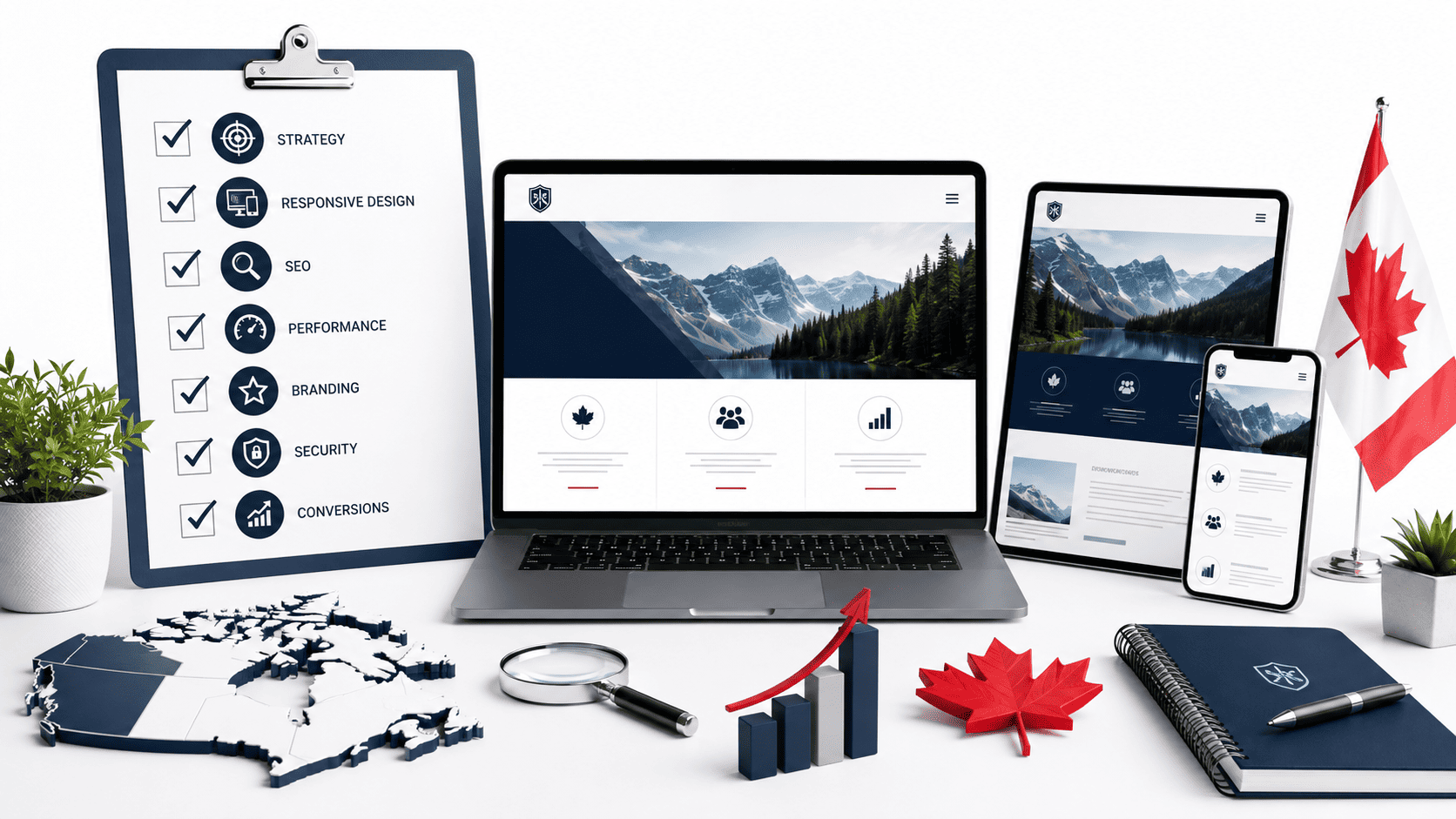


Comments (2)
Pingback: Ecommerce Web Design Checklist for Canadian Businesses
Pingback: How to Choose the Right Agency for WordPress Web Design in Canada